Search

Results 2161 - 2170 of 6465 (Sorted by date)
Book Chapter
In Climate Change, Disaster Risks and Human Security: Asian Experience and Perspectives
Climate-fragility risks are on the rise globally and developmental paths taken by countries could be attributed to this rise. To understand the link between development and climate-fragility risks, this chapter presents the findings of the survey conducted by authors with the development practitioners and experts from Asia. The purpose of the...
Book Chapter
In Asia-Pacific Landscape Transformations: Solutions for Sustainability
Food production and productivity improvements have contributed to lifting millions of people out of poverty and reduced hunger and malnutrition, but are associated with patterns of land intensification that have degraded agricultural land and caused great environmental harm. Underlying drivers affecting land conversion to and from agriculture...
Presentation
Regional collaboration for climate and SDG actions in the HKH
The objectives of the session are to emphasize the following points: Climate Change in the Hindu Kush Himalayas will seriously comprise food, nutritional and energy security in the region and downstream, severely challenging abilities of nations – particularly the poorer nations– to achieve the SDGs. There is an urgent need for collective climate...
Presentation
Third Forum of Ministers and Environment Authorities of Asia Pacific
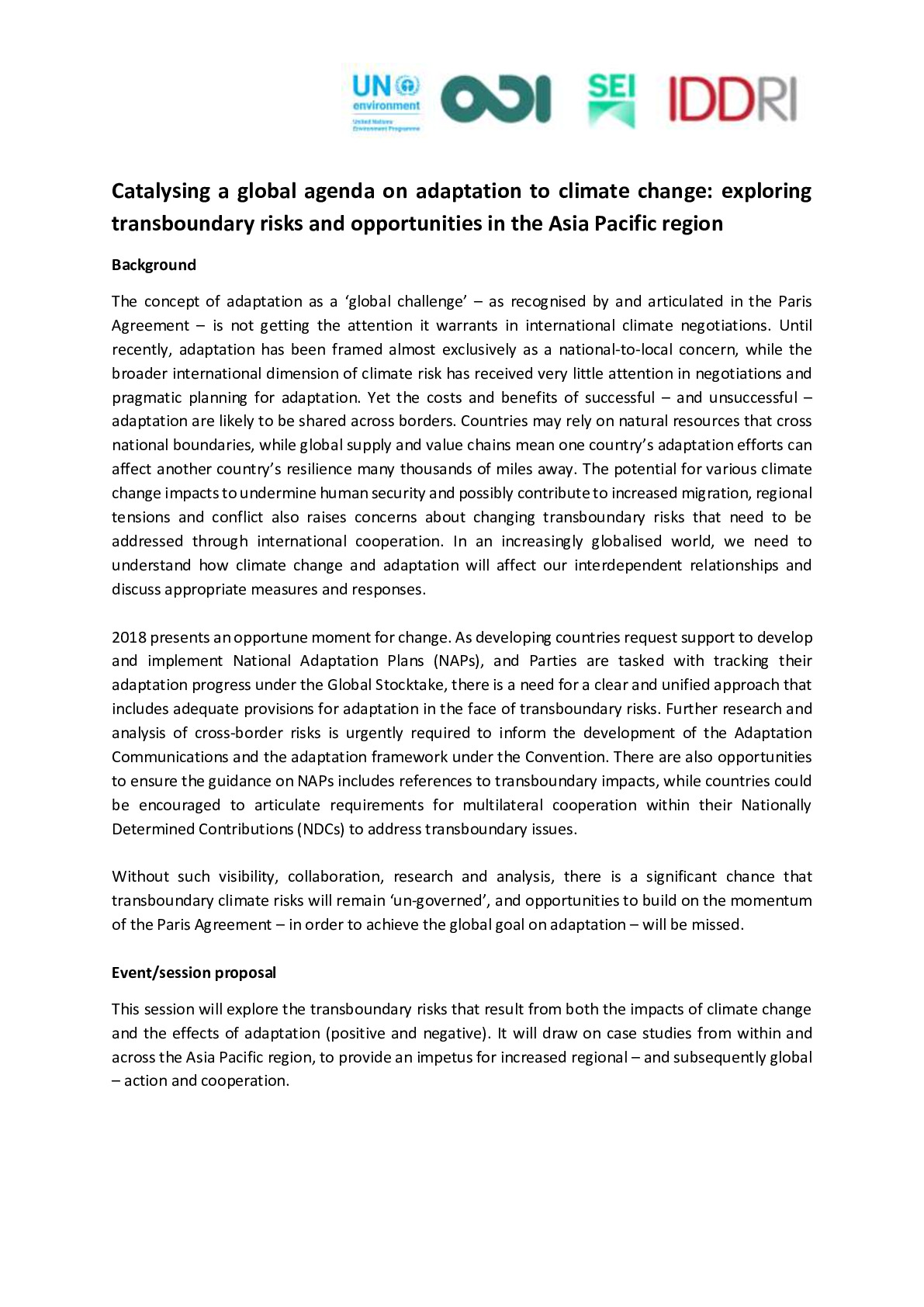
This session will explore the transboundary risks that result from both the impacts of climate change and the effects of adaptation (positive and negative). It will draw on case studies from within and across the Asia Pacific region, to provide an impetus for increased regional – and subsequently global – action and cooperation.   The session will...
Briefing Note
Integrative approaches to land management, such as ecosystems-based approaches and landscape approaches, together with sustainable infrastructure and the sustainable use and conservation of biodiversity, provide multiple benefits. By providing stakeholders with a means to work through competing interests over land and natural resources, while at...
Presentation
Third Workshop on the CBIT Global Coordination Platform, Enhancing coordination on climate transparency
Author:
Michael
Gillenwater
This presentation highlights how enhanced Monitoring & Evaluation (M&E) can contribute to the improved effectiveness of transparency and capacity building. Three conclusions are: 1) Fill the research gap in identifying the effectiveness of capacity building approaches at the project level, 2) build M&E good practice guidance so that practitioners...
Peer-reviewed Article
In APN Science Bulletin
Author:
Devesh
Sharma
G.M. Tarekul
Islam
Rabin
Malla
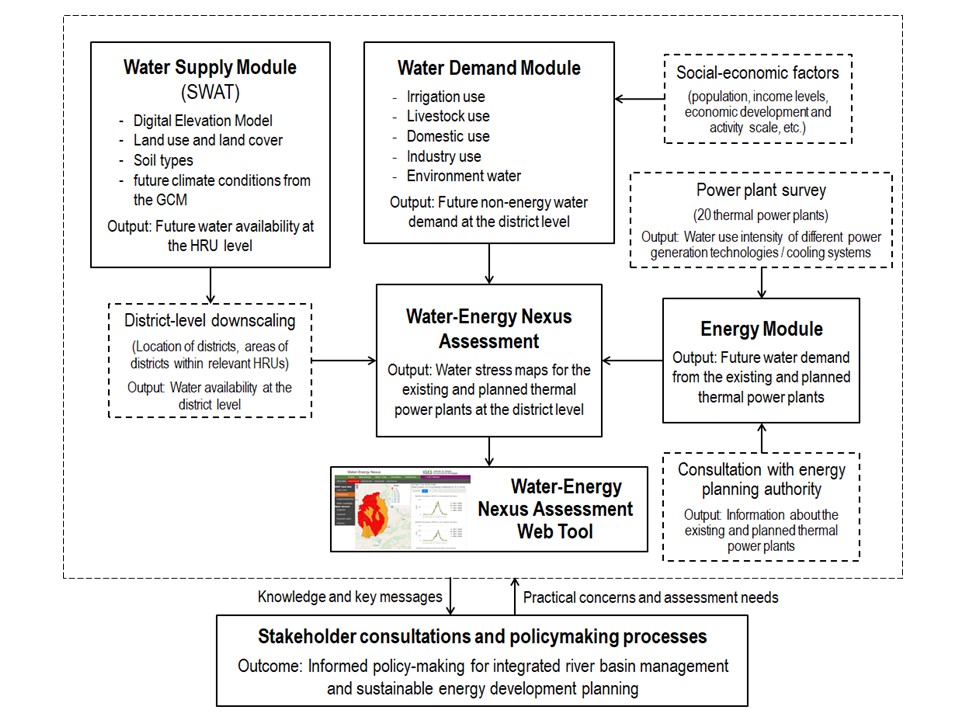
The Ganges basin provides essential water for drinking, irrigation, industrial use and power generation. Global climate change will affect the water availability in the basin and inevitably intensify the competition for water among major users, particularly from thermal power generation. Knowledge on the spatial distribution of water supply-demand...
Policy Report
Author:
G7 Resource Efficiency Alliance Members
This synthesis report has been produced as a follow-up activity of the G7 Alliance on Resource Efficiency on both the Toyama Framework on Material Cycles (2016) and the 5-year Bologna Roadmap (2017) adopted at the G7 Environment Ministers’ Meetings, conducted under an initiative of the Ministry of the Environment, Japan. Reports on actions by the...
Issue Brief
Socio-ecological production landscapes and seascapes (SEPLS) can contribute to global goals for biodiversity conservation and dealing with climate change, while also contributing locally to human security and wellbeing. SEPLS are, however, under threat around the world. SEPLS have been promoted under the Satoyama Initiative by the International...