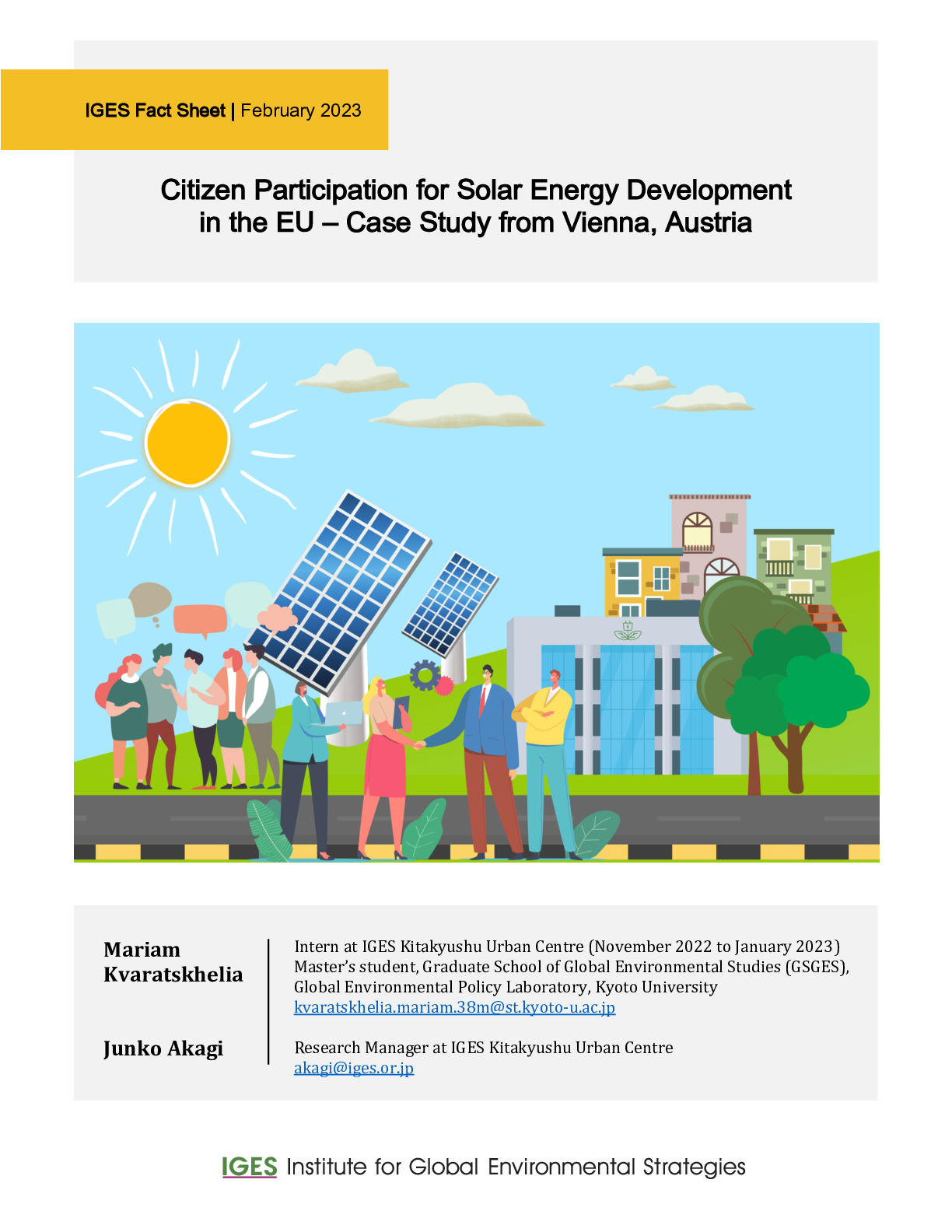
As a crucial part of transition towards sustainable energy systems, the European Union (EU) has been actively encouraging its citizens to participate in the uptake of solar energy. As a result, peoplecentred approaches, which put citizens at the heart of the energy transition process, have gained major momentum. By summarising the concept of...
Results 1371 - 1380 of 6464 (Sorted by date)
The participation and engagement of non-state actors (NSAs), including civil society, businesses, local governments, academia, and NGOs, plays an essential role in the implementation of the Global Stocktake (GST). NSAs can join the GST by making submissions and attending its technical dialogues. Their active participation fills various gaps in...
Keywords:
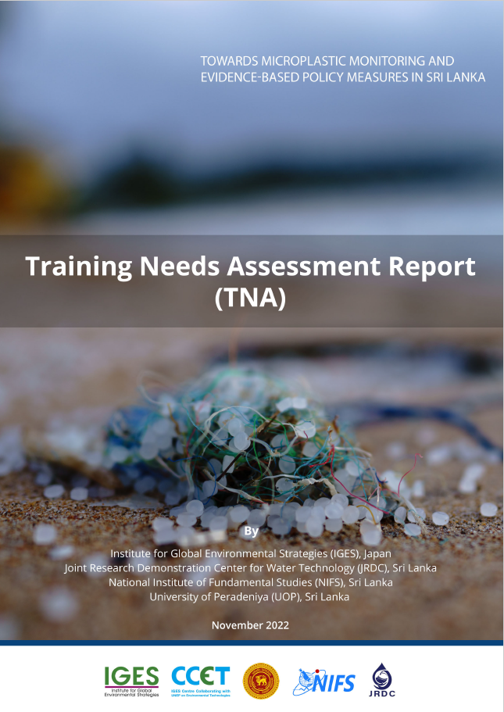
The report assesses the level of public awareness of microplastic pollution and related hazards as well as the current status of microplastic monitoring facilities available in Sri Lanka’s state and private sector institutes, with an emphasis on the public water supply chain and identifying microplastic point sources upstream to ensure safe...
Keywords:
In Ecosystem Services
Cultural Ecosystem Services (CES) are non-material benefits that are indispensable for the health and well-being of communities. CES are often spatially explicit and fluctuate according to the knowledge, beliefs, and perception of users of the location. Therefore, understanding the spatial patterns of CES perceived by people from different...
In Agroecology and Sustainable Food Systems
Innovation history analysis of the transformation of paddy rice system on Sado Island from 1999 to 2019, which progressed with the reintroduction of crested ibis (Nipponia nippon), identified three key levers, i.e. multi-stakeholder collaboration, integrated local policies, and incentives, which, interacting one another and with seven leverage...
In Resources, Conservation and Recycling
There is limited knowledge on the potential impacts of electric vehicle (EV) deployment in developing countries to date. India is a rapidly industrializing country with a national policy to promote EVs, but does not have the waste management infrastructure to process battery waste. Through a model analysis for India, we projected that the sale of...
In Sustainability
There is a growing recognition of the urgent need to change citizens’ lifestyles to realise decarbonised societies. Consumption-based accounting (carbon footprinting) is a helpful indicator for measuring the impacts of peoples’ consumption on climate change by capturing both direct and embedded carbon emissions. However, while carbon footprinting...
In Sustainability MDPI
Information and Communication Technologies (ICT) have been identified as potential enablers for alternative forms of sharing surplus food to prevent food loss and waste. Food sharing platforms can also provide an entry point to the sustainability transition by encouraging its users to confront the systemic causes of unsustainable and inequitable...
Special Session on "Outcome of 11 th Regional 3R and Circular Economy Forum in Asia and the Pacific, Siem Reap, Kingdom of Cambodia", 3RINCs 2023
The presentation was made at the Special Session on "Outcome of 11 th Regional 3R and Circular Economy Forum in Asia and the Pacific, Siem Reap, Kingdom of Cambodia", 3RINCs 2023. The presentation discusses that increasingly UNEA plays an inportant role in global environmental governance. Cosidering the role of Regional 3R and CE Forum in Asia and...
In response to the call for inputs to the third technical dialogue of the first Global Stocktake of the Paris Agreement, this submission intends to present an approach for non-state actors (NSAs) to engage with the implementation of the Global Stocktake (GST). It builds on the voices of NSAs collected through an initiative called “iGST Southeast...
Keywords: