
Results 901 - 910 of 5563 (Sorted by date)
Report Chapter
In Global Peatlands Assessment: The State of the World's Peatlands
Peatlands are unique and rare ecosystems that, despite only covering around 3-4% of the planet’s land surface, they contain up to one-third of the world’s soil carbon, which is twice the amount of carbon as found in the world’s forests. Keeping this carbon locked away is absolutely critical to achieving global climate goals. However, about 12% of...
Presentation
JSPS-ICSSR Seminar 2022: Understanding and Addressing Systemic Risks Behind the Socio-economic Impacts of COVID-19 in Japan and India: Developing a Roadmap for a Resilient and Sustainable Future
This presentation introduces how COVID-19 has evolved into a systemic risk that sets the background for the seminar.
Policy Report
The objective of this report is to provide an analysis of the current policy environment for garment production in Cambodia, applying a systems lens to identify challenges and opportunities for enhancing the sustainability of the sector. To maintain the competitiveness of Cambodia’s garment sector in the global market, a shift to sustainable...
Conference Proceeding
JSPS-ICSSR Seminar on Understanding and Addressing Systemic Risks Behind the Socio-economic Impacts of COVID-19 in Japan and India: Developing a Roadmap for a Resilient and Sustainable Future
Starting as a health emergency, the COVID-19 pandemic has evolved into a global crisis impacting health, the economy, society, the environment and institutions. The crisis reveals that building a resilient and sustainable society is important and achieving the Sustainable Development Goals (SDG) is urgently needed. It is imperative to ensure that...
Peer-reviewed Article
In Nature-Based Solutions
More than 90 systematic reviews have been conducted on the topic of nature-based solutions for climate change adaptation (NBS-CCA). These prior reviews, however, are scattered across more than 45 different peer-reviewed journals and gray literature sources, making it difficult to follow all of the knowledge generated and remaining research gaps. In...
Presentation
SETAC North America
A global agreement to end plastic pollution must be based on pertinent, multi-disciplinary knowledge. Consideration of the full life cycle impacts of plastics and substitutes is important to achieve sustainable solutions rather than shifting the burden. Hence, this process requires considerations of fossil-based and biobased feedstocks for plastic...
Training or Learning Material

Online Course on Municipal Solid Waste Management (MSWM) towards Circular Economy for Asian Development Bank Staff
IGES organized a training course on muncipal solid waste management and circular economy on November 14-16, 2022 for ADB staff. During the training, Hotta provided a lecture as follows; Hotta shared that with economy and social development, policy is shifting towards CE. He buttressed his case with Japan as a case study. He stressed that in 60s and...
Presentation
UNFCCC side event at the COP27 “Sharing best practices and lessons learned from capacity building for implementation of Article 6”
The presentation was given at the COP 27 official side event on "Sharing best practices and lessons learned from capacity building for implementation of Article 6". It shows our capacity building activities for Article 6.2 reporting - mutual learning program for enhanced transparency (MLP), and explains key findings from MLP discussion and lessons...
Keywords:
Research Report
The objective of this Guideline is to provide a systems approach to sustainable consumption and production (SCP) in the seafood sector in Vietnam that considers all stages of the production chain. SCP is conceived as a crucial framework for achieving the social and economic benefits, and minimizing the environmental burden, of Vietnam’s seafood...
Keywords:
Technical Report
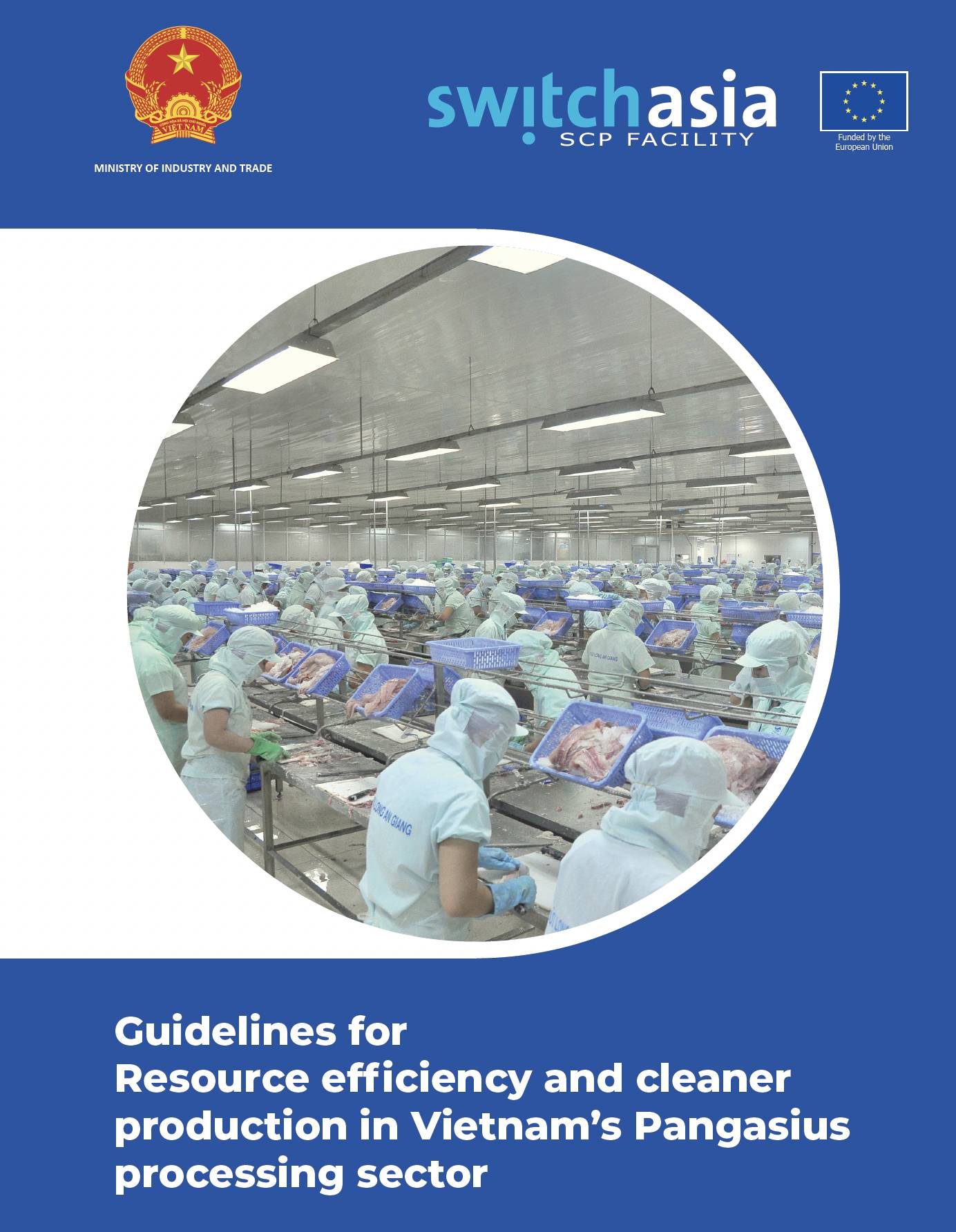
The Guidelines for Resource efficiency and cleaner production in Vietnam's Pangasius processing sector were developed within the framework of technical assistance of SWITCH-Asia provided to the Ministry of Industry and Trade of Vietnam, through the Programme of Sustainable Production and Consumption (SCP Facility), which is funded by the European...
Keywords: