
Results 2181 - 2190 of 5566 (Sorted by date)
Presentation
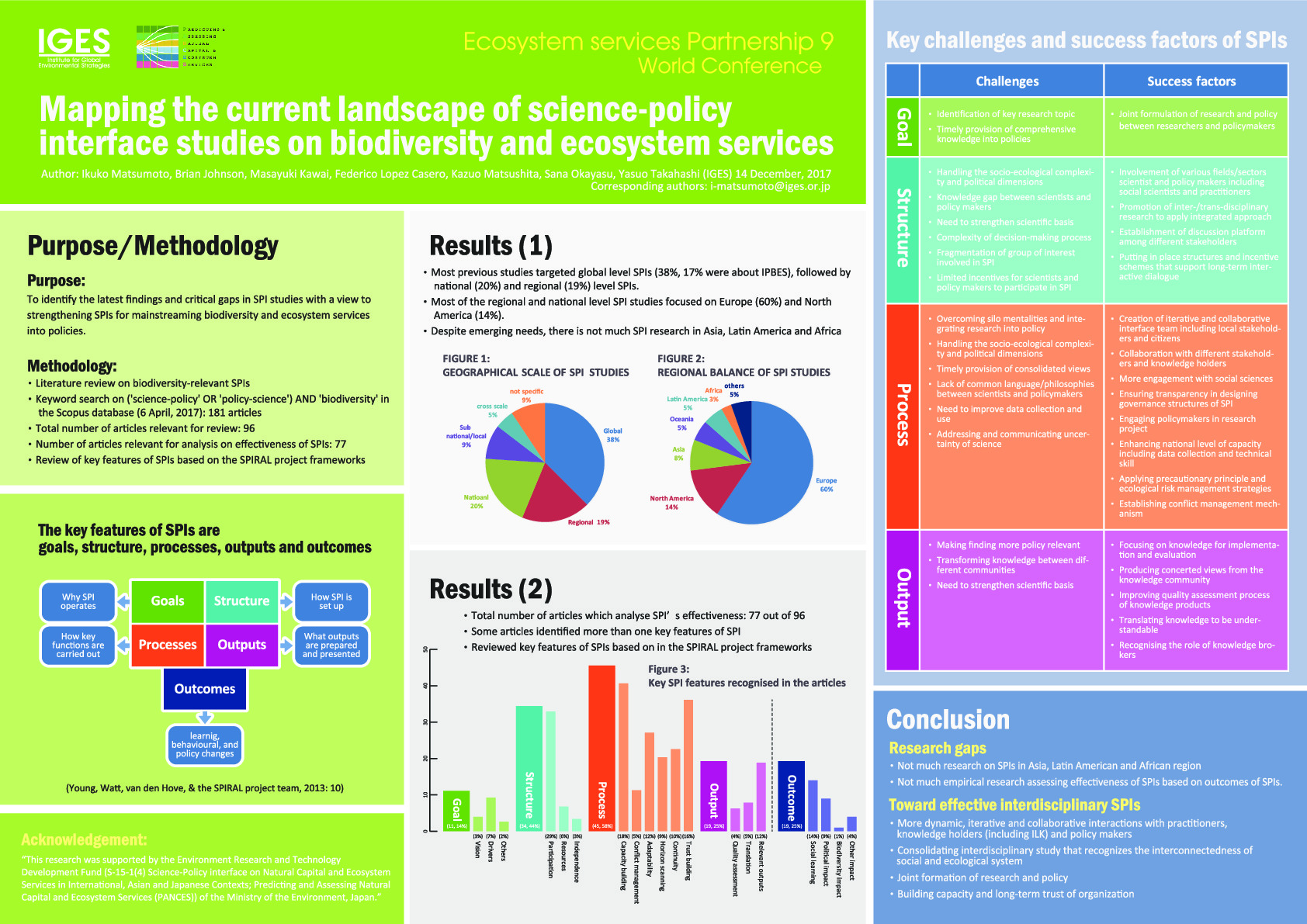
The 9th Ecosystem services Partnership, World Conference
>Towards effective interdisciplinary SPIs - More dynamic, iterative and collaborative interactions with practitioners, knowledge holders (including ILK) and policymakers - Consolidating interdisciplinary study that recognises the interconnectedness of social and ecological system - Joint formation of research and policy - Building capacity and long...
Data or Tool

IGES made a proposal of an MRV methodology for the JCM projects which installs solar PV systems to the JCM Joint Committee between Chile and Japan. The Joint Committee approved a methodology CL_AM001 Ver1.0 "Installation of Solar PV System" on the basis of this proposal. The attached version (PM_001) includes three documents: the JCM Proposed...
Fact Sheet
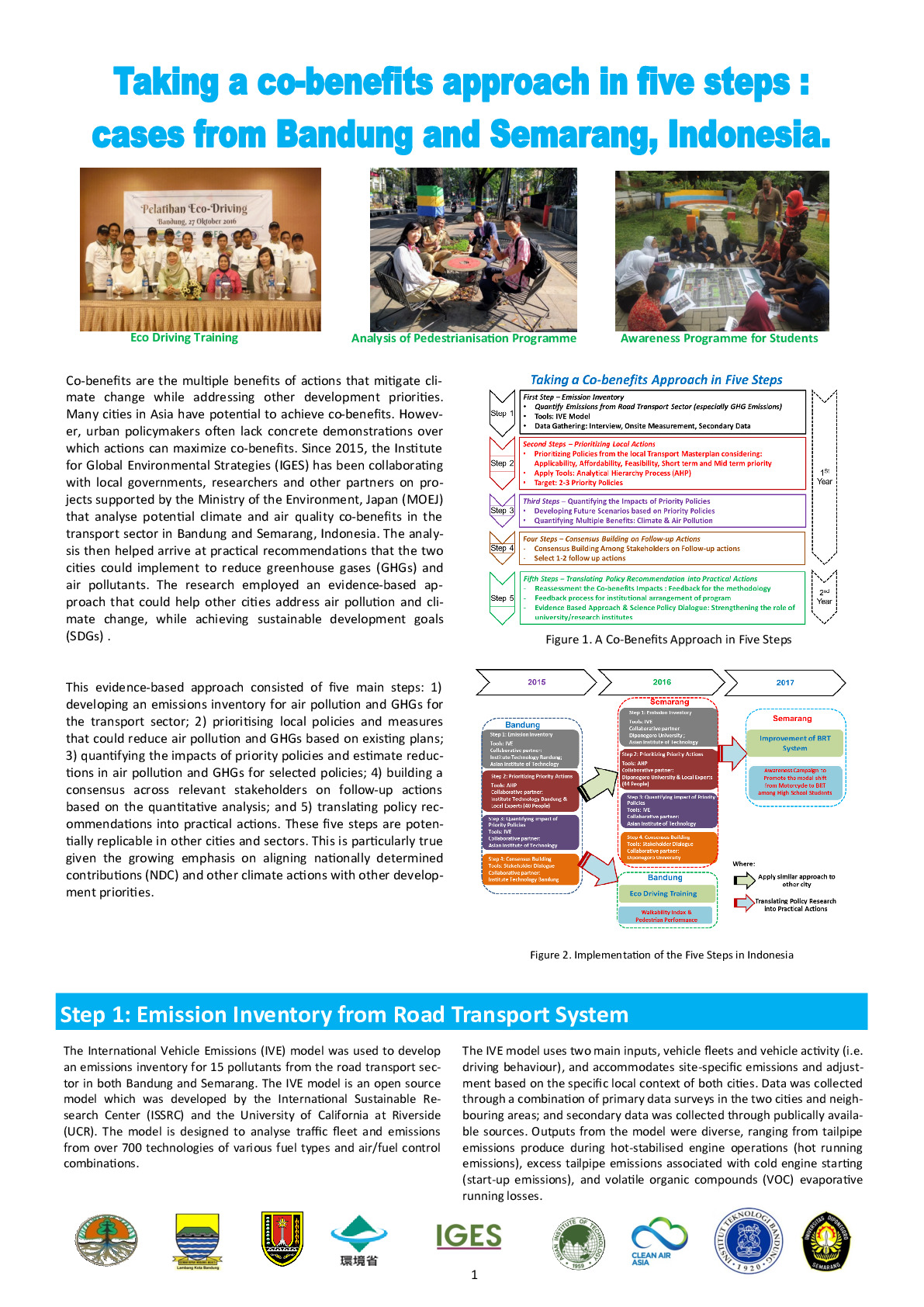
Co-benefits are the multiple benefits of actions that mitigate cli-mate change while addressing other development priorities. Many cities in Asia have potential to achieve co-benefits. Howev-er, urban policymakers often lack concrete demonstrations over which actions can maximize co-benefits. Since 2015, the Institute for Global Environmental...
Conference Proceeding
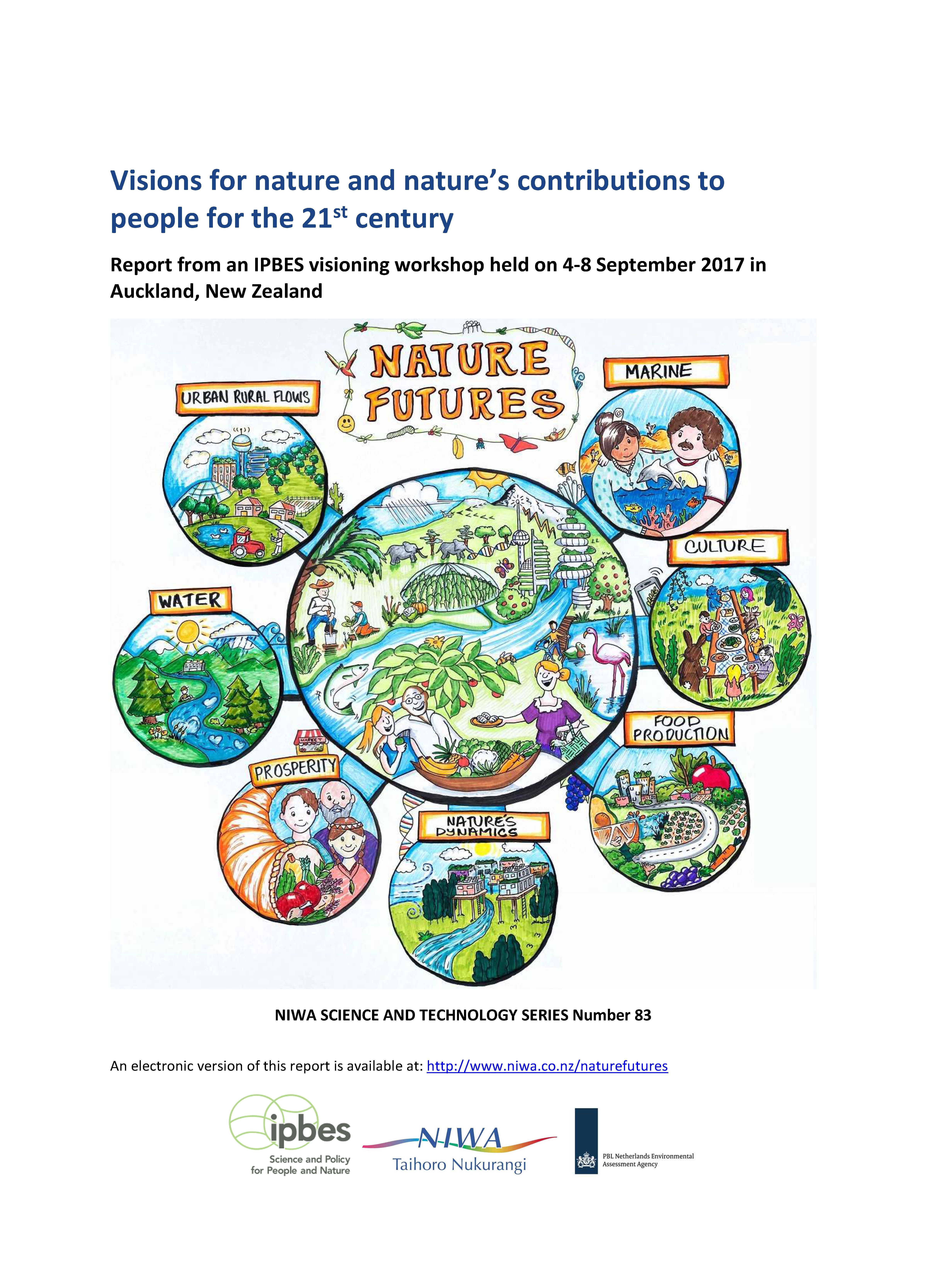
IPBES visioning workshop
The report presents the process in, and outputs from an IPBES visioning workshop, entitled "Visions for nature and nature's contributions to people for the 21st century" held in September 2017, which well captures the contributions from participants in the breakout groups and plenaries.
Book Chapter
In ENVIRONMENTAL SUSTAINABILITY IN ASIA: PROGRESS, CHALLENGES AND OPPORTUNITIES IN THE IMPLEMENTATION OF THE SUSTAINABLE DEVELOPMENT GOALS
The main purposes of this book chapter are: (i) to review the existing regulatory and policy framework for low-carbon development in Vietnam; (ii) to provide an overview of the JCM, its implementation progress in partner countries with special focus on Vietnam, and to discuss how the JCM could facilitate low-carbon technology transfer and...
Presentation

Workshop on Joint Crediting Mechanism (JCM) and Opportunities of Transferring Low-Carbon Technology for Enterprises
Outline of this prepsentation includes: - An overview on the status of the Joint Crediting Mechanism (JCM) implementation among 17 JCM partner countries. - Introduction of JCM financing programmes funded by the Ministry of the Environment of Japan - Sharing experience on the JCM project development, requirements and benefits of applying for the JCM...
Data or Tool
This pamphlet offers a description of IGES’s set of Climate Databases. Having been developed in some cases over more than 10 years, the Databases compile unique data about climate change policies and sustainable development projects, and offer in-depth insights through analytics, summary and figures. All Databases are freely accessible online using...
Peer-reviewed Article
In Resources, Conservation & Recycling
Methodology development on macro-level environmental impact associated with material use in Japan.
Working Paper
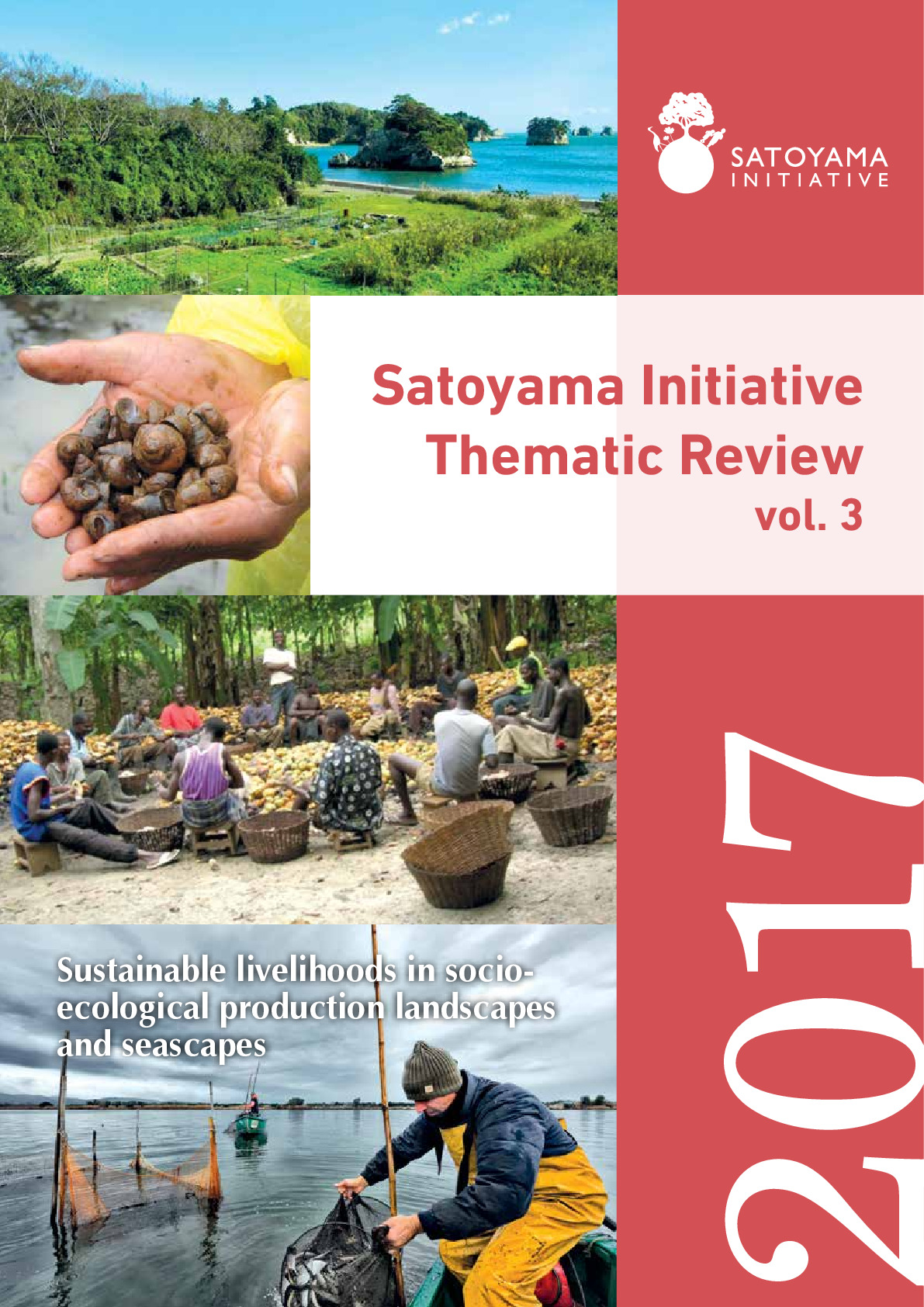
SEPLS generally require high levels of management by humans in order to maintain a sustainable production system that provides for human well-being. Thus their ecosystems are dominated by human activities, including traditional and local practices as well as modern production methods. These activities are considered means of livelihood, as they...
Non Peer-reviewed Article
In Ngingit
This paper describes the trans-river migration of the Iban and Bekatan to the Tatau River Basin in Bintulu Division, Sarawak. Until the beginning of the nineteenth century, The Iban and Bekatan did not inhabit the Tatau River Basin, but migrated there from other river basins from the middle of the nineteenth century onward. We describe the...