

Programme Director/ Director of Integrated Sustainability Centre
Research Topics & Areas of Expertise
Co-benefits
Political economy of low carbon development
Air pollution regulation
Climate policy
Sustainable transport
SDGs
Multilevel governance
Education
Rutgers University, Chinese Department
The University of Texas at Austin, LBJ School of Public Affairs, Department of Asian Studies
The University of California, Los Angeles, Political Science Department
Results 191 to 200 of 362 (Sorted by date)
Fact Sheet
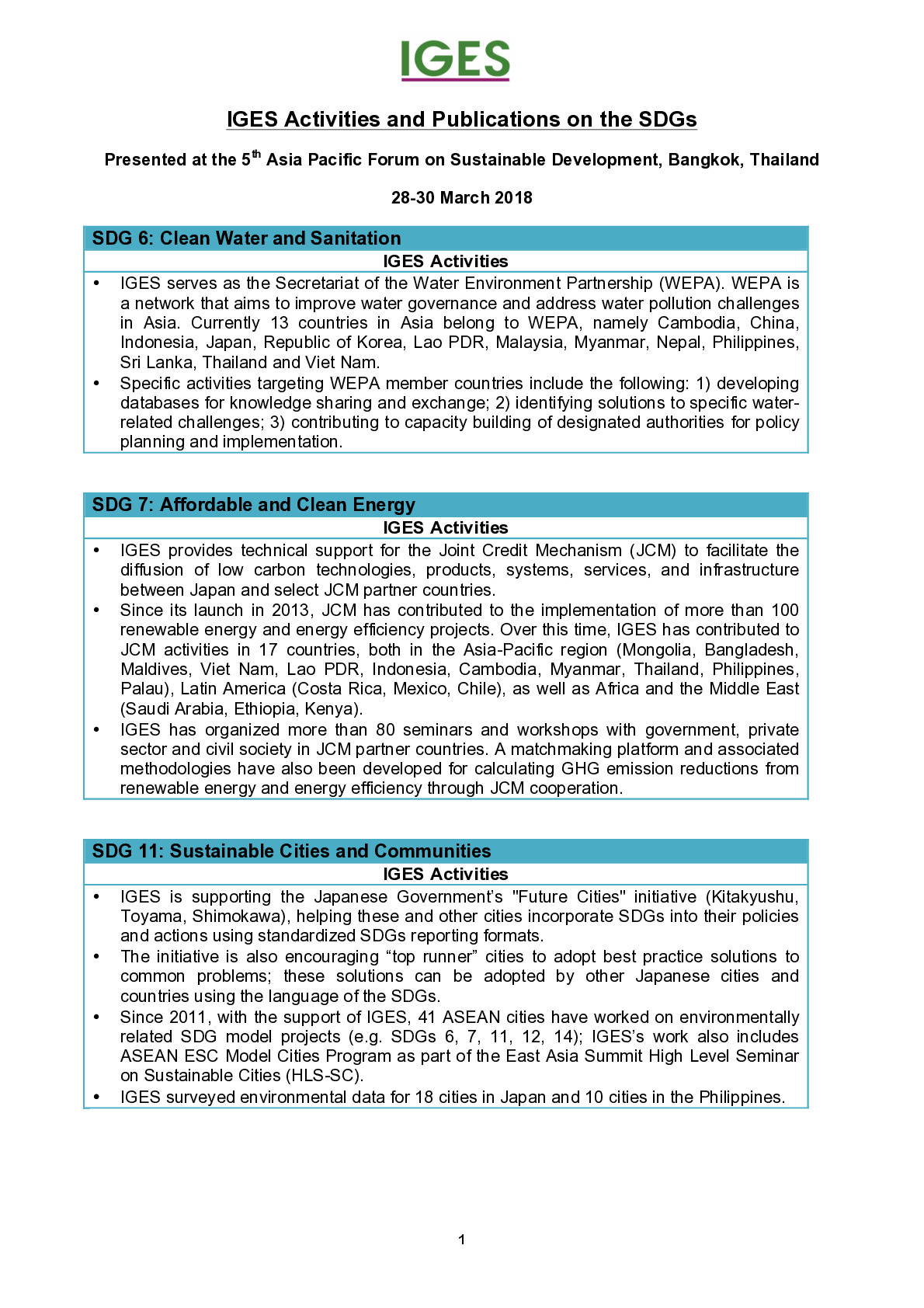
The Fifth Asia-Pacific Forum on Sustainable Development (APFSD), organized by the United Nations Economic and Social Commission of Asia and the Pacific (UNESCAP), was held 28-30 March 2018 in Bangkok, Thailand, under the theme of “Transformations towards sustainable and resilient societies'. A key preparatory meeting for the High-level Political...
Discussion Paper

NDCs are the sets of nationally driven actions that countries pledged to the UNFCCC in the wake of the Paris Agreement. Countries in Asia could capitalize on the political and financial support flowing from the Paris Agreement and NDCs to help mitigate Short Lived Climate Pollutants(SLCPs) and curb air pollution. This paper has three objectives...
Conference Paper

The 97th Annual Meeting Transportation Research Board (TRB)
Pedestrianization programs hold promise to encourage non-motorized transport (NMT) in rapidly motorizing cities. But successful implementation of these programs depends on whether they meet the needs of urban residents. This article aims to assess how Bandung, Indonesia—a fast-growing city of 2.3 million people—is meeting those needs with a...
Fact Sheet
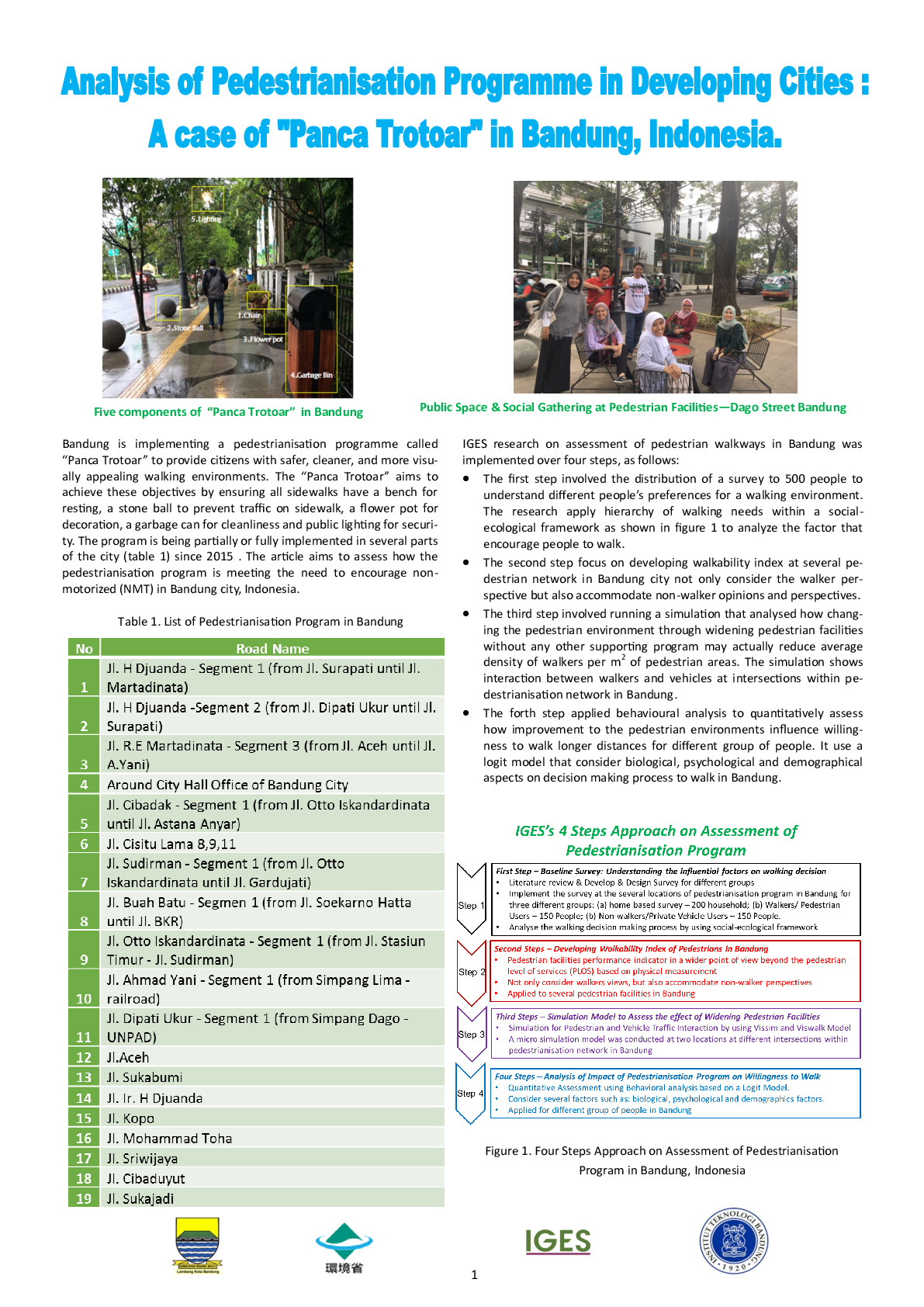
Bandung is implementing a pedestrianisation programme called “Panca Trotoar” to provide citizens with safer, cleaner, and more visually appealing walking environments. The “Panca Trotoar” aims to achieve these objectives by ensuring all sidewalks have a bench for resting, a stone ball to prevent traffic on sidewalk, a flower pot for decoration, a...
Fact Sheet
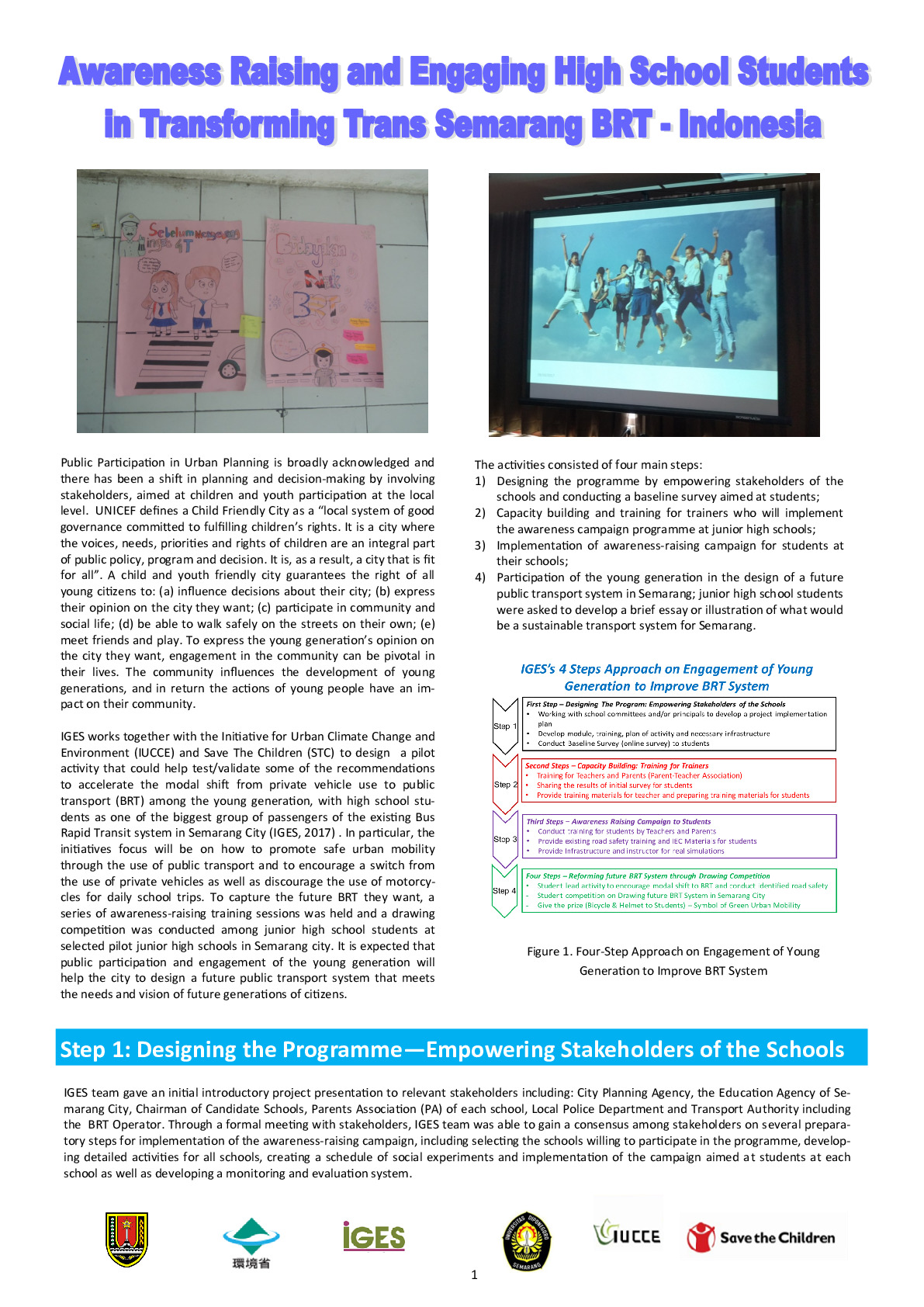
Public Participation in Urban Planning is broadly acknowledged and there has been a shift in planning and decision-making by involving stakeholders, aimed at children and youth participation at the local level. UNICEF defines a Child Friendly City as a “local system of good governance committed to fulfilling children’s rights. It is a city where...
Commissioned Report
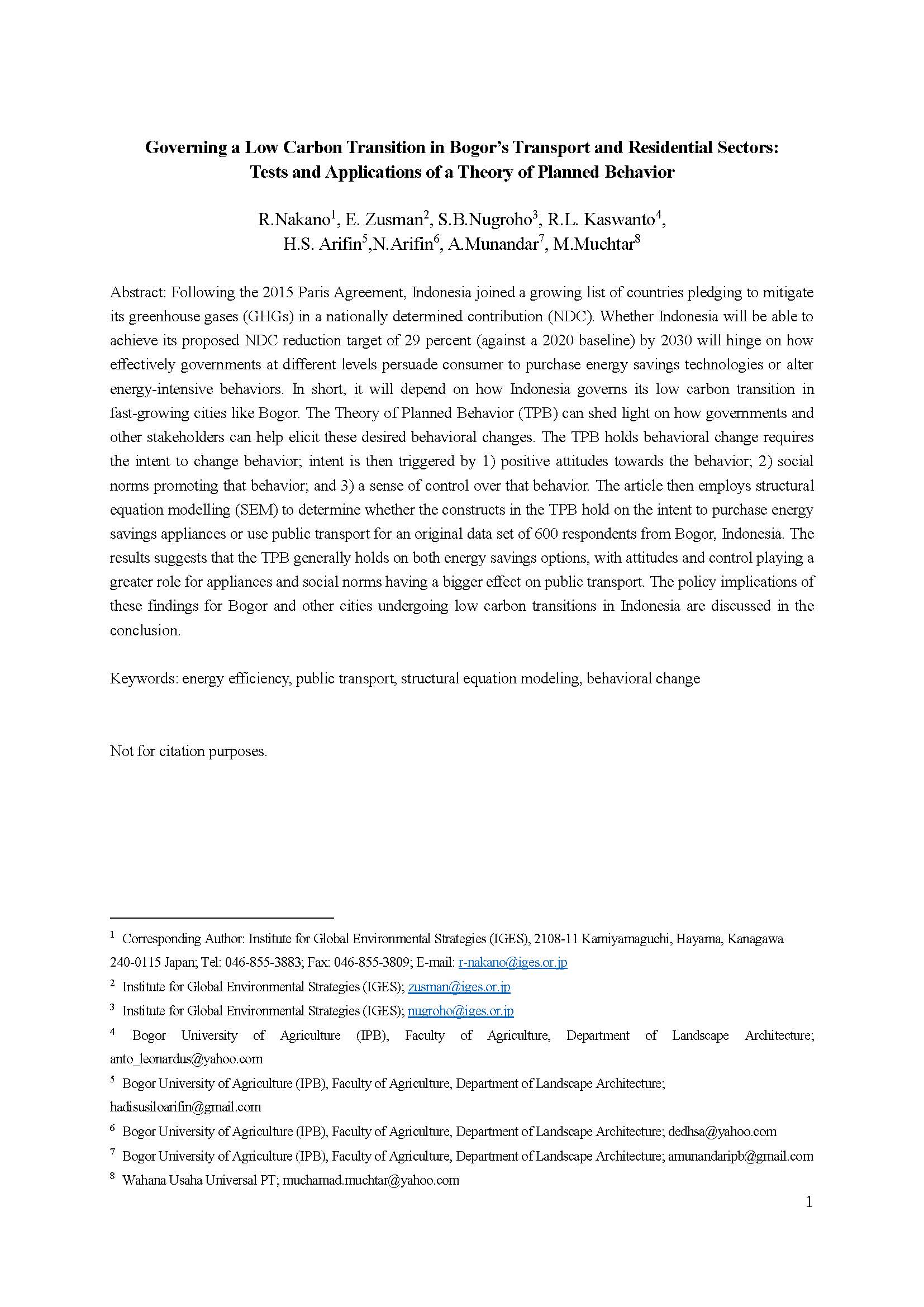
Following the 2015 Paris Agreement, Indonesia joined a growing list of countries pledging to mitigate its greenhouse gases (GHGs) in a nationally determined contribution (NDC). Whether Indonesia will be able to achieve its proposed NDC reduction target of 29 percent (against a 2020 baseline) by 2030 will hinge on how effectively governments at...
Fact Sheet
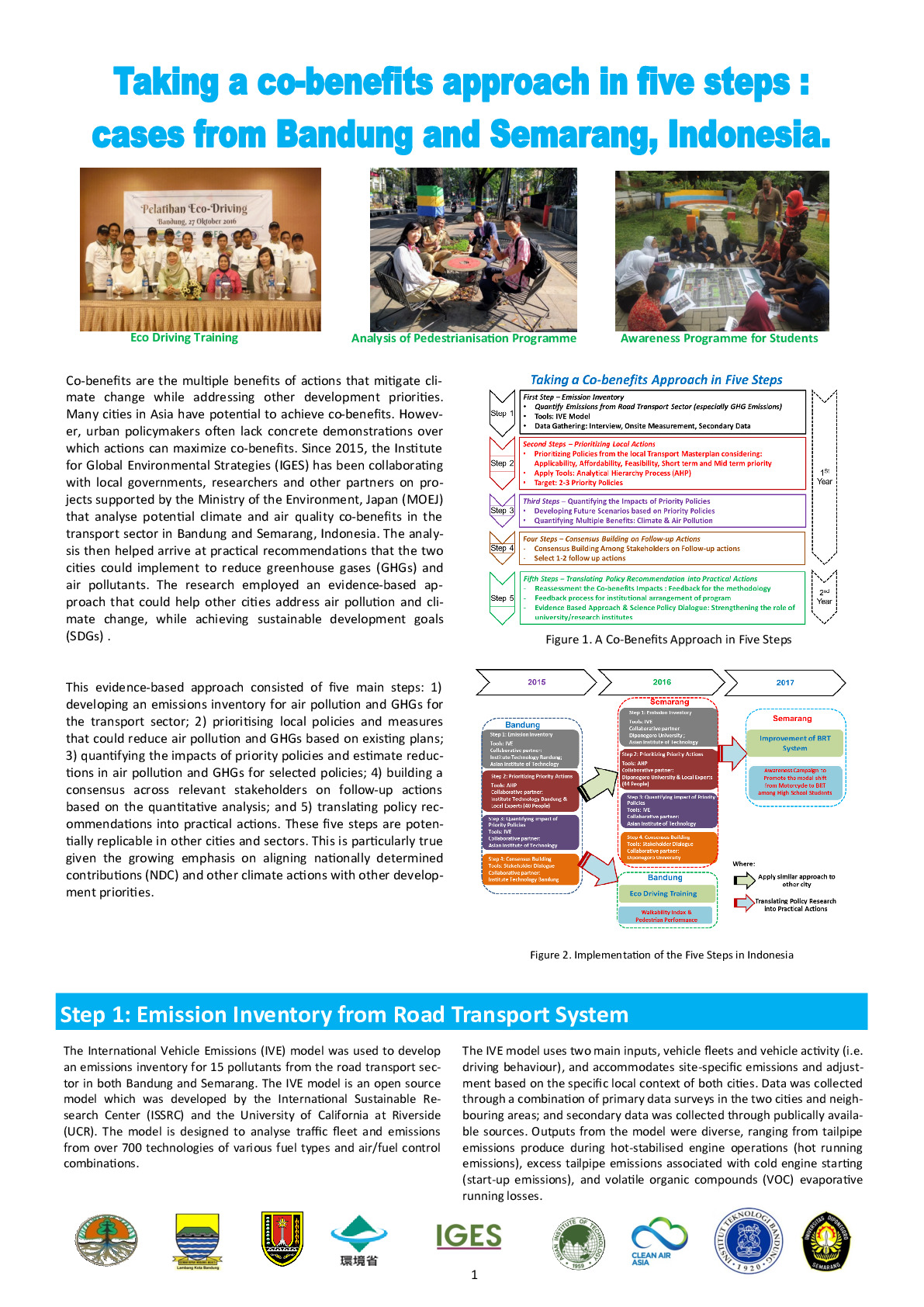
Co-benefits are the multiple benefits of actions that mitigate cli-mate change while addressing other development priorities. Many cities in Asia have potential to achieve co-benefits. Howev-er, urban policymakers often lack concrete demonstrations over which actions can maximize co-benefits. Since 2015, the Institute for Global Environmental...
Conference Paper
Proceeding of The Eastern Asia Society for Transportation Studies
The benefits of walking have recently inspired considerable research on the relationships between pedestrian choices and numerous built environment factors. These relationships are then elaborated using walkability indices for the meso- the micro-levels. Despite important advances in micro-level research, the walkability concept is based chiefly on...
Briefing Note
On 5-8 September 2017, the Asia-Pacific Ministerial Summit on the Environment (the Summit) was convened in Bangkok, Thailand. This briefing note draws upon the observations of researchers from the Institute of Global Environmental Strategies (IGES) to underline key points involving the SDGs, air pollution, and resource efficiency that stood out...
Book Chapter
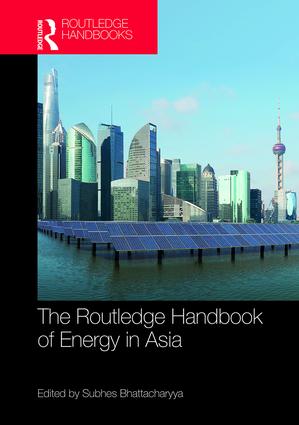
In Routledge Handbook of Energy in Asia
The Routledge Handbook of Energy in Asia presents a comprehensive review of the unprecedented growth of Asian energy over the past quarter of a century. It provides insightful analysis into variation across the continent, whilst highlighting areas of cross-learning and regional cooperation between the developed and developing countries of Asia...
Results 1 to 10 of 11 (Sorted by date)
Project

Updated: August 2025
Circulating and Ecological Sphere (CES)
Home Thematic Focus Areas CES Spotlight What's New Members About CES Concept Our Approach CES-Asia Consortium Activities Research Workshops Events Publications Academic Papers Reports Others Outreach Media Coverage Seminar Voices from the Field Tools...
Project

Updated: November 2024
Summit of the Future (2024) Special webpage
From September 22-23, the United Nations Summit of the Future was held at the United Nations Headquarters in New York. The aim of the Summit of the Future is strengthening global governance and accelerating the implementation of internationally...
Project
Updated: January 2024
IGES Activities on the Better Air Quality (BAQ) conference 2023
The Better Air Quality (BAQ) conference 2023, the region's largest and most prestigious air quality gathering, was held on 15th -17th November 2023, with pre-events on 13th -14th November, at the Asian Development Bank (ADB) in Manila, Philippines...
Project
Updated: January 2024
IGES Activity on COP28
Hosted in Dubai, United Arab Emirates, the 28th meeting of the Conference of the Parties to the United Nations Framework Convention on Climate Change (UNFCCC COP28) will begin on 30 November 2023. Before, during and after COP28, this Special Webpage
Project
Updated: August 2022
Global Climate and SDG Synergy Conference
Calling for an integrative approach: Climate, SDGs and biodiversity Serious concerns were underlined at the 26th Conference of the Parties (COP26) to the United Nations Framework Convention on Climate Change (UNFCCC) regarding the current NDC targets
Project
Updated: July 2022
IGES Activity on High-level Political Forum on Sustainable Development (HLPF 2022)
The High-Level Political Forum on Sustainable Development is the United Nations’ annual global platform for following up and reviewing the 2030 Agenda for Sustainable Development and its 17 Sustainable Development Goals. This year’s theme is "Buildin
Project

Updated: March 2023
Net-zero: Towards 1.5°C Goal
In 2021, Japan announced its Green Growth Strategy, setting out a roadmap for key technologies in line with its commitment on carbon neutrality by 2050. Japan has embarked on several initiatives on transformative technology in key sectors, with the a
Project
Updated: July 2020
IGES Activity on "High-level Political Forum on Sustainable Development (HLPF 2020)"
This special webpage presents reports and publications related to the High-level Political Forum on Sustainable Development (HLPF2020).
Project
Updated: July 2020
IGES Activity on "High-level Political Forum on Sustainable Development (HLPF 2019)"
This special webpage presents reports and publications related to the High-level Political Forum on Sustainable Development (HLPF), which as the main United Nations platform on sustainable development, is dedicated to the follow-up and review of the...
Project
Updated: August 2023
IGES Inputs to Asia-Pacific Forum on Sustainable Development (APFSD)
APFSD is an annual meeting convened by the United Nations Economic and Social Commission for Asia and the Pacific (UNESCAP) aimed at strengthening the region’s readiness for the United Nations High-level Political Forum on Sustainable Development.