Search

Results 5911 - 5920 of 6464 (Sorted by date)
Presentation
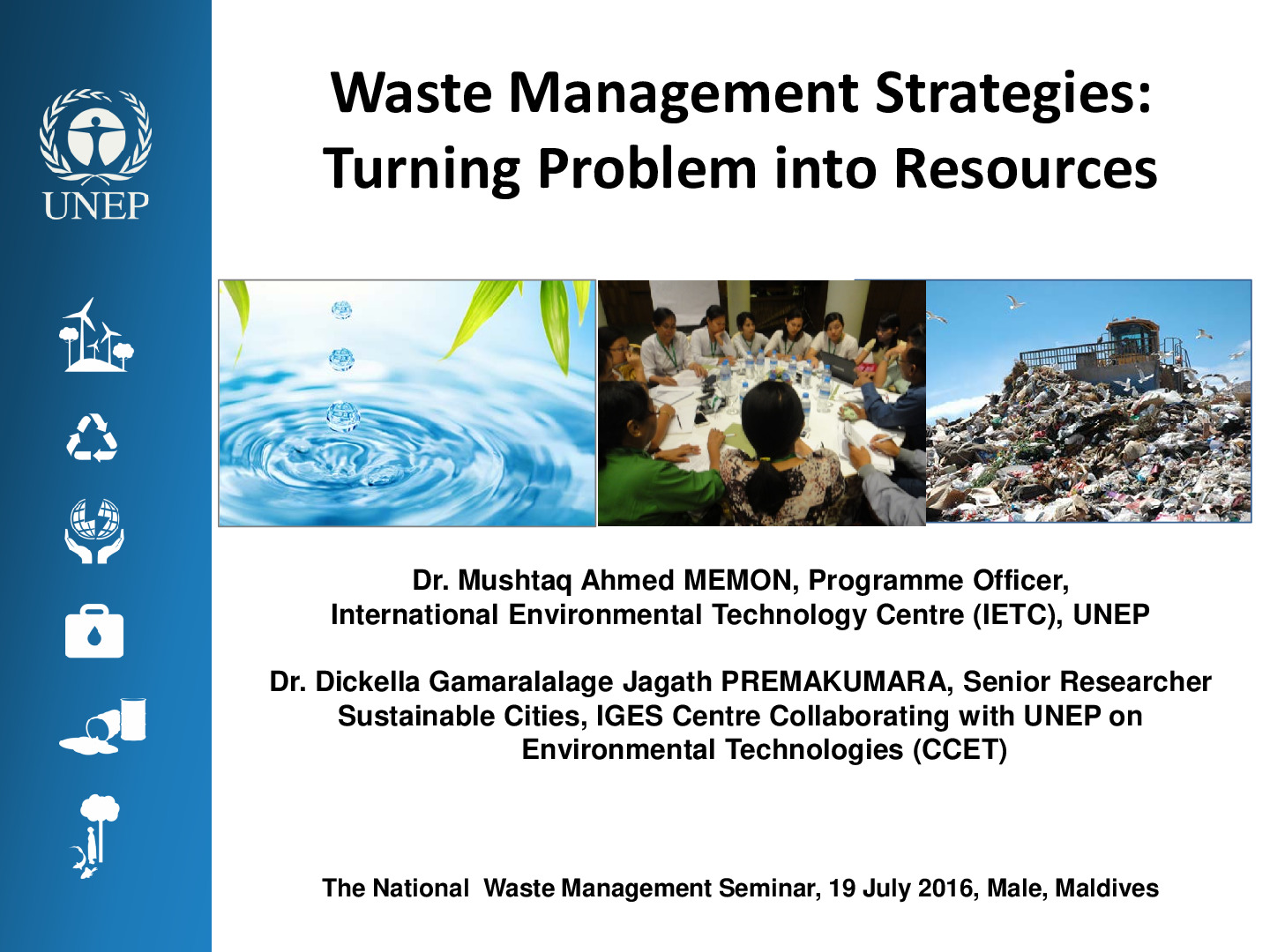
The National Waste Management Seminar, 19 July 2016, Male, Maldives
Author:
This presentation discusses the tools and guidelines for establishing the holistic and integrated waste management system at national and city levels and explains the current activities of the IGES Centre Collaborating with UNEP on Environmental Technologies (CCET)
Issue Brief
Author:
Katherine Rittenhouse
Peter Sopher
Daniel Francis
Stefano De Clara
Jeff Swartz
This case study covers the experimental Japanese voluntary ETS, the J-Credit System, the Tokyo Cap-and-Trade Program, the Joint Crediting Mechanism, Commentary on Market Functioning, and Policy Distinction. Remarks: This case study is co-authored by the IGES, the International Emissions Trading Association (IETA), and the Environmental Defense Fund...
Issue Brief
Assuming all thermal power plants currently planned for construction and replacement are put into operation, coal-fired and gas-fired power plants need to operate below 56% and 43%, respectively, of their capacity factor in order to achieve Japan’s electric power sector’s voluntary emissions intensity targets for 2030. However, the voluntary...
Commentary (Op. Ed)
Following last year’s agreement over the Sustainable Development Goals (SDGs), much of the international community’s attention has focused on what data would be needed to assess progress on the new development agenda. Answering this question has proven challenging. Part of the challenge stems from the sizable difficulties of gathering quality data...
Issue Brief
Author:
Kaoru
Ichikawa
William
Dunbar
Yohsuke
Amano
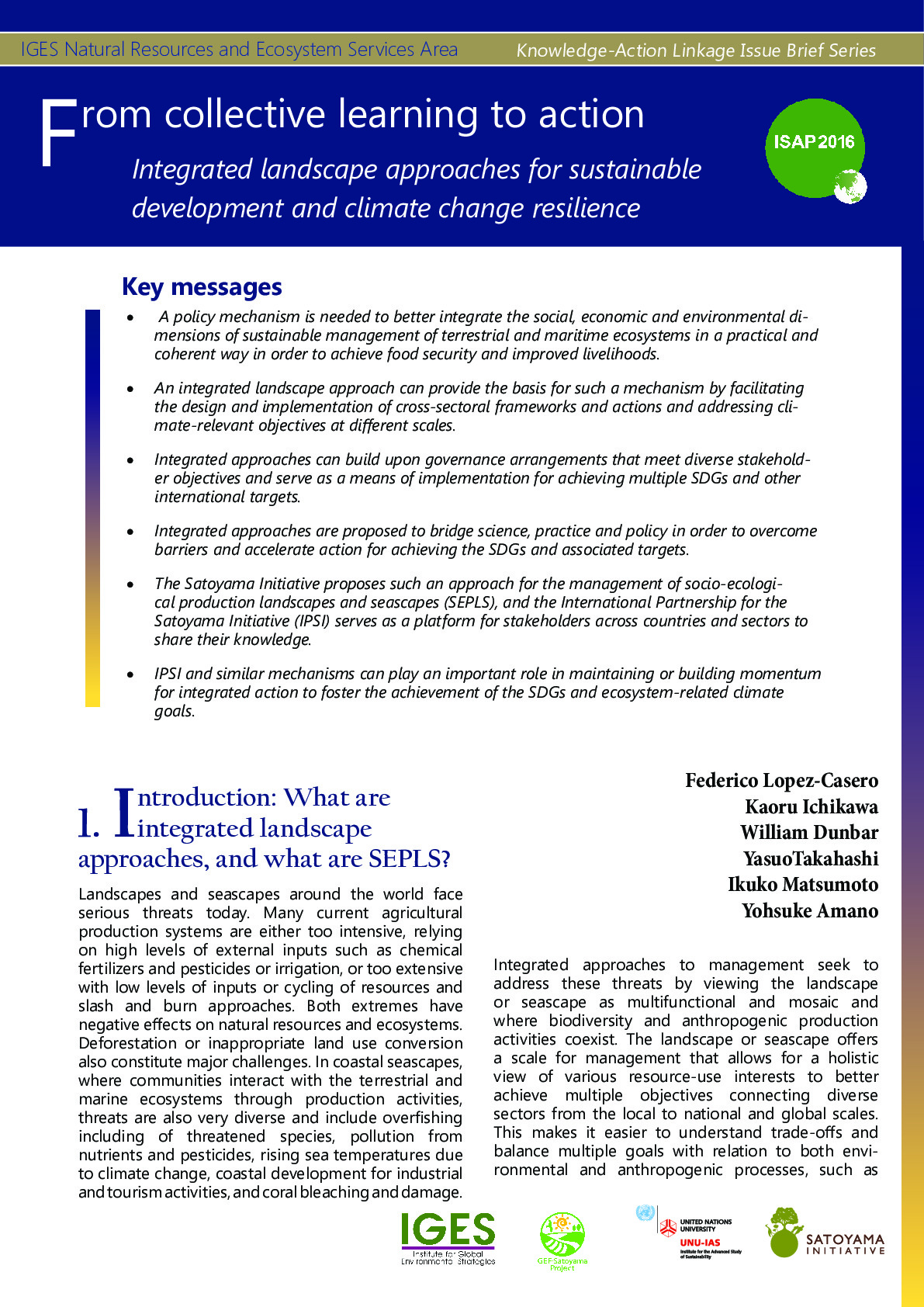
A policy mechanism is needed to better integrate the social, economic and environmental dimensions of sustainable management of terrestrial and maritime ecosystems in a practical and coherent way in order to achieve food security and improved livelihoods. An integrated landscape approach can provide the basis for such a mechanism by facilitating...
Working Paper
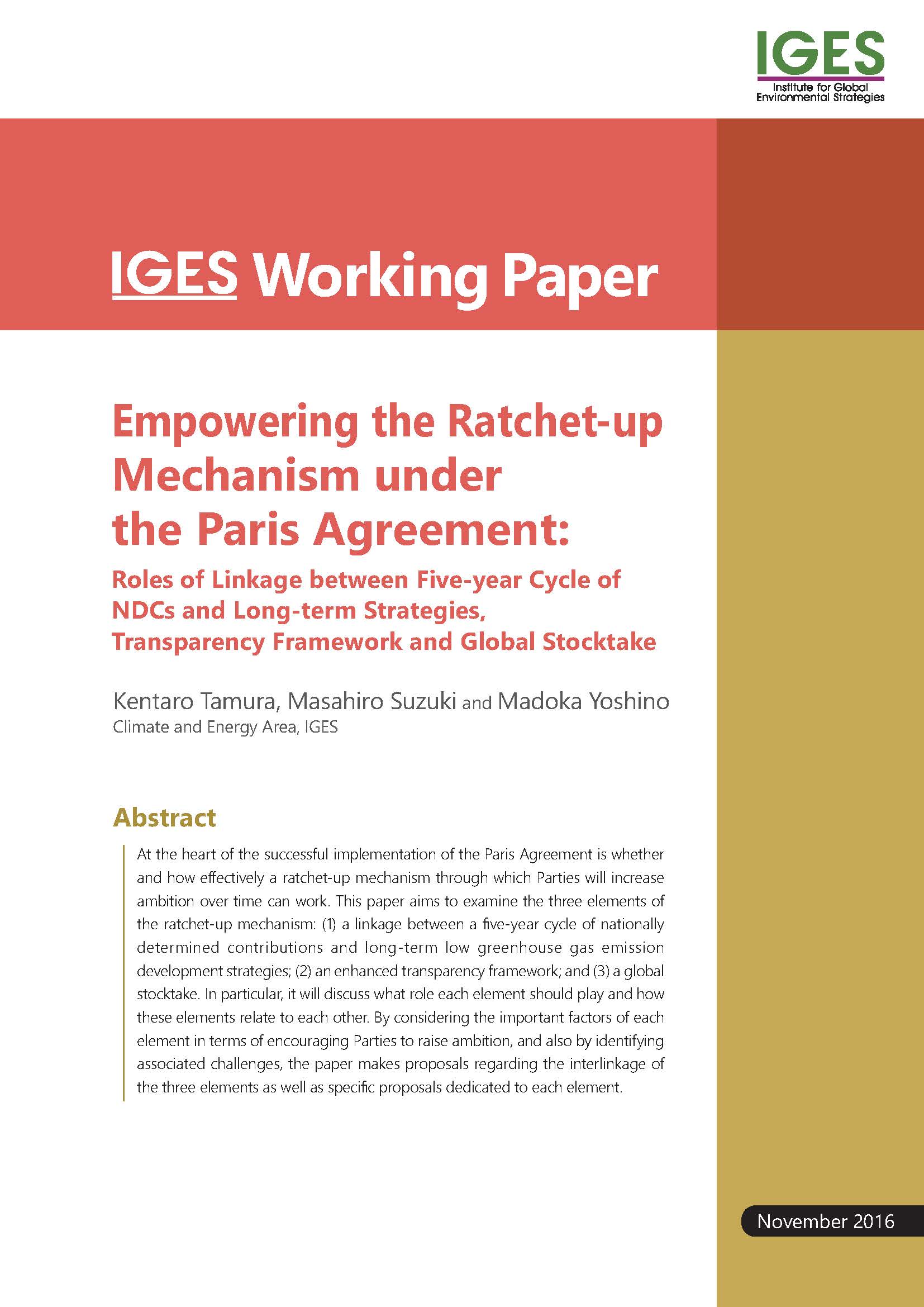
At the heart of the successful implementation of the Paris Agreement is whether and how effectively a ratchet-up mechanism through which Parties will increase ambition over time can work. This paper aims to examine the three elements of the ratchet-up mechanism: (1) a linkage between a five-year cycle of nationally determined contributions and long...
Peer-reviewed Article
In Journal of Environmental Protection
Author:
Farzad
Taheripour
Thomas W.
Hertel
Badri
Narayanan
Sebnem
Sahin
Anil
Markandya
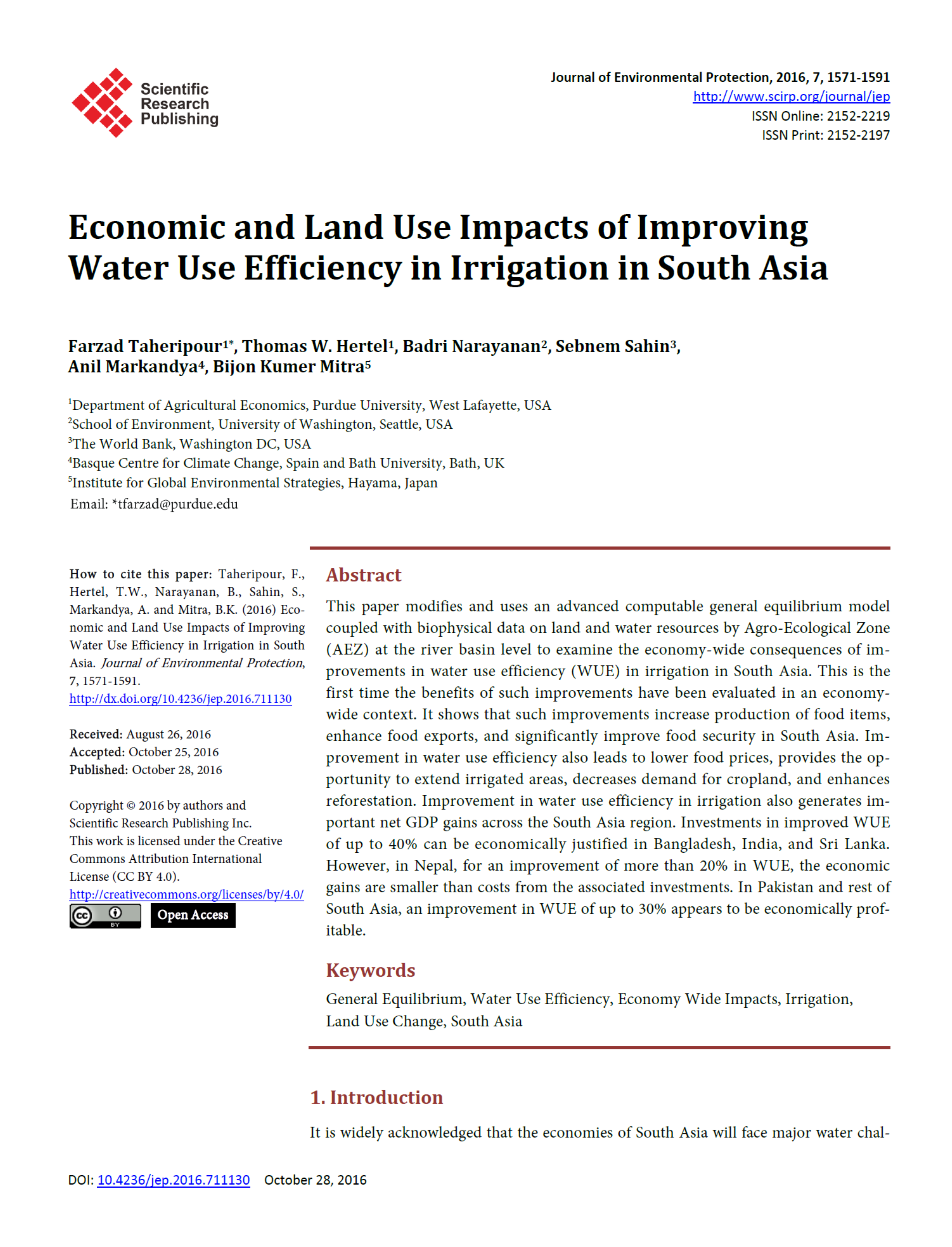
This paper modifies and uses an advanced computable general equilibrium model coupled with biophysical data on land and water resources by agro-ecological zone at the river basin level to examine the economy-wide consequences of improvements in water use efficiency (WUE) in irrigation in South Asia. This is the first time the benefits of such...
Working Paper
Author:
Molly
White (Greenhouse Gas Management Institute)
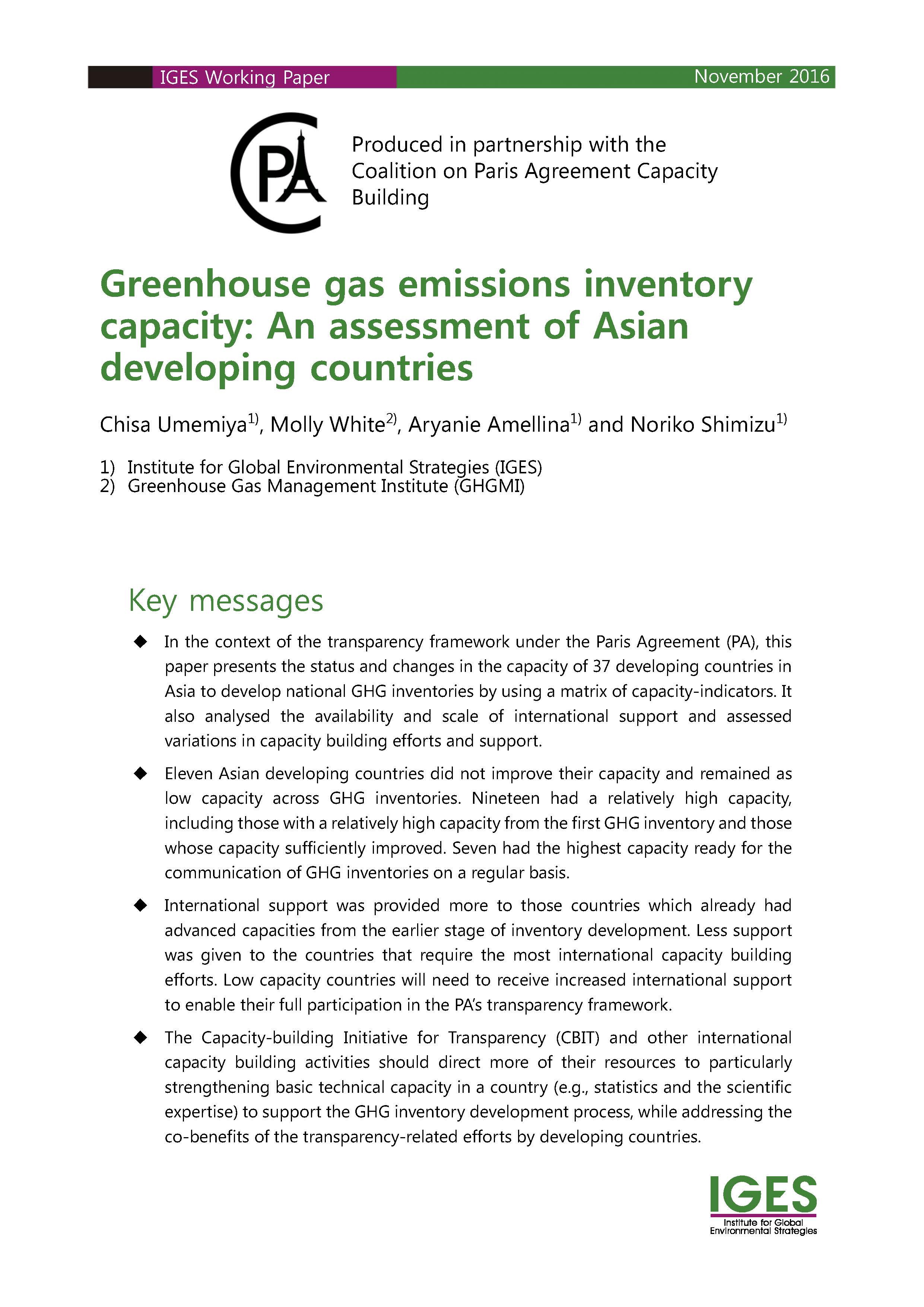
In the context of the transparency framework under the Paris Agreement (PA), this paper presents the status and changes in the capacity of 37 developing countries in Asia to develop national GHG inventories by using a matrix of capacity-indicators. For the latest outcome of this research paper, please refer to: Umemiya, C., White, M., Amellina, A....
Data or Tool
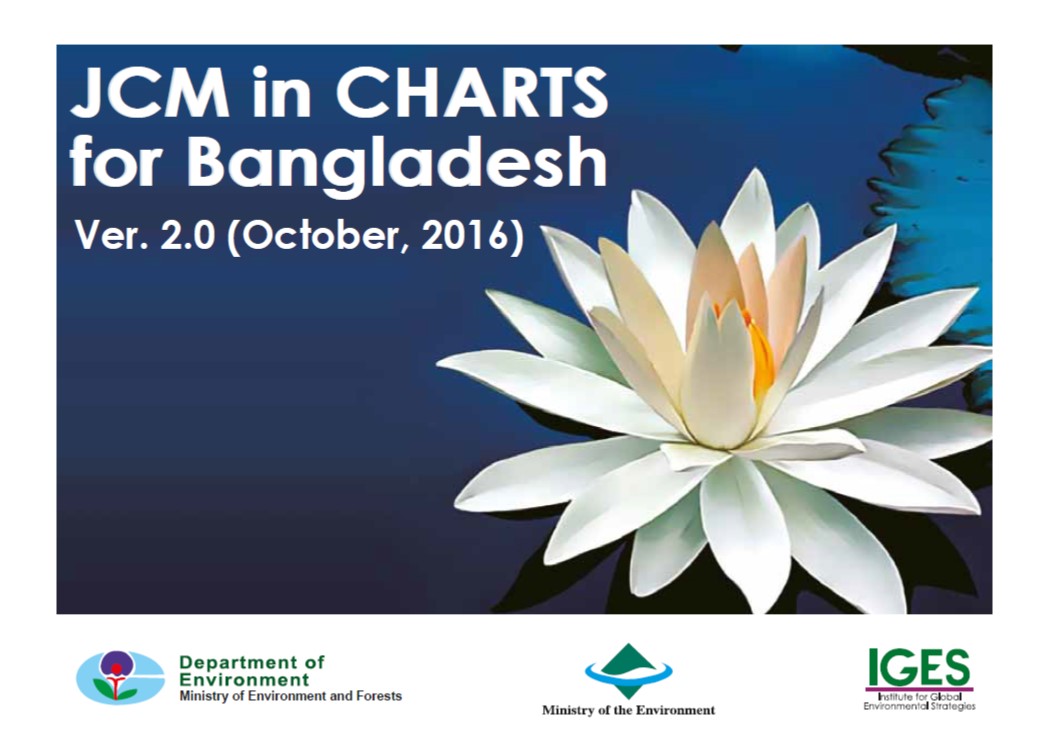
This document aims to provide a comprehensive and easy-to-understand description of the Joint Crediting Mechanism (JCM) including JCM concept, JCM project cycle, JCM related bodies, JCM project methodology, project design document (PDD), Registration process, post registration activities, procedure for issuance of credits, and procedure for...