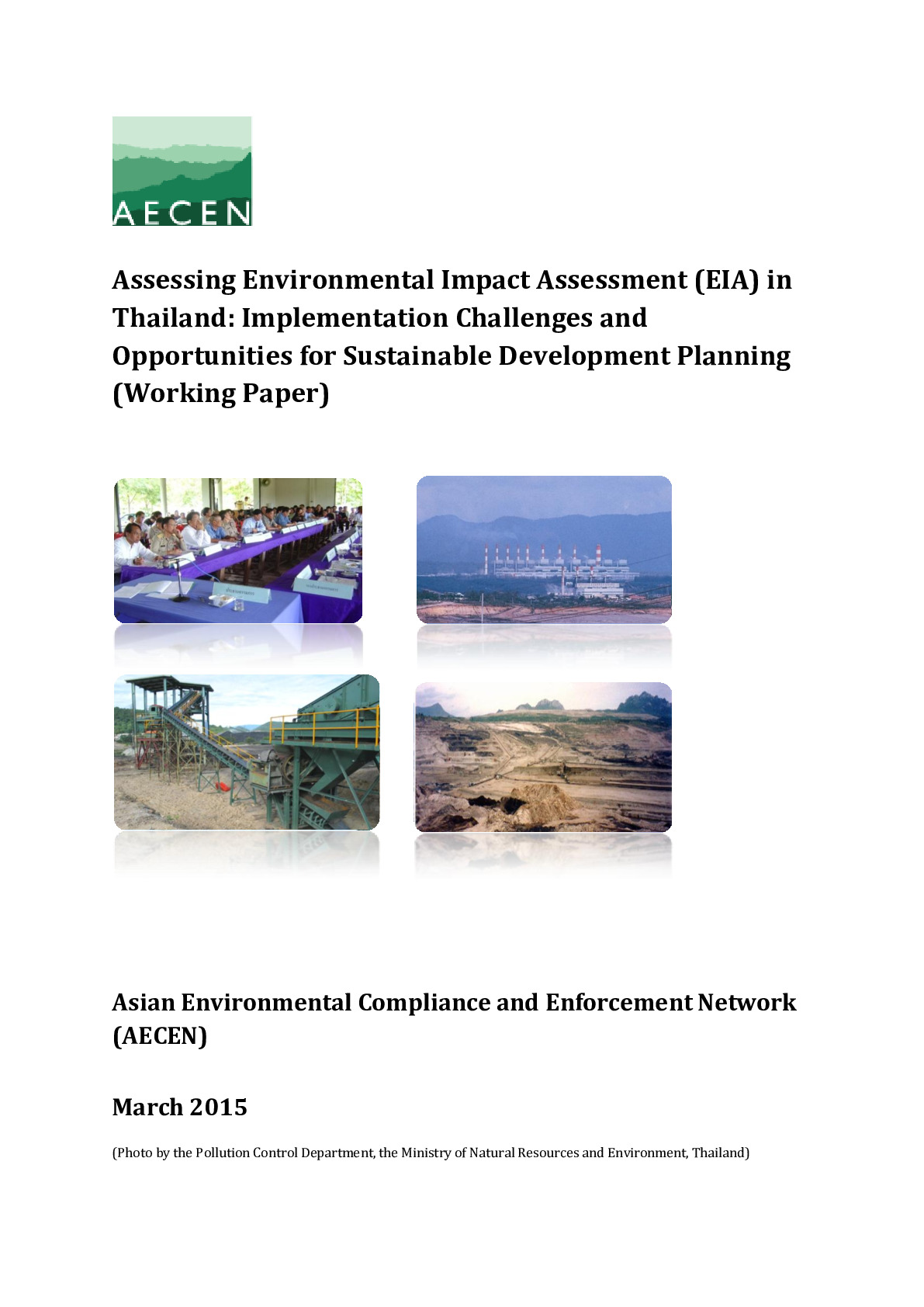
This report presents the existing EIA systems and implementation practices in Thailand as of December 2014 and their challenges and recommendations. Chapter 1 provides an overview of the systems of assessment (EIA and environmental and health impact assessment or EHIA) and their procedures; Chapter 2 identifies major challenges and opportunities...
Results 5921 - 5930 of 6464 (Sorted by date)
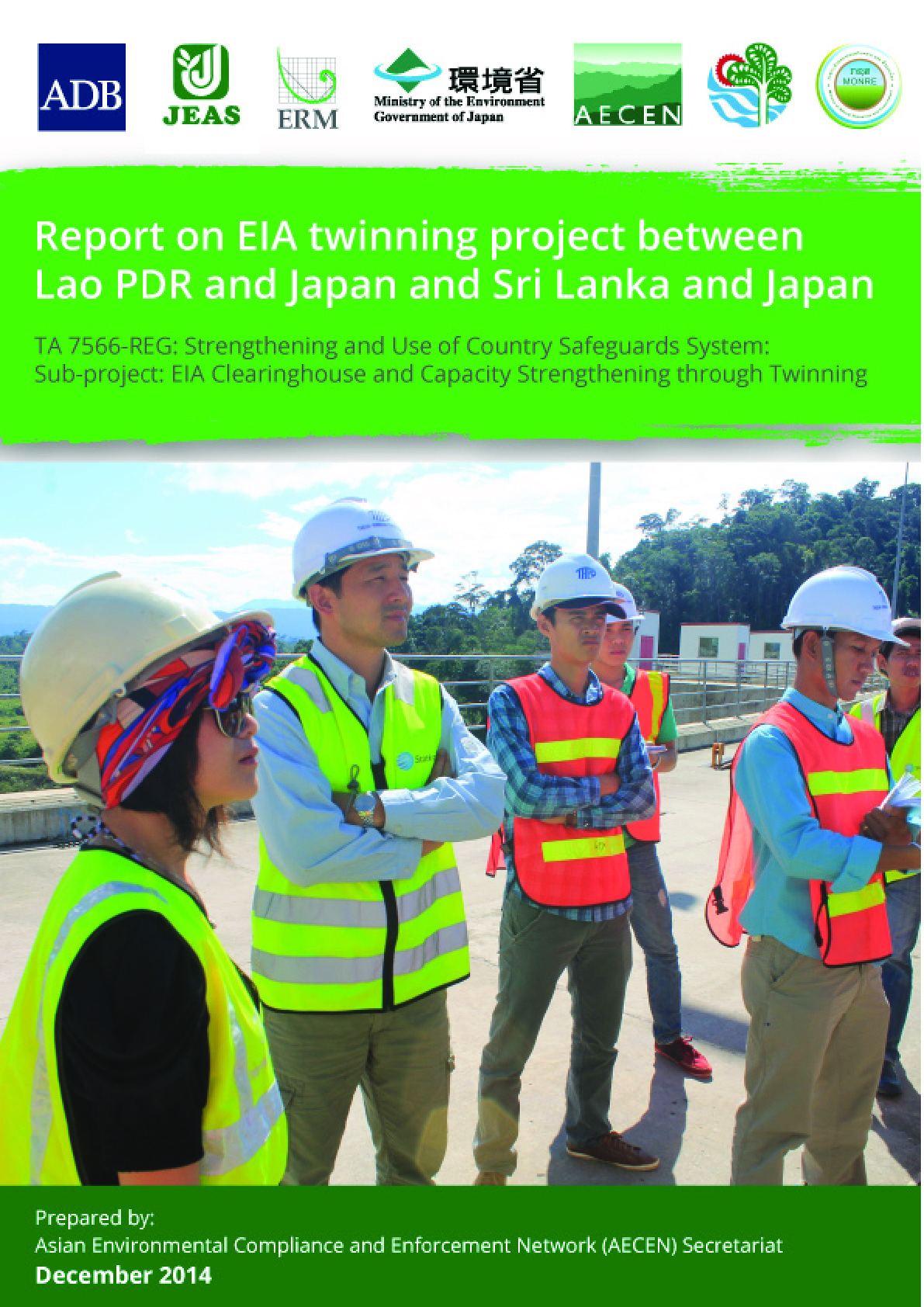
The subproject has two main components: (i) an EIA clearinghouse that aims to facilitate knowledge capture and dissemination of information on international best practices in EIA implementation, and (ii) south-south twinning between Lao PDR and Japan, and Sri Lanka and Japan. Through these components, the subproject aims to improve information...
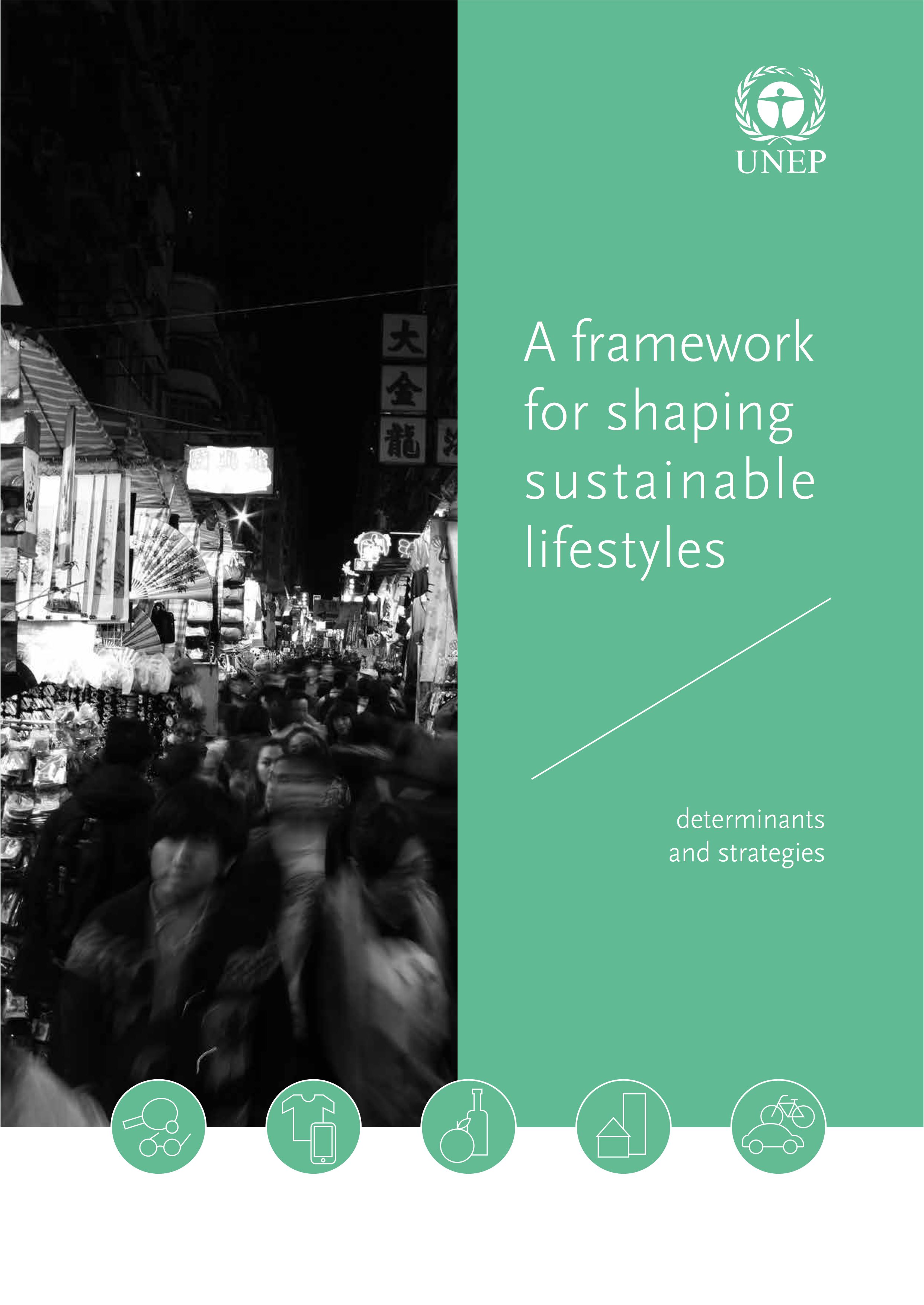
How we choose to live as a society and as individuals – what houses we choose and build, what food we eat and grow, how we spend our spare time, and what type of transport we use – will have an enormous impact on the trajectory of human history. This publication will help policymakers, individuals and other stakeholders understand what a holistic...
In Journal of Cleaner Production
Drawing from papers in this special volume (SV), this introductory paper on absolute reductions argues that the magnitude, scope and urgency of the sustainability challenge require a drastic change in global civilisation, including a radical transformation of the institutional arrangements and socio-technical systems that facilitate the pursuit of...
In Journal of Cleaner Production
Editor:
Arnold
Tukker
Raimund
Bleischwitz
Sylvia
Lorek
Philip
Vergragt
Bas
de Leeuw
Special Issue on: Absolute Reductions in Material Throughput, Energy Use and Emissions
This paper tries to capture the main characteristics of financial components of Intended Nationally Determined Contributions (INDCs), in order to deepen understanding of developing countries’ financial needs. Such analysis will help developed countries and other countries consider provisions of financial support to developing countries. For this...
In Biological Conservation
Supply of non-timber Forest Products (NTFPs) is an important provisioning ecosystem service. It is often argued that forest conservation contributes to poverty alleviation through provisioning of NTFPs to the poor. However, implicit assumptions of the argument that NTFPs are more intensively utilized by poor who lack alternative sub-sistence...
Editor:
OECD
This report updates the 2001 Guidance Manual for Governments on Extended Producer Responsibility (EPR), which provided a broad overview of the key issues, general considerations, and the potential benefits and costs associated with producer responsibility for managing the waste generated by their products put on the market. Since then, EPR policies...
Japan Pavilion's Side Event at COP22
The presentation summaries the findings from recent research on GHG inventory capacity assessment in 37 Asian developing countries. It is produced jointly by IGES and GHGMI through the Coalition on Paris Agreement Capacity Building.
This briefing note surveys early hints and speculations regarding the Trump Administration’s possible climate policies and personnel appointments, and discusses them in the context of the surrounding domestic political context and institutional decision-making processes. A few areas for cautious optimism are identified and obstacles to the...