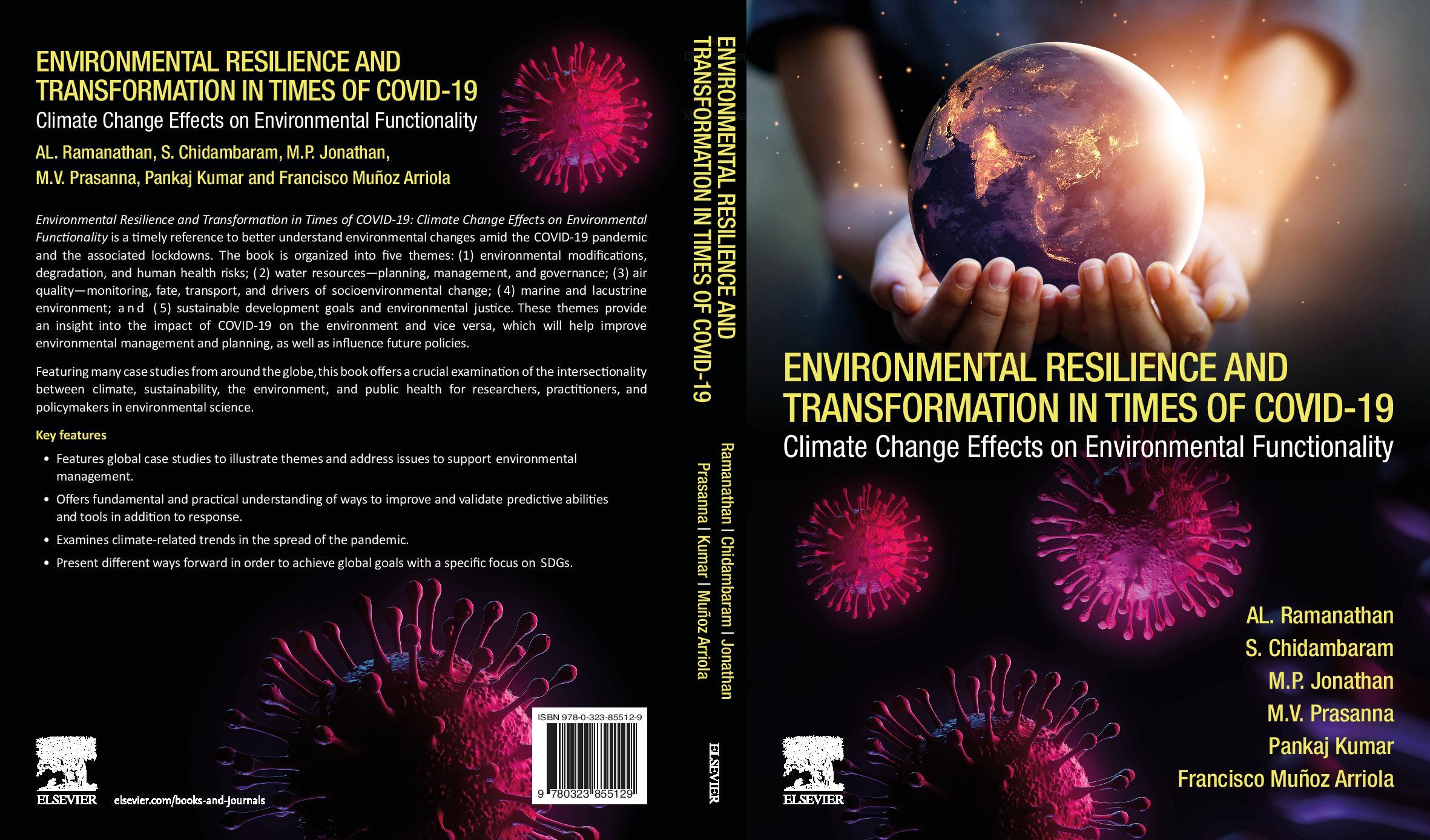
The whole world has been on intermittent lockdowns due to the present COVID-19 pandemic. The industrial deacceleration caused by the pandemic has affected everyone without distinction of wealth, religion, or nationality. Also, the pandemic has evidenced how socio-environmental processes have been altered or accentuated, relieving the environment...
Results 2591 - 2600 of 6467 (Sorted by date)
There has been renewed interest in the challenges and implications of zoonotic diseases due to the recent global COVID-19 pandemic. In the 'Anthropocene', or age dominated by humans, we have seen a devastating impact on intact and wild ecosystems, and an increase in human managed ecosystems. Based on a literature review, this chapter argues that...
In Journal of Industrial Ecology
Decoupling well-being from resource use and its associated environmental impacts through resource efficiency and circular economy has become the mainstream agenda for sustainable development. Resource productivity and material flow indicators have been widely used to evaluate resource decoupling. Several approaches have been introduced in Europe to...
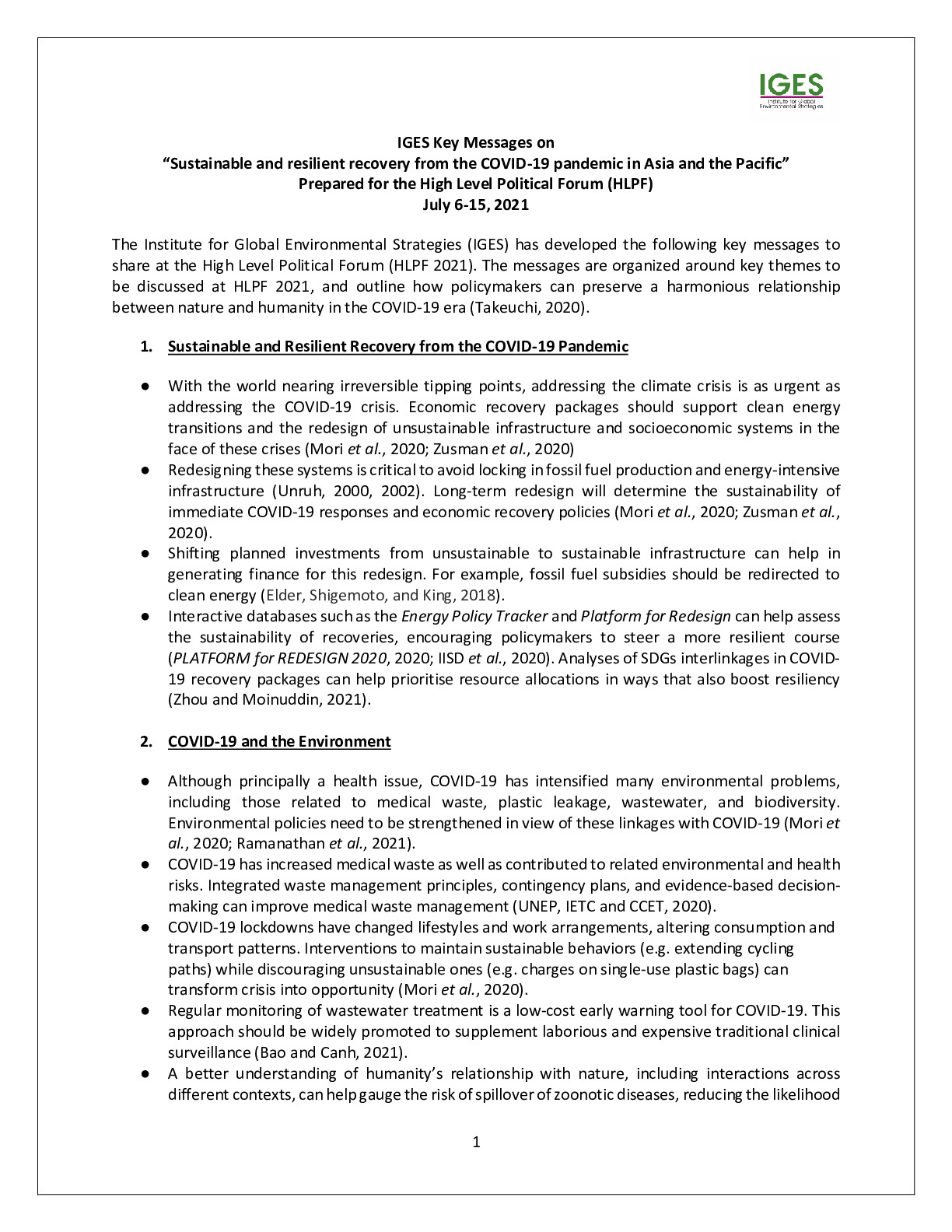
This publication consists of key messages IGES will share at the the High Level Political Forum 2021.
In Nature Climate Change
Mitigation pathways by Integrated Assessment Models (IAMs) describe future emissions that keep global warming below specific temperature limits and are compared with countries’ collective greenhouse gas (GHG) emission reduction pledges. This is needed to assess mitigation progress and inform emission targets under the Paris Agreement. Currently...
In Earth System Science Data
National, regional and global CO 2 emissions and removals from forests were estimated for the period 1990–2020 using as input the country reports of the Global Forest Resources Assessment 2020. The new Food and Agriculture Organization of the United Nations (FAO) estimates, based on a simple carbon stock change approach, update published...
FAO Environment and Natural Resources Management Working Paper
Assessing policy gaps and opportunities in the NDCs: a sectoral methodology for agriculture and land use. FAO – Environment and Natural Resources Management
FAO Environment and Natural Resources Management Working Paper
A common framework for agriculture and land use in the nationally determined contributions
In Sustainability
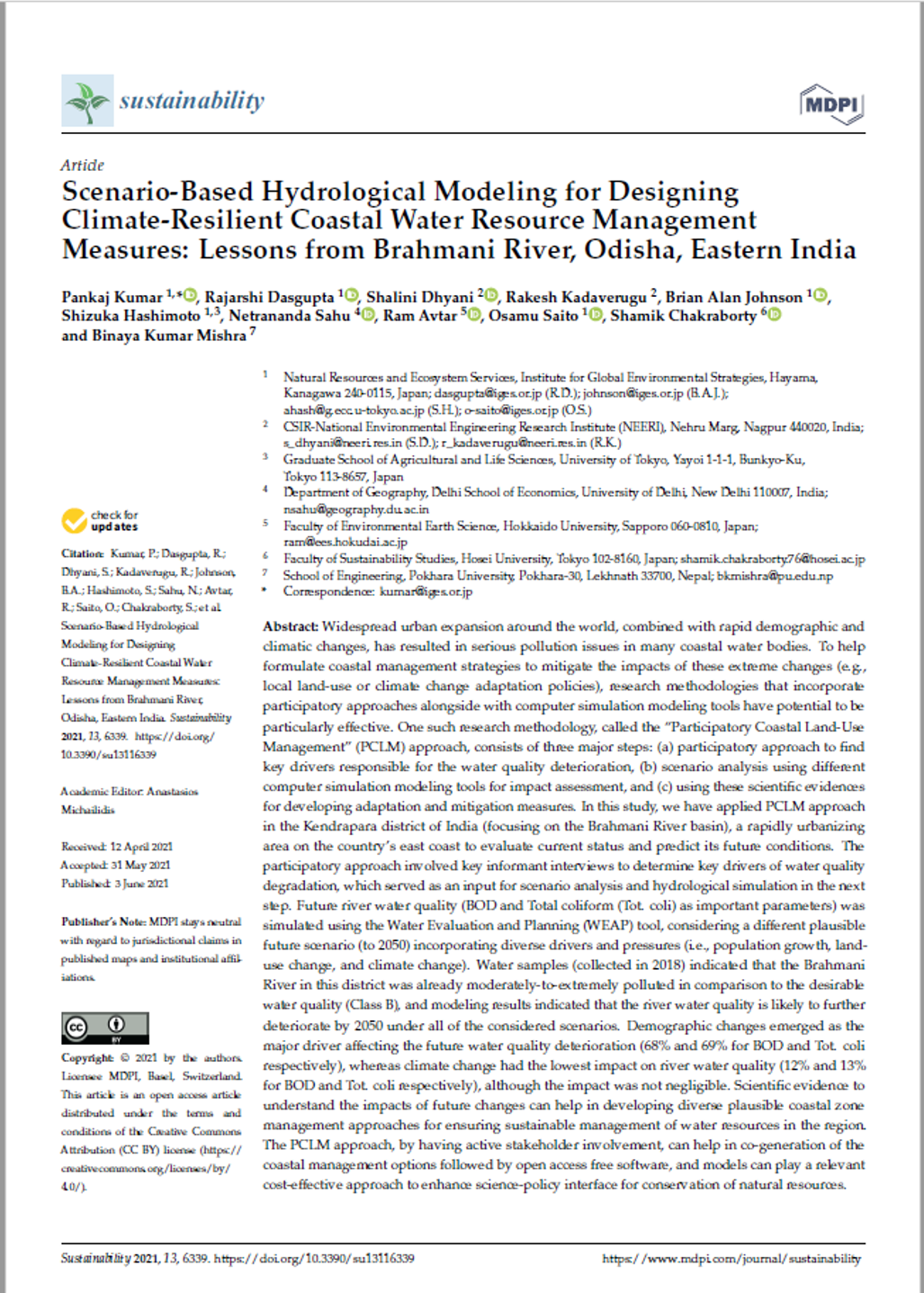
Widespread urban expansion around the world, combined with rapid demographic and climatic changes, has resulted in serious pollution issues in many coastal water bodies. To help formulate coastal management strategies to mitigate the impacts of these extreme changes (e.g., local land-use or climate change adaptation policies), research...
In Sustainability Challenges in Sub-Saharan Africa I: Continental Perspectives and Insights from Western and Central Africa
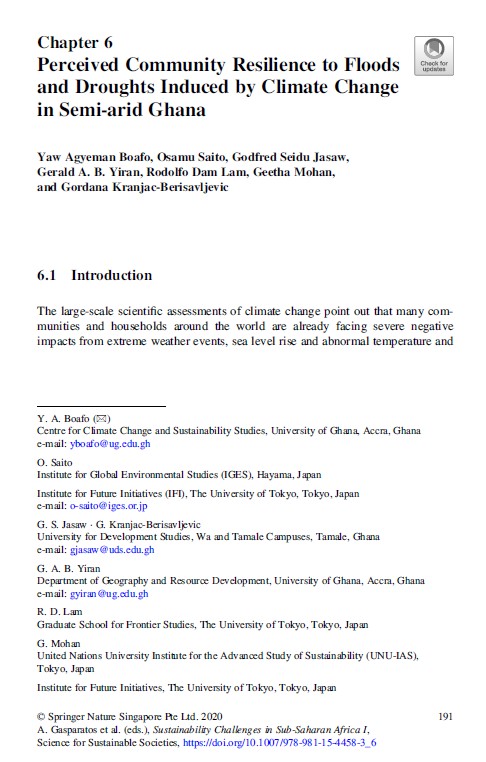
Droughts and floods are some of the major climatic hazards in the semi-arid areas of Sub-Saharan Africa (SSA). Climate change affects the periodicity and severity of such hazards, and eventually the well-being of many rural communities in the region, including semi-arid Ghana. Enhancing the resilience of local communities to droughts and floods...