

Director of CCET
Research Topics & Areas of Expertise
Participatory planning, Decentralised/ bottom-up development policies and practices, Sustainable cities, Integrated waste management, 3R (reduce, reuse and recycle) policies and practices, Circular society.
Education
PhD in Management Development, Nihon Fukushi University, Japan (2006)
MSc in Landscape Design, University of Moratuwa, Sri Lanka (1997)
BSc (1st class Hons) in Estate Management and Valuation, University of Sri Jayawardenapura, Sri Lanka (1994)
Results 101 to 110 of 299 (Sorted by date)
Submission to Policy Process
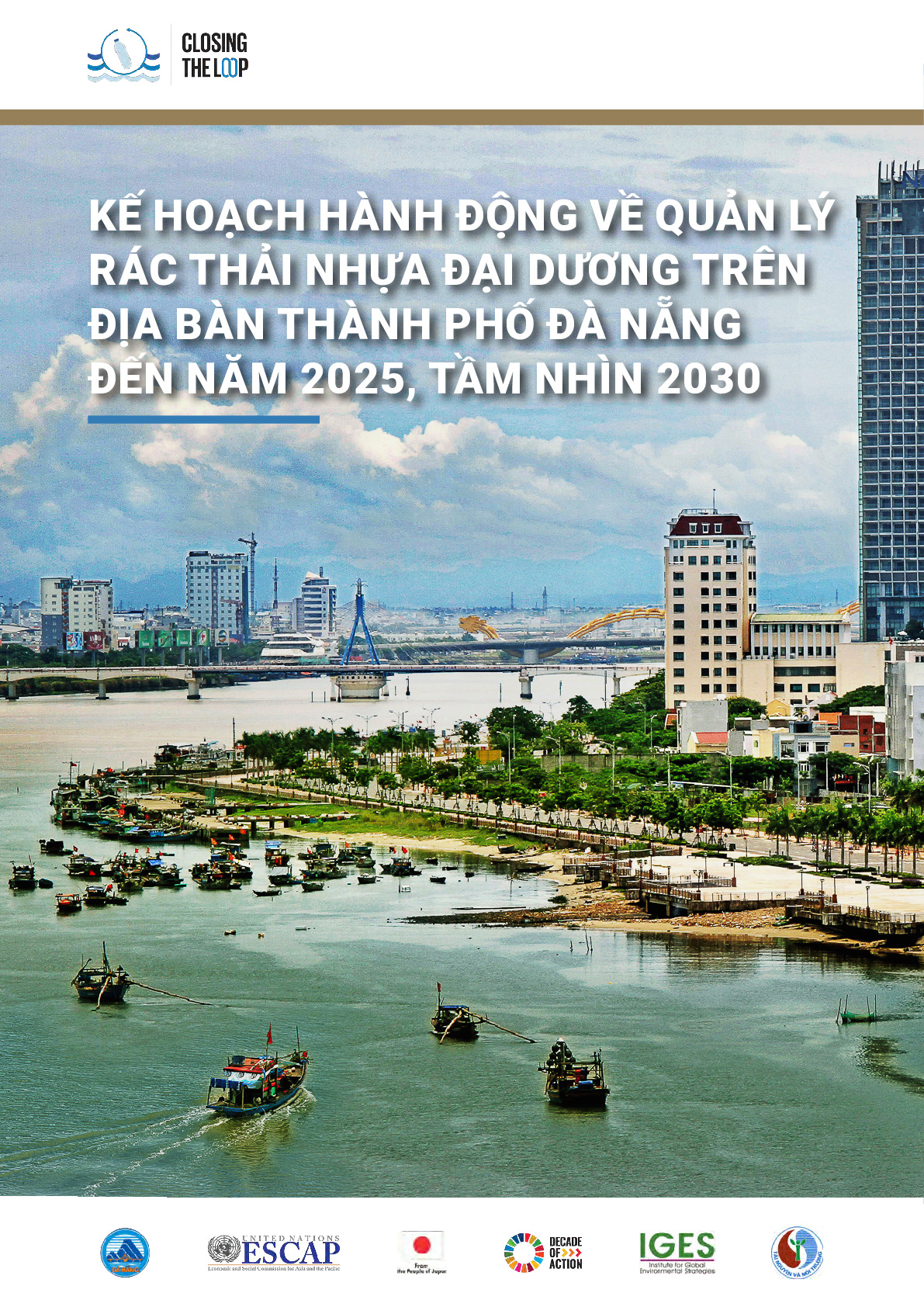
Implementing the Prime Minister’s Decision No. 1746/QĐ-TTg dated December 4th, 2019 on promulgating the National Action Plan on Marine Plastic Debris Management by 2030 and the Prime Minister’s Directive No. 33/CT-TTg dated August 20th, 2020 on strengthening the management, reuse, recycling, treatment and reduction of plastic waste (abbreviated as...
Training or Learning Material
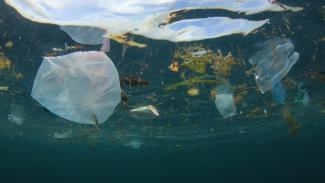
Plastic pollution and marine litter is one of today's most serious emerging issues and without any countermeasures, the amount of plastic waste in the ocean will outweigh fish by 2050, posing a threat to the environment and our way of life. It is said that the COVID-19 pandemic has increased pollution from disposable products, such as plastic face...
Submission to Policy Process
IGESの出版物であるこのキーメッセージは、High Level Political Forum 2021で共有されるものです。
Submission to Policy Process
This publication consists of key messages IGES will share at the the High Level Political Forum 2021.
Submission to Policy Process
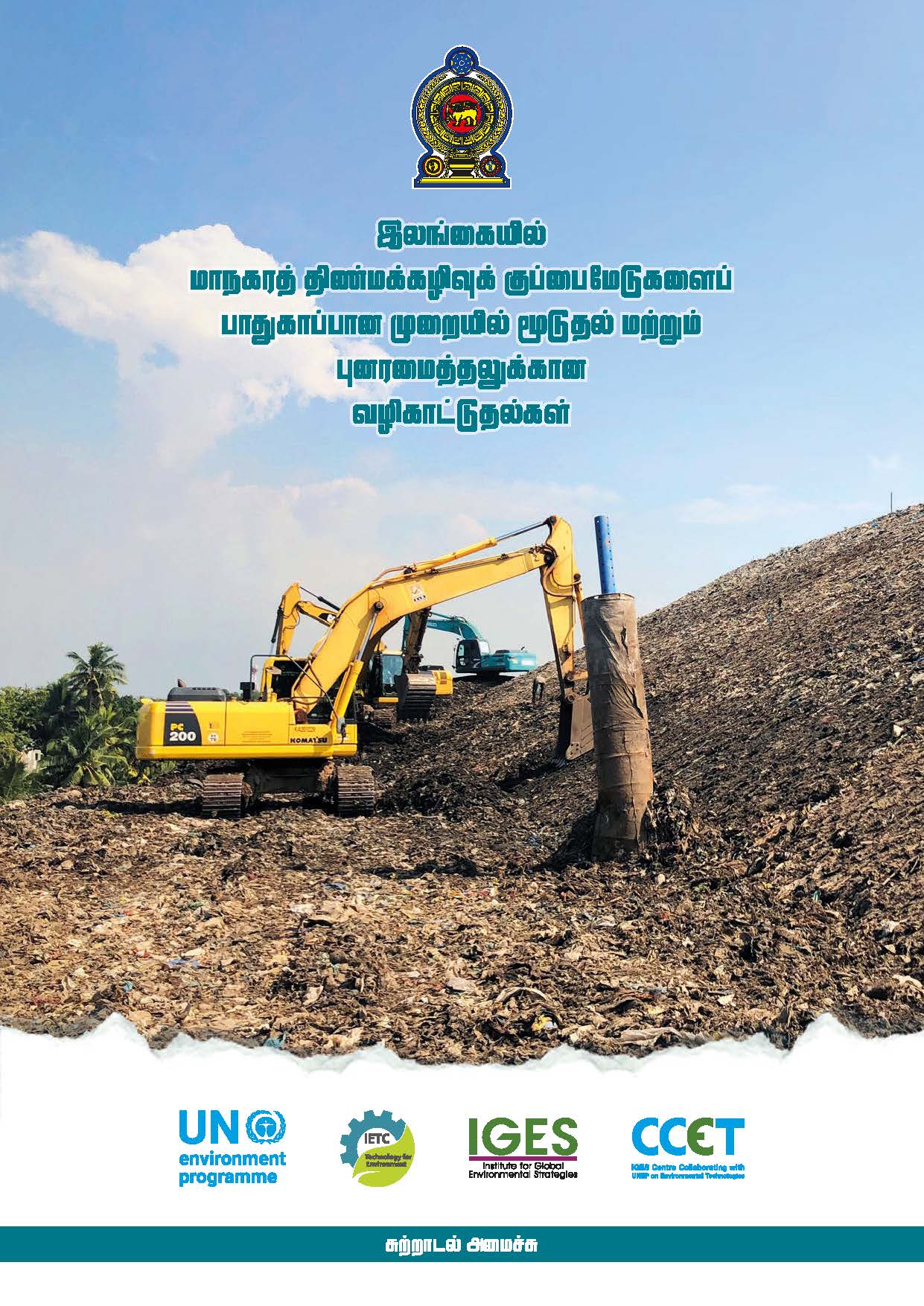
Municipal Solid Waste (MSW) management, particularly the use of open dumps for final disposal has become a global issue. Worldwide, dumpsites are the third largest anthropogenic source of methane, accounting for 11 percent of estimated global methane emissions or 881 million tonnes of CO2 equivalent. The 50 largest dumpsites affect the daily lives...
Policy Report
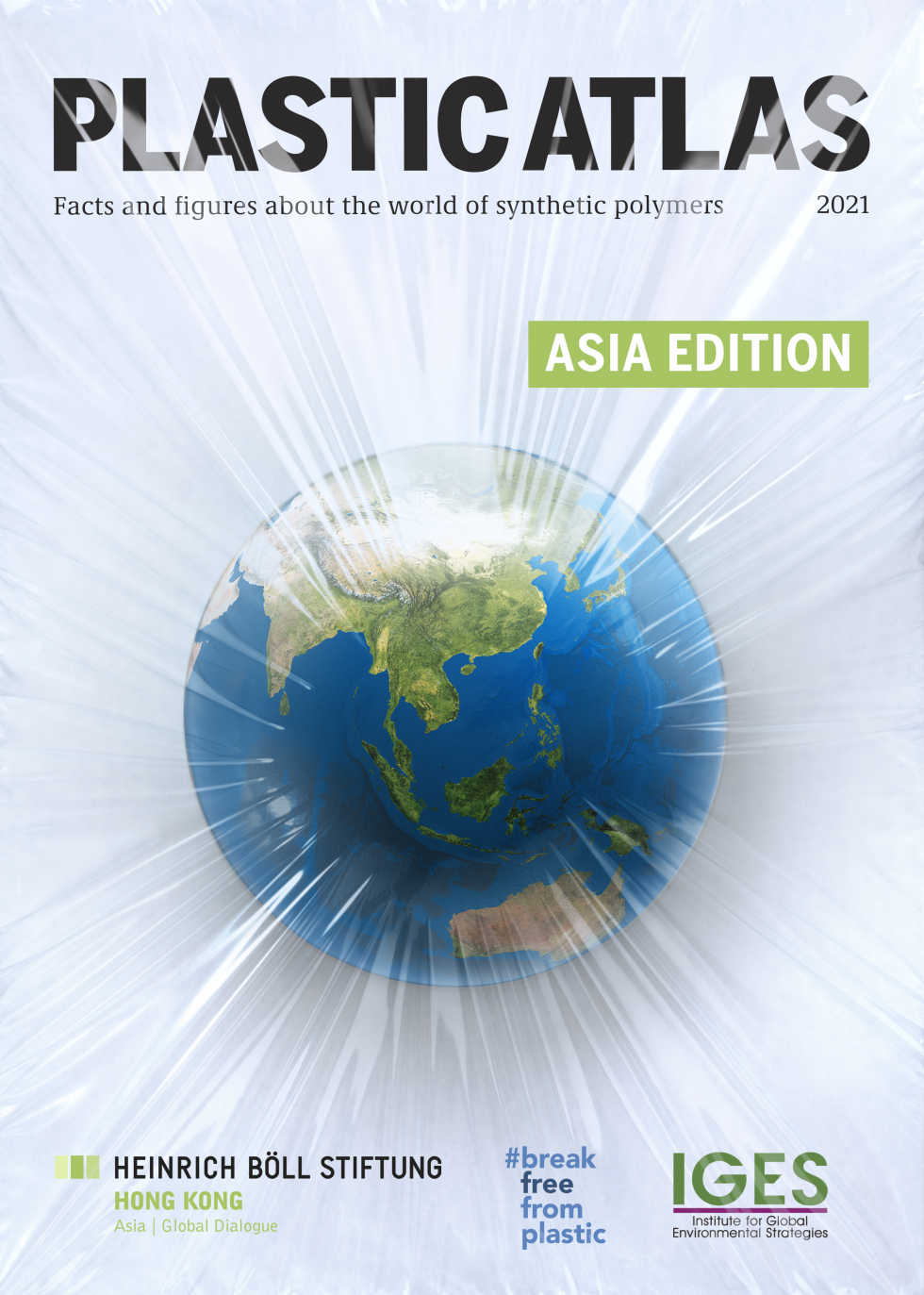
Plastic is ubiquitous: we use it for life-saving medical devices, clothing, toys and cosmetics; we use it in agriculture and industry. But we also know the growing risk of plastic waste in the environment, landfills and the oceans. For example, the amount of plastic that some fulmars accumulate in their stomachs during their lives is equivalent to...
Submission to Policy Process
The Institute for Global Environmental Strategies (IGES) has developed the following key messages to share at the Asia Pacific Forum on Sustainable Development (APFSD 2021). The messages are organized around six APFSD 2021 agenda items, and outline how policymakers can preserve a harmonious relationship between nature and humanity in the COVID-19...
Working Paper
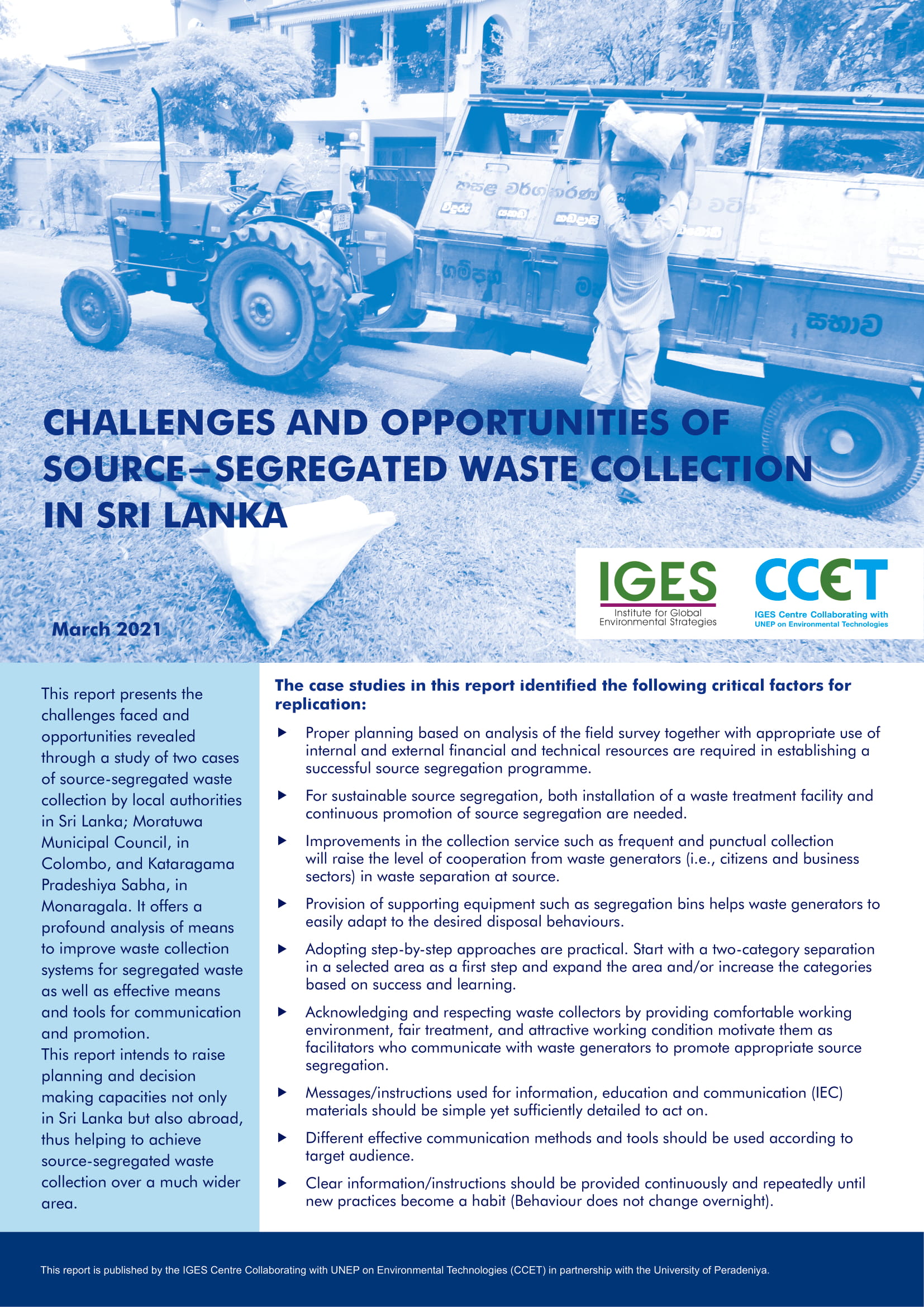
This report presents the challenges faced and opportunities revealed through a study of two cases of source-segregated waste collection by local authorities in Sri Lanka; Moratuwa Municipal Council, in Colombo, and Kataragama Pradeshiya Sabha, in Monaragala for the purpose of raising planning and decision making capacities not only in Sri Lanka but...
Submission to Policy Process
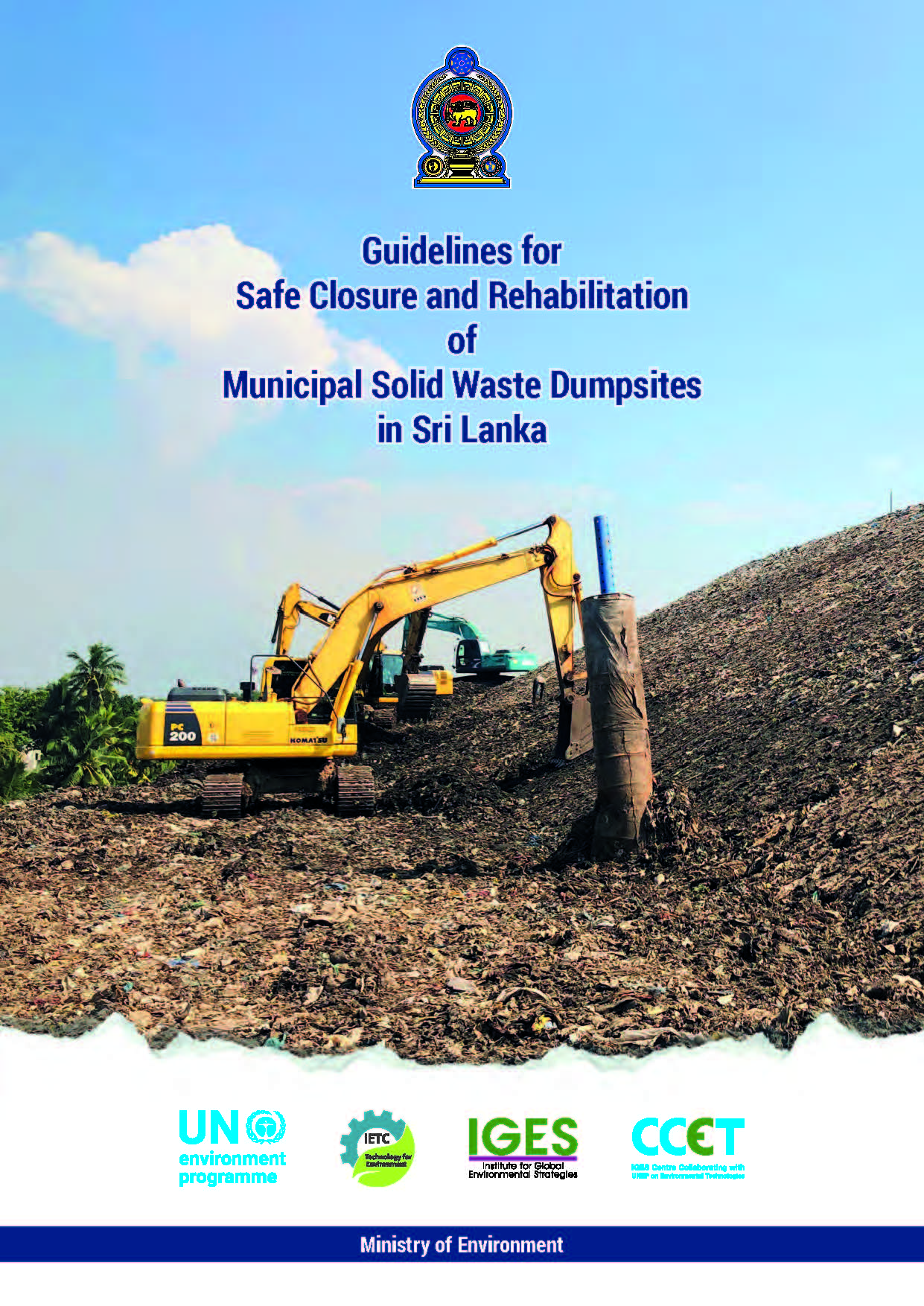
Municipal Solid Waste (MSW) management, particularly final disposal as open dumps has become a global issue. Worldwide, dumpsites are the third largest anthropogenic source of methane, accounting for 11 percent of estimated global methane emissions or 881 million tonnes of CO2 equivalent. The 50 largest dumpsites affect the daily lives of 64...
Training or Learning Material
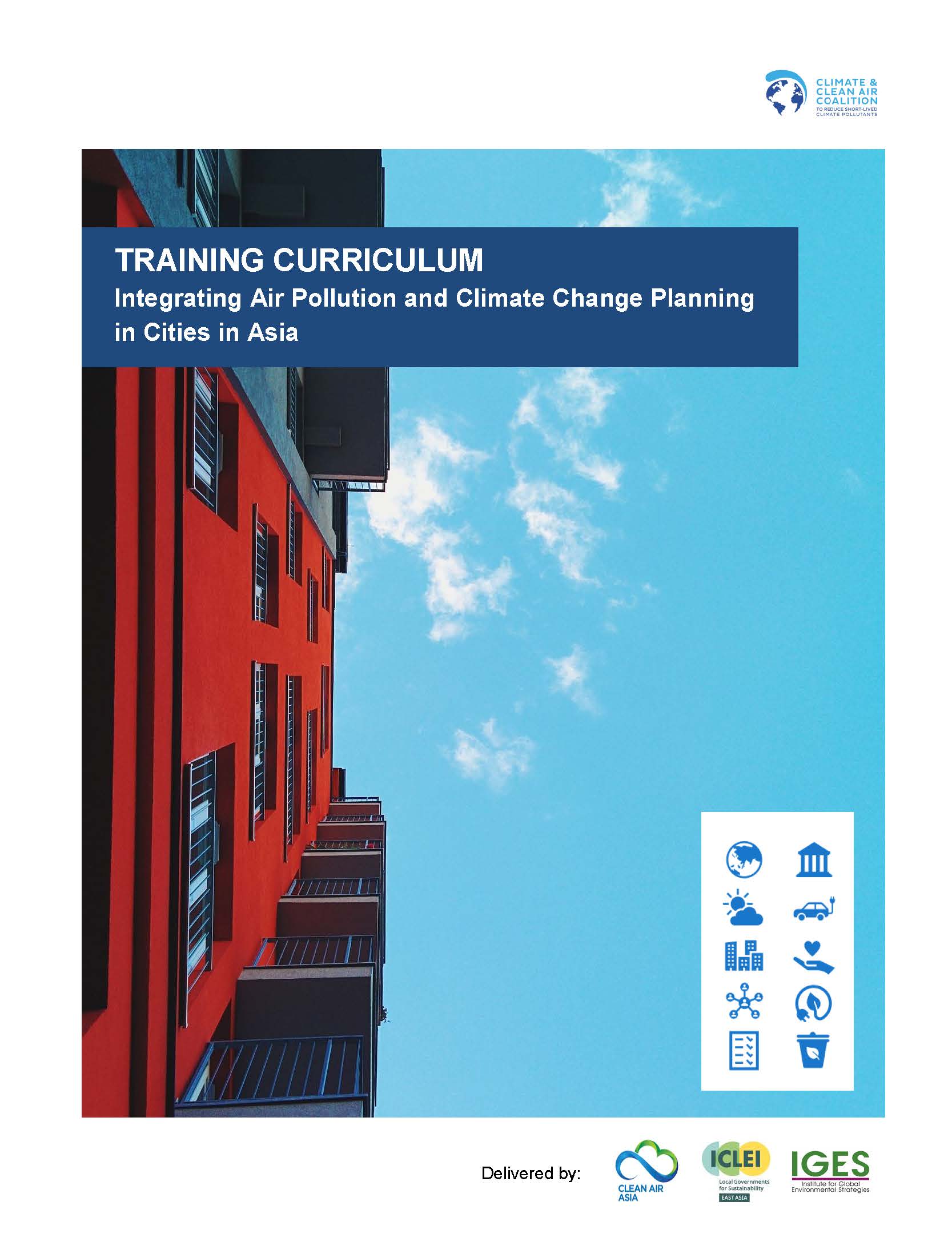
With more than half the world’s population classified as urban, whether the world achieves global climate change goals increasingly rests on cities. Yet, many policymakers at the city level place clean air and public health before mitigating climate change. Fortunately, since emissions contributing to air pollution and climate change often come...
Results 1 to 4 of 4 (Sorted by date)
Project
Updated: March 2025
Emission Quantification Tool (EQT): A Pathway to Climate-Friendly Waste Solutions
The Emission Quantification Tool (EQT) was developed by the Institute for Global Environmental Strategies (IGES) as a science-based tool designed to empower policymakers and practitioners to estimate emissions, plan climate-friendly systems, and...
Project
Updated: March 2026
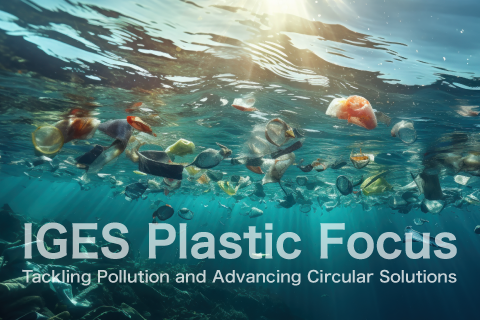
IGES Plastic Focus: Tackling Pollution and Advancing Circular Solutions
This special webpage highlights global developments in addressing plastic pollution, focusing on the growing importance of the circular economy as a solution. It also showcases IGES contributions to this agenda, including its environmental policy...
Project
Updated: January 2024
IGES Activity on COP28
Hosted in Dubai, United Arab Emirates, the 28th meeting of the Conference of the Parties to the United Nations Framework Convention on Climate Change (UNFCCC COP28) will begin on 30 November 2023. Before, during and after COP28, this Special Webpage
Project
Updated: September 2023
G20 (2023) Special webpage
In September, the G20 Summit will convene in New Delhi, India. The world is now facing the simultaneous crises of climate change and biodiversity loss, as well as tackling the consequences of Russia's invasion of Ukraine over one year ago. To deal wi