This discussion paper aims to identify critical factors to encourage the business and finance sectors to act on transitioning to investments for decarbonised and resilient society by recognising the climate risks and opportunities. Chapter 1 defines climate risks and opportunities for the business and finance sectors, referring mainly to...
Results 1641 - 1650 of 6464 (Sorted by date)
Proceedings of the 16th World Lake Conference
Land cover (LC) has a significant impact on rainfall-runoff dynamics of a watershed, so LC maps are often incorporated into hydrological models to simulate how changes in climate or land management will affect water quantity/water quality within the watershed. The accuracy of a LC map can thus affect the accuracy of hydrological modelling results...
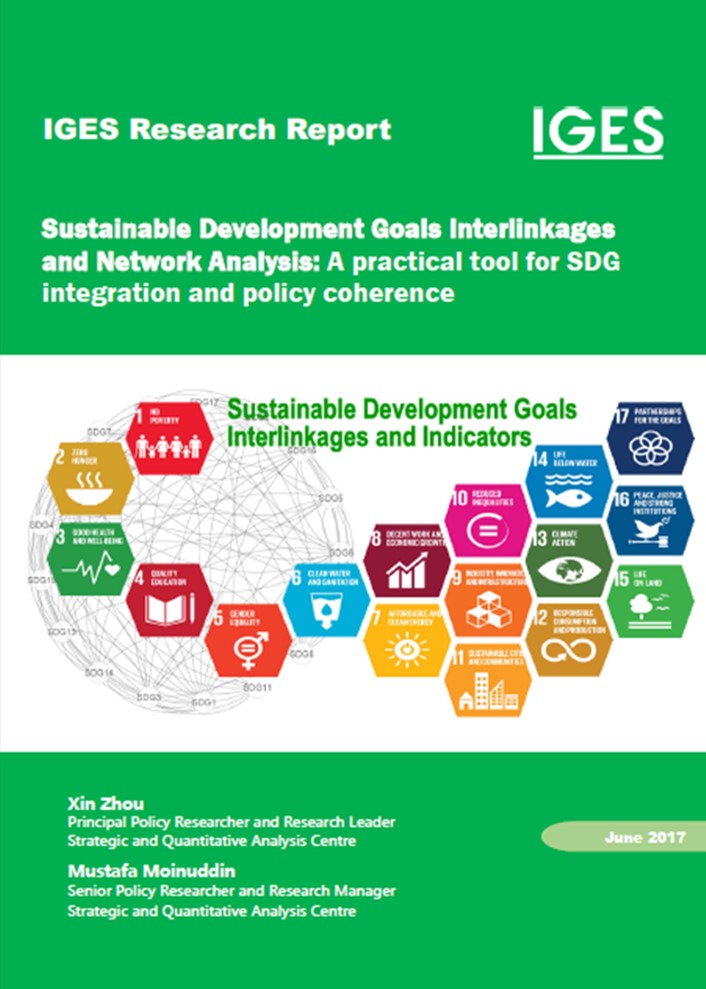
While being broadly framed as 17 separate and diverse elements, Sustainable Development Goals (SDGs) and associated targets inherently interlink with one another making up indivisible parts of sustainability from a systemic perspective. Actions or measures taken for achieving one goal may be mutually reinforcing or contradictory with achieving...
This Briefing Note explores the implications for climate change, green finance, and Sustainable Development Goals (SDGs) of the G20 Summit which was held in Hamburg, Germany, on 7-8 July 2017. On climate, the final encouraging result was a consensus among all countries except for the US to maintain strong support for implementation of the Paris...
The Sustainable Development Goals (SDGs) were designed to be “integrated and indivisible, balanc[ing] the three dimensions of sustainable development." The growing need for integration has given rise to a number of tools and research that can help capture synergies and avoid trade-offs across goals and targets. These include tools that employ...
The Article 6 of the Paris Agreement lays the groundwork for the operation of carbon market after 2020 by providing room for top-down and bottom-up approaches. Linkages between these mechanisms should be promoted to fully enable the potential of market mechanism to contribute to climate mitigation. Although the accounting method toward Nationally...
The Institute for Global Environmental Strategies (IGES) and the United Nations University Institute for the Advanced Study of Sustainability (UNU-IAS) are engaged in various research activities to understand and promote Low Carbon Technology Transfer (LCTT). This background paper provides an overview of findings and insights in two key areas of...
The international commitments in response to climate change have been made globally, particularly at COP21 in Paris in December 2015 and at COP22 in Marrakech in November 2016. All parties are required to submit their Nationally Determined Contribution (NDC) to show their commitment in tackling the threat of climate change impacts. Climate change...
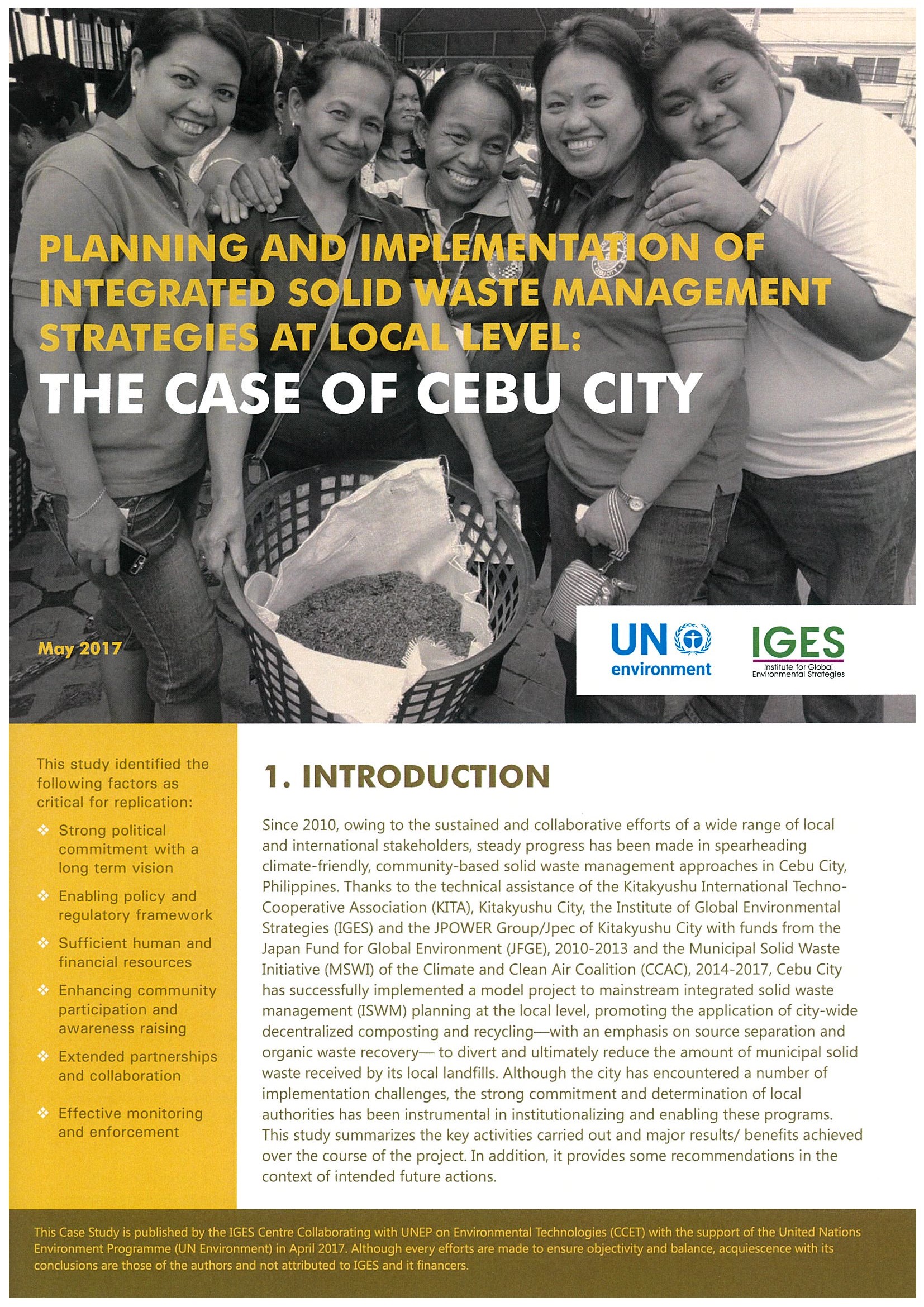
Since 2010, owing to the sustained and collaborative efforts of a wide range of local and international stakeholders, steady progress has been made in spearheading climate-friendly, community-based solid waste management approaches in Cebu City, Philippines. Thanks to the technical assistance of the Kitakyushu International Techno-Cooperative...
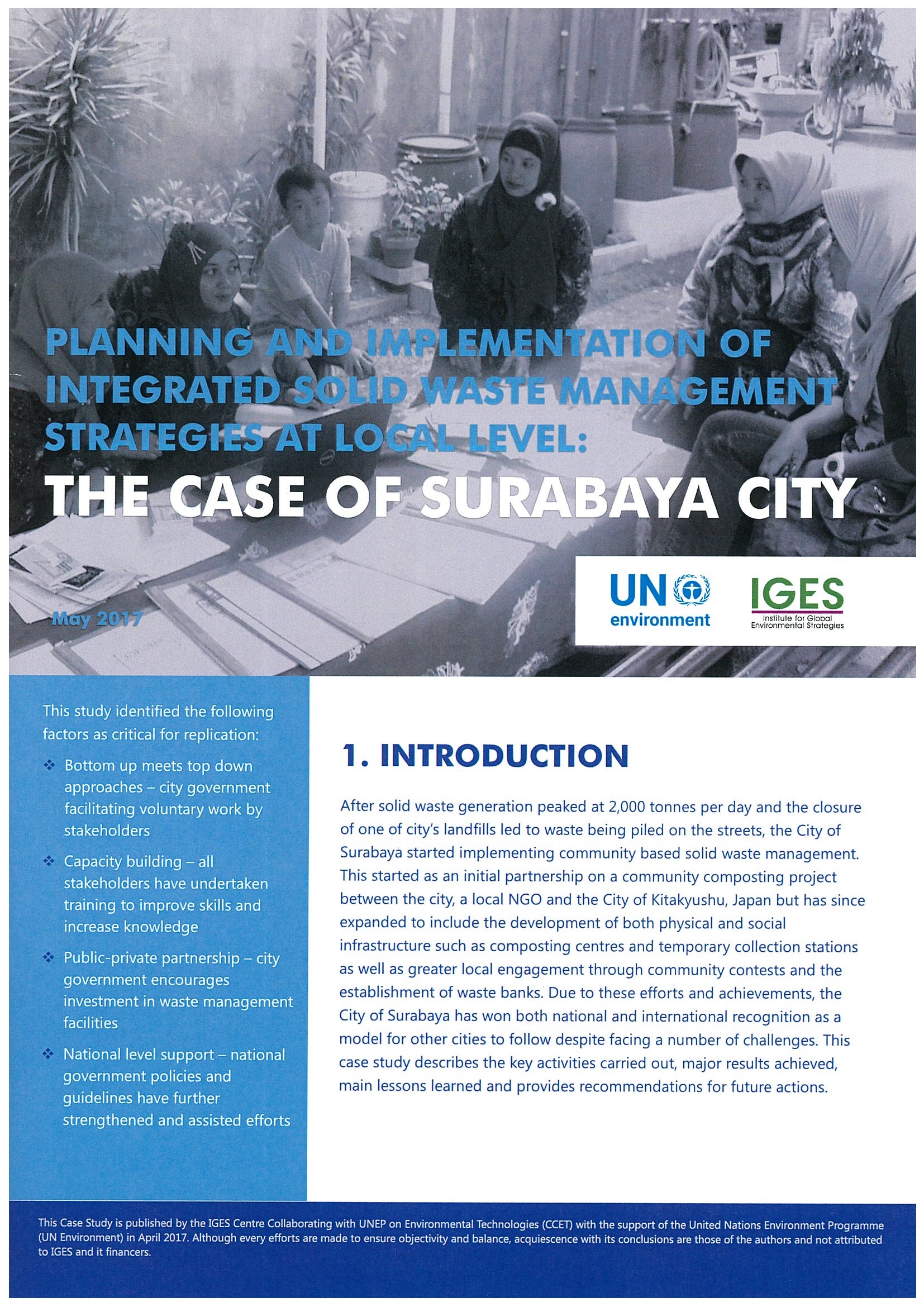
After solid waste generation peaked at 2,000 tonnes per day and the closure of one of city’s landfills led to waste being piled on the streets, the City of Surabaya started implementing community based solid waste management. This started as an initial partnership on a community composting project between the city, a local NGO and the City of...