

Programme Director
Research Topics & Areas of Expertise
3R Policy, Sustainable Resource Management, Extended Producer Responsibility (EPR), transnational environmental issues, Circular Economy, Sustainable Consumption and Production, Zero Emissions policy, marine plastic issues, industry and environmental issues, self-regulation, Ecological Modernization.
Education
- Dphil in International Relations, Centre for Culture, Development and Environment, University of Sussex, UK
- M.A. in Political Science, Graduate School of Political Science, Waseda University
- B.A. in Political Science, School of Political Science and Economics, Waseda University
早稲田大学政治経済学部政治学科(政治学士)卒業
早稲田大学大学院政治学研究科(政治学修士)修了
英国サセックス大学文化・開発・環境研究所(国際関係論博士)修了
Results 201 to 210 of 440 (Sorted by date)
Peer-reviewed Article

In 廃棄物資源循環学会誌
2001年に,OECD (経済開発協力機構) が拡大生産者責任 (EPR) 政策の政府向けガイダンスマニュアルを発表して以来,EPRの原則に基づいた使用済み製品の引き取り・リサイクル政策は,導入国数,政策の対象とする製品ともに拡充してきている。不適切な廃棄物管理やインフォーマルなリサイクル活動による環境負荷や社会問題に直面してきた途上国では,EPR政策の導入がある種の希望をもってみられてきた。本論文では,アジア新興国・途上国でのEPR政策の展開を紹介し,途上国でEPR政策を導入する上での課題を整理する。その上で,OECD政策ガイダンス改訂版はこれらの途上国の抱える課題にどう応えているかを論じる。最後に,途上国のリサイクル政策へのEPR適用の経験から何が学べるのかについて,論じる。
Book
廃棄物資源循環学会誌
Editor:
2001 年に OECD が『Extended Producer Responsibility:A Guidance Manual for Governments』(以下,ガイダンスマニュアル) を発表して 15 年が経過した。その間,拡大生産者責任 (EPR) 制度の数は大きく増加しており,2013 年の OECD の調査では,確認できた384 の EPR 政策のうち 70 % 以上が 2001 年以降に導入されたと報告されている。384 の政策の約 90 % は先進国での導入 (州単位を含む) であるが,近年は中所得国にも広がってきている。この間,EPR に係る研究・経験が蓄積される一方,新たな課題も浮上してきた。 EU のプロジェクトにおいても EPR 政策がレビューされ...
Policy Report
This publication is intended to provide an expert-based assessment of the regional progress of 3R policy implementation in Malaysia.
Book Chapter
In SDGsと環境教育:地球資源制約の視座と持続可能な開発目標のための学び
持続可能な生産と消費(SCP)は、「消費と生産システムが環境に及ぼすネガティブな影響を最小化しつつ、すべての人にとっての生活の質の向上を目指す包括的なアプローチ」と定義され、非常に包括的で広範な政策概念である。SCPに関連して、2015年に「持続可能な開発目標(SDGs)」とパリ合意と言う2つの国際合意がなされたことは注目すべきである。いずれの場合も、無限の資源、環境容量を前提としない社会経済へと舵取りすることについて国際合意したことにその画期性がある。この2つの政策的文脈の中で、生産と消費のあり方を変えることで社会経済の仕組みをより持続可能にすること(SCP)が注目されている。SCPを実現するための政策を検討する上では、製品とサービスのライフサイクル、ライフスタイルの変化...
Briefing Note
On 5-8 September 2017, the Asia-Pacific Ministerial Summit on the Environment (the Summit) was convened in Bangkok, Thailand. This briefing note draws upon the observations of researchers from the Institute of Global Environmental Strategies (IGES) to underline key points involving the SDGs, air pollution, and resource efficiency that stood out...
Presentation
13th ASIA PACIFIC ROUNDTABLE FOR SUSTAINABLE CONSUMPTION AND PRODUCTION (APRSCP)
At 13th APRSCP meeting, S-16 research group organized a round table session titled "SCP Challenges and Opportunities from Four Perspectives – Resources, Lifecycle, Lifestyle, Sufficiency". There, Hotta presented how SCP policy design will be changed systematically in the era of SDGs and Paris Agreement referring to Sufficiency Approach.
Presentation
環境経済・政策学会 2017 年大会
2010年代に入って、現在の環境政策のベースとなっている効率性改善を重視するアプローチから、資源利用・エネルギー利用の総量抑制を意識した充足性アプローチを重視する動きが出てきている。2015年には持続可能な開発目標(SDGs)とパリ協定が採択され、いずれも無限の資源、環境容量を前提としない社会経済を目指すものである。本研究における充足性アプローチは、従来の効率性アプローチに対して、資源・環境制約を念頭にして、消費・ニーズのあり方の転換も視野に入れてエネルギー・資源消費総量を抑制するアプローチと定義する。従来、環境政策はその政策手法(規制的、経済的、自主的、情報的手法)により検討が行われてきたが、SCPが取り扱う領域が汚染対策や環境効率の改善から...
Non Peer-reviewed Article
In 廃棄物資源循環学会誌
全文 「日本では、実感はまだそれほど大きなものではないかもしれないが、2015年に合意されたパリ協定と持続可能な開発目標(SDGs)は、画期的な国際合意であったと言えるだろう。2015年は、1992年と並んで、持続可能性を政策目標の中心に据えるように、世界が大きく舵を取った年として記憶されることとなると考える。 本書は、「持続可能な開発目標」についての国際交渉の最中の2013年に開始され、合意が行われた2015年まで3年間実施された『持続可能な開発目標とガバナンスに関する総合研究(S-11)』の成果をまとめたものである。第1部ではSDGsの前進であるミレニアム開発目標との比較を行うと同時に、進捗を測る上での新たな統合的評価の必要性を説いている。第2部では...
Submission to Policy Process
9th meeting of Working Party on Resource Productivity and Waste (WPRPW), OECD
During the 9th WPRPW meeting of OECD, food waste prevention and good practices in assessing the related policies were discussed in a roundtable session. From Japan, Hotta from IGES shared information on Japan's initiative on food waste prevention in Japan and submitted a short report to WPRPW process.
Presentation
The 9th biennial conference of the International Society for Industrial Ecology (ISIE) and the 25th annual conference of the International Symposium on Sustainable Systems and Technology (ISSST)
Policy intervention towards sustainable consumption is thus important in shifting the demand side/civil sector towards a sustainable socio-techno regime. i.e. altering provision systems and infrastructure. This is a shift from a technically oriented efficiency approach to a sufficiency approach. This shift in thinking is highlighted in the...
Results 1 to 1 of 1 (Sorted by date)
Project
Updated: March 2026
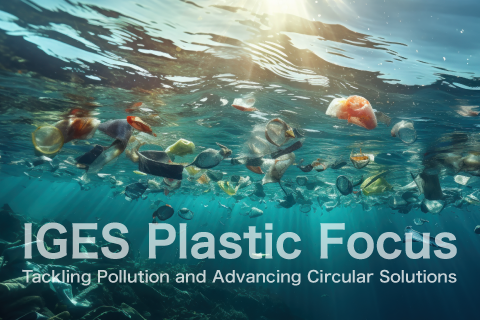
IGES Plastic Focus: Tackling Pollution and Advancing Circular Solutions
This special webpage highlights global developments in addressing plastic pollution, focusing on the growing importance of the circular economy as a solution. It also showcases IGES contributions to this agenda, including its environmental policy...