Search

Results 3561 - 3570 of 6469 (Sorted by date)
Presentation
UNU International Course on Global Change and Sustainability
The lecture was divided into three sections. The first section provides an overview of adaptation, basic principles, and the need for adaptation. The second section looks at the means of mainstreaming climate change adaptation concerns in disaster risk reduction by using the concept of redundancy and transforming local level functionaries into...
Peer-reviewed Article
In Energy Policy
An online social survey was conducted to reveal household electricity-saving behaviour and its relationship with participation in social group activities, as well as face-to-face and online social interactions, i.e. information sources used and information dissemination through personal networks, in a disaster-affected region of Kanagawa, Japan...
Peer-reviewed Article
In 20th Conference of the International Input-Output Association
Author:
Hiroaki Shirakawa
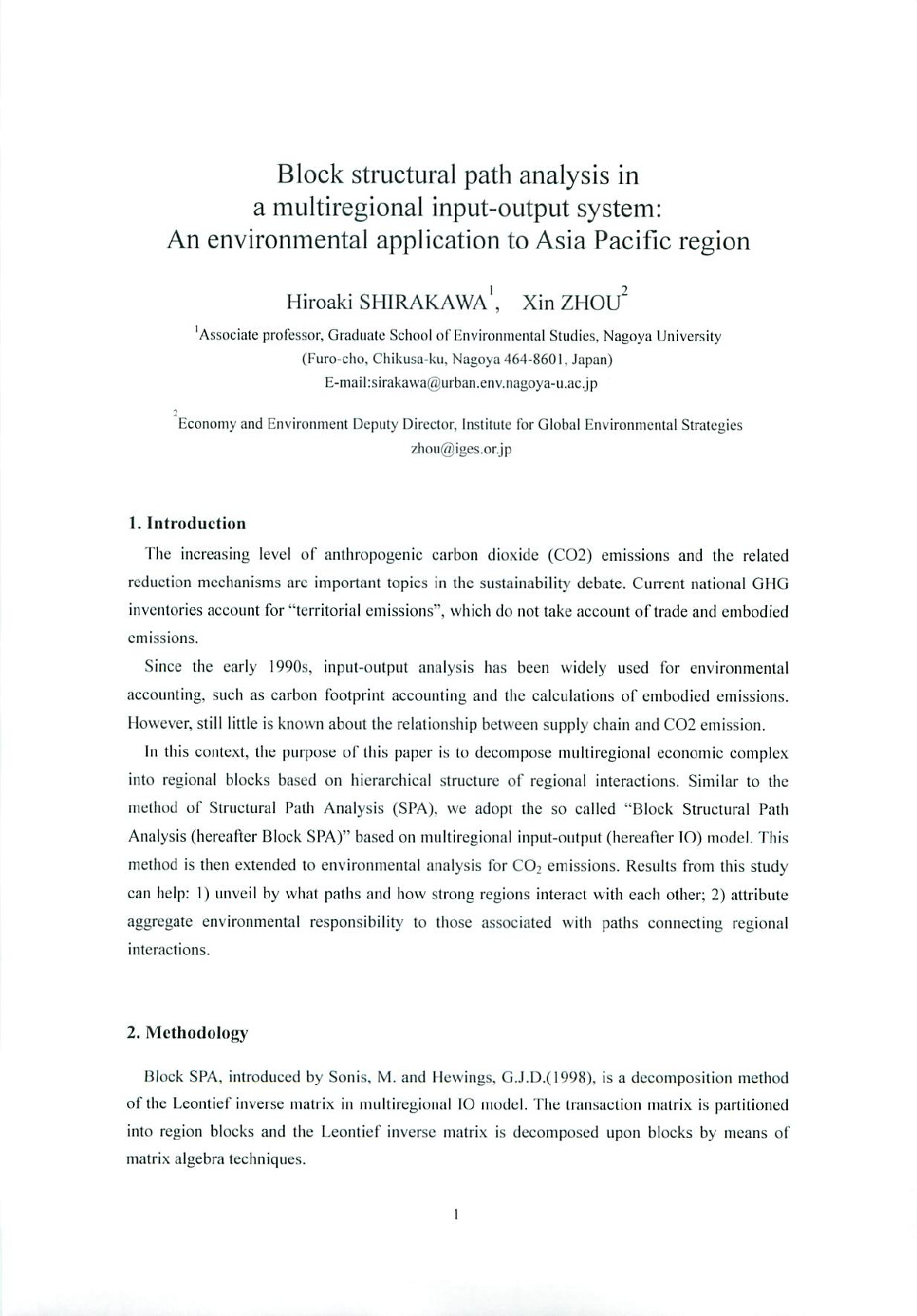
Growing regional inequality and environmental degradation associated with interregional trade in Asia Pacific Area has been considered one of the major barriers in achieving sustainable development. Decomposition of economic structure at the regional level can help analyze these problems. This study applies Block Structural Path Analysis to the...
Presentation
20th Conference of the International Input-Output Association
Author:
Hiroaki Shirakawa
Growing regional inequality and environmental degradation associated with interregional trade in Asia Pacific Area has been considered one of the major barriers in achieving sustainable development. Decomposition of economic structure at the regional level can help analyze these problems. This study applies Block Structural Path Analysis to the...
Presentation
20th Conference of the International Input-Output Association
Author:
Zhao Zhao
Minjun Shi
In 2005, the Chinese government set compulsory targets for energy-saving. The national target is a reduction of 20 percent energy consumption per unit of GDP by 2010 based on the level in 2005. The national target is disaggregated into provincial targets which range from 12 - 30 percent of reduction. This policy will have great influences on not...
Presentation
The 9th NIES Workshop on E-waste
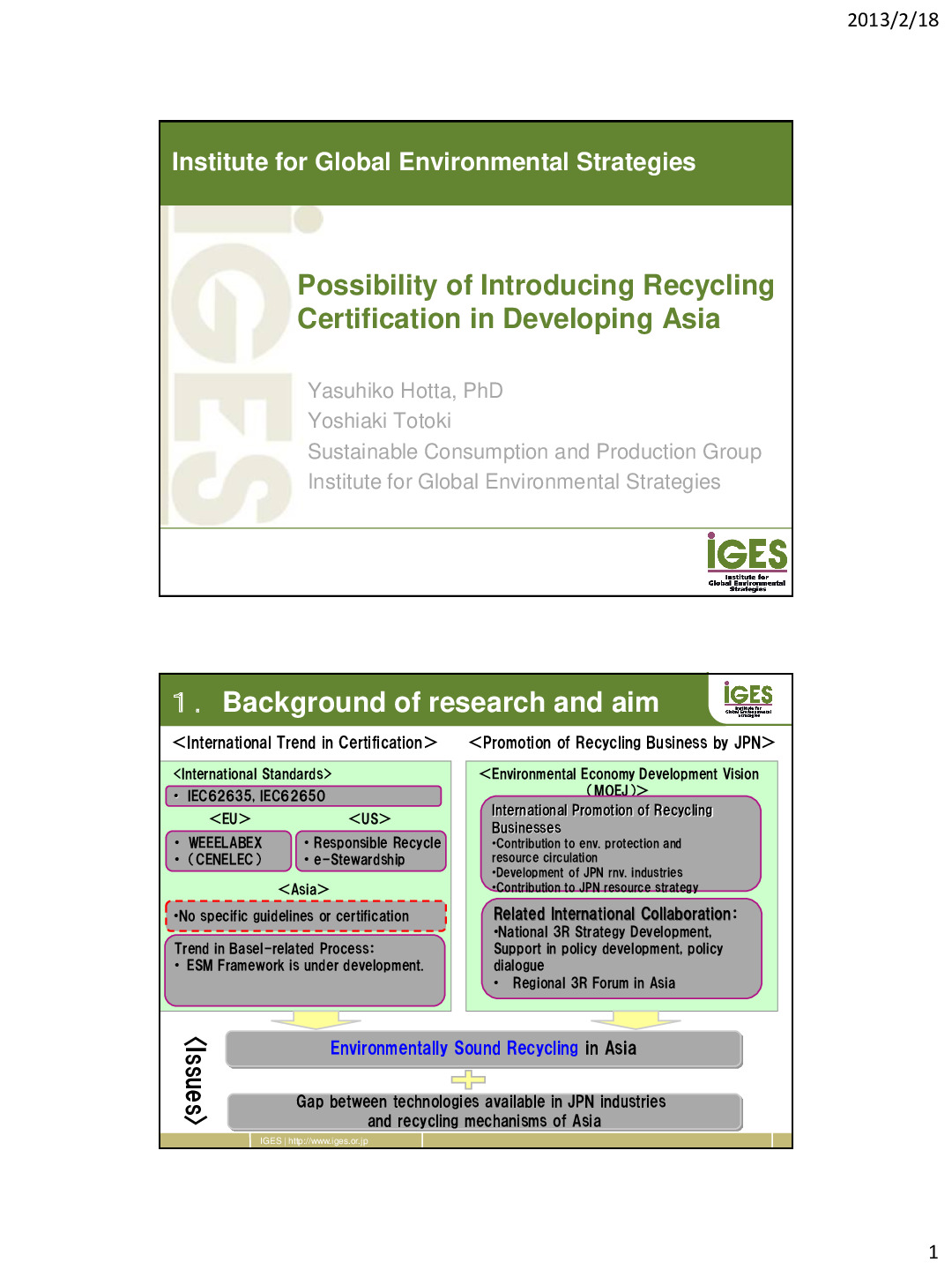
As resource demand grows in line with the rapid economic growth of developing countries in Asia in recent years, so too has the transboundary movement of recyclables in Asia. At the same time, Japanese government is trying to promote recycling and waste management business development in developing Asia. In response to the challenges faced by...