
Results 71 - 80 of 5560 (Sorted by date)
Commissioned Report

本研修は,2025 年1 月に実施したエジプトがパリ協定の下で強化された透明性枠組み「enhanced transparency framework (ETF)」に沿った国内システムを確立することを企図した国別研修の続編として,実施された.気候変動はエジプトを含む全世界の脅威であり,エジプトも加盟する気候変動枠組条約の下,2016 年に発効したパリ協定では,全ての国が「国が決定する貢献」(Nationally Determined Contributions; NDC)を作成し,自身が表明した温室効果ガス(GHGs)削減・抑制目標に沿って取組を進める必要がある.また,その進捗・結果をモニタリングし,2 年毎に透明性報告書(Biennial Transparency Report; BTR...
Discussion Paper
This discussion paper examines whether the securitisation of climate change can accelerate the transition to net-zero emissions in the Asia-Pacific region. It argues that framing climate change and energy transition as national security concerns can elevate policy urgency and mobilise resources to address systemic risks, including energy insecurity...
Keywords:
Peer-reviewed Article
In Human Ecology
Through a study of Ra Province (northeast Viti Levu Island, Fiji) involving both archival research and community engagement, we highlighted a long history of Indigenous population mobility. Many coastal settlements have mostly undocumented histories of relocating inland due to shoreline retreat and land loss over recent decades. Studies of...
Peer-reviewed Article
In Marine Pollution Bulletin
This research focuses on the global issue of heavy metal (HM) contamination in coastal systems and provides the first baseline investigation of the surface sediments in Tiruchendur Taluk, southern Thoothukudi, while evaluating potential sources and associated ecological risks. A total of 25 sediment samples were analyzed for particle size...
Peer-reviewed Article
In Habitat International
In climate-vulnerable coastal regions, left-behind family members often choose to stay despite having migration pathways through departed household members, challenging conventional theories of family reunification. This study examines the influence of psychosocial integration on non-migration aspirations among 411 left-behind households in coastal...
Book Chapter
In Decarbonization Policy Engineering:Energy Transition and Regional Cooperation in East Asia
This chapter explores a decent climate policy in Japan against the background of the unfortunate current situation resulting from Japan’s unwise climate and energy policies to date. Japan experienced serious industrial pollution during its period of rapid economic growth from the 1960s onward, as exemplified by Minamata disease and Yokkaichi air...
Policy Report
What a Waste 3.0 is the third edition of the World Bank Group’s What a Waste series, following the 2012 and 2018 publications. It updates and expands these earlier publications and provides a global reference dataset on municipal solid waste in the context of a transition toward circularity, drawing on the most recent publicly accessible data from...
Peer-reviewed Article
In Next Energy
As economies move toward carbon neutrality, hydrogen produced from zero-carbon electricity and synthetic fuels derived from captured carbon dioxide (CO₂) and such hydrogen—hereafter referred to as carbon capture and utilisation (CCU) fuels—are expected to play a complementary role to electrification, particularly in hard-to-abate sectors. Despite...
Training or Learning Material
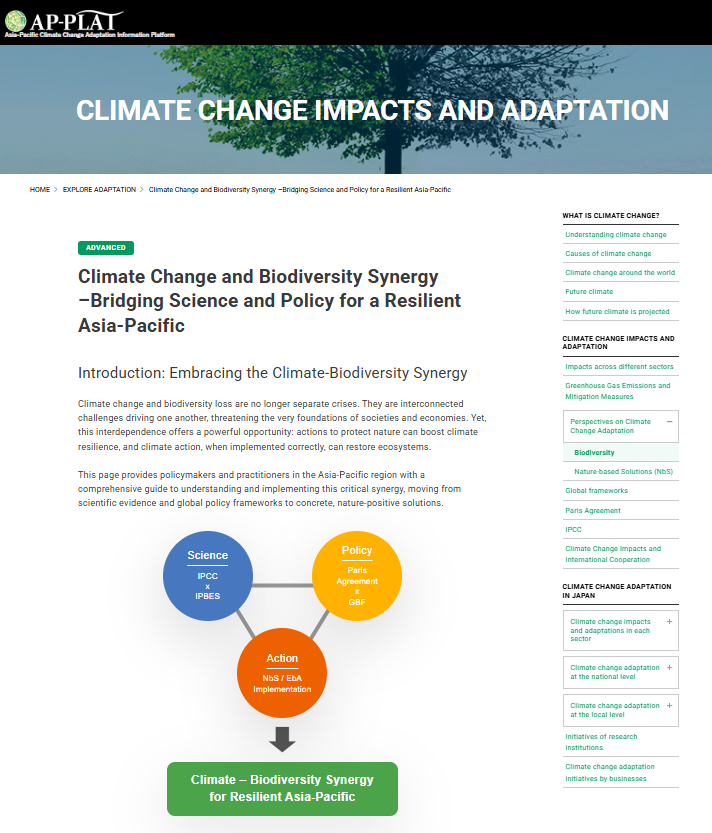
Embracing the Climate-Biodiversity Synergy Climate change and biodiversity loss are no longer separate crises. They are interconnected challenges driving one another, threatening the very foundations of societies and economies. Yet, this interdependence offers a powerful opportunity: actions to protect nature can boost climate resilience, and...
Keywords:
Policy Report
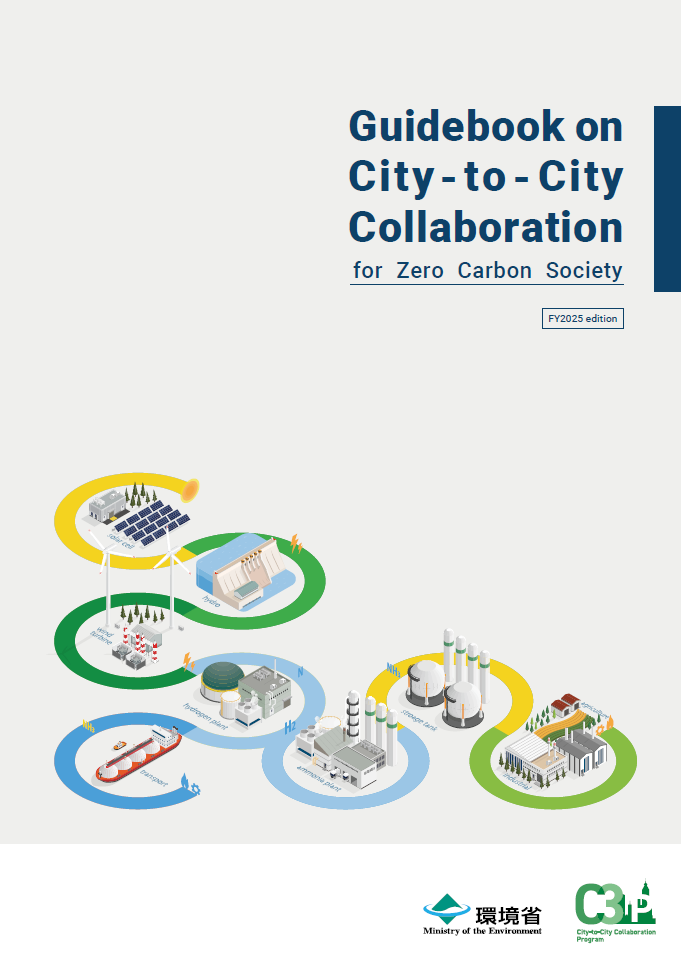
This is a guidebook for the "City-to-City Collaboration for Zero Carbon Society" program (C3P) developed by the Ministry of the Environment of Japan since fiscal 2013. This publication is intended for potential stakeholders of the C3P, including local governments and private companies in Japan and abroad.