Results 21 - 30 of 5593 (Sorted by date)
Report Chapter
In Asia-Pacific Synergies Report: Advancing Synergistic Solutions to the Triple Planetary Crisis and the SDGs
Author:
Kejun Jiang
Soumya Swaminathan
Roubitha David
Aneta Nikolova
From a planetary-health perspective, the transgression of planetary boundaries through climate change, biodiversity loss and pollution is shrinking the safe operating space for humanity. The degradation of air, water, soil and ecosystems undermines nutrition, disease control and resilience. The planetary-health framing therefore highlights the need...
Report Chapter
In Asia-Pacific Synergies Report: Advancing Synergistic Solutions to the Triple Planetary Crisis and the SDGs
Author:
Lorenzo Santucci
Sanjeevani D. Singh
The Asia-Pacific region stands at a historic crossroads. Rapid economic growth and urbanization over recent decades have delivered major social gains, including higher living standards, reduced poverty and expanded access to education. Yet the resource intensive, linear production and consumption model that has underpinned this growth is now...
Report Chapter
In Asia-Pacific Synergies Report: Advancing Synergistic Solutions to the Triple Planetary Crisis and the SDGs
Author:
Jun Ma
Hyemin Park
Cameron Allen
Yusuke Inoue
Achieving the Sustainable Development Goals (SDGs) in the Asia-Pacific region requires understanding the deeply interconnected nature of the triple planetary crisis: climate change, biodiversity loss and pollution, while advancing socioeconomic development. Progress depends not only on sectoral achievements, but on the ability of policymakers and...
Report Chapter
In Asia-Pacific Synergies Report: Advancing Synergistic Solutions to the Triple Planetary Crisis and the SDGs
Author:
Wanxin Li
Shirin Malekpour
Yi-Ann Chen
Marina Demaria Venancio
Paris Hadfield
Ambuj Sagar
Kam Sing Wong
The previous chapters underscored that addressing climate, biodiversity and pollution crises together can generate synergies and accelerate progress on the Sustainable Development Goals (SDGs). Implementing synergistic solutions, however, require a range of strategies and mechanisms that can break down silos and facilitate interactions across...
Report Chapter
In Asia-Pacific Synergies Report: Advancing Synergistic Solutions to the Triple Planetary Crisis and the SDGs
Author:
Heinz Schandl
Thumrongrut Mungcharoen
Shabbir H. Gheewala
Ivan Gue
Pongvipa Lohsomboon
Anshuman Varma
Addressing material use, waste and pollution, and advancing circular economy transitions in Asia and the Pacific are central to achieving sustainable development outcomes that combine economic prosperity, environmental integrity and human well-being. The region’s development trajectory over recent decades has delivered substantial gains in income...
Policy Report
Author:
United Nations Economic and Social Commission for Asia and the Pacific (UNESCAP)
United Nations Environment Programme (UNEP)
Asian Development Bank (ADB)
As the Asia-Pacific region navigates the complex intersections of climate change, biodiversity loss, and systemic pollution, the need for integrated, cross-sectoral action has never been more evident. While high-level reports frequently emphasize the theoretical value of synergistic approaches—strategies that align multiple policy goals to maximize...
Policy Report
Author:
United Nations Economic and Social Commission for Asia and the Pacific (ESCAP)
United Nations Environment Programme(UNEP)
Asian Development Bank (ADB)
The Asia-Pacific Synergies Report synthesizes experiences from the Asia-Pacific region on translating synergies into practical, policy-relevant lessons for national and subnational policymakers and other stakeholders. The report argues that synergies should be positioned as a core organizing principle in policies and actions toward 2030 and beyond...
Presentation
esearch Evidence and Policy Making: What Works to Advance Climate Adaptation and Resilience. A Research–Policy Dialogue
This presentation reflected on the experience of developing the ASEAN Climate Change Strategic Action Plan 2026–2030 (ACCSAP) to examine how evidence can move beyond assessment and analysis to influence policy and support implementation. The ACCSAP experience showed that evidence becomes policy-relevant not simply through technical quality, but...
Discussion Paper
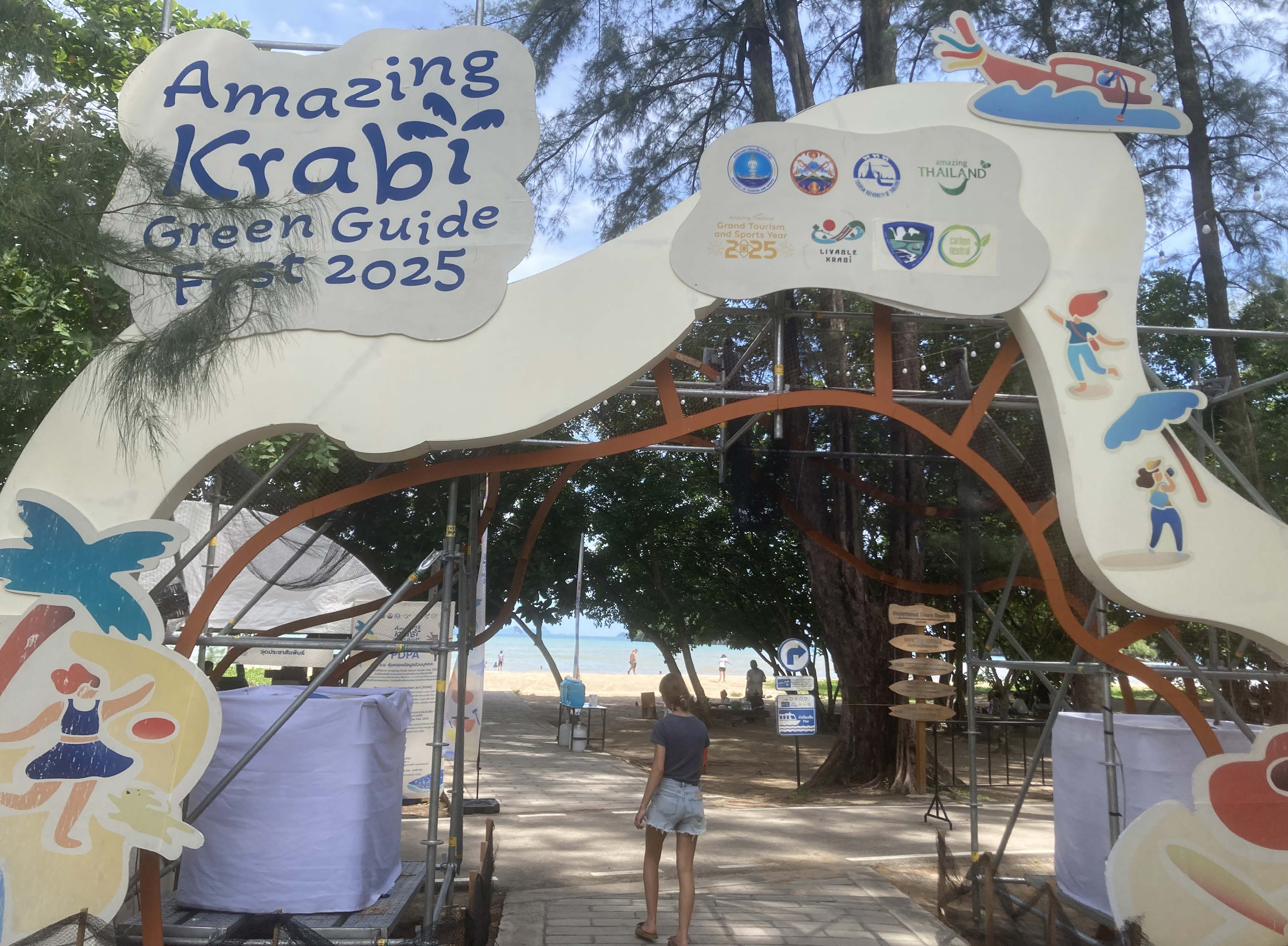
Tourism is a key driver of economic growth in Thailand, but it also generates significant environmental and socio-economic pressures, particularly in coastal destinations such as Krabi. Increasing plastic pollution, resource stress, and socio-economic inequalities highlight the limitations of conventional tourism models and the need for more...
Presentation
AAAI 2026 Summer Symposium Series
Typhoon impacts in the Philippines exhibit strong neighbour hood-scale heterogeneity driven by interactions among haz ard intensity, exposure, and vulnerability, yet most opera tional assessments remain hazard-centric. This study presents a grid-based machine-learning framework for neighbour hood-scale typhoon risk mapping integrating geophysical...