The “FutureCity” initiative promoted an integrated approach and also developed “top runner” municipalities as the best practices on specific common urban issues that can be rolled out across Japan. Major issues were “Energy” (Goal 7) and “Cities” (Goal 11), but not “Poverty” (Goal 1), “Gender equality” (Goal 5), or “Reduced inequalities” (Goal 10)...
Results 1681 - 1690 of 6464 (Sorted by date)
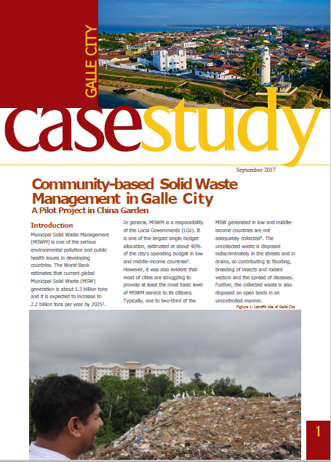
This case study summarises the experience and lessons learned of the pilot project that has been implementing by the CITYNET Yokohama Project Office in Japan partnered with the HELP-O, a local Non-Governmental Organization (NGO), to assist in improving the Municipal Solid Waste Management (MSWM) in Galle City based on the successful experience of...
In Global Environmental Research
Article 5 of the Paris Agreement specifies implementation of REDD+ (reducing emissions from deforestation and forest degradation) through results-based payments. Currently, however, REDD+ resultsbased financing is insufficient for incentivizing full implementation of REDD+ by developing countries. In this article, we examine how a new bilateral...
13th ASIA PACIFIC ROUNDTABLE FOR SUSTAINABLE CONSUMPTION AND PRODUCTION (APRSCP)
At 13th APRSCP meeting, S-16 research group organized a round table session titled "SCP Challenges and Opportunities from Four Perspectives – Resources, Lifecycle, Lifestyle, Sufficiency". There, Hotta presented how SCP policy design will be changed systematically in the era of SDGs and Paris Agreement referring to Sufficiency Approach.
In order to ensure accountability of each research project and provide feedback to improve overall effectiveness, IGES has traditionally conducted a review at the end of each Phase by external experts. The IGES external reviews examine to what extent studies and activities conducted in the Integrative Strategic Research Programme for the Sixth...
The Integrative Strategic Research Programme of IGES for the 7th Phase (ISRP7) is a four-year programme which will start in July 2017.1 Taking into account discussions at the Ninth Meeting of Board of Trustees (BOT) and the Ninth Meeting of Board of Directors (BOD) in June 2016, as well as exchanged views at the Informal Meeting for the Board of...
In Journal of Applied Ecology
1.Efficient and reliable methods for estimating animal density are essential to wildlife conservation and management. Camera trapping is an increasingly popular tool in this area of wildlife research, with further potential arising from technological improvements, such as video recording functions that allow for behavioural observation of animals...
Cities contribute more than 70% of global greenhouse gas emissions; therefore, low-carbon city development needs to be enhanced for achieving the “2 degree Celsius target” of the Paris Agreement and the Sustainable Development Goals (SDGs). Appropriate policies and measures at both national and local levels need to be implemented for mobilizing...
This pamphlet offers a description of IGES’s set of Climate Databases. Having been developed in some cases over more than 10 years, the Databases compile unique data about climate change policies and sustainable development projects, and offer in-depth insights through analytics, summary and figures. All Databases are freely accessible online using...
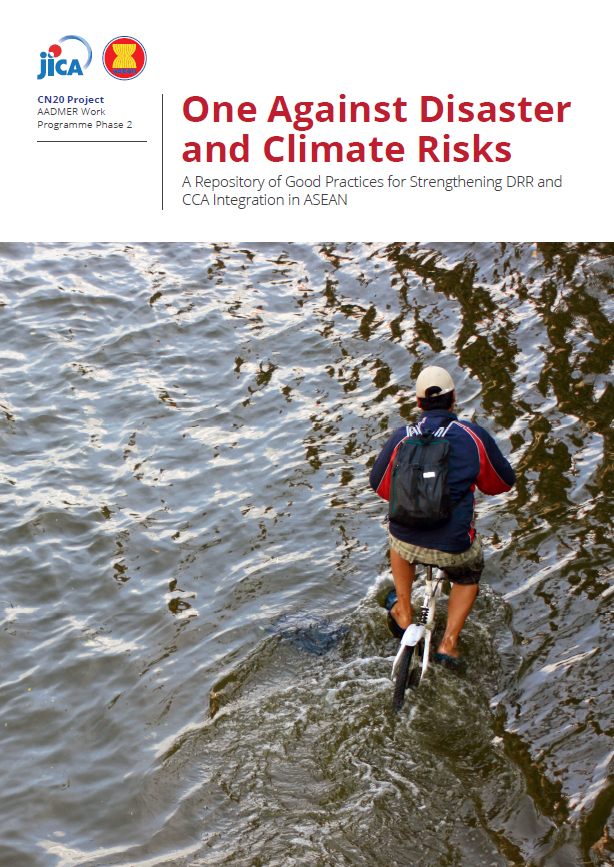
Both the full report and summary documents are attached. Recognising the need to integrate DRR and CCA into policies and institutions in The ASEAN Member States, JICA has supported implementation of a project on ‘Strengthening Institutional and Policy Framework on Disaster Risk Reduction (DRR) and Climate Change Adaptation (CCA) Integration’. The...