Search

Results 121 - 130 of 6464 (Sorted by date)
Policy Report
Editor:
OECD
Southeast and East Asia play a pivotal role in global efforts to end plastic pollution. ASEAN Plus Three countries are at the heart of this region, represented by the 10 Member States of the Association of Southeast Asian Nations, Japan, Korea and the People’s Republic of China (hereafter, China). This region has become a hotspot for plastic...

Presentation
3RINCs 2026 ASEAN-Japan Special Session "International Metal Resource Circularity: Towards Establishing an E-waste Proper Treatment Network and Contributing to Sustainable Resource Management"
The special session was co-organized by the Embassy of Japan in Thailand and the Ministry of the Environment, Japan, focuses on establishing and expanding an international metal resource circularity network through the proper treatment of e-waste between ASEAN and Japan. Dr. Hotta and Dr. Menikpura presented about lifecycle sustainability...
Technical Report
Author:
This report evaluates a pilot project in Padang, Indonesia, that introduced the digital application to modernise community-based waste banks. The study explores how digital transformation can improve operational efficiency, data accuracy, and transparency within a circular economy framework. While the initiative successfully digitised thousands of...
Peer-reviewed Article
In Journal of the Eastern Asia Society for Transportation Studies
Decarbonizing road transport requires a socio-technological transition that integrates systemic changes in transport infrastructure, technological innovation, and broader societal transformation. Non-state actors—particularly sub-national governments and cities such as Jakarta Metropolitan City, West Java Province, and the City of Semarang—play a...
Submission to Policy Process
Author:
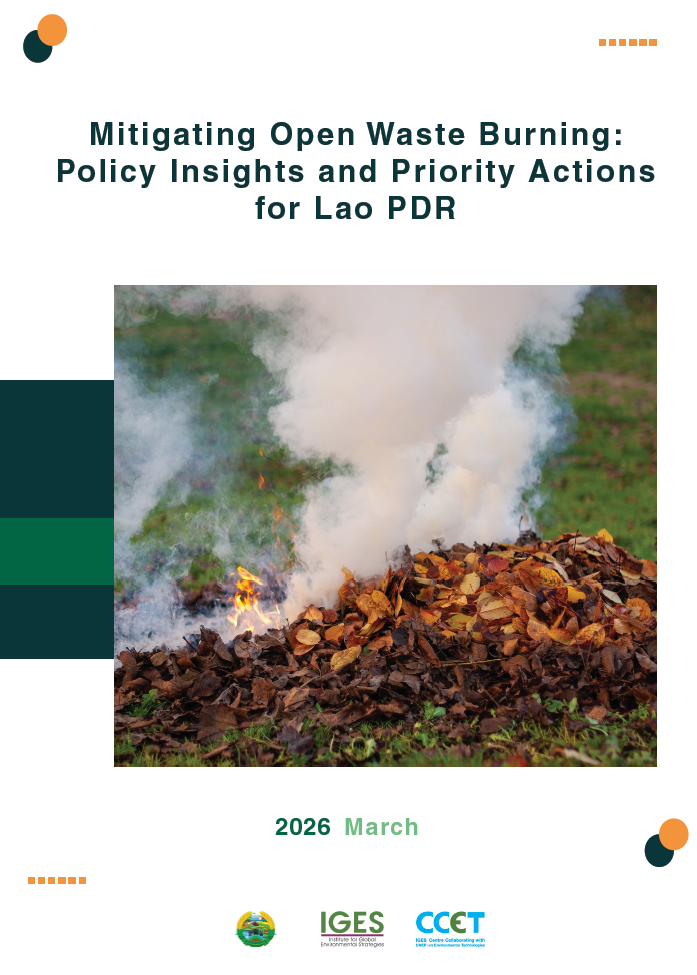
This paper outlines a comprehensive strategy for Lao PDR to eliminate open waste burning (OWB), a prevalent disposal method caused by limited waste collection services. It emphasizes that OWB is a major source of toxic air pollutants like PM2.5 and black carbon, which severely threaten public health and exacerbate climate change. Rather than...
Submission to Policy Process
Author:
Dr. Asif
Iqbal
Anum
Shahid
Muhammad
Minhaj
Muhammad
Sheharyar Fida
Mr. Mazhar
Hussain
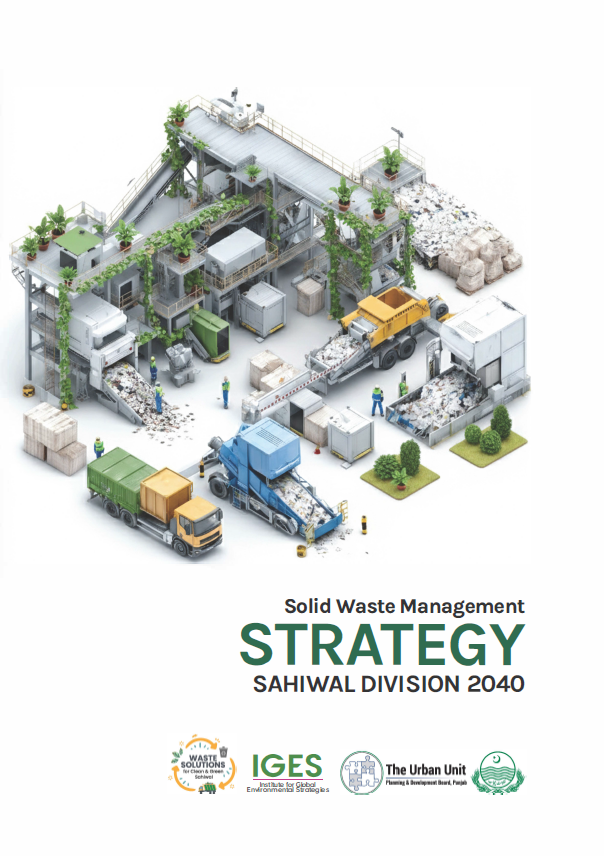
The document outlines the comprehensive Solid Waste Management Strategy for the Sahiwal Division, focusing on transforming local waste practices into a modern, circular, and resource-efficient system across its districts (Sahiwal, Okara, and Pakpattan) over a fifteen-year period (2026–2040). Sahiwal generates increasing volumes of municipal solid...
Presentation
The 6th Symposium of the International Waste Working Group Asian Regional Branch
This presentation provides an overview of the escalating microplastic and nanoplastic (MNP) pollution crisis in Southeast Asia, which currently ranks among the highest global contributors to ocean plastic waste due to rapid urbanization, heavy reliance on single-use plastics, and inadequate waste management. It details the lifecycle of plastic...
Presentation
2025 International Conference on Marine Environmental Management
The widespread issue of plastic pollution is increasingly affecting human health, with growing evidence of exposure, particularly in regions such as ASEAN, which are rich in aquatic resources. Microplastics and nanoplastics contaminate water bodies and are ingested by aquatic organisms. Given the high consumption of seafood in the region, humans...
Commissioned Report
Author:
Maria Antonia
Tanchuling
Rigo
Riguera
Marian
Delos Santos
Marielle Gwen
Martinez
This commissioned report presents a capacity and training needs assessment conducted to evaluate the Philippines' current capabilities and identify critical gaps in microplastic and nanoplastic research, facilities, and public awareness. In response to growing global concerns over plastic pollution, comprehensive surveys were administered between...
Technical Report
Author:
Jean
Paula Bermudez Regulano
Juhi
Bansal
Julie
Amoroso-Garbin
Promit
Mookherjee
As one of the world’s most climate-vulnerable nations and a country in which agriculture underpins the livelihoods of tens of millions, making food systems climate resilient is a key priority for Pakistan. This case study examines the strategic integration of food systems into Pakistan’s National Adaptation Plan (NAP) and Nationally Determined...