- English
Date: September 15-17, 2025 (Taipei, Taiwan)


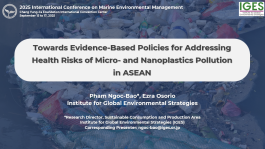
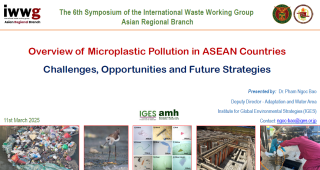
The widespread issue of plastic pollution is increasingly affecting human health, with growing evidence of exposure, particularly in regions such as ASEAN, which are rich in aquatic resources. Microplastics and nanoplastics contaminate water bodies and are ingested by aquatic organisms. Given the high consumption of seafood in the region, humans are inevitably exposed to these plastics and their associated chemical additives through bioaccumulation. Beyond dietary intake, exposure can also occur via inhalation and dermal contact. Recent studies have detected microplastics within the human body, including in the blood, brain, and placenta, highlighting the pervasive nature of this contamination. This presentation reviews the latest scientific evidence on the human health impacts of plastics across their entire lifecycle, with particular emphasis on micro- and nanoplastics, whose extremely small size enables potential penetration into deep human tissues. It also examines existing policy frameworks and mitigation strategies currently employed in ASEAN countries, including regulatory measures, improved waste management practices, research into alternative materials, and international cooperation. Despite growing concern and ongoing efforts, significant research gaps remain, especially concerning conclusive health outcomes, which continue to hinder evidence-based policymaking in the region. The presentation concludes by calling for integrated, cross-sectoral approaches to mitigate plastic pollution and safeguard public health.
- English
Date: September 15-17, 2025 (Taipei, Taiwan)