
Results 611 - 620 of 5560 (Sorted by date)
Commentary (Op. Ed)
IISD SDG Knowledge Hub
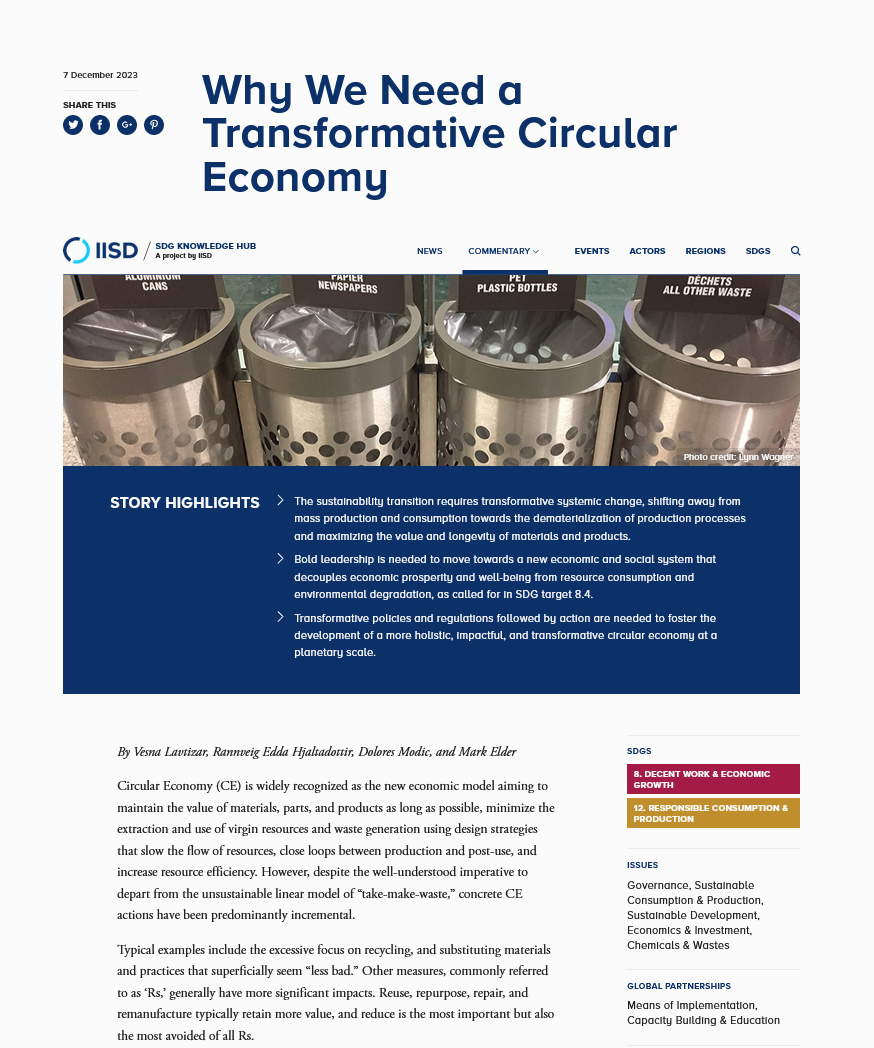
The sustainability transition requires transformative systemic change, shifting away from mass production and consumption towards the dematerialization of production processes and maximizing the value and longevity of materials and products. Bold leadership is needed to move towards a new economic and social system that decouples economic...
Keywords:
Technical Report
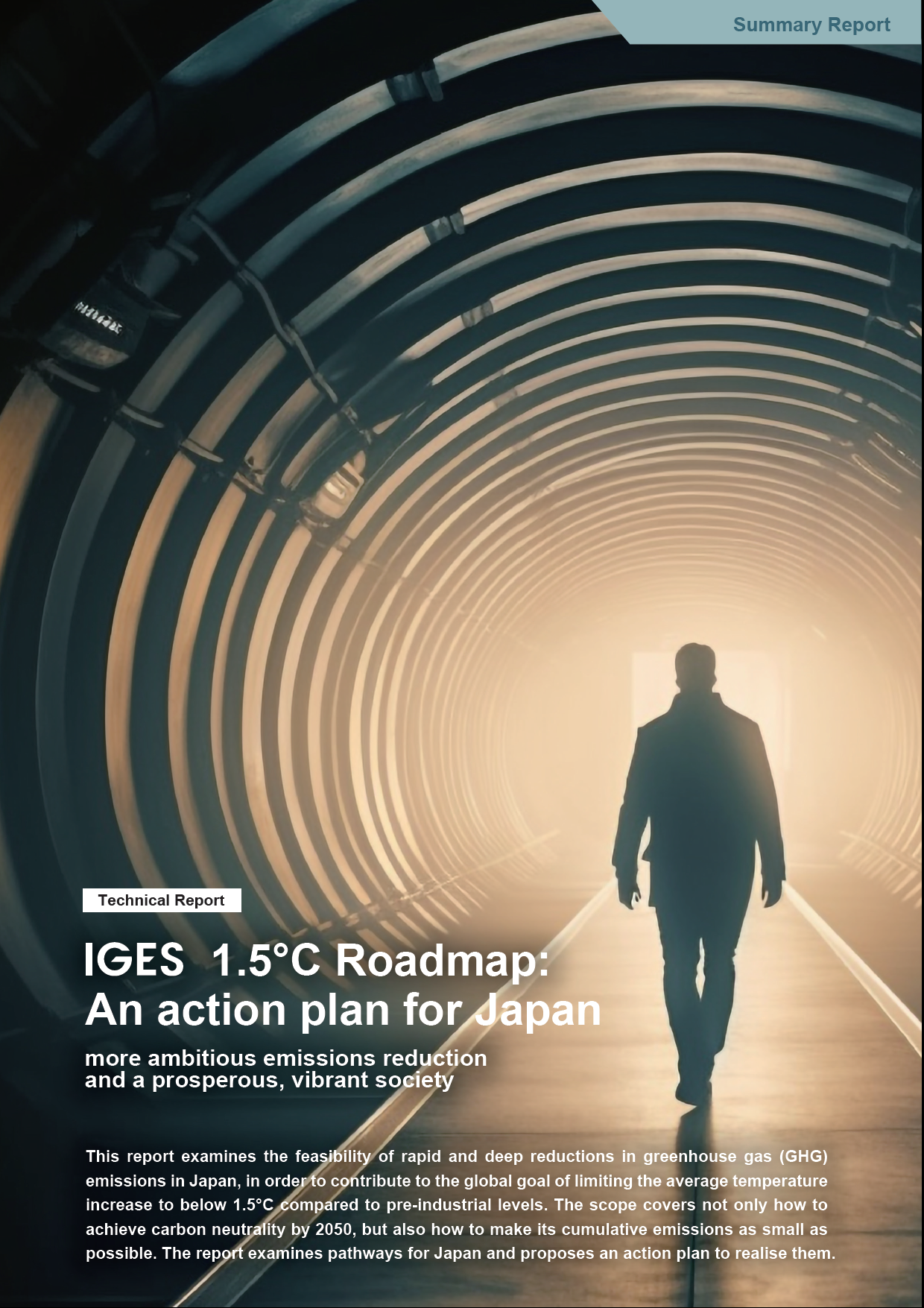
This report examines the feasibility of Japan not only achieving carbon neutrality by 2050, but also making significant reductions in greenhouse gas (GHG) emissions, so as to make its cumulative emissions as small as possible, thereby contributing to the global goal of limiting the average temperature increase to below 1.5°C compared to the pre...
Presentation

Azerbaijan Pavilion Side Event, COP28
The presentation was presented at a side event organised by the Ministry of Ecology and Natural Resources (MENR), the Azerbaijan Branch of the Regional Environmental Centre for the Caucasus (REC), and others in the Azerbaijan Pavilion during the COP28 in UAE. It explians the Mutual Learning Program for Enhanced Transparency (MLP), which we focus on...
Peer-reviewed Article
In Hydrology
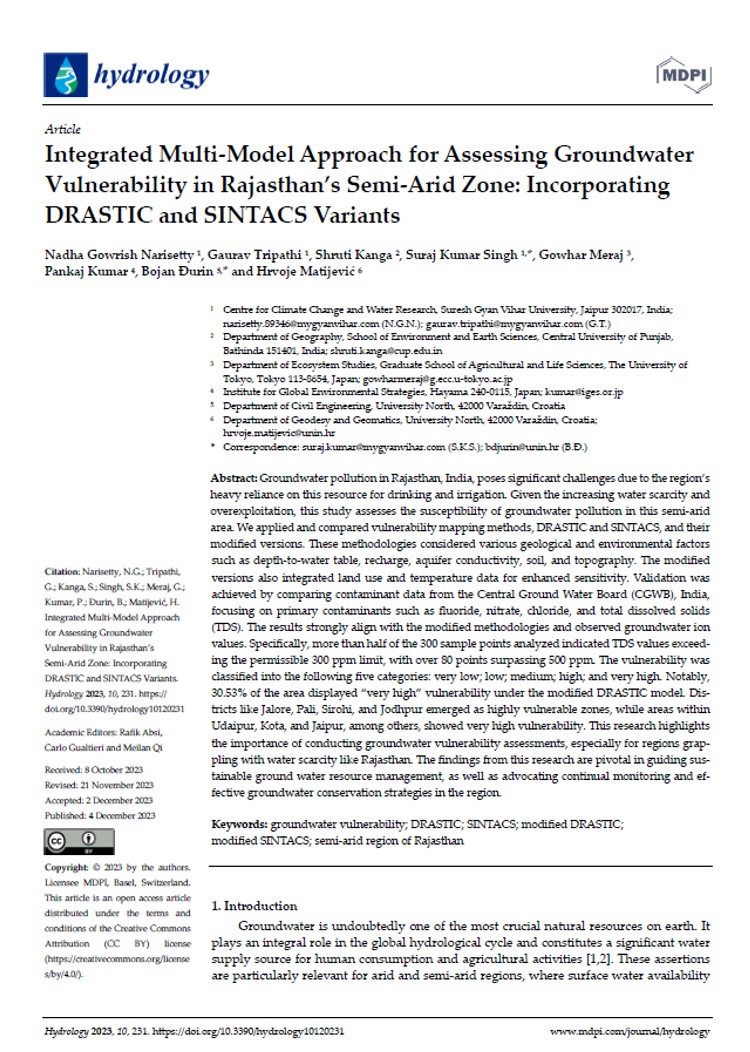
Groundwater pollution in Rajasthan, India, poses significant challenges due to the region’s heavy reliance on this resource for drinking and irrigation. Given the increasing water scarcity and overexploitation, this study assesses the susceptibility of groundwater pollution in this semi-arid area. We applied and compared vulnerability mapping...
Presentation
Azerbaijan Pavilion Side Event, COP28
This presentation provides lessons for future collaboration under the Mutual Learning Program for Enhanced Transparency (MLP) implemented by IGES with support from the Ministry of the Environment, Japan. It was presented at a side event organised by the Ministry of Ecology and Natural Resources (MENR), the Azerbaijan Branch of the Regional...
Presentation
COP28 Effective Capacity-building Day Side Event
This presentation sets the level of group discussions at the side event, entitled "Measuring capacity progress in climate transparency under the Global Stocktake (GST)". It includes why measurement of capacity progress is important, challenges and opportunities at the time of GST, and the proposed way forward.
Non Peer-reviewed Article
In キノマチウェブ
木材デューデリジェンスを理解するための基礎知識 世界の先進的なデューデリジェンスの取り組みについての解説
Presentation
COP28 Side Evenet, UAE
This presentation provides a framing of the COP28 official side event, entitled "Bottom-up Approach of Regional Non-State Actors (NSAs) towards Updating NDCs in Post-GST" by IGES, West African Science Service Centre on Climate Change and Adapted Land Use (WASCAL), University of Technology Malaysia (UTM), Institute for Climate and Sustainable Cities...
Keywords:
Peer-reviewed Article
In Resources, Conservation and Recycling
Agent-based model for assessment of multiple circular economy strategies: Quantifying product-service diffusion, circularity, and sustainability
Report Chapter
In The Climate Technology Progress Report 2023
Understanding institutional settings and governance processes is critical to the effective delivery of climate technology solutions for low-carbon and climate-resilient development in Asian cities. Creating the appropriate enabling environment for the development and transfer of climate technologies becomes imperative in this context. This requires...