
Results 601 - 610 of 5560 (Sorted by date)
Fact Sheet
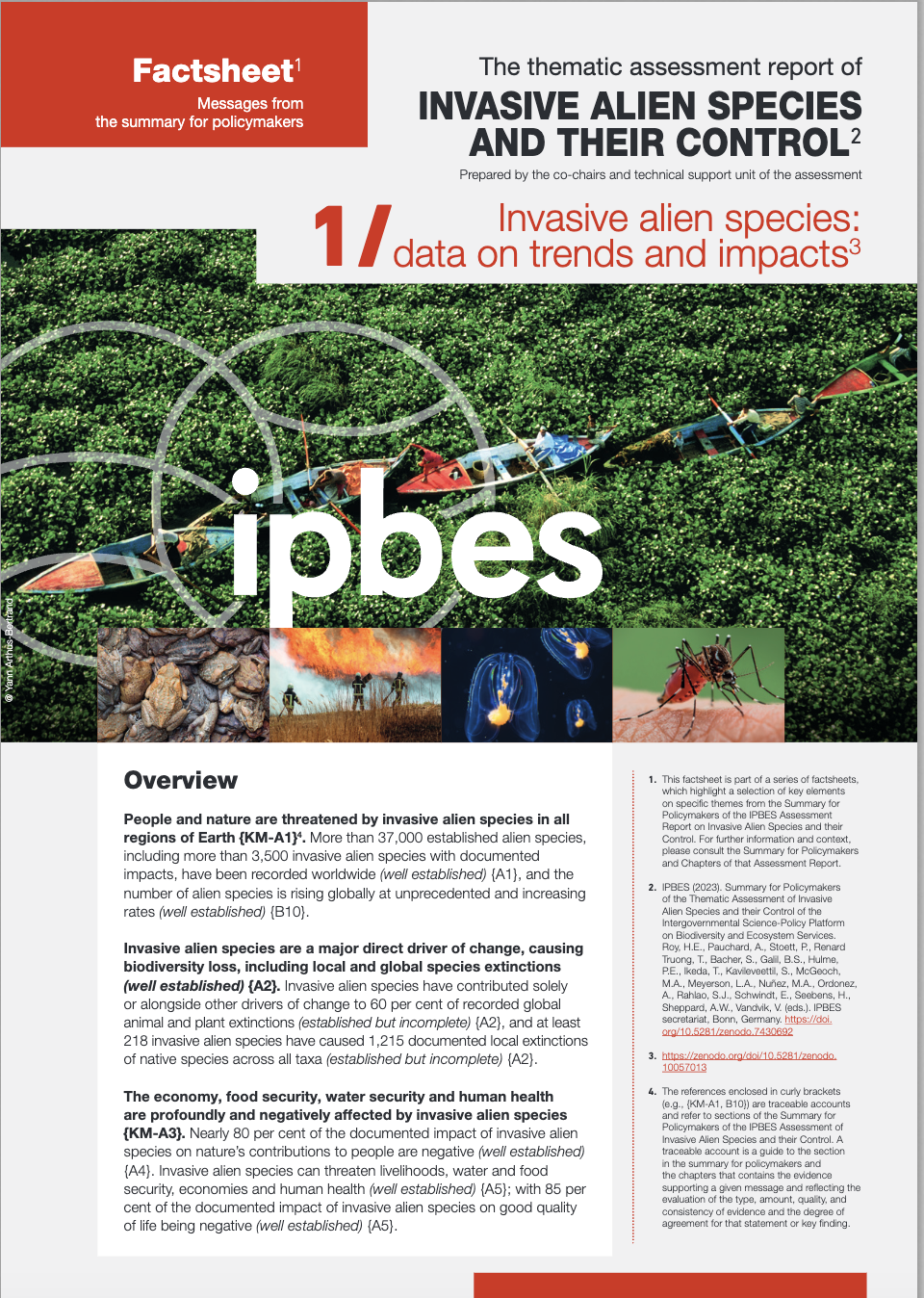
Key messages from the Summary for Policymakers of the Thematic Assessment Report on Invasive Alien Species and their Control of the Intergovernmental Science-Policy Platform on Biodiversity and Ecosystem Services (IPBES), specifically on data on trends and impacts.
Fact Sheet
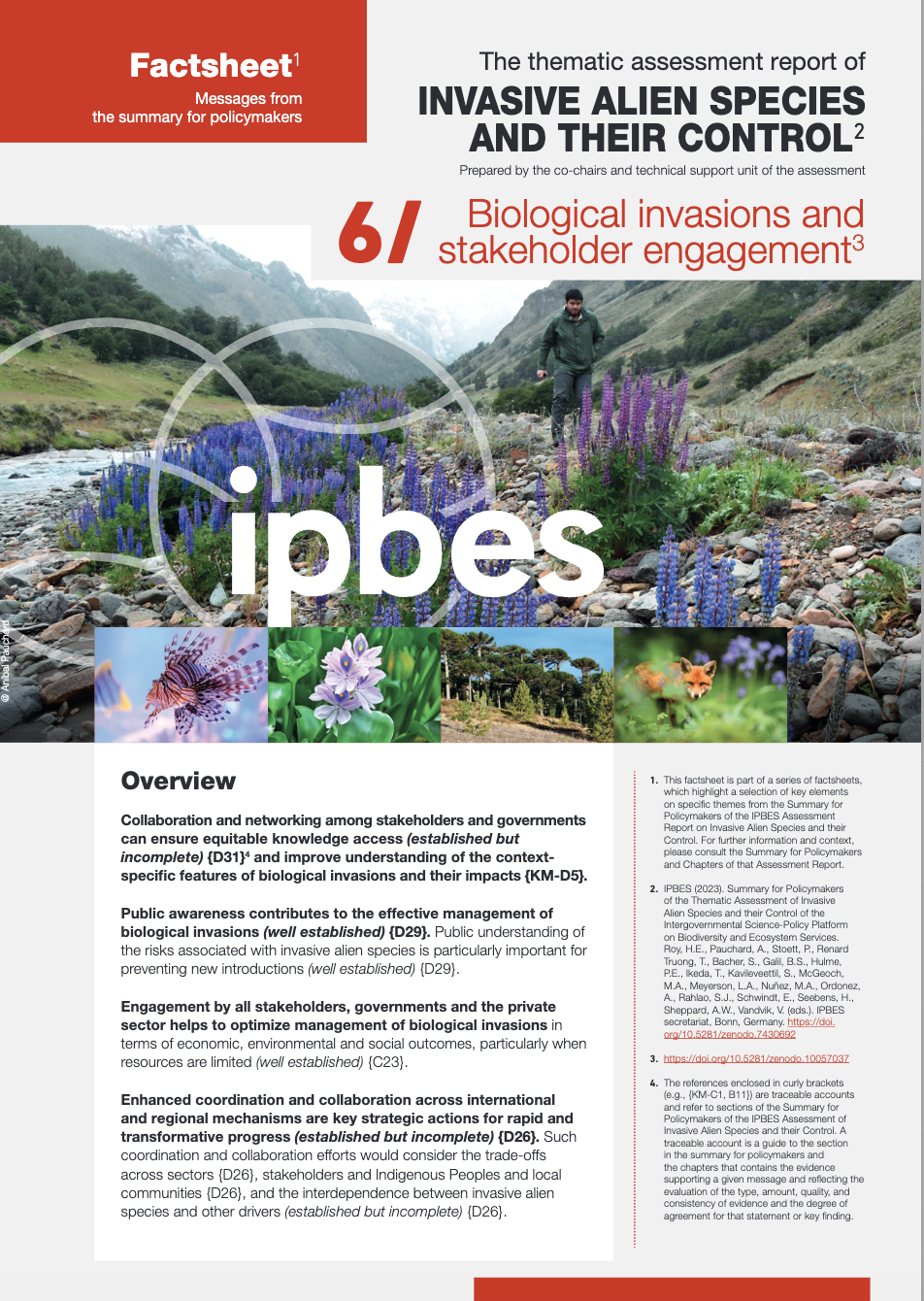
Key messages from the Summary for Policymakers of the Thematic Assessment Report on Invasive Alien Species and their Control of the Intergovernmental Science-Policy Platform on Biodiversity and Ecosystem Services (IPBES) relevant to stakeholder engagement.
Fact Sheet
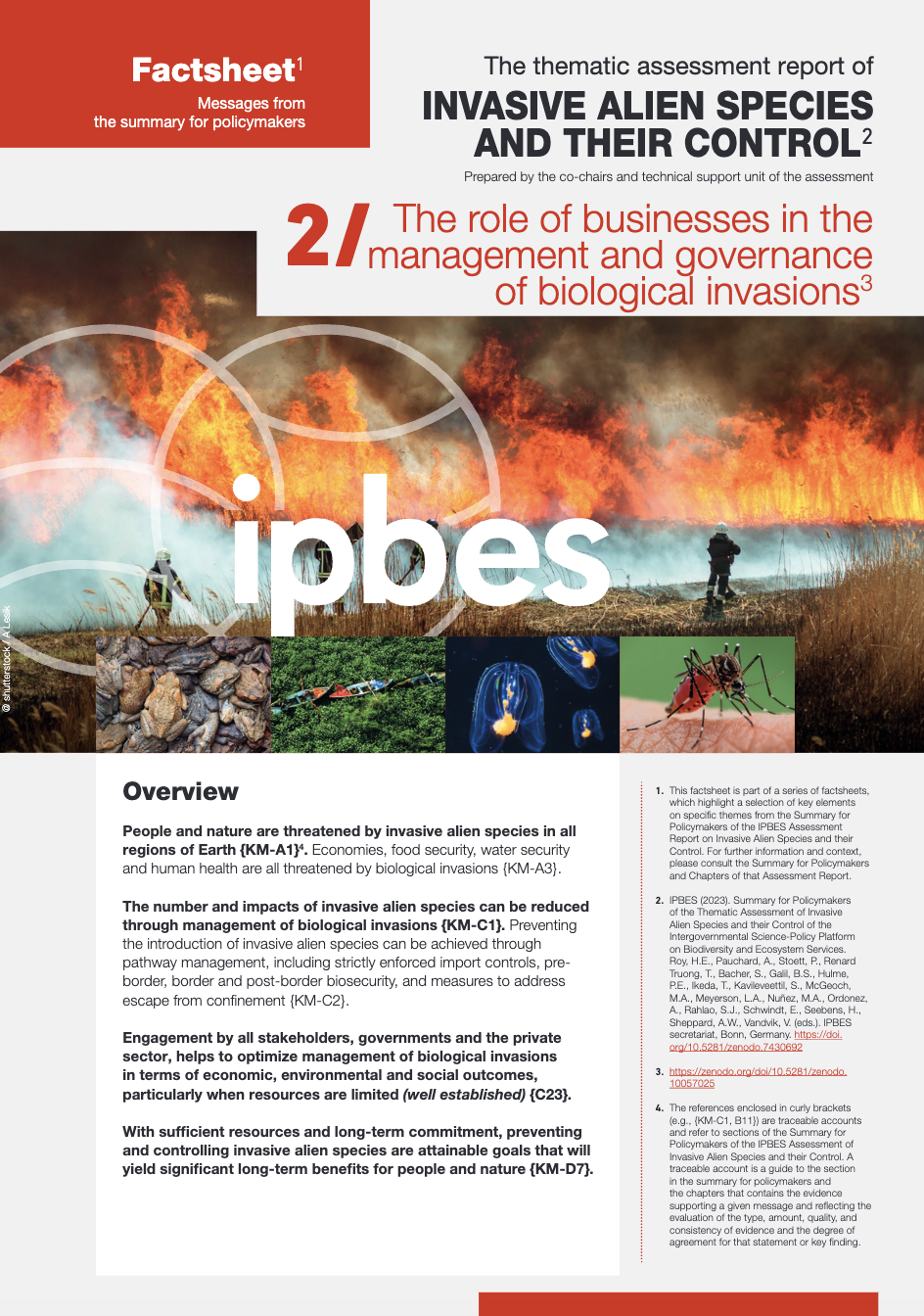
Key messages from the Summary for Policymakers of the Thematic Assessment Report on Invasive Alien Species and their Control of the Intergovernmental Science-Policy Platform on Biodiversity and Ecosystem Services (IPBES) on the role of businesses in the management and governance of biological invasions.
Fact Sheet
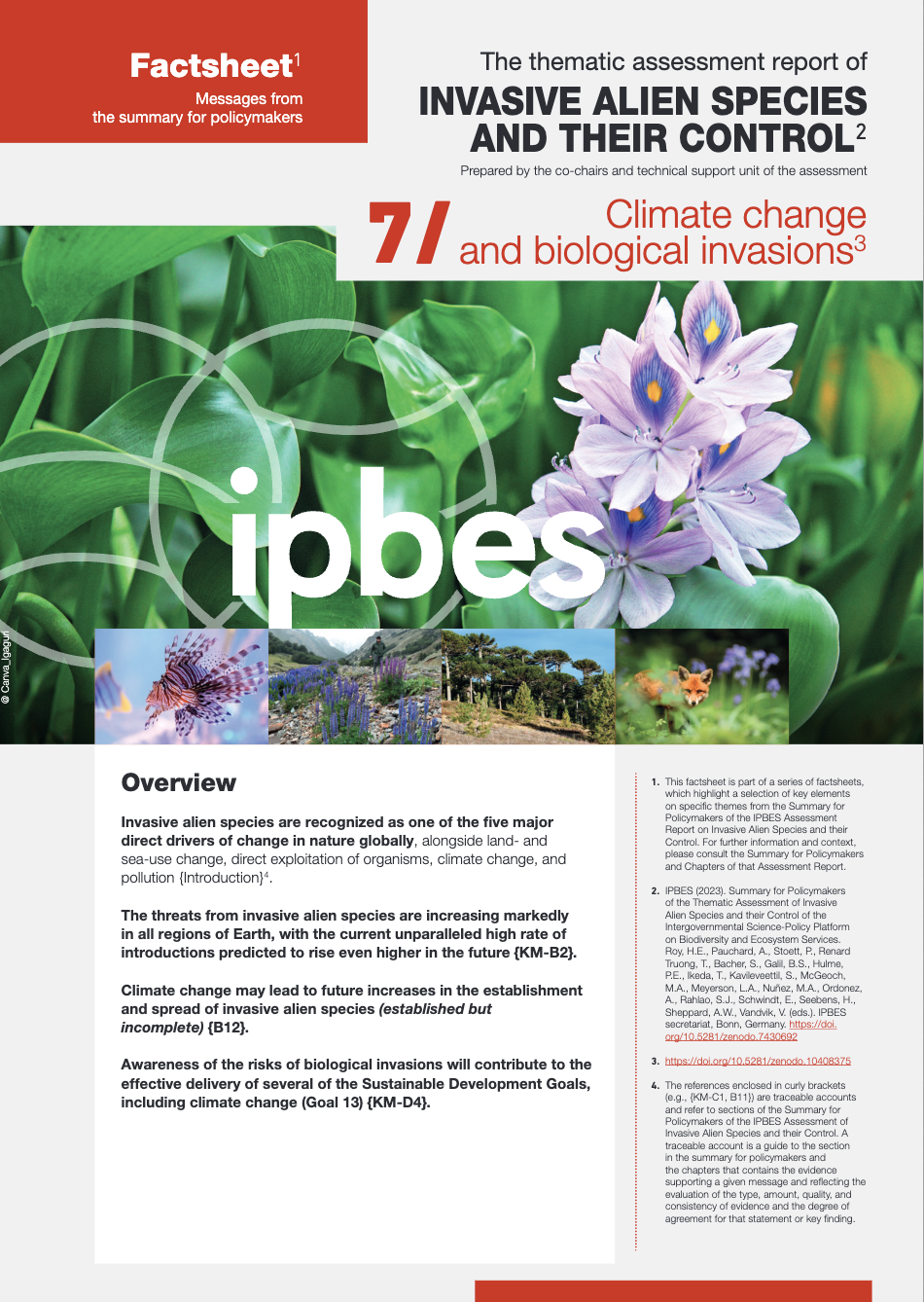
Key messages from the Summary for Policymakers of the Thematic Assessment Report on Invasive Alien Species and their Control of the Intergovernmental Science-Policy Platform on Biodiversity and Ecosystem Services (IPBES) relevant to climate change.
Presentation

COP28 side event ‘Dealing with Loss and Damage'
Just like adaptation, L&D has grown into an extensive science and policy area and things are very complicated even for the researchers to take a stock of it and to provide solutions. A large part of this confusion is coming from the disjoint between the global negotiations and at the national level. While at the ground level, most L&D solutions are...
Keywords:
Fact Sheet
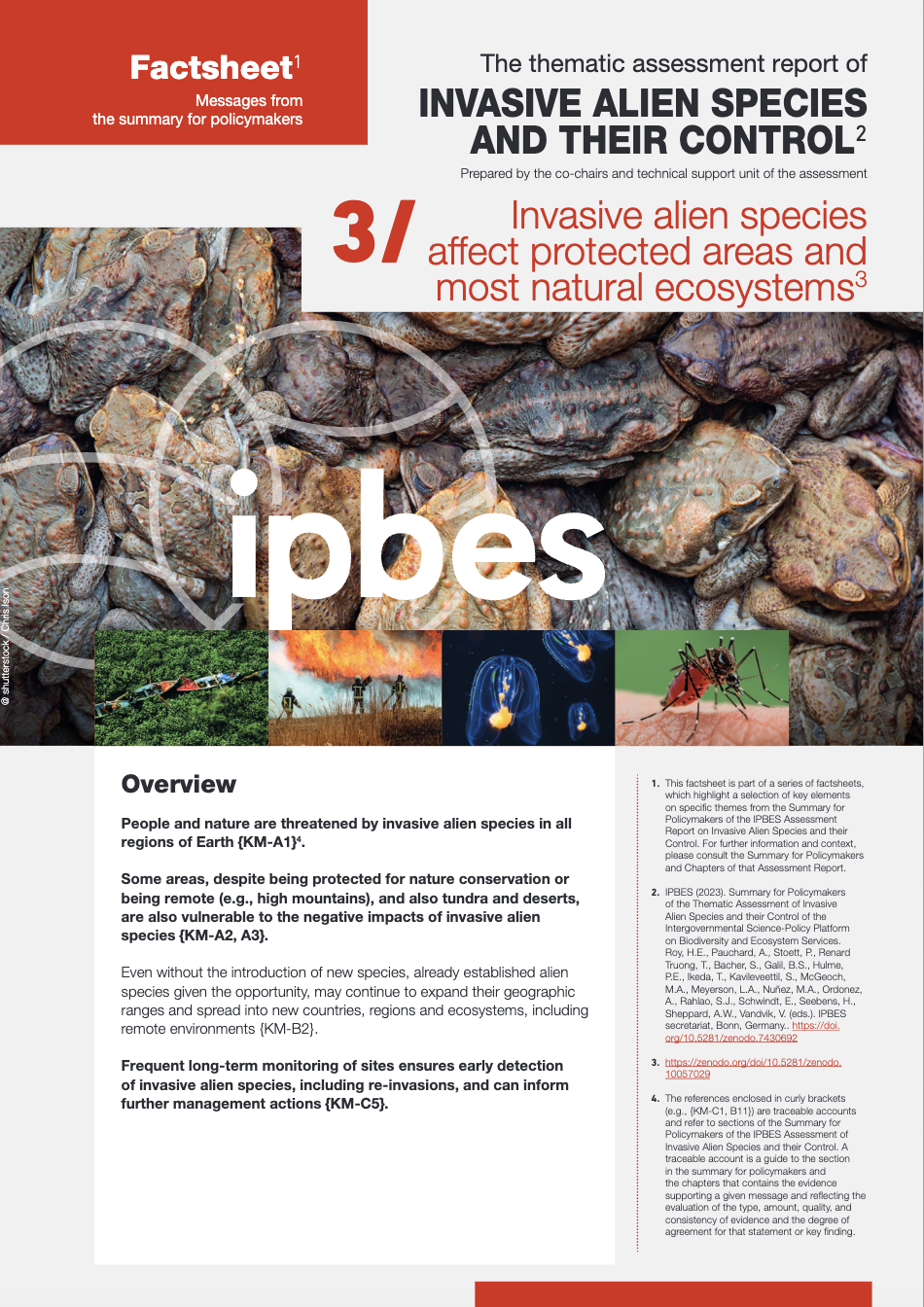
Key message from the Summary for Policymakers of the Thematic Assessment Report on Invasive Alien Species and their Control of the Intergovernmental Science-Policy Platform on Biodiversity and Ecosystem Services (IPBES) relevant to protected areas and most natural ecosystems.
Fact Sheet
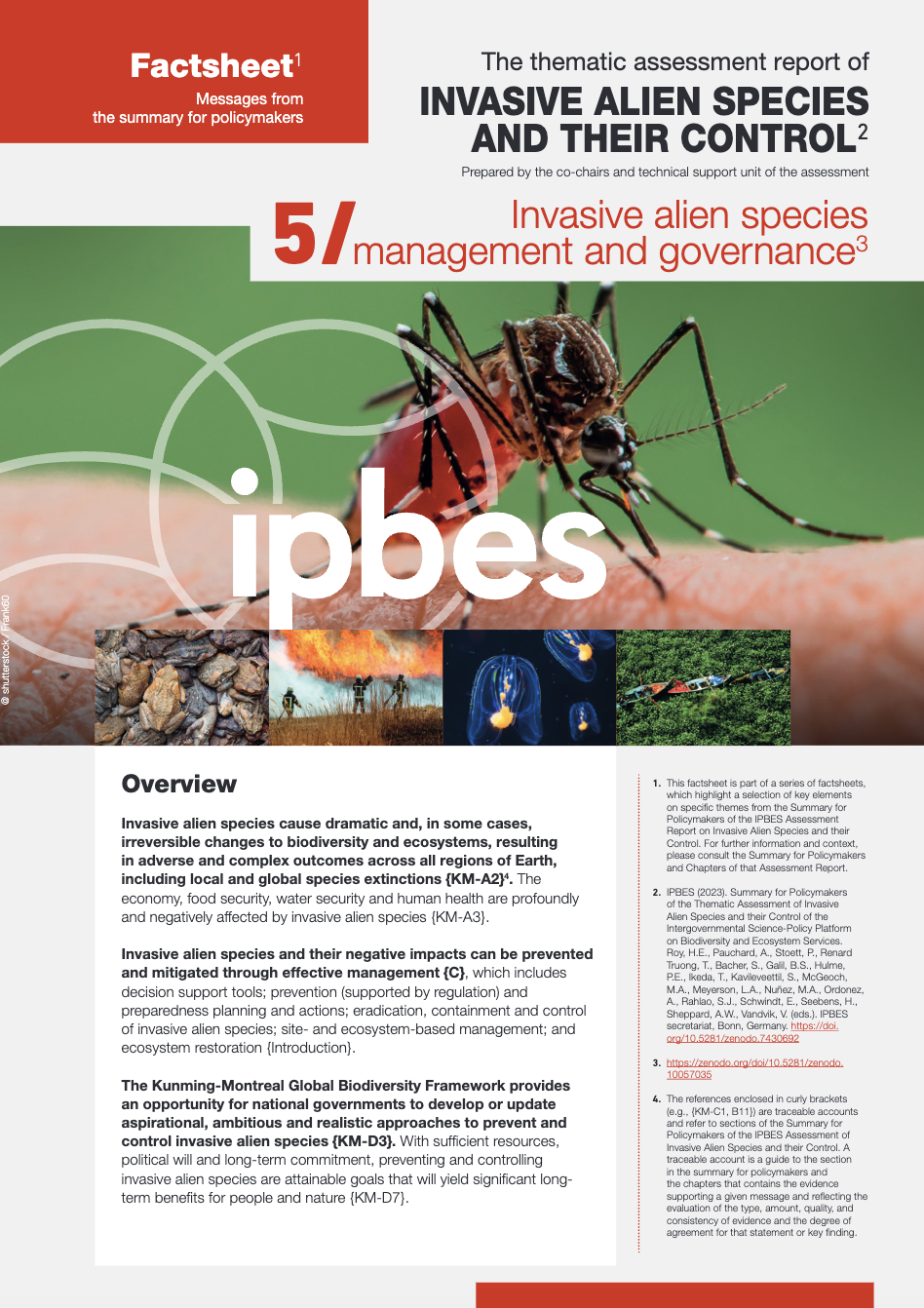
Key messages from the Summary for Policymakers of the Thematic Assessment Report on Invasive Alien Species and their Control of the Intergovernmental Science-Policy Platform on Biodiversity and Ecosystem Services (IPBES) relevant to management and governance.
Fact Sheet
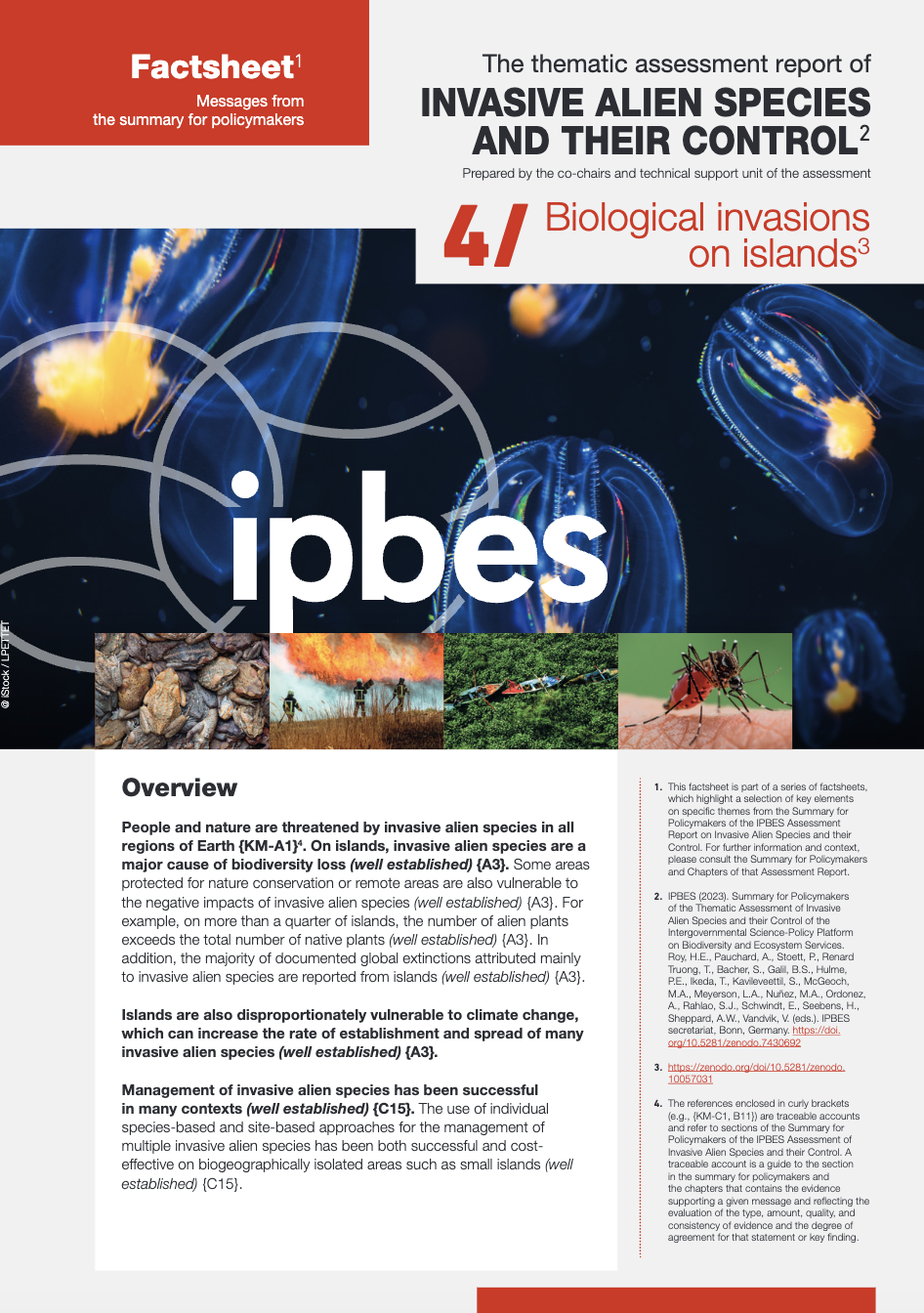
Key messages from the Summary for Policymakers of the Thematic Assessment Report on Invasive Alien Species and their Control of the Intergovernmental Science-Policy Platform on Biodiversity and Ecosystem Services (IPBES) relevant to islands.
Presentation
Scaling up Climate Action through Adaptation Effectiveness
Adaptation effectiveness cannot be achieved by focusing on one stage of the adaptation process, rather it needs an all-encompassing approach. The current undue attention on a few stages of adaptation planning needs to be reconsidered. Adaptation effectiveness is vital to inform both national and local level adaptation actions as well as progress...
Peer-reviewed Article
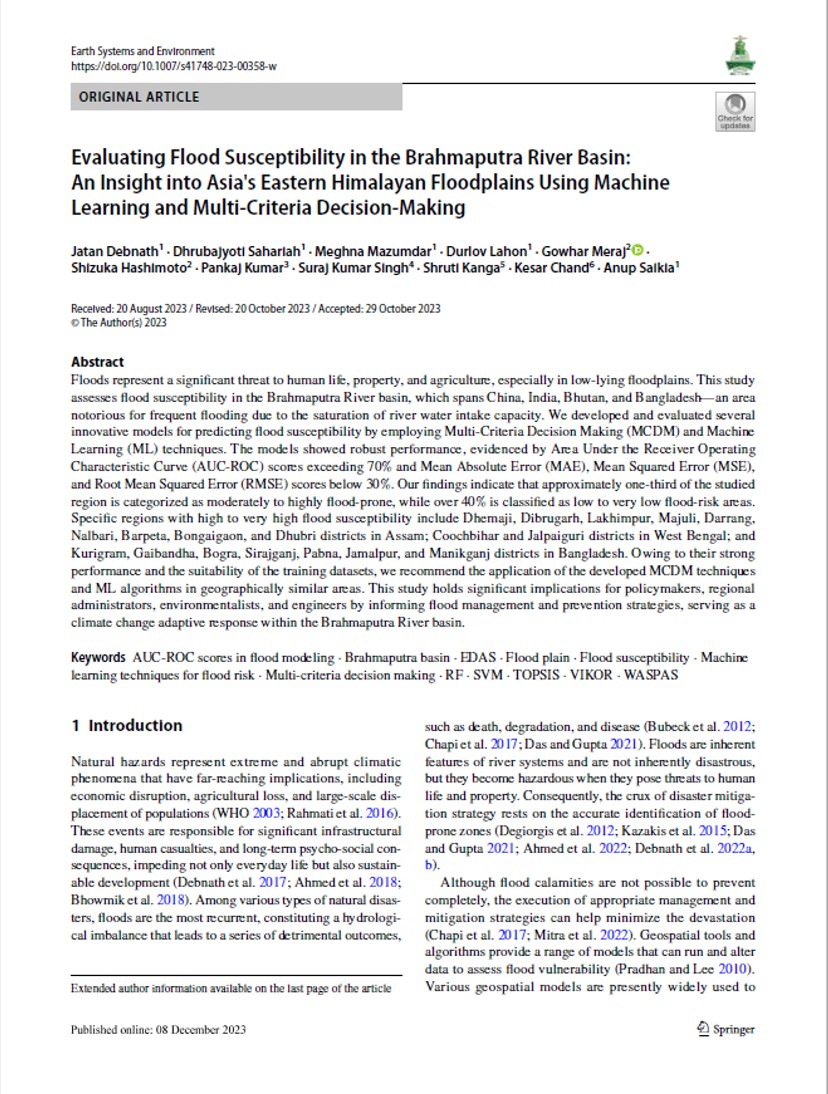
In Earth Systems and Environment
Floods represent a significant threat to human life, property, and agriculture, especially in low-lying floodplains. This study assesses flood susceptibility in the Brahmaputra River basin, which spans China, India, Bhutan, and Bangladesh—an area notorious for frequent flooding due to the saturation of river water intake capacity. We developed and...