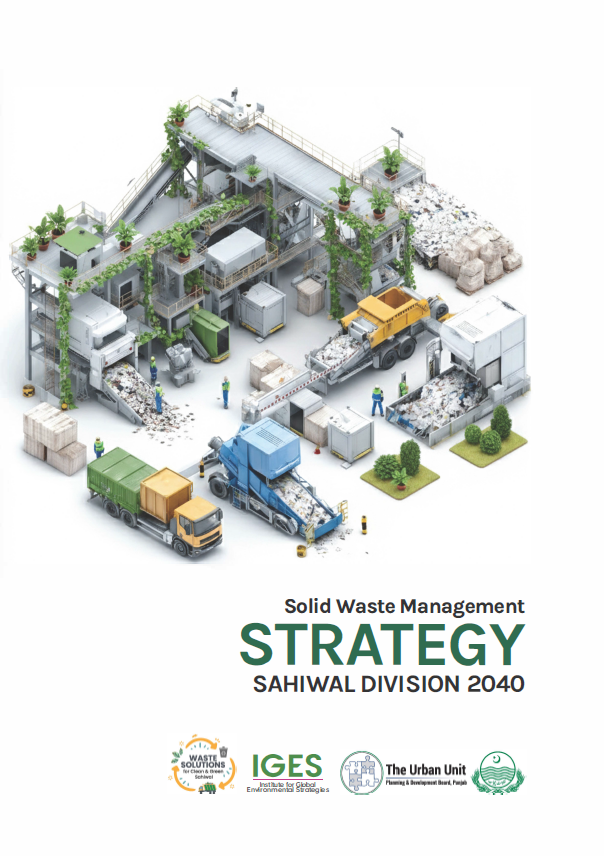
The document outlines the comprehensive Solid Waste Management Strategy for the Sahiwal Division, focusing on transforming local waste practices into a modern, circular, and resource-efficient system across its districts (Sahiwal, Okara, and Pakpattan) over a fifteen-year period (2026–2040). Sahiwal generates increasing volumes of municipal solid...
- Clear all
- Publication Year: (-) 2025
- SDGs: (-) Goal 11. Sustainable Cities and Communities
Results 1 - 10 of 45 (Sorted by date)
In Sustainability Science
Accelerating urban population concentration across the world has both positive and negative social-ecological consequences. Countries facing serious negative consequences like Japan need to explore enhanced deurbanization pathways, e.g., highlighting high quality of life in rural areas, to achieve a more desirable urban-rural population balance...
From "Islands of Excellence" to a "Sea of Change": How ASEAN's Secondary Cities are Localising the SDGs in the region As the ASEAN region rapidly urbanises, the focus often falls on its mega-cities. However, a quiet transformation is underway in the region’s secondary cities -- the agile urban centres that are proving to be fertile ground for...
Keywords:
In Atmospheric Environment
The open burning of municipal solid waste (MSW) remains a prevalent yet underreported source of greenhouse gas (GHG) and air pollutant emissions, particularly in developing and transition economies. This study updates the 2006 IPCC activity inventory methods and subsequent refinements to quantify emissions from open waste burning (OWB) in Asian...
In Progress in Disaster Science
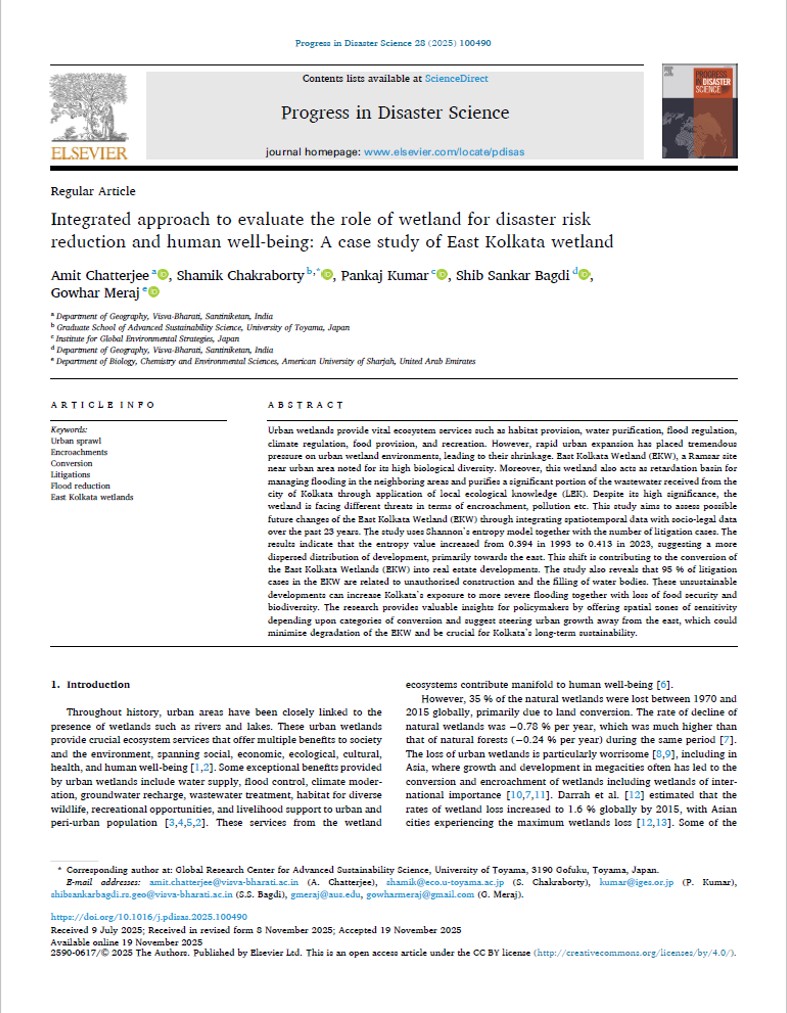
Urban wetlands provide vital ecosystem services such as habitat provision, water purification, flood regulation, climate regulation, food provision, and recreation. However, rapid urban expansion has placed tremendous pressure on urban wetland environments, leading to their shrinkage. East Kolkata Wetland (EKW), a Ramsar site near urban area noted...
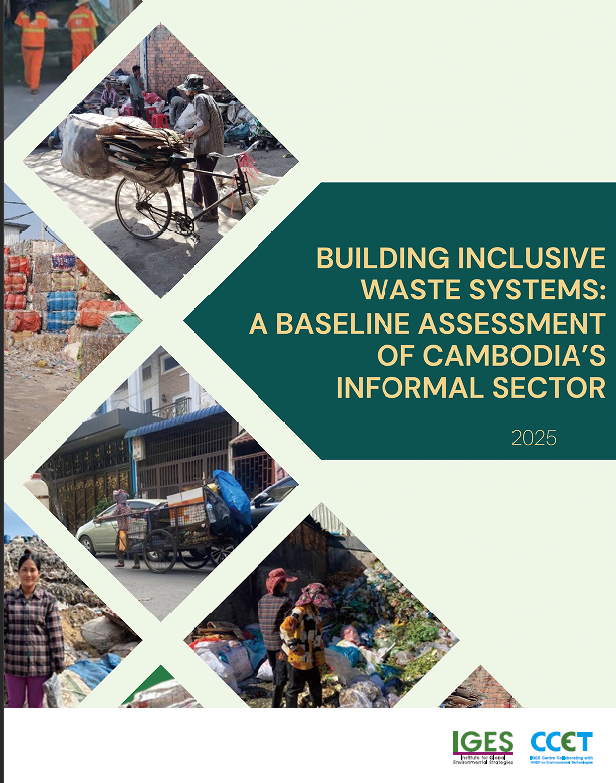
This report provides a baseline assessment of Cambodia’s informal waste sector, with a focus on Phnom Penh and Battambang. Informal waste workers, including street pickers, door-to-door collectors, pickers at landfills and junkshop operators, play a critical yet undervalued role in the country’s waste management system. They are responsible for a...
This report evaluates a pilot project in Padang, Indonesia, that introduced the digital application to modernise community-based waste banks. The study explores how digital transformation can improve operational efficiency, data accuracy, and transparency within a circular economy framework. While the initiative successfully digitised thousands of...
Asia Smart City Conference 2025
Asia Smart City Conference 2025, organized by City of Yokohama in November 2025, organized a session on Mutual pitches between city and company representatives on urban issues and technological solutions. This session shared the needs of Asian cities in addressing urban challenges, including rapid urbanization, population concentration in city...
In Sustainability
Many cities have integrated health co-benefits into their climate plans to address cost concerns and build multi-stakeholder support for resilient, net-zero transitions. While some studies have demonstrated that cities vary in how much they link health and climate, few have examined why this is the case. This study fills this gap by using 16...
In Sustainability Science
As more cities adopt resilient net-zero policies, local-level assessments of the current and future health impacts of warmer temperatures are becoming increasingly important. These assessments may be even more useful if they demonstrate how health impacts of different predicted temperatures vary across acclimatized/non-acclimatized groups. This...