Payments for ecosystem services (PES) is a market-based mechanism aimed at sustaining the flow of such services. Through a PES scheme, beneficiaries or users of the ecosystem service(s) compensate the provider or manager of those services, directly or indirectly. The provider and beneficiaries agree on the terms and conditions of the PES and...
Results 2091 - 2100 of 6464 (Sorted by date)
Contributing Papers for the 2019 Global Assessment Report
Groundwater is a de-facto source of water during drought and emergencies. In a broader perspective, the traditional short-term strategy of using groundwater to combat water deficits during drought needs revisiting. The objective of this paper is to examine the relevance and options for developing and adopting such groundwater-based natural...
Editor:
United Nations Environment Programme (UNEP)
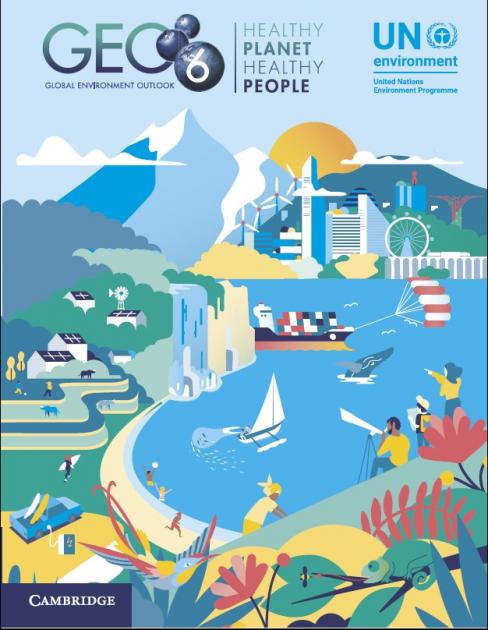
Under the theme of ‘Healthy Planet, Healthy People,’ the sixth Global Environment Outlook (GEO-6) is an integrated assessment which considers various scientific perspectives and inputs from across the world in a holistic manner. The assessment urges the world’s decision makers and all citizens to apply the principles of sustainable development to...
Stockholm World Water Week 2018 Session on "Groundwater-based natural infrastructure solutions: The missing link to resilience?"
Kumamoto is a rare case of fully functional PES for over 13 years; Willingness between buyers and sellers is one of the basic conditions for establishing PES. However, willingness are always not sufficient condition for groundwater recharge, which are difficult to quantify and verify; Role of intermediary institutions such as local agriculture...
Role of information platform for integrated lake basin management (ILBM) in Asia: Lessons and pathways for SDGs
ILBM is an approach for achieving sustainable management of lakes and reservoirs through gradual, continuous and holistic improvement of basin governance, including sustained efforts for integration of institutional responsibilities, policy directions, stakeholder participation, scientific and traditional knowledge, technological possibilities, and...
The 11th Regional Conference on Environmental Engineering 2018 and the 3rd International Symposium on Conservation and Management of Tropical Lakes “Enhancing Sustainability and Resilience under Anthropogenic Pressure and Climate Change
The Tonle Sap Lake (TSL) is among the most productive freshwater ecosystems, and one of the most fish- abundant lakes in the world. It is connected with the Mekong River by Tonle Sap River. The TSL absorbs a huge volume of water, which helps to reduce flooding in the Mekong River floodplains during the peak flooding season, then releases water into...
T20 Japan Task Force 3: Climate Change and Environment
This policy brief suggests six priorities for developed and emerging economies represented by G20 countries to mainstream circular economy and society globally, as follows: 1) need to capture the momentum raised by public attention on marine plastic pollution; 2) raise the level of ambition of Extended Producer Responsibility; 3) provide policy...
International Workshop on G20 Subsidies and Public Finance for Fossil Fuels
This presentation summarised the work experience from Japan case in G7 fossil fuel subsidy scorecard (https://www.odi.org/publications/11131-g7-fossil-fuel-subsidy-scorecard).
Final report for the Envisioning Future Low-Carbon Lifestyles and Transitioning Instruments project.
3RINCs
In order to assist policymakers and implementers at the national and city level to select and implement appropriate waste management technologies for improving the waste management, CCET (IGES Centre Collaborating with UNEP on Environmental Technologies) aims to develop a series of waste management guidelines on the targeted subjects related to the...