Results 1 - 10 of 219 (Sorted by date)
Data or Tool
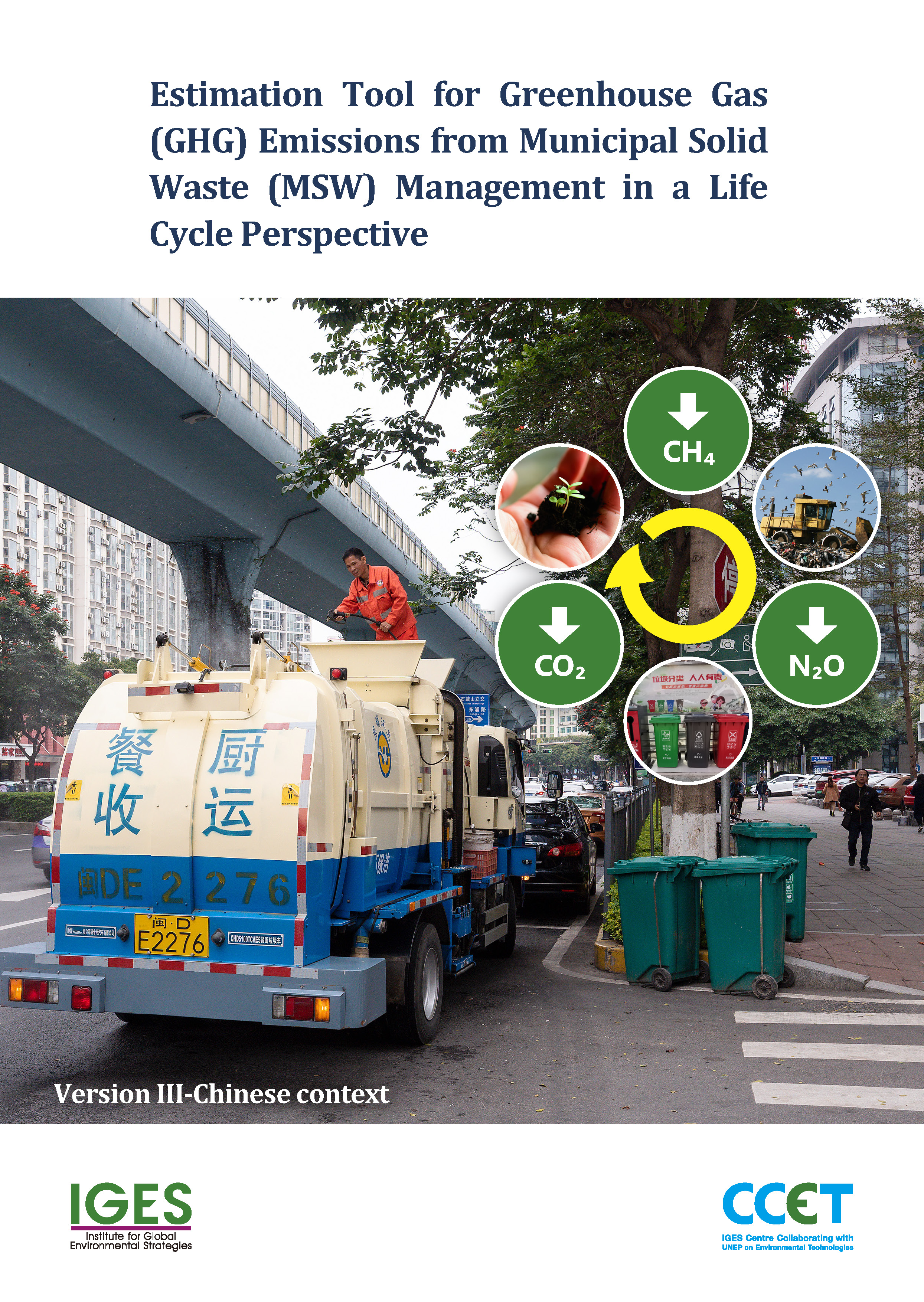
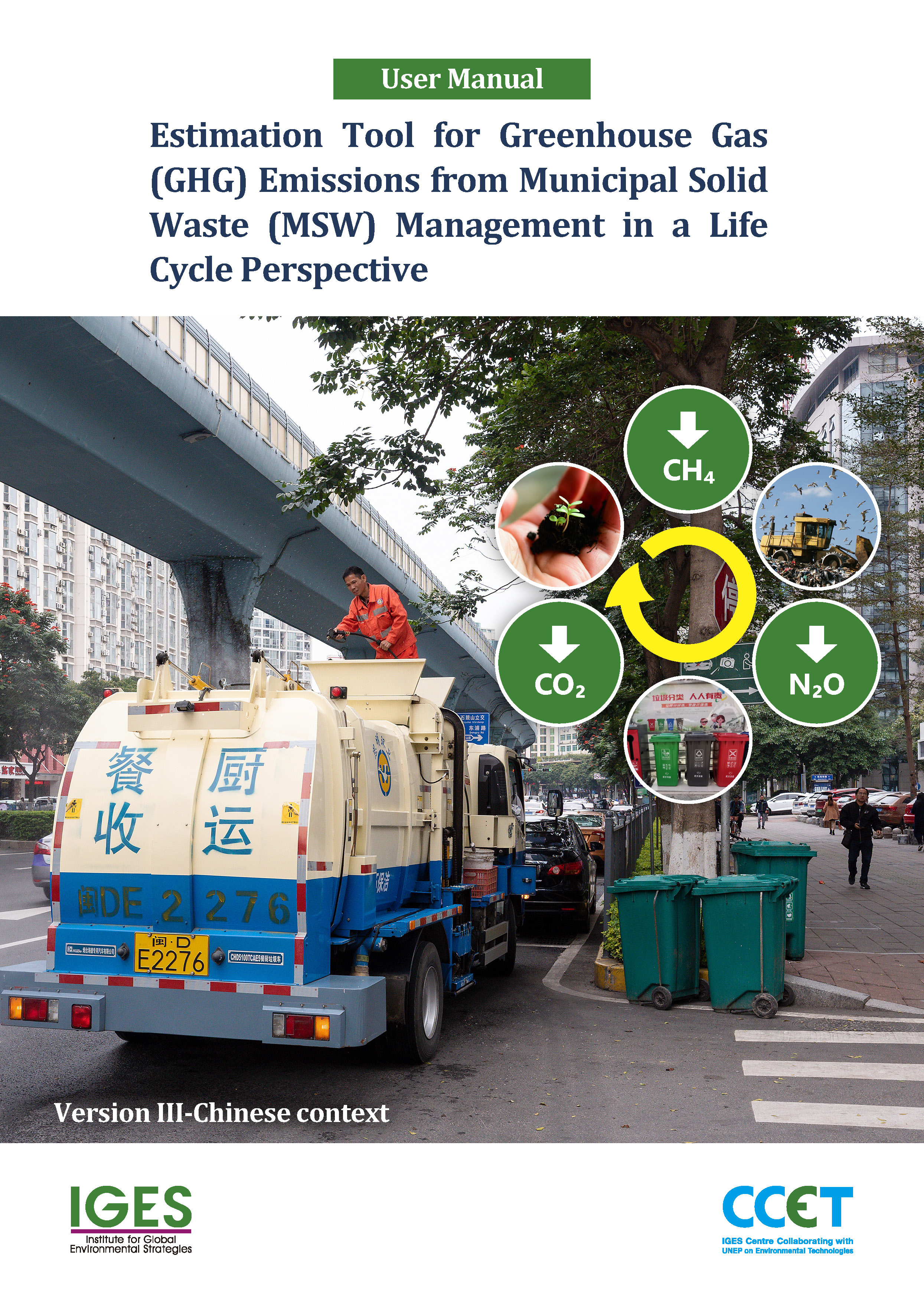
IGES Centre Collaborating with UNEP on Environmental Technologies (CCET) has developed version III of the IGES-GHG calculator entitled "Estimation Tool for Greenhouse Gas (GHG) Emissions from Municipal Solid Waste (MSW) Management in a Life Cycle Perspective", a tool that enables to estimate GHG emissions from the waste sector in China in the Life...
Training or Learning Material
IGES Centre Collaborating with UNEP on Environmental Technologies (CCET) has developed version III of the IGES-GHG calculator entitled "Estimation Tool for Greenhouse Gas (GHG) Emissions from Municipal Solid Waste (MSW) Management in a Life Cycle Perspective", a tool that enables to estimate GHG emissions from the waste sector in China in the Life...
Book Chapter
In China's Carbon-Energy Policy and Asia's Energy Transition: Carbon Leakage, Relocation and Halos
India has an ambitious renewable energy target for the decades ahead. However, the targets are faced with two critical impediments: (1) the lack of an internationally competitive renewable equipment manufacturing industry domestically and (2) the overdependency on external supply sources for equipment and machinery. The chapter finds that, despite...
Policy Report
Author:
Makoto Tsukiji
Patrick Mwesigye
Norah Mugita
Sylvia Munuhe
Evans Kituyi
Lelissa Daba
Chengchen Qian
Adebiyi Odegbile
Joseph Price
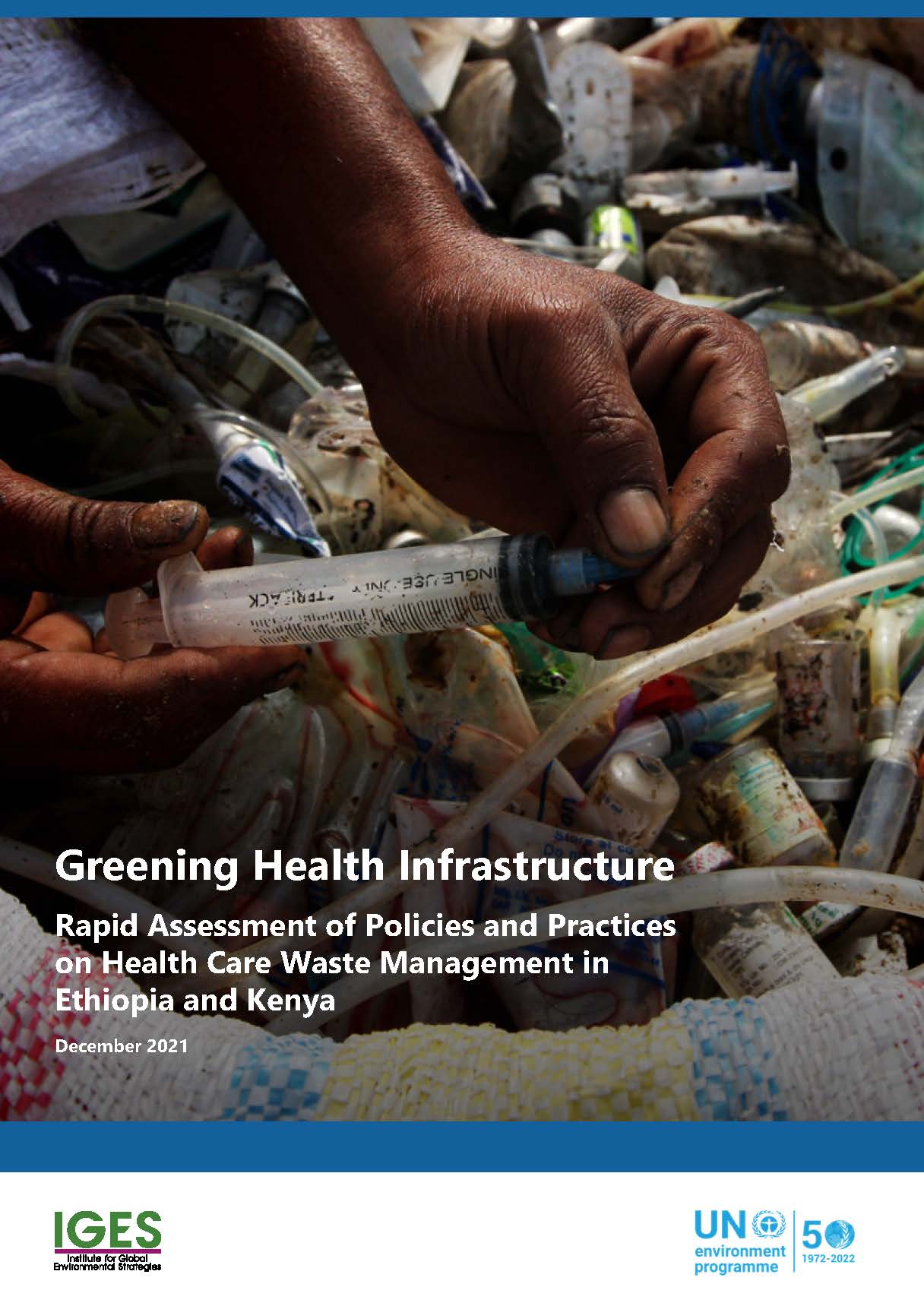
The sound management of Health Care Waste (HCW) has been receiving increasing global attention, now even more so given the urgency of the COVID-19 pandemic. The spread of COVID-19 throughout Africa has significantly influenced the already overburdened Health Care Waste Management (HCWM) systems in many countries. A lack of infrastructure...
Peer-reviewed Article
In Sustainability
Author:
Kesar
Chand
Jagdish Chandra
Kuniyal
Shruti
Kanga
Raj Paul
Guleria
Gowhar
Meraj
Majid
Farooq
Suraj Kumar
Singh
Mahendra Singh
Nathawat
Netrananda
Sahu
Raj
Kumar
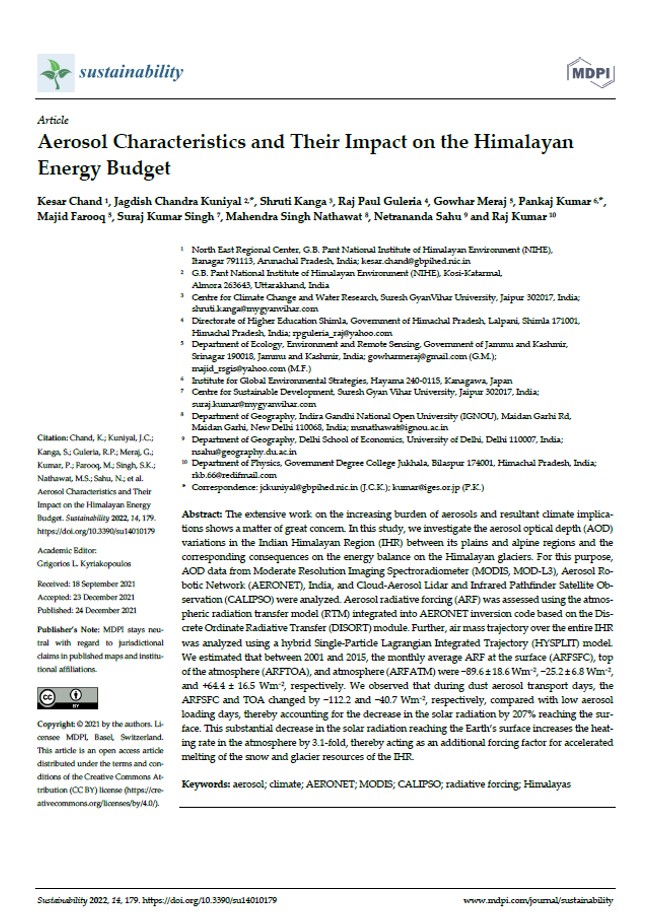
The extensive work on the increasing burden of aerosols and resultant climate implications shows a matter of great concern. In this study, we investigate the aerosol optical depth (AOD) variations in the Indian Himalayan Region (IHR) between its plains and alpine regions and the corresponding consequences on the energy balance on the Himalayan...
Data or Tool
Author:
IGES CDM Investment Analysis Database aims to provide organised information that has been used for investment analysis to demonstrate the additionality of the project activities.The listed information helps users to search for specific information on each registered, rejected and withdrawn project more easily and it also enables them to use...
Training or Learning Material
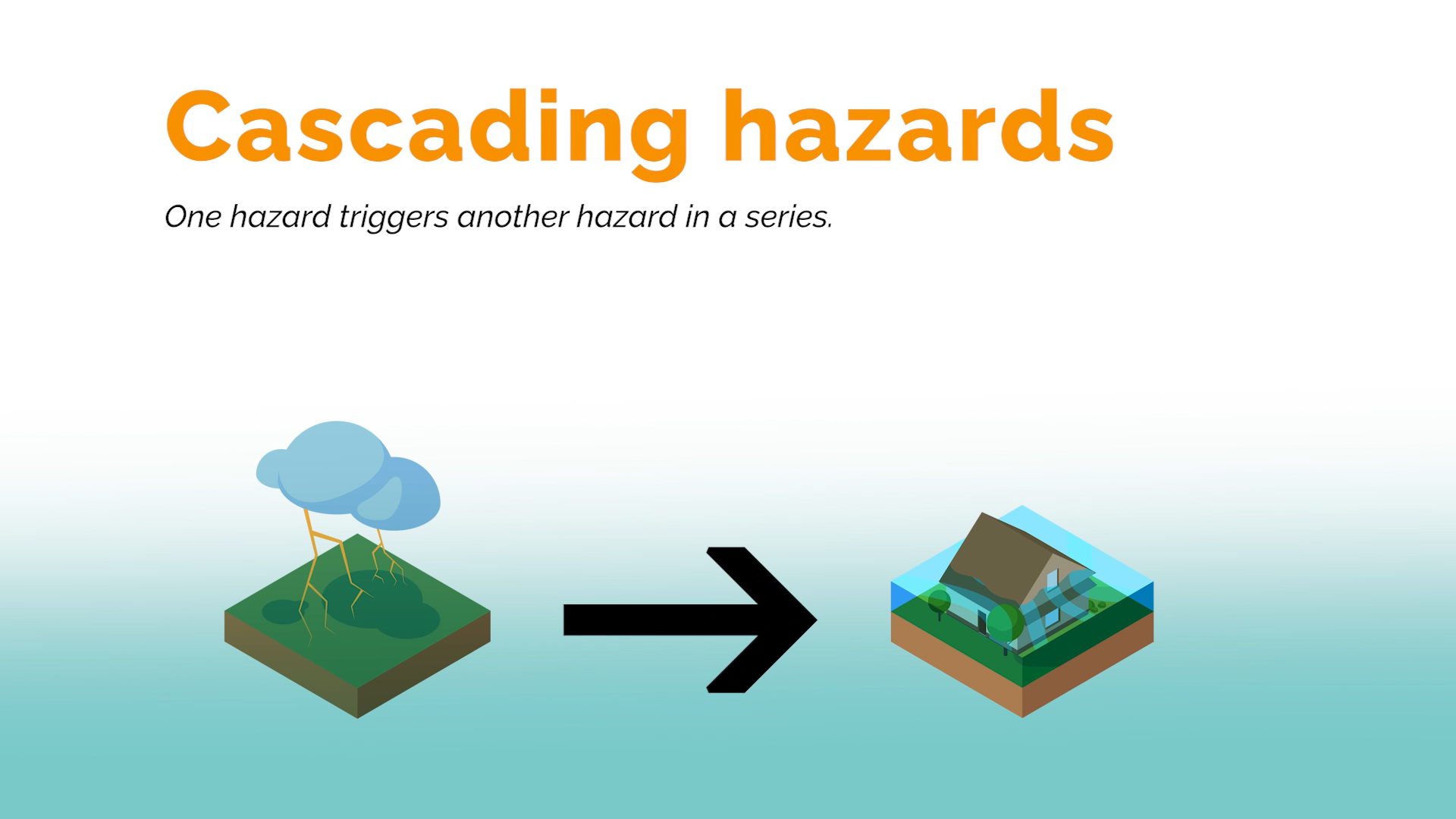
The Joint Message on the Synergy between Climate Action and Disaster Risk Reduction by the Japanese government calls for integrated approaches for disaster risk reduction and climate change adaptation in this era of climate crisis. In the wake of the COVID-19 pandemic, there is also a growing need to address cascading and compound effects of...
Peer-reviewed Article
In Water
Author:
Abdul
Kadir
Zia
Ahmed
Md. Misbah
Uddin
Zhixiao
Xie
This study aims to assess the impacts of land use and land cover (LULC) changes on the water quality of the Surma river in Bangladesh. For this, seasonal water quality changes were assessed in comparison to the LULC changes recorded from 2010 to 2019. Obtained results from this study indicated that pH, electrical conductivity (EC), and total...
Peer-reviewed Article
In Forests
Author:
Sachchidanand
Singh
Harikesh
Singh
Vishal
Sharma
Vaibhav
Shrivastava
Shruti
Kanga
Netrananda
Sahu
Gowhar
Meraj
Majid
Farooq
Suraj Kumar
Singh
Forests are an important natural resource and are instrumental in sustaining environmental sustainability. Burning biomass in forests results in greenhouse gas emissions, many of which are longlived. Precise and consistent broad-scale monitoring of fire intensity is a valuable tool for analyzing climate and ecological changes related to fire...
Peer-reviewed Article
In Asian Research Policy
The Paris Agreement sets the goal to limit the global warming to well below 2 °C and preferably 1.5 °C. The recent IPCC report warned that 1.5 °C-warming may occur much earlier than expected. To meet the 1.5 °C target, global emissions of greenhouse gases (GHGs) should be net zero by 2050 or earlier. Increasing number of countries, local...
Keywords: