This pamphlet introduces the latest activities of Kitakyushu Urban Centre.
- Clear all
- Language: (-) English
- SDGs: (-) Goal 14. Life Below Water
Results 1 - 10 of 225 (Sorted by date)
In International Journal of Applied Earth Observation and Geoinformation
Quantitative monitoring of lake water storage in arid regions is essential for effective management of regional water resources, and can also elucidate the impacts of ecological degradation on lake water storage. This study investigates changes in water storage in Ebinur Lake, Xinjiang, from 2011 to 2024 using field–measured water depth data and...
Editor:
Wei-Sheng
Chen
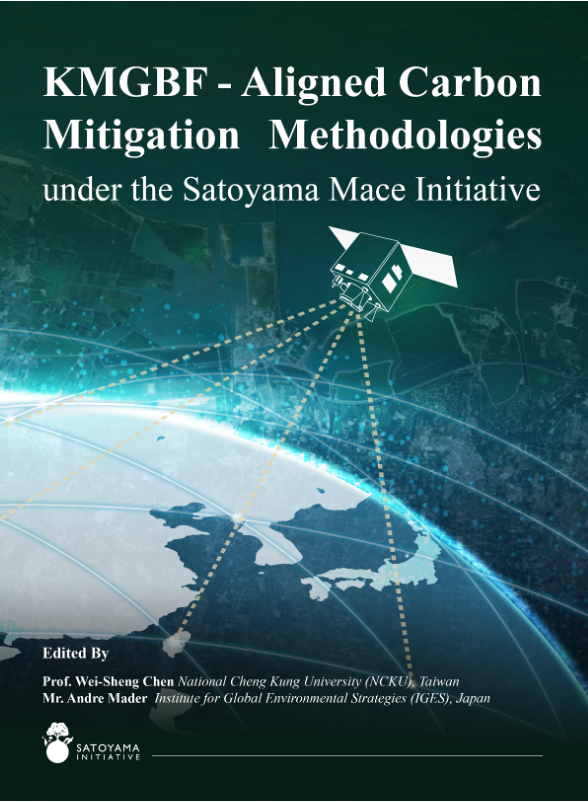
Excerpt from Preface: Climate action has long been the main focus of global sustainability efforts. From a biodiversity point of view, frameworks to manage greenhouse gases need to do more than track emissions. They should, at least, avoid harming biodiversity and at best be proactive tools for sustaining the complex ecosystems that help us...
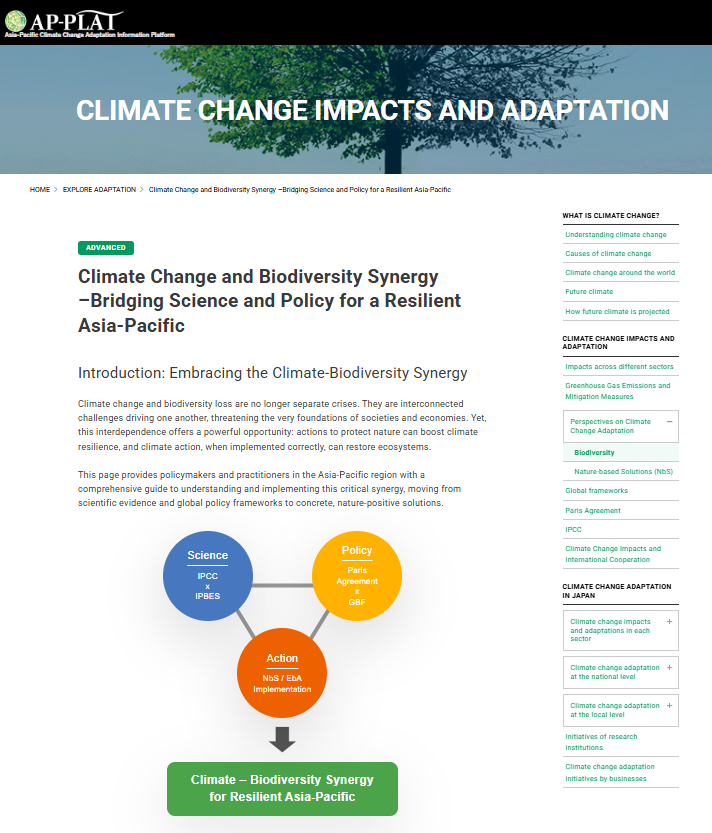
Embracing the Climate-Biodiversity Synergy Climate change and biodiversity loss are no longer separate crises. They are interconnected challenges driving one another, threatening the very foundations of societies and economies. Yet, this interdependence offers a powerful opportunity: actions to protect nature can boost climate resilience, and...
Keywords:
In BioScience
Excerpt (first section): Nature-based solutions (NbS) have become a pillar of global sustainability governance, featuring prominently in international agenda-setting instruments such as the Kunming–Montreal Global Biodiversity Framework, as well as in conservation messaging. Using nature to address societal challenges is the defining feature of NbS...
The 12 th meeting of the IPBES Plenary (IPBES-12) was held in Manchester, UK, from 3–9 February 2026, preceded as usual by regional consultations and a Stakeholder Day on 2 February. The largest individual focus of the meeting was the consideration of the report of The Methodological Assessment of the Impact and Dependence of Business on...
In Sustainability Science
Aquatic food systems are essential to global food security and biodiversity but remain underserved by existing sustainability indexes, especially amid rising uncertainties and accelerating climate change. Current frameworks are fragmented, environmentally weighted, and insufficiently inclusive of social, economic, and governance dimensions. As we...
The Seventh G20 Report on Action against Marine Plastic Litter is the seventh compilation of policies and measures undertaken by countries and international organisations globally to tackle marine plastic litter, and is prepared under the leadership of South Africa, the G20 Presidency for 2025, in collaboration with the Ministry of the Environment...
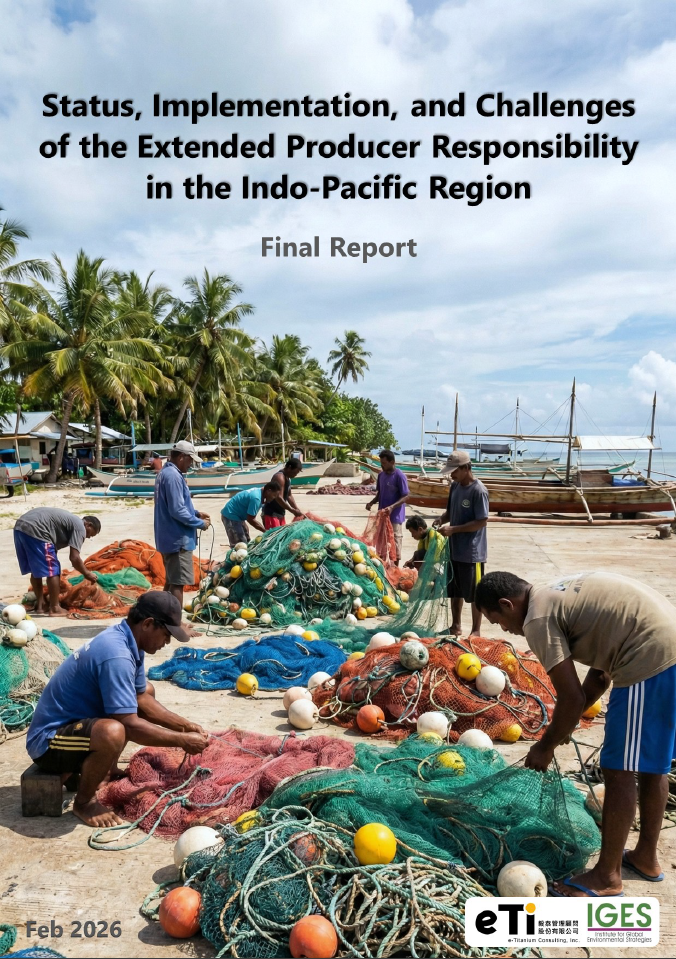
The global environmental governance landscape is undergoing a paradigmatic shift from state-centric pollution control to market-based Extended Producer Responsibility (EPR). This report provides an exhaustive analysis of the EPR landscape within the Indo-Pacific region, contrasting the mature, strict-liability frameworks of East Asia (Japan, South...
Single-use plastics (SUPs) remain a major contributor to environmental degradation in ASEAN+3 despite a decade of national bans, regional declarations, and growing circular economy commitments. Yet most policy frameworks continue to rely on product-focused interventions – bans, charges, and recycling mandates – without adequately considering the...