Mr.
Kazunobu ONOGAWA

Former Staff (from Jan 2012 - Jun 2021 )
Results 31 to 40 of 68 (Sorted by date)
Policy Report
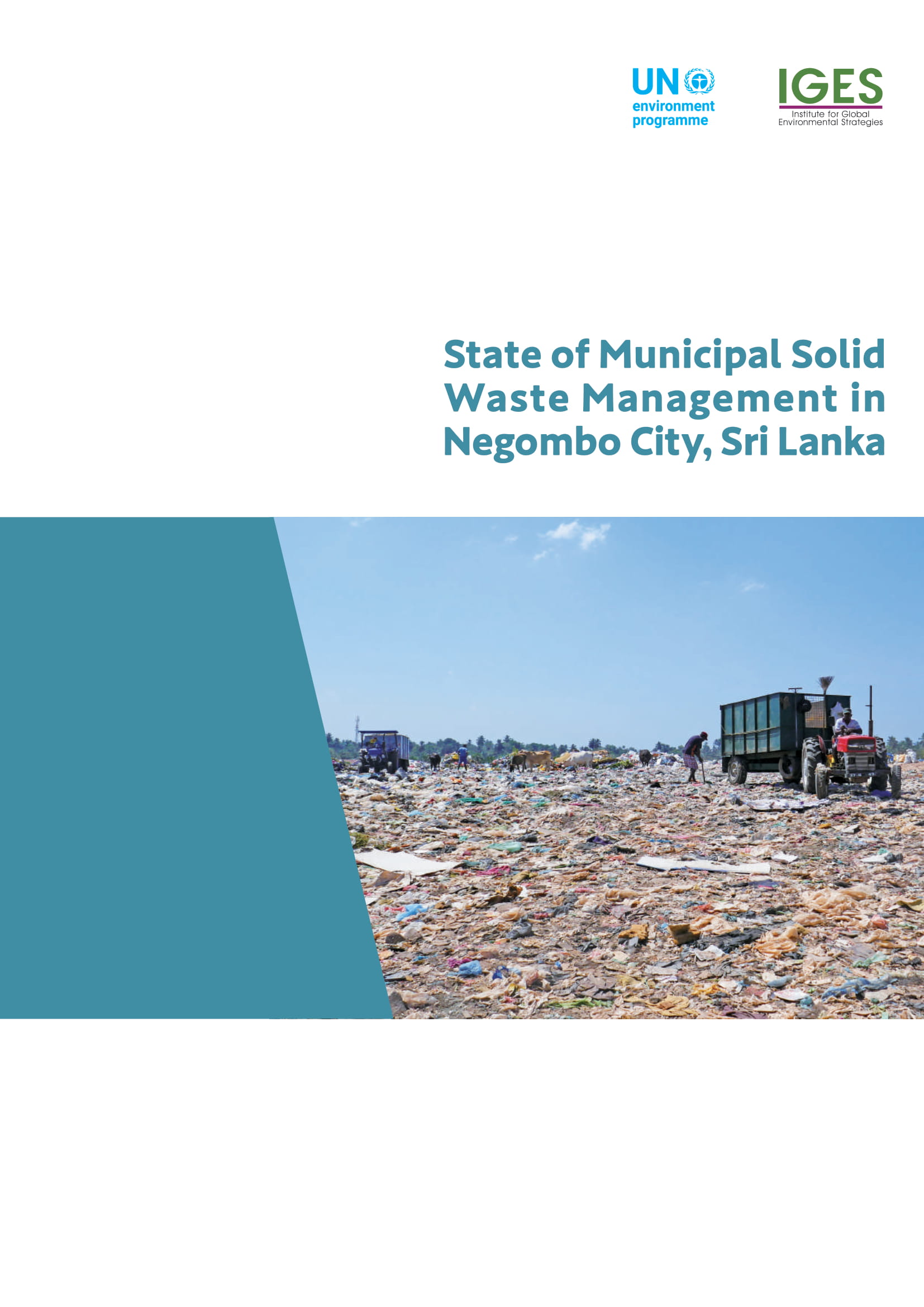
Negombo City is one of the fastest growing tourist destinations in Sri Lanka. It is the major commercial and transport centre, and main health service provider for the region. However, municipal solid waste management is a pressing concern for Negombo due to expanding urbanization, increasing income, lack of public awareness, changes in consumption...
Submission to Policy Process
Author:
Mao Kol Mardi
Navuth Sam
Kim Vathanak Thida
Keo Channarith
Nodira Akhmedkhodjaeva
Rithy Uch
Phlla Sam
Lara Grosso
Seng Bunrith
Just like in any city, the waste management has always been a major societal issue for Phnom Penh. The monthly amount of disposed waste at the landfill more than doubled in the past decade owing to factors such as population growth, economic growth, changes in industrial structure and of people’s lifestyle. While Phnom Penh Capital Administration...
PR, Newsletter or Other
The IGES Centre Collaborating with UNEP on Environmental Technologies (CCET) was founded in 2014 to assist national, regional and local governments with advancing low impact, environmentally responsible waste management systems, helping to direct a wider shift towards more resource efficient and sustainable societies. In collaboration with other...
PR, Newsletter or Other
IGES-UNEP 環境技術連携センター( IGES Centre Collaborating with UNEP on Environmental Technologies : CCET )は、アジア・太平洋地域の国々に対し、中央政府・地方自治体による環境負荷が少ない適切な廃棄物管理体系の構築に協力し、資源効率的で持続可能な社会への転換を後押しすることを目的に 2014 年に設立されました。 CCET は主要なステークホルダーとの連携の下、 3R (リデュース( Reduce )、リユース( Reuse )、リサイクル( Recycle ))等に基づく効率的な廃棄物管理・資源管理に向けた支援を実施しています。相手国政府の政策策定の支援、政策の実施に向けた組織体制・知見の強化...
Conference Proceeding
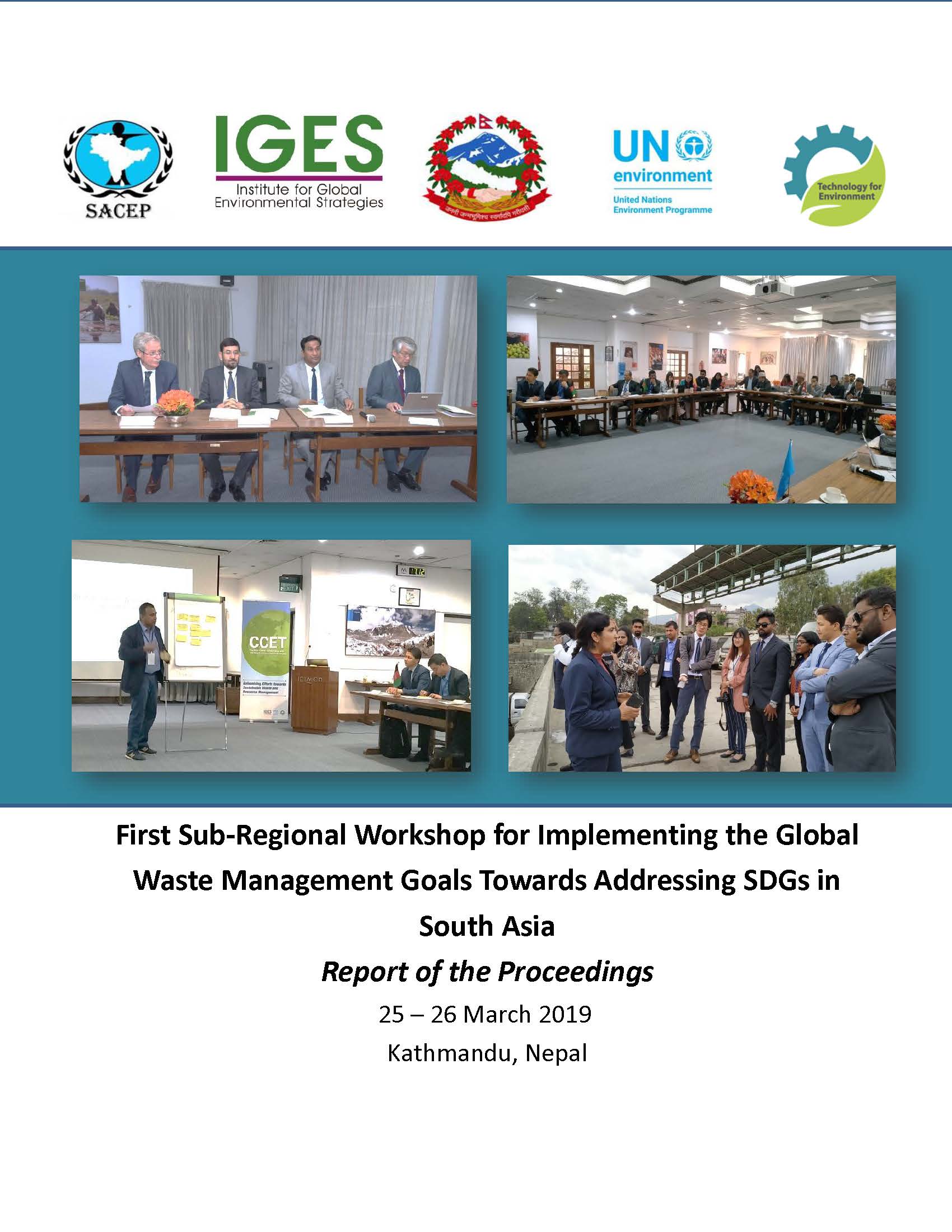
First Sub-Regional Workshop on Preparation of Status Report and Sub-regional Road map for implementing the Global Waste Management Goals toward Addressing SDGs in South Asia
Home to roughly 1.8 billion people, South Asia generates approximately 334 million tonnes of waste per year of which 174 million tonnes (57%) is organic in content. In addition to the increase in municipal solid waste, managing complex and emerging waste streams, including e-waste, food waste, construction and demolition waste, disaster waste...
Presentation
First Sub-Regional workshop on Preparation of status Report and Sub-regional Roadmap for Implementing the Global Waste Management Goals toward Addressing SDGs in South Asia
Author:
Home to roughly 1.8 billion people, South Asia generates approximately 334 million tonnes of waste per year of which 174 million tonnes (57%) is organic in content. In addition to the increase in municipal solid waste, managing complex and emerging waste streams, including e-waste, food waste, construction and demolition waste, disaster waste...
Presentation
TRAINING WORKSHOP FOR THE SAAFURAAJJE SMALL GRANT AWARD WINNERS
Author:
This presentation was delivered as a part of the training workshop on Saafraaj which was organized with aimed at developing capacity of Island Council members of Zone 6, Maldives, towards implementation of the regional waste management strategy.
Conference Proceeding
Author:
Waste-to-energy (WtE) can be considered as a potential alternative source of energy and is a subject of very considerable interest in both developed and developing countries. In order to provide a guideline for introducing WtE from municipal solid waste (MSW) in Asian countries, investigations were carried out on the overall framework and factors...
Submission to Policy Process
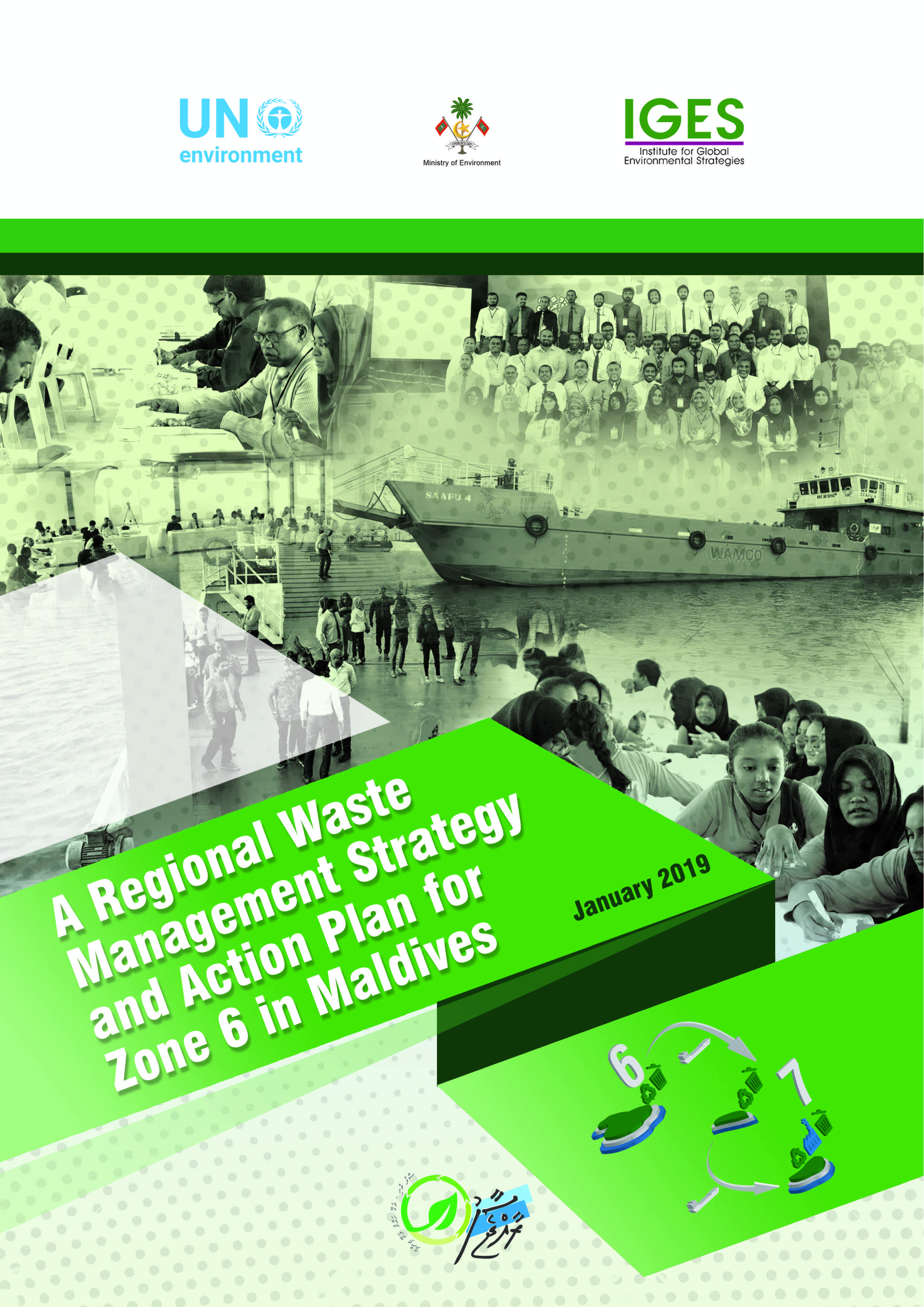
Maldives has had to face a growing challenge in managing its solid waste and associated environmental, economic and social issues. This situation is even worse in small islands due to the size of the island communities, insufficient infrastructure and waste transportation difficulties, absence of sufficient budget and appropriate cost recovery...
Policy Report
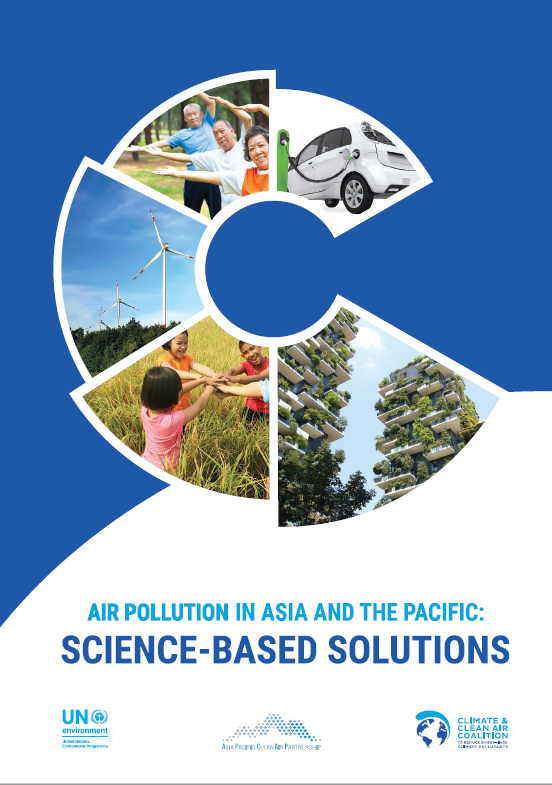
UNEP published the Air Pollution in Asia and the Pacific: Science-based Solutions, the first-ever comprehensive scientific assessment of air pollution outlook in the region. It outlines 25 clean air measures that could achieve safe air quality levels for 1 billion people by 2030 - with numerous benefits for public health, economic development and...
No Projects Found.