

Research Director
Research Topics & Areas of Expertise
- Water and sanitation in developing countries
- Decentralised domestic wastewater and septage management
- Circular economy perspectives for plastic (including macro- and microplastics) and municipal solid waste
- Sustainable consumption and production (SCP)
- Environmental systems analysis
- Climate change adaptation and mitigation technologies
- Integrated and high-integrity carbon markets in ASEAN
- Water–food–energy nexus for resource efficiency
Education
1. Institution: The University of Tokyo
Date: 2006-2009
Degree: Doctoral Degree (Ph.D)– Department of Urban Engineering
Graduate School of Engineering – The University of Tokyo, Japan.
Date of graduation: September 2009
2. Institution Asian Institute of Technology, Bangkok, Thailand;
Date: 2004 – 2006
Degree: M.Eng. - Environmental Engineering and Management
3. Institution Hanoi University of Civil Engineering, Hanoi, Vietnam;
Date: 1998 – 2003
Degree: B. Sc. - Water Supply, Sewerage and Environmental Sanitation
Results 91 to 100 of 164 (Sorted by date)
Policy Brief
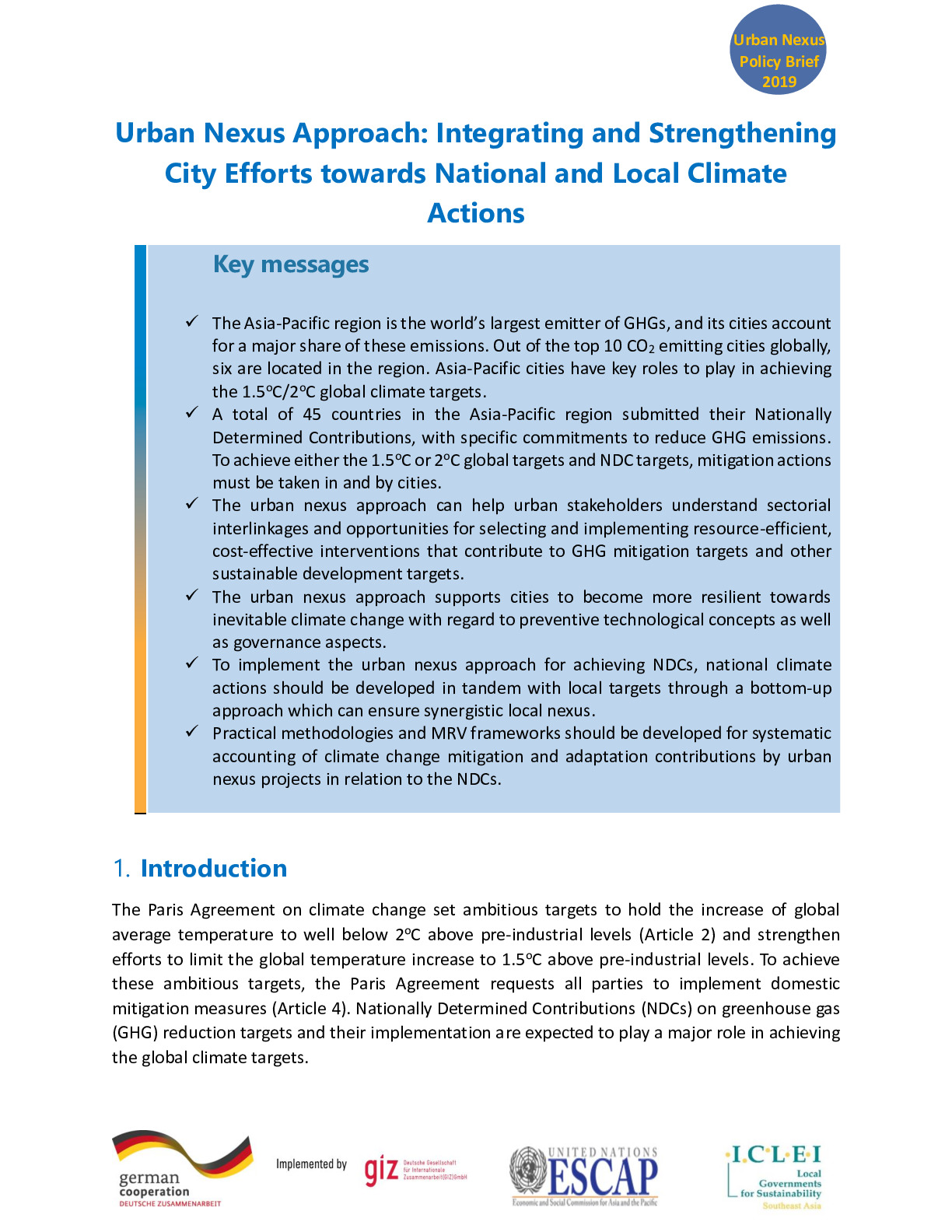
UNESCAP - Urban Nexus Policy Brief 2019
Key Messages: ✓ The Asia-Pacific region is the world’s largest emitter of GHGs, and its cities account for a major share of these emissions. Out of the top 10 CO2 emitting cities globally, six are located in the region. Asia-Pacific cities have key roles to play in achieving the 1.5oC/2oC global climate targets. ✓ A total of 45 countries in the...
Commissioned Report
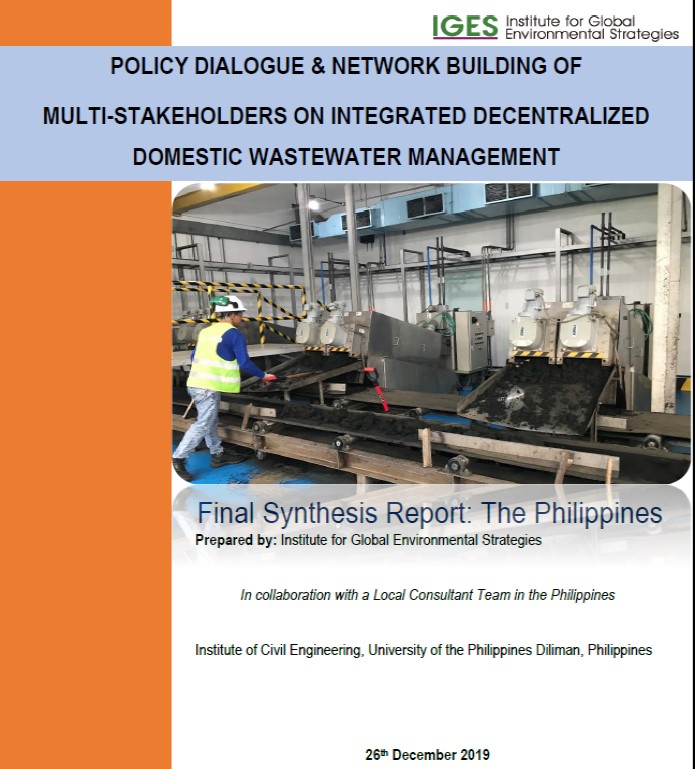
This report presents the results of fact-finding investigation and surveys on decentralised domestic wastewater management in the Philippines, as a part of the commission work under the Japan-ASEAN Integration Fund (JAIF) project on: "Policy Dialogue and Network Building of Multi-stakeholders on Integrated Decentralised Domestic Wastewater...
Commissioned Report
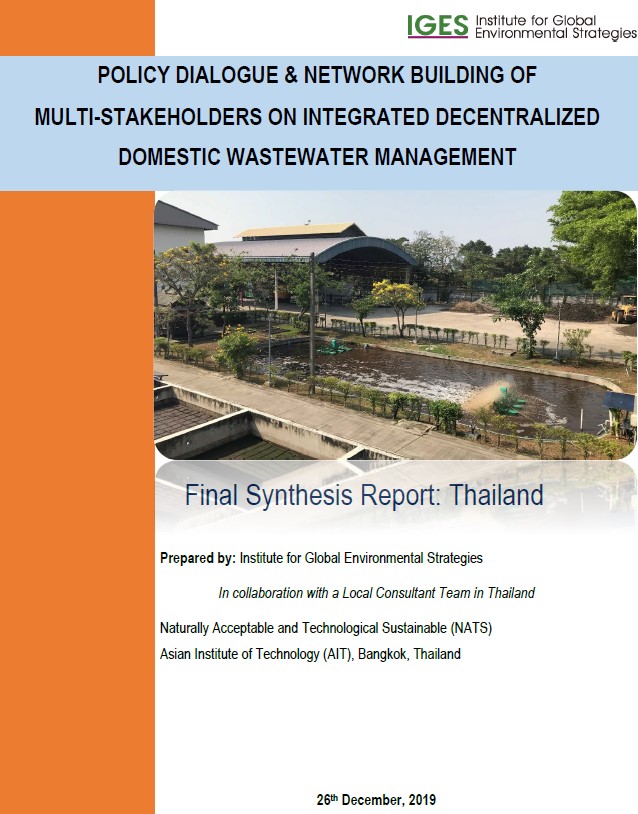
This report presents the results of fact-finding investigation and surveys on decentralised domestic wastewater management in Thailand, as a part of the commission work under the Japan-ASEAN Integration Fund (JAIF) project on: "Policy Dialogue and Network Building of Multi-stakeholders on Integrated Decentralised Domestic Wastewater Management"
Commissioned Report
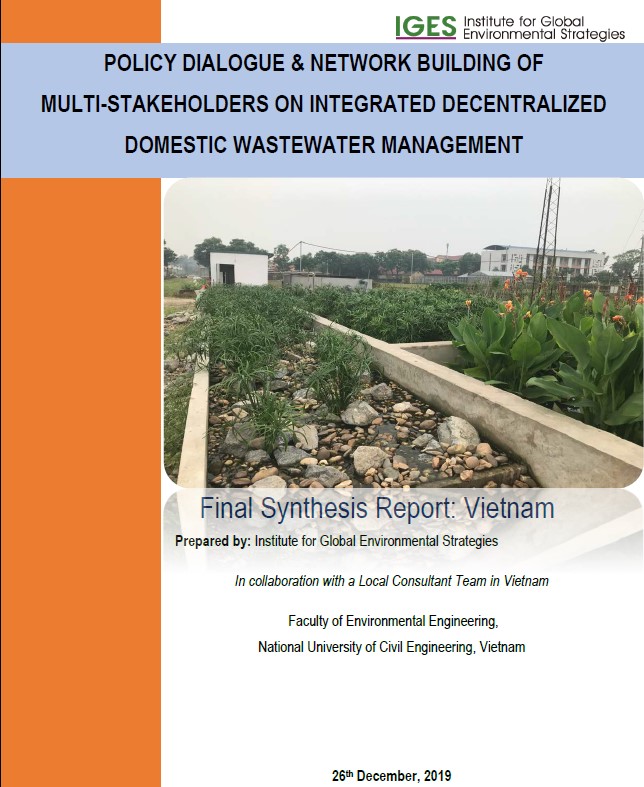
This report presents the results of fact-finding investigation and surveys on decentralised domestic wastewater management in Vietnam, as a part of the commission work under the Japan-ASEAN Integration Fund (JAIF) project on: "Policy Dialogue and Network Building of Multi-stakeholders on Integrated Decentralised Domestic Wastewater Management"
Book
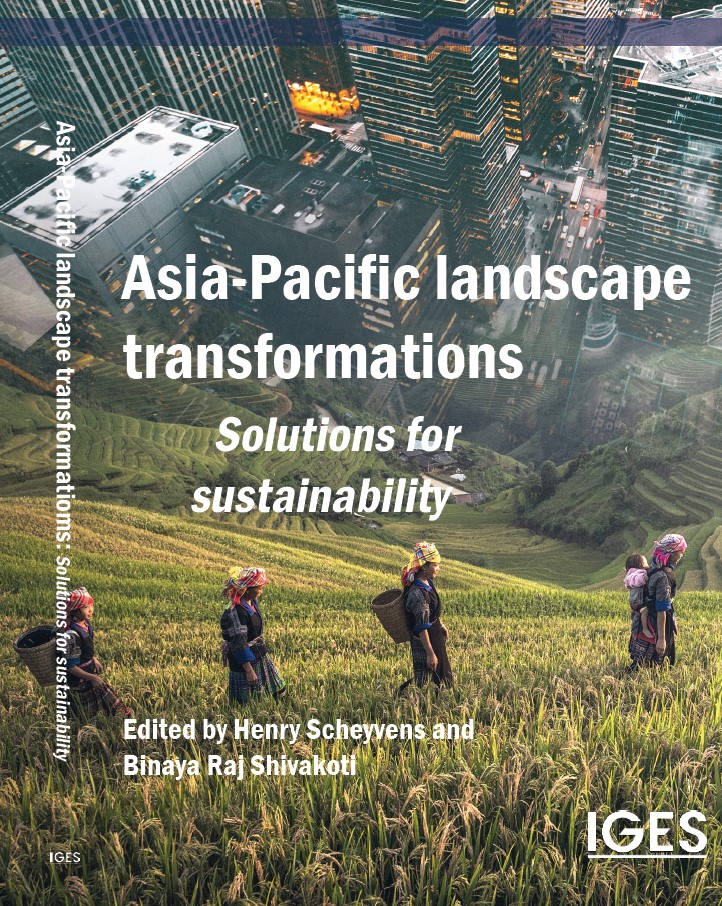
The Asia-Pacific region faces a fundamental dilemma. Over recent decades the region has achieved tremendous economic growth that has lifted millions of its people out of poverty and raised living standards, but in many places the way land is being used to generate this growth is unsustainable. Land has been exploited – growing economies regardless...
Policy Report
Asia is home to 60% of the world’s total population, with further population growth forecast in the future. In addition, the region accounts for 30% of global GDP and by 2050 this share is expected to exceed 50%, making Asia the region with the most dynamic growth in the world. Against this background, there is a worsening impact on the environment...
Data or Tool
The "JCM in CHARTS" series aim to provide a comprehensive and easy-to-understand description of the Joint Crediting Mechanism (JCM) in each host country. This version describes the rules, procedures, and references for implementing the JCM in Vietnam.
Conference Proceeding
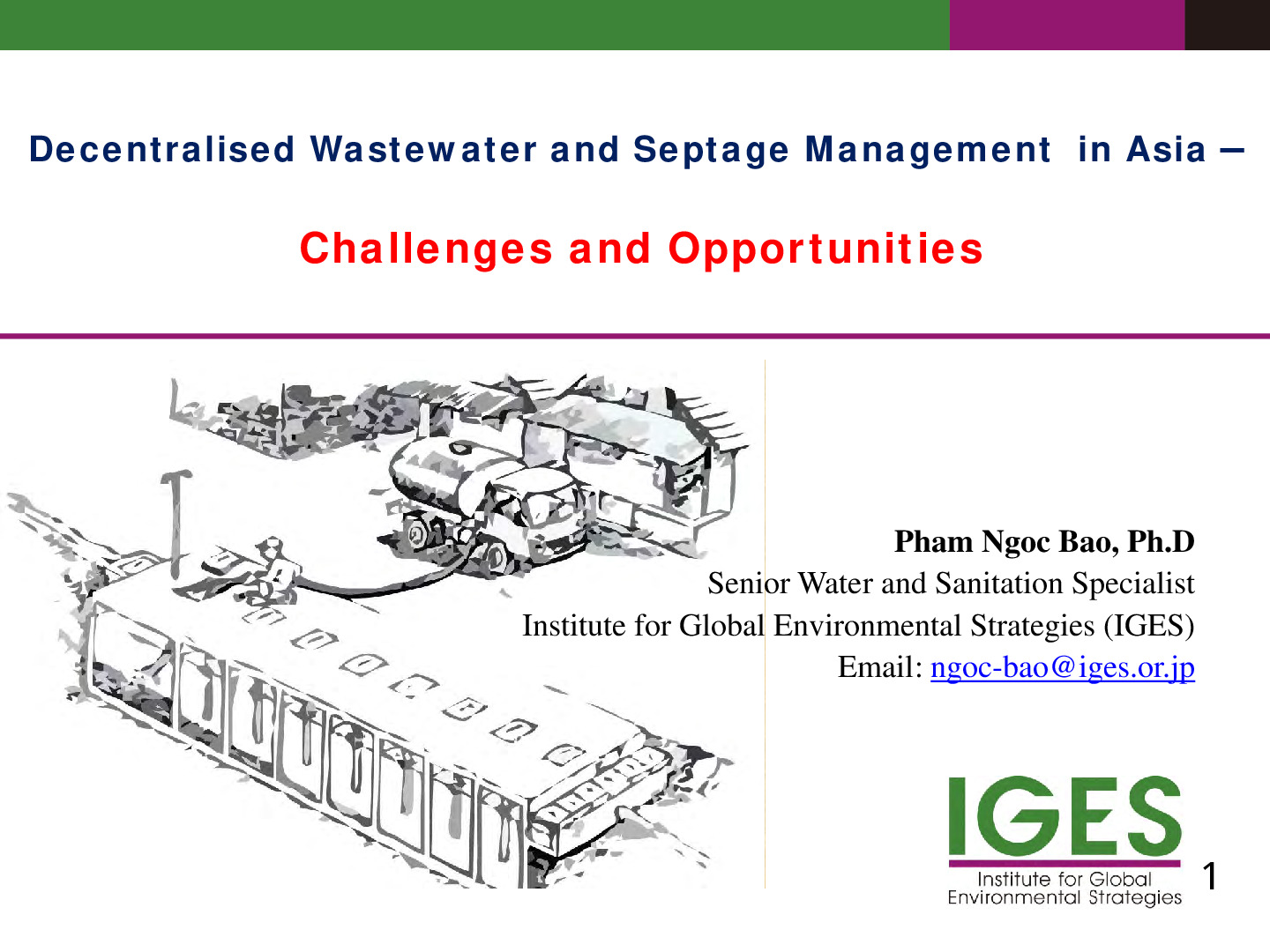
WEPA International Workshop on “Roles of decentralized wastewater and septage management in addressing the challenges and accelerating the progress of Sustainable Development Goal 6 (SDG6) in Asia”
The Asia-Pacific region, with over 4.6 billion people by 2016, is the home of nearly 60% of the world population. Rapid population growth, urbanization, industrialization and changes in consumption patterns, including shifting diets toward highly water-intensive foods such as meats, which have led to a significant increase in water demand, and...
Commissioned Report
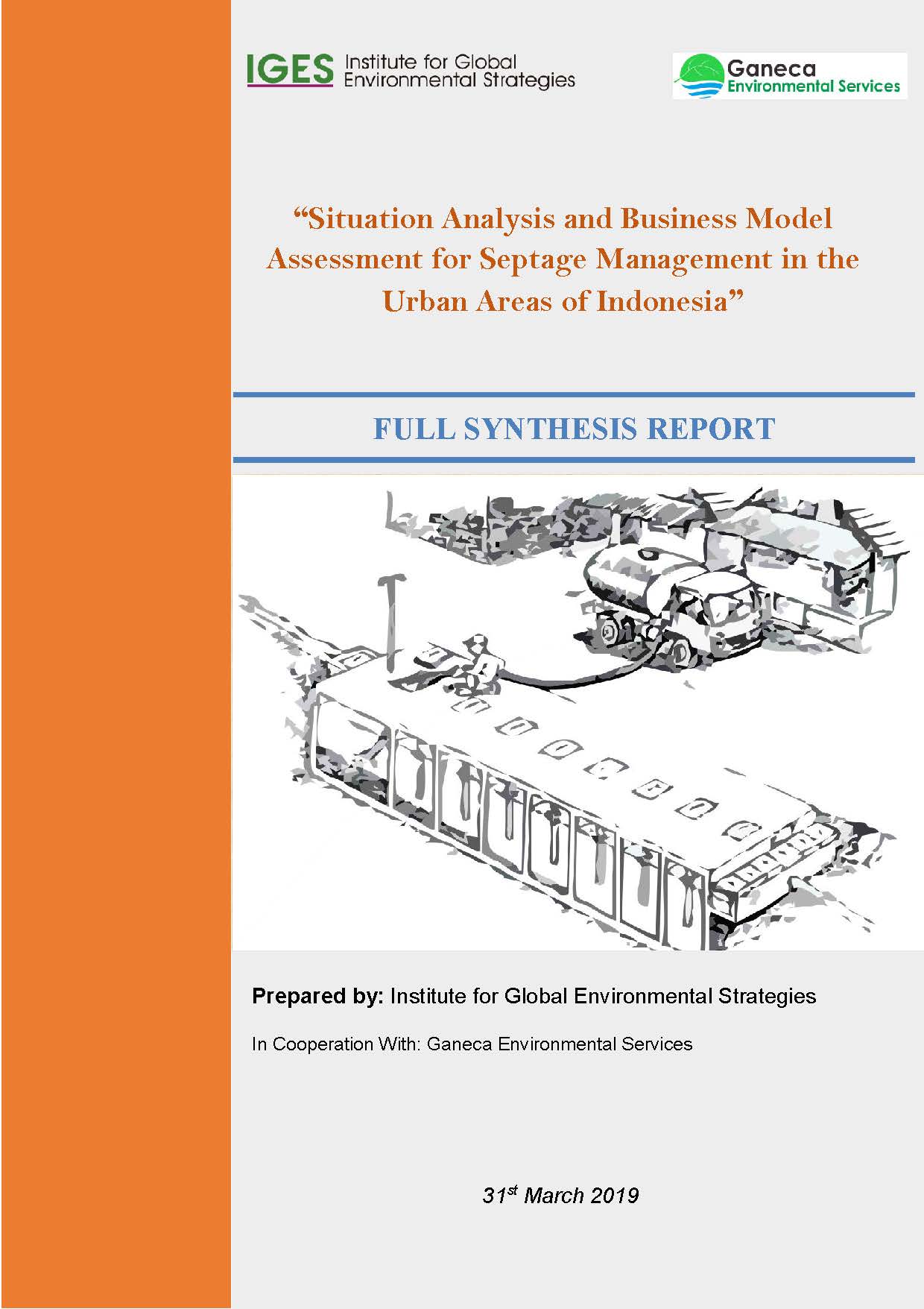
Although an enormous progress has been made over the last 25 years regarding the increased access to improved on-site sanitation such as septic tanks in urban areas of Indonesia, but unfortunately most of them are soak pits of poorly designed, constructed, open bottomed septic tanks. Particularly, due to lack of regular de-sludging and maintenance...
Commissioned Report
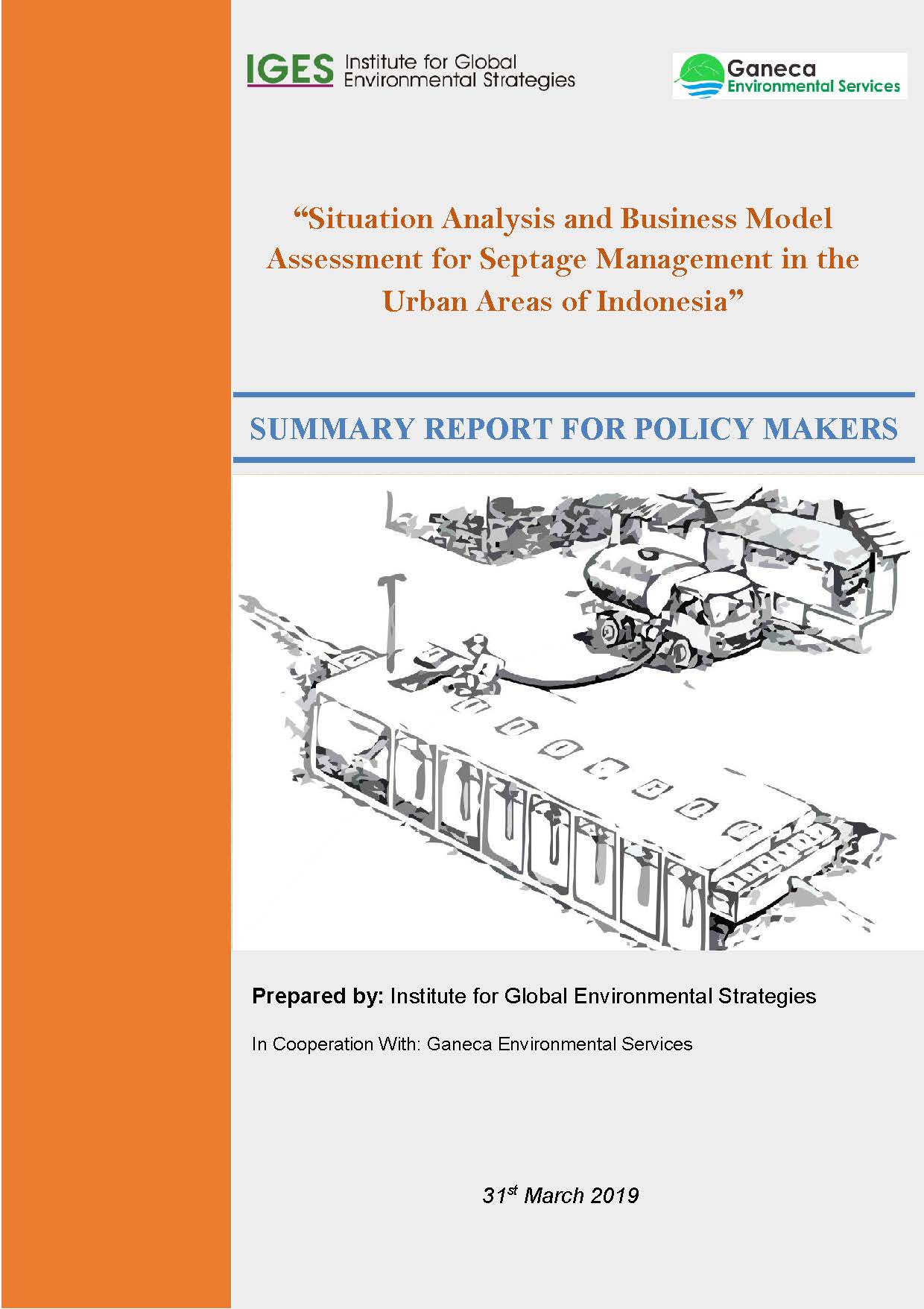
Key Messages - Indonesia is the fourth most populous country in the world with a total population of more than 260 million people, of which more than half of them are now living in urban areas, and less than 2% are connected to centralised sewer network and treatment system. This situation creates a huge burden for urban environment and...
Results 1 to 1 of 1 (Sorted by date)
Project
Updated: August 2024
PoDIWM-2: Strengthening Capacity Development for Local Governments in ASEAN to Tackle Microplastics and Water Pollution through Decentralised Wastewater Management Approach
PoDIWM is shorthand for a 2-year ASEAN Cooperation Project titled “Policy Dialogue and Network Building of Multi-stakeholders on Integrated Decentralized Domestic Wastewater Management in ASEAN Countries,” (PoDIWM) funded by the Japan-ASEAN Integrati