

Results 101 to 110 of 110 (Sorted by date)
Discussion Paper
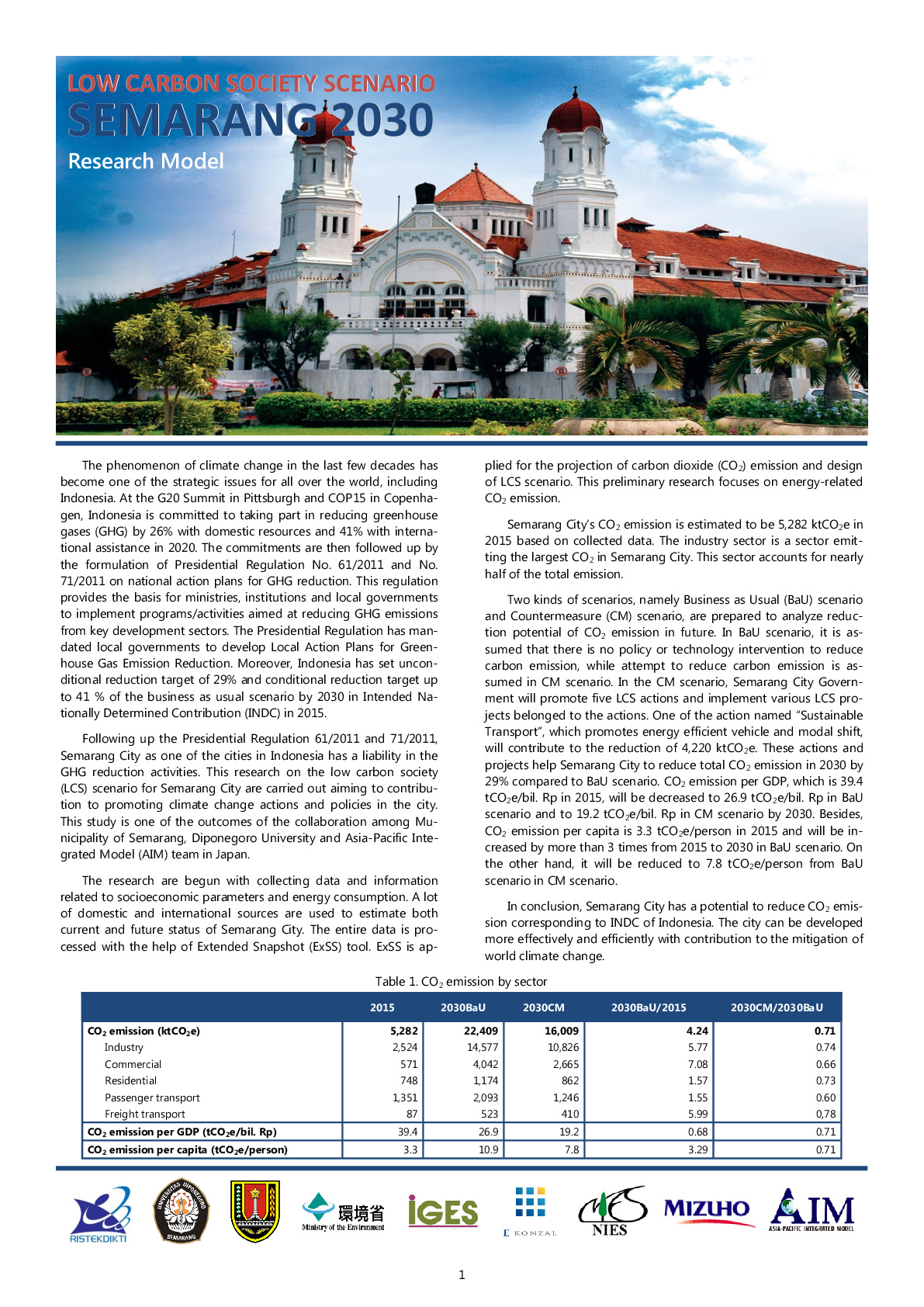
Following up the Presidential Regulation 61/2011 and 71/2011, Semarang City as one of the cities in Indonesia has a liability in the GHG reduction activities. This research on the low carbon society (LCS) scenario for Semarang City are carried out aiming to contribu-tion to promoting climate change actions and policies in the city. This study is...
Commissioned Report

本業務は、アジア域内での環境協力の更なる促進を図るため、以下の5つを主要コンポーネントとし、これらの統合的実施を図り、CAIの幅広い普及と日本国の戦略的国際環境協力の推進に貢献することを目的とするものである。 1.アジアの都市における環境対策を強化するための概要調査、2.アジア諸国との各種会合支援及び調査業務、3.環境的に持続可能な都市(ESC)に関る調査等業務、4.アジア・太平洋島嶼国における環境問題の現状に係る調査業務、5.環境省が実施する取組に関する情報発信業務
Commissioned Report
本報告書では、アジアの都市の低炭素化やレジリエンス強化に一層資するために、アジアの都市が抱えている環境課題を、既存の資料や東アジア首脳会議環境大臣会合(EAS EMM)やASEAN 加盟国等の主要なステークホルダー等を対象としたアンケートや聞き取り調査等を実施することで抽出した。また、その課題に対し、我が国の都市や企業が強みを持つ技術やノウハウの活用可能性を調査するとともに、連携して取り組むことが検討可能な国際機関、援助機関やその支援メニュー等を調査することで、都市の環境分野協力を推進するための戦略について検討の上で、本報告書を作成した。
Commissioned Report
本報告書は、これまでのASEANにおける環境に係る取組みの全体像を把握でき、また我が国が今後ASEANとの環境協力を検討する上で参考にするための日本語資料作成を目的とし、既存あるいは最新の資料をもとに情報収集をして整理したものである。本調査では、ASEANに関する概要とASEAN地域環境協力に関する発展と経緯を概観し、次にASEAN地域環境協力に関する政策と組織体制および最近のASEAN環境関連大臣会合の動向等について整理した。最後に、主要な個別環境分野における対応状況や2015年のASEAN経済共同体発足に伴う影響などについて記載している。
Commissioned Report
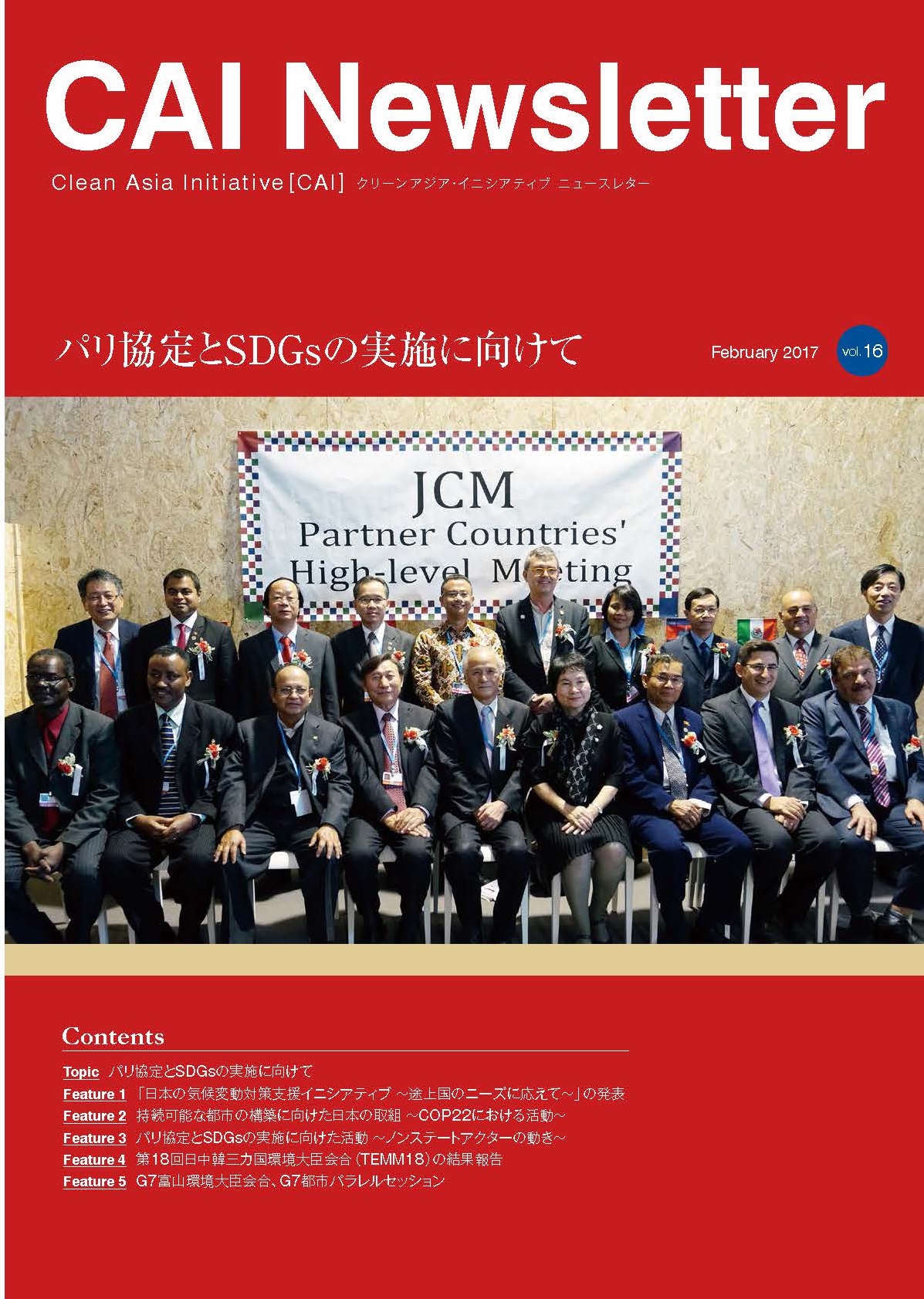
本報告書では、ASEANにおける「環境的に持続可能な都市」(ESC)の現状、及び持続可能な開発のための2030アジェンダ、特に持続可能な開発目標(SDGs)への最新の対応状況の概要を述べる。また、ASEAN及び東アジアにおけるESCアジェンダを支援している主なステークホルダーに関する最新の調査結果、及びESCに関する東アジア首脳会議(EAS)の第8回環境的に持続可能な都市ハイレベルセミナー(HLS)(2017年2月8日-9日にタイ・チェンライで開催)からの主要なメッセージに加え、参加者からのセミナー後のフィードバックの概要も記載している。最後に、次回の第9回ハイレベルセミナーに加え、ASEANにおけるESC及びSDGsに関する今後の研究に対する提言について述べている。
Commissioned Report
平成28年3月に環境省の支援によりアジア太平洋島嶼国の研究者を中心として、島嶼国で起きている環境問題や気候変動の影響に関する研究の促進や解決策の議論、及び若手研究者の養成を目的とした「アジア太平洋島嶼地域環境研究者ネットワーク(Environmental Scientists Network for Asia-Pacific Islands: ESNAP)」が設立された。本業務は、本ネットワークの活動の一環として島嶼国の若手研究者の議論の促進と交流を図り、研究結果を共有するため、ESNAPの事務局である琉球大学を中心として平成29年3月に沖縄県にて研究会が開催された。また、ESNAPの下で実施されている研究結果及び本研究会の成果も含め、アジア...
PR, Newsletter or Other
PR, Newsletter or Other
The Institute for Global Environmental Strategies (IGES) is an international research institute headquartered in Hayama, Japan that conducts strategic policy research on sustainable development in Asia and the Pacific. Since its establishment in 1997, IGES has been an active player in environmental policy research in Indonesia. This paper describes...
Presentation
International Workshop on Clean Energy Development in Asian Cities (Learning From Real Cases)
The main objective of this workshop was set to address the case studies of successful clean energy solutions in Asian cities (India, China and Japan) with a special focus on: 1) How clean energy planning contributes to urban resilience and sustainability? 2) Which initiatives are most promising? What are their policy implications? 3) What is the...
PR, Newsletter or Other
ISAP2016 Discussion Paper - Sub-plenary Session 3
This is the paper for ISAP2016 sub-plenary session.
Results 1 to 6 of 6 (Sorted by date)
Project
Updated: August 2022
Global Climate and SDG Synergy Conference
Calling for an integrative approach: Climate, SDGs and biodiversity Serious concerns were underlined at the 26th Conference of the Parties (COP26) to the United Nations Framework Convention on Climate Change (UNFCCC) regarding the current NDC targets
Project
Updated: July 2020
IGES Activity on "High-level Political Forum on Sustainable Development (HLPF 2020)"
This special webpage presents reports and publications related to the High-level Political Forum on Sustainable Development (HLPF2020).
Project
Updated: July 2020
IGES Activity on "High-level Political Forum on Sustainable Development (HLPF 2019)"
This special webpage presents reports and publications related to the High-level Political Forum on Sustainable Development (HLPF), which as the main United Nations platform on sustainable development, is dedicated to the follow-up and review of the...
Project

Updated: September 2019
SDGs City Reports
Sustainable Development Goals Reports on Cities - Launch of the World-First Voluntary Local Reviews (VLRs) on Shimokawa, Toyama, and Kitakyushu
Project
Updated: August 2023
IGES Inputs to Asia-Pacific Forum on Sustainable Development (APFSD)
APFSD is an annual meeting convened by the United Nations Economic and Social Commission for Asia and the Pacific (UNESCAP) aimed at strengthening the region’s readiness for the United Nations High-level Political Forum on Sustainable Development.
Project
Updated: August 2023
IGES Activity on "High-level Political Forum on Sustainable Development (HLPF)"
This special webpage presents publications related to the High-level Political Forum on Sustainable Development (HLPF), which as the main United Nations platform on sustainable development, is dedicated to the follow-up and review of the 2030 Agenda