Results 1 - 5 of 5 (Sorted by date)
PR, Newsletter or Other
日本経済新聞
Contributor:
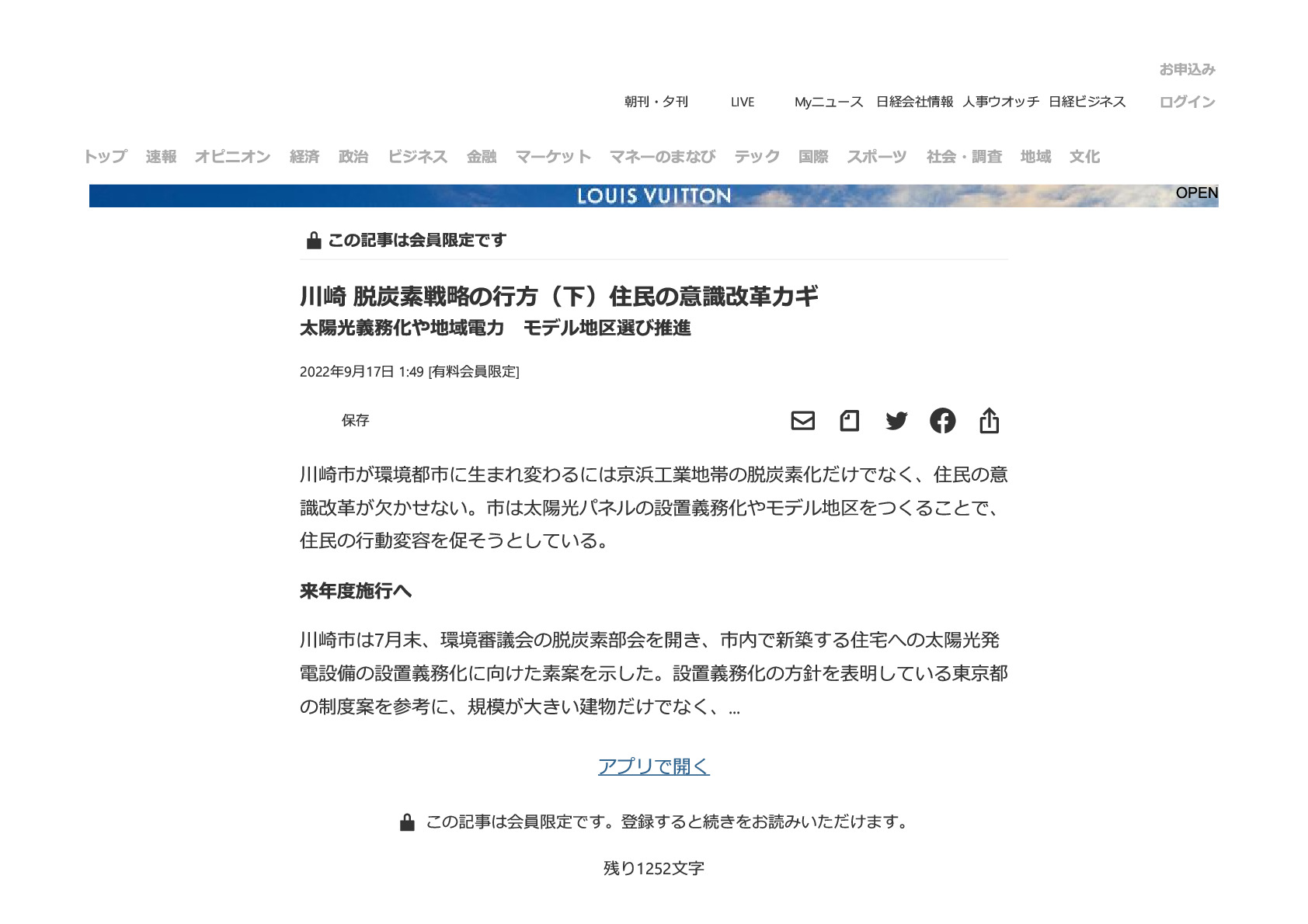
「川崎 脱炭素戦略の行方(下)住民の意識改革カギ:太陽光義務化や地域電力 モデル地区選び推進」 川崎市が環境都市に生まれ変わるには京浜工業地帯の脱炭素化だけでなく、住民の意識改革が欠かせない。市は太陽光パネルの設置義務化やモデル地区をつくることで、住民の行動変容を促そうとしている。 来年度施行へ 川崎市は7月末、環境審議会の脱炭素部会を開き、市内で新築する住宅への太陽光発電設備の設置義務化に向けた素案を示した。設置義務化の方針を表明している東京都の制度案を参考に、規模が大きい建物だけでなく、... (日本経済新聞の記事のページ:https://www.nikkei.com/article/DGKKZO64414520W2A910C2L72000/)...
Policy Brief
Author:
Luca
Coscieme
Bruno
Yamanaka
Fernanda
Iwasaka
Francisco
Javier Contreras Pineda
Flora
Lyn de Albuquerque Fujiwara
Victor
Alexsander Silva
Vimlendu
Kumar Jha
Ashim
Bery
Kuldip
Singh Sangwan
Kailash
Choudhary
Paul
Currie
Solophina
Nekasa
Jokudu
Guya
Pasicha
Chaikaew
Pongsun
Bunditsakulchai
Sittidaj
Pongkijvorasin
Michael
Lettenmeier
Jennie
Broman
Sumito
Shirane
Keiichiro
Tahara
Sayaka
Shinoda
Burcu
Tuncer
Francesca
Oberti
The concept of 1.5-degree lifestyles involves changes in household consumption for achieving levels of per person carbon footprint compatible with the 1.5°C target of the Paris Agreement (IPCC, 2018). This requires, on average, emitting the equivalent of 2.5 tons of CO₂ per person per year by 2030, and 0.7 tons of CO₂ per person per year by 2050...
Report Chapter
Author:
Michael
Lettenmeier
Viivi
Toivio
This report demonstrates that changes in consumption patterns and dominant lifestyles are a critical and integral part of the solutions package to addressing climate change. The report fills a gap in the existing research by establishing global targets for lifestyle carbon footprints, examining current consumption patterns and their impacts on...
Peer-reviewed Article
In Global Policy
This article argues that the environment was extensively incorporated into the Sustainable Development Goals (SDGs), with broad and ambitious targets, reflecting environmental concerns throughout the SDGs. Many environment‐related targets – including some of the most important ones – were placed under ‘non‐environmental’ goals. The SDGs also...
Policy Report
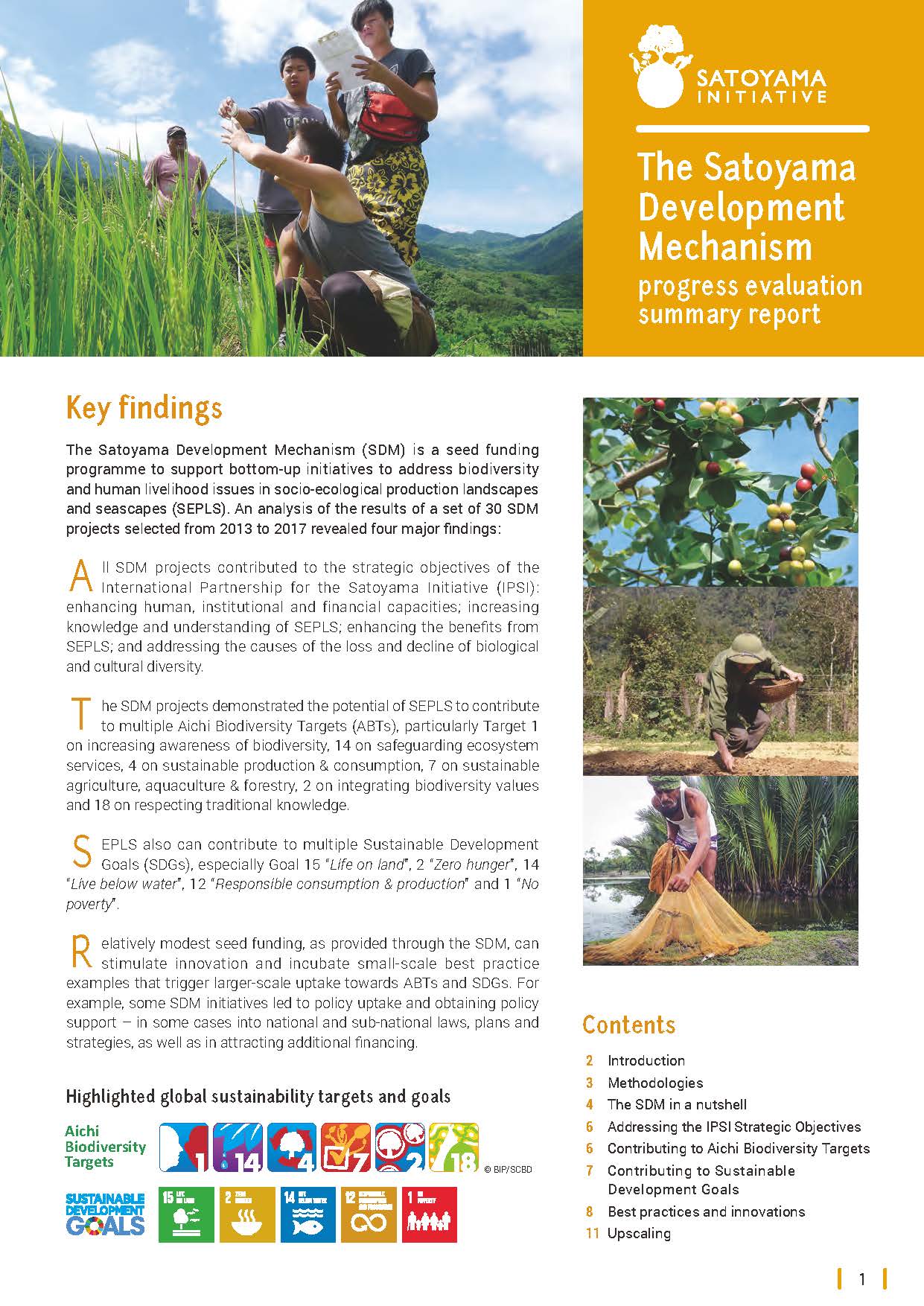
The Satoyama Development Mechanism (SDM) is a seed funding mechanism to encourage IPSI members to develop and accelerate sustainability actions in SEPLS. This report aims to present the SDM projects and their contributions to global goals, for the consideration of policymakers, businesses, researcher institutions, organizations and civil society...