
Director of CCET
Research Topics & Areas of Expertise
Participatory planning, Decentralised/ bottom-up development policies and practices, Sustainable cities, Integrated waste management, 3R (reduce, reuse and recycle) policies and practices, Circular society.
Education
PhD in Management Development, Nihon Fukushi University, Japan (2006)
MSc in Landscape Design, University of Moratuwa, Sri Lanka (1997)
BSc (1st class Hons) in Estate Management and Valuation, University of Sri Jayawardenapura, Sri Lanka (1994)
Results 131 to 140 of 299 (Sorted by date)
Book Chapter
In Routledge Handbook of Food Waste
This chapter considers food waste from the perspective of cities in Asia, presenting case studies from Cambodia, India, Indonesia, Japan, and the Philippines. Interdisciplinary perspectives are brought together, drawing from sociology, industrial ecology, urban planning and public affairs, towards highlighting current efforts to manage waste in...
Policy Report
Accumulation of plastic wastes in the marine eco-system is growing rapidly with the increase of plastic production and consumption patterns, particularly single-use plastics as well as unsustainable plastic waste management practices. Land-based sources are recognised as the main cause (up to 80% of total marine debris) of marine plastic pollution...
Submission to Policy Process
Myanmar has had to face tremendous challenges in waste management in the recent past, due to a number of factors – its growing population and economy, increasing complexity of waste streams, and lack of effective waste management systems, proper infrastructure, capital investment, financial and human resources, as well as effective policy and...
Book Chapter
In Resilient Policies in Asian Cities: Adaptation to Climate Change and Natural Disasters
Enhancing capacity for building resilient cities is a growing concern among policy makers and international communities to minimize the impacts of climate change and natural disasters. The UN Conference on Sustainable Development 2012 and the Sendai Framework for Disaster Risk Reduction (2015–2030) called for urgent need in building resilient...
Policy Report
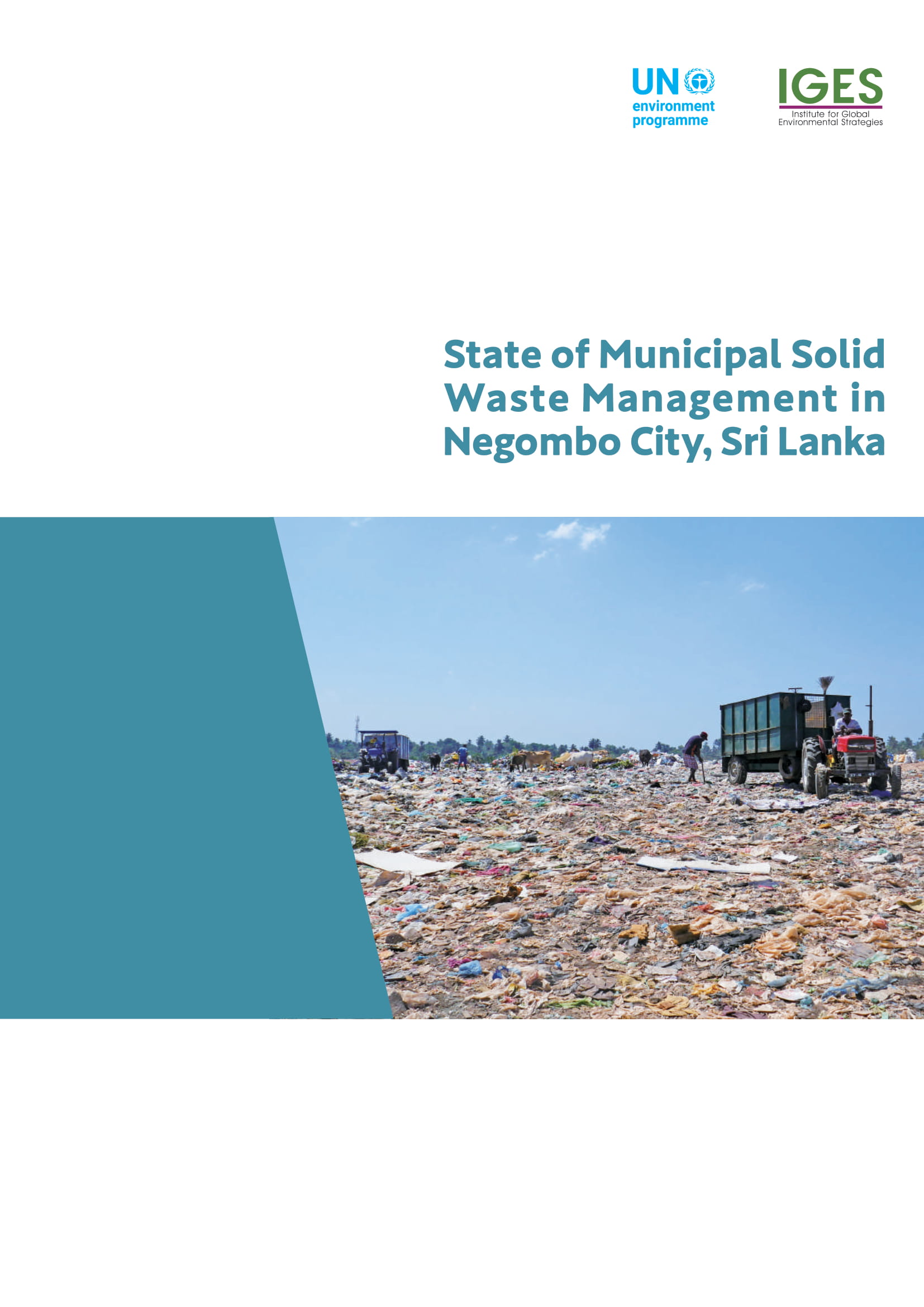
Negombo City is one of the fastest growing tourist destinations in Sri Lanka. It is the major commercial and transport centre, and main health service provider for the region. However, municipal solid waste management is a pressing concern for Negombo due to expanding urbanization, increasing income, lack of public awareness, changes in consumption...
Submission to Policy Process
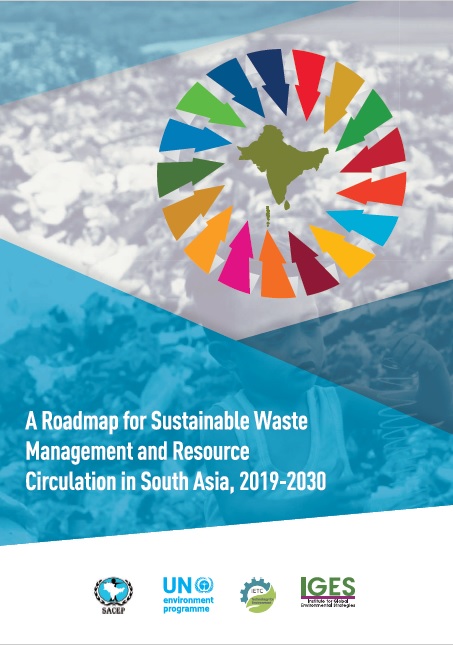
Development of the Roadmap for Sustainable Waste Management and Resource Circulation in South Asia, 2019-2030 is a result of an intensive consultation process facilitated by the South Asia Cooperative Environment Programme (SACEP) and the IGES Centre Collaborating with UNEP on Environmental Technologies (CCET) with the participation of all eight...
Submission to Policy Process
Just like in any city, the waste management has always been a major societal issue for Phnom Penh. The monthly amount of disposed waste at the landfill more than doubled in the past decade owing to factors such as population growth, economic growth, changes in industrial structure and of people’s lifestyle. While Phnom Penh Capital Administration...
Peer-reviewed Article
In sustainability
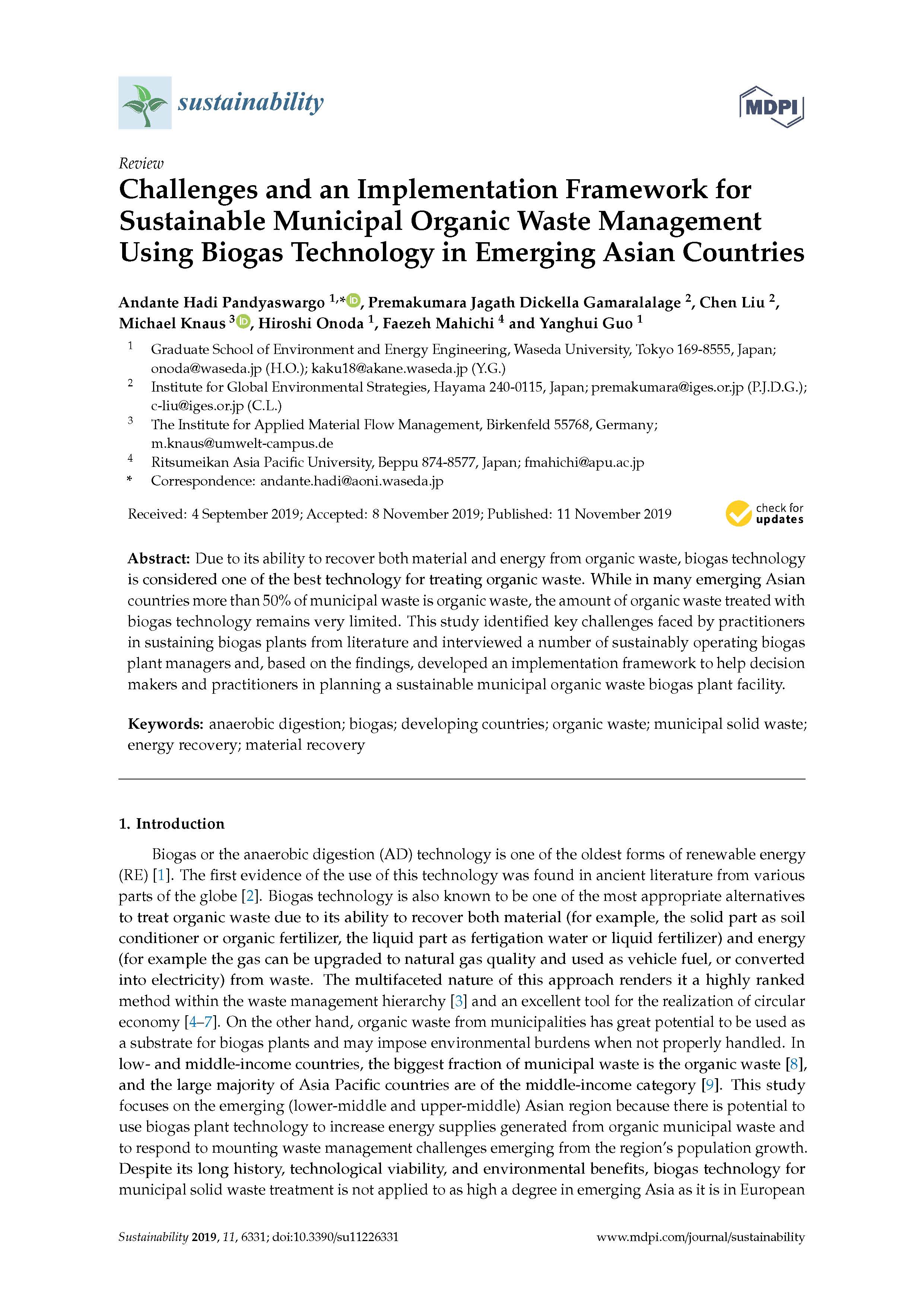
Due to its ability to recover both material and energy from organic waste, biogas technology is considered one of the best technology for treating organic waste. While in many emerging Asian countries more than 50% of municipal waste is organic waste, the amount of organic waste treated with biogas technology remains very limited. This study...
PR, Newsletter or Other
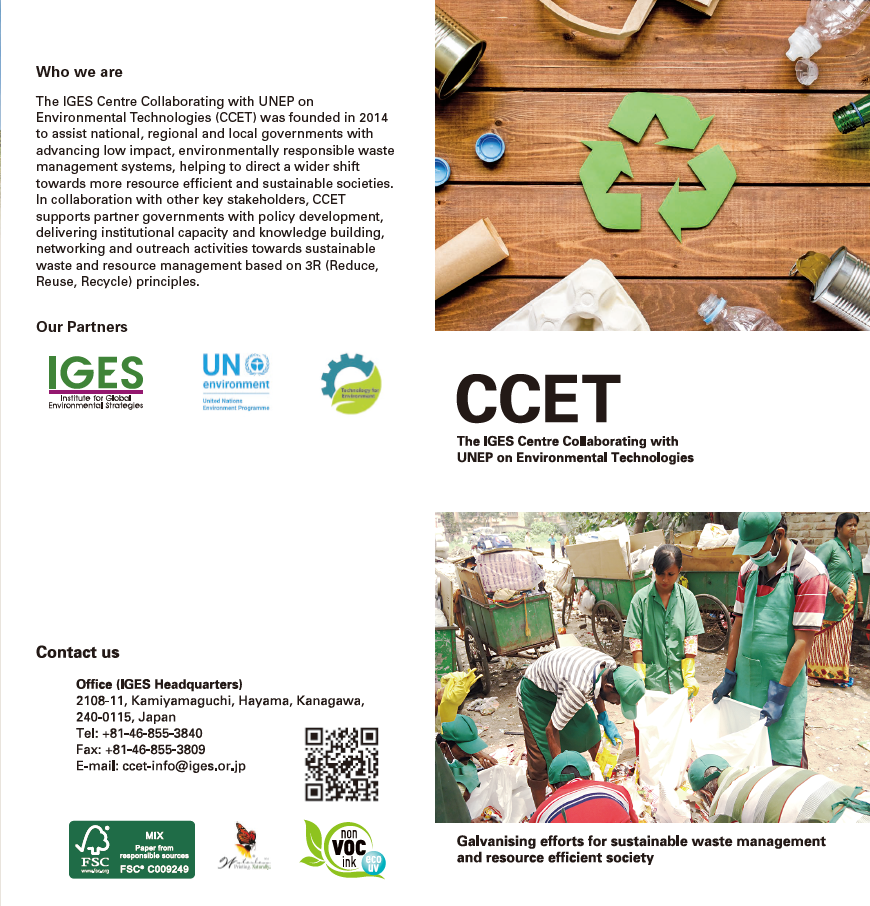
The IGES Centre Collaborating with UNEP on Environmental Technologies (CCET) was founded in 2014 to assist national, regional and local governments with advancing low impact, environmentally responsible waste management systems, helping to direct a wider shift towards more resource efficient and sustainable societies. In collaboration with other...
PR, Newsletter or Other
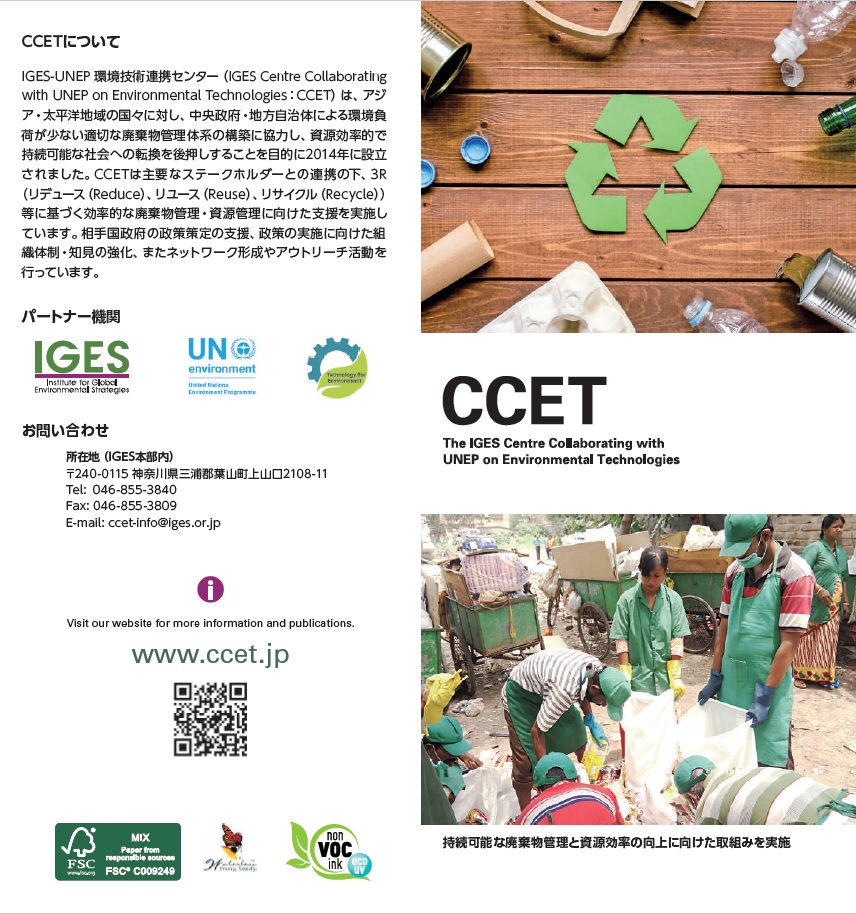
IGES-UNEP 環境技術連携センター( IGES Centre Collaborating with UNEP on Environmental Technologies : CCET )は、アジア・太平洋地域の国々に対し、中央政府・地方自治体による環境負荷が少ない適切な廃棄物管理体系の構築に協力し、資源効率的で持続可能な社会への転換を後押しすることを目的に 2014 年に設立されました。 CCET は主要なステークホルダーとの連携の下、 3R (リデュース( Reduce )、リユース( Reuse )、リサイクル( Recycle ))等に基づく効率的な廃棄物管理・資源管理に向けた支援を実施しています。相手国政府の政策策定の支援、政策の実施に向けた組織体制・知見の強化...
Results 1 to 4 of 4 (Sorted by date)
Project

Updated: March 2025
Emission Quantification Tool (EQT): A Pathway to Climate-Friendly Waste Solutions
The Emission Quantification Tool (EQT) was developed by the Institute for Global Environmental Strategies (IGES) as a science-based tool designed to empower policymakers and practitioners to estimate emissions, plan climate-friendly systems, and...
Project
Updated: March 2026
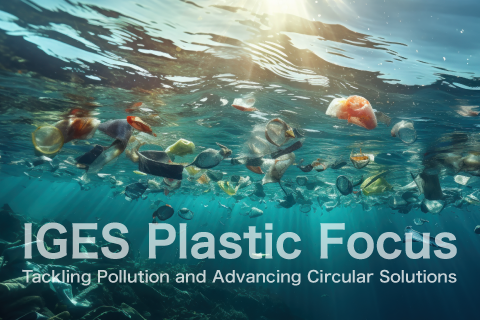
IGES Plastic Focus: Tackling Pollution and Advancing Circular Solutions
This special webpage highlights global developments in addressing plastic pollution, focusing on the growing importance of the circular economy as a solution. It also showcases IGES contributions to this agenda, including its environmental policy...
Project
Updated: January 2024
IGES Activity on COP28
Hosted in Dubai, United Arab Emirates, the 28th meeting of the Conference of the Parties to the United Nations Framework Convention on Climate Change (UNFCCC COP28) will begin on 30 November 2023. Before, during and after COP28, this Special Webpage
Project
Updated: September 2023
G20 (2023) Special webpage
In September, the G20 Summit will convene in New Delhi, India. The world is now facing the simultaneous crises of climate change and biodiversity loss, as well as tackling the consequences of Russia's invasion of Ukraine over one year ago. To deal wi