

Results 3621 - 3630 of 5565 (Sorted by date)
Book Chapter

In Implementing Climate Change Adaptation Strategies
Climate change has brought an additional dimension to disaster risks in the Asia-Pacific Region as it is projected to exacerbate the intensity and magnitude of various natural hazards such as storms, high-intensity rainfall events, heat waves, floods and droughts. Risk transfer has been widely advocated as one of the best means of risk mitigation...
Commentary (Op. Ed)
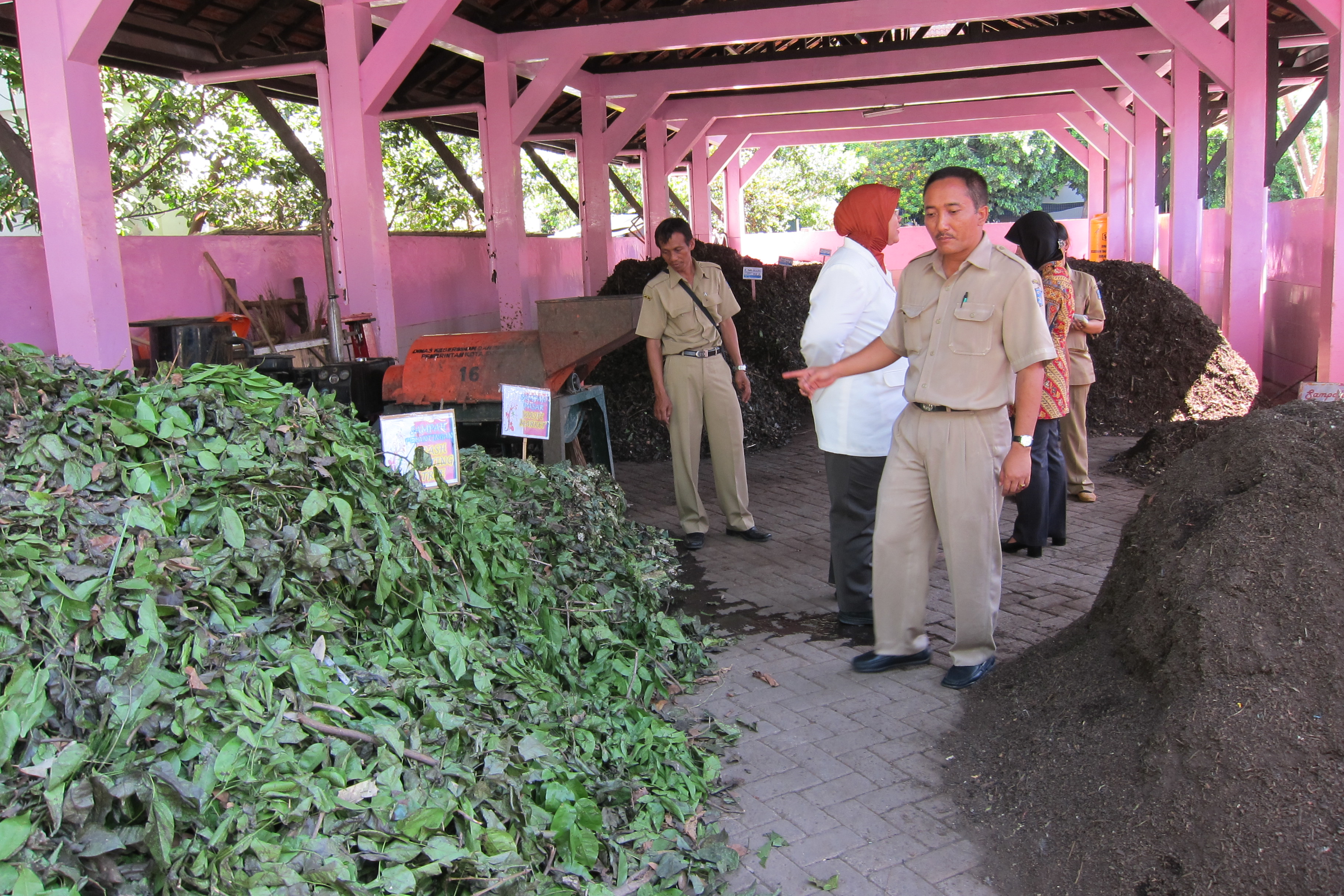
In ASEAN cities, ‘waste management’ is persistently cited as the top challenge faced by local governments. Ideally, ‘sound’ waste management approaches should be grounded in scientific principles, utilise appropriate technologies, be financially feasible and also socially sensible – a demanding package far from the grasp of many cities. So far...
Presentation
Seminar on Asia Low Carbon Strategy for waste sector issue
Non Peer-reviewed Article

In In Japan Spotlight
Book Review on Club of Rome report “Bankrupting Nature: Denying Our Planetary Boundaries” by Anders Wijkman and Johan Rockström Published 5 November 2012 by Routledge, 224 pages http://www.clubofrome.org/?p=5366 Fundamental changes required to save our nature from bankruptcy The revised English edition of the book Bankrupting Nature, authored by...
Peer-reviewed Article
In Journal of Cleaner Production
Abstract Greenhouse gas (GHG) emissions from conventional solid waste management in developing Asian countries contribute significantly to global climate change. This paper argues that moving towards Integrated Solid Waste Management (ISWM) offers a practical solution for mitigating these GHG emissions and for realising socio-economic as well as...
Issue Brief

The basic qualitative indicator Hazardous Waste refers to the existence of regulations controlling hazardous waste. The presence of regulations themselves should also promote environmentally sound management of hazardous waste. Amounts and rates of generation of hazardous waste are the main quantitative indicators. To assess a country’s hazardous...
Research Report
APN CRP Project
The Project was initiated in August 2009 to strengthen research capacity on mainstreaming climate change adaptation concerns into agricultural and water policies and foster networking for adaptation policy research in Asia. Research activities were carried out collaboratively by four institutes from India, Japan, Malaysia and Viet Nam, and had...
Policy Report

This report was developed as part of a series of three research publications on the research project led by UNU-IAS and IGES on monitoring and evaluation of education for sustainable development, especially in the Asia-Pacific region. This report specifically focuses on the development of an appropriate framework for structuring the approach on...
Report Chapter
In Report of PSEE Resource Study
From 1971 to 2010, world trade grew fast by 10% per year on average (World Trade Organization 2011). The rapid growth of international trade contributes not only national economic growth but also increasing environmental pressures, such as raw material extraction and depletion, carbon emissions, water resource deterioration and landscape change and...
Presentation
11th International Conference on Dryland Development : “Global Climate Change and its Impact on Food & Energy Security in the Dry lands"
Assessing the effectiveness of climate change adaptation actions is important for monitoring and evaluation at regular intervals, efficient allocation of limited resources and making sure that maladaptation doesn’t happen. Identifying and quantifying a set of indicators through participatory processes has gained popularity due to the importance of...