

Results 2221 - 2230 of 5566 (Sorted by date)
Presentation
Carbon dioxide (CO2), which is considered as a primary driver of climate change, is responsible for slightly more than half of the total current warming impact from human-caused emissions (EESI, 2013). Emitted CO2 remain in the atmosphere for hundreds of years, creating warming effect even the new CO2 level reduce to zero. Therefore, the strategies...
Technical Report

This report is related to the feasibility study on the potential application of Japanese low carbon technologies, namely once-through boiler was conducted on October 30, 2017 at Carabao Tawandang CO.,LTD. at Samutprakarn in Thailand. It was a part of the activities conducted in Thailand in FY2017 under the “Technology Assessment” project, which is...
Policy Report
ASEAN is committed to the implementation of two parallel, but inter related processes: the ASEAN Community Vision 2025 (ASEAN Vision 2025) and the United Nations 2030 Agenda for Sustainable Development (2030 Agenda). From the outset ASEAN Member States underlined the complementarity of these two agendas in their efforts to uplift the standards of...
Data or Tool
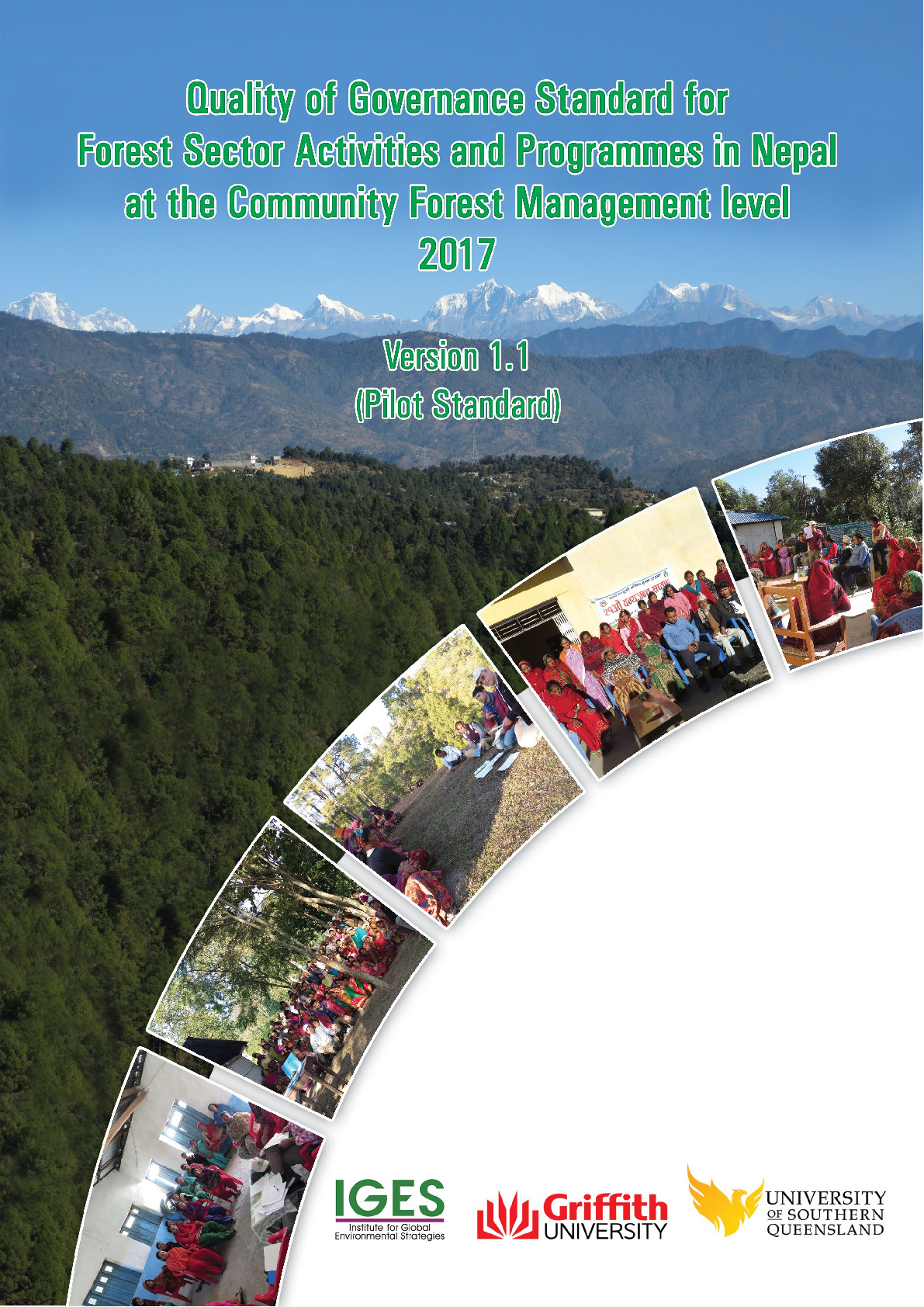
This voluntary standard is based on participatory research with forest sector parties to develop methods for evaluating the governance quality of forest sector programmes and projects, including emissions reduction activities, in Nepal. The research was conducted July 2011 – January 2016 by Dr Federico Lopez-Casero of the Institute for Global...
Training or Learning Material

Climate-fragility risks are on the rise globally and developmental paths taken by countries can shape these risks. To understand the link between development and climate-fragility risks in Asia, this brief presents the findings of a survey conducted with development practitioners and experts from a range of developing and developed countries. To...
Conference Paper
6th International Symposium on Environmental Sociology in East Asia (ISESEA)
An increasing number of national and local governments are developing their strategies on sustainable development, due partially to the recent international agreements aiming for a medium and long-term transition toward sustainable societies. These strategies sometimes highlight local/community-scale initiatives as their key drivers to achieve...
Conference Paper
ADB Conference on Community-based Disaster Risk Management and Adaptation
Lack of economic opportunity has been identified as one of the important bottlenecks for achieving development and empowerment as a result of which several financial inclusion projects and programs have been introduced globally in the past several decades. These financial inclusion instruments range between providing cash at hand to invest in...
Presentation

ADB Conference on Community-based Disaster Risk Management and Adaptation
Lack of economic opportunity has been identified as one of the important bottlenecks for achieving development and empowerment as a result of which several financial inclusion projects and programs have been introduced globally in the past several decades. These financial inclusion instruments range between providing cash at hand to invest in...
Presentation

Sustainable Development Transition Forum
This presentation derives few resilience messages based on the ongoing research in the field of natural resources management at IGES in Japan. Resilience is considered as a unifying concept for stakeholders working in the fields of disaster risk reduction and climate change adaptation. While resilience refers to bouncing back to normalcy without...
Discussion Paper
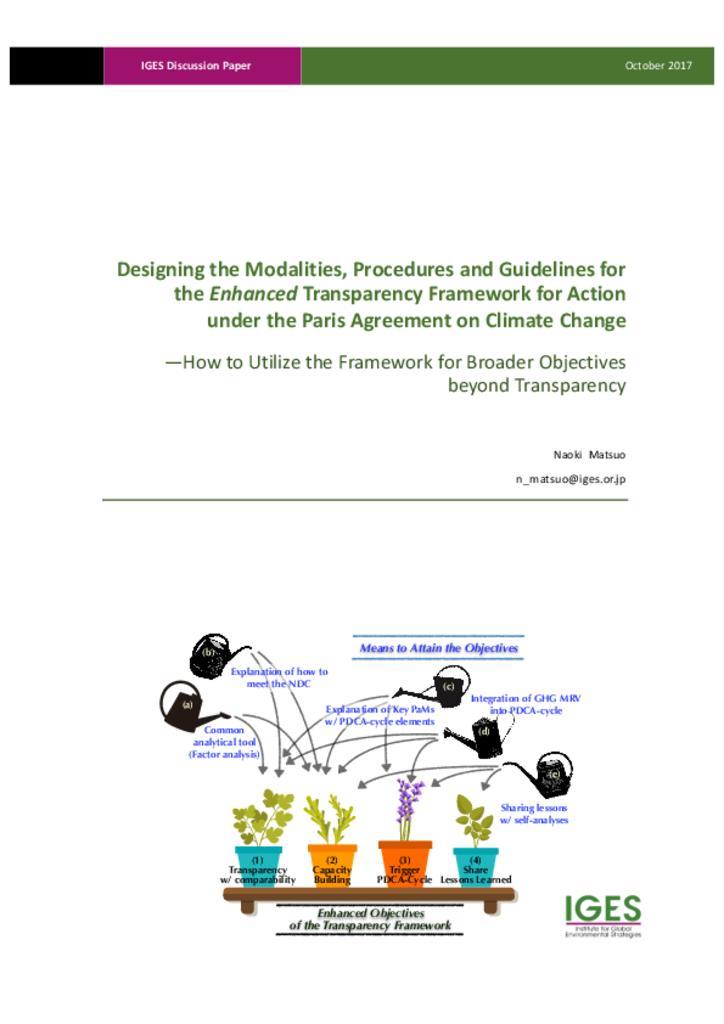
This paper proposes various elements to be specified in the rule book: “Modalities, Procedures and Guidelines for the Transparency Framework” (MPG) of the Paris Agreement, focusing on mitigation, based on the past experience of the national reports and their reviews/ assessments.The underlying motivation is the concern that the current arrangements...