
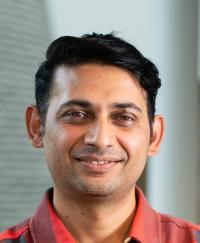
Research Manager
Research Topics & Areas of Expertise
- Locally Led Adapation
- Application of Indigenous/traditional and local knowledge systems for cliamte action
- Capacity building to promote climate change adaptation such as gap assessments, developing new approaches of capacity building
- Disaster risk management and planning
- Integrated implementation of SDGs using river basin approaches
Education
EDUCATION
Dr.Eng. (Urban and Environmental Engineering), Kyoto University, Japan (2004-2007);
M.Sc. (Agriculture Systems & Engineering/Integrated Watershed Management), Asian Institute of Technology (AIT), Thailand (2002-2004);
B.Sc. Agriculture, Institute of Agriculture and Animal Science, Tribhuban University, Chitwan, Nepal (1998-2001);
WORKING EXPERIENCES:
July 2017 - Current: Senior Water and Adaptation Specialist, IGES
April 2010 - June, 2017: Policy researcher/Water Resources Specialist, IGES
October 2009 - March 2010: Researcher at Global-COE Sustainability / Survivability Science for a Resilient Society Adaptable to Extreme Weather Conditions (GCOE-ARS), GSGES, Kyoto University
April 2009 - September 2009: Researcher at Global-COE Human Security Engineering for Asian Megacities (GCOE-HSE), GSGES, Kyoto University;
October 2007-March 2009: Researcher at Research Center for Environmental Quality Management (RCEQM), Kyoto University;
Results 31 to 40 of 133 (Sorted by date)
Book Chapter
In Water, Climate Change and Sustainability
Adoption of sustainable development goals (SDGs) offers a targeted and time‐bound approach for sustainable development. Water, along with its dedicated goal (SDG6), is at the core of SDGs due to its interdependency and synergistic relationship with all SDGs. Implementation of SDG6, as well as other SDGs, remains a challenge for many countries due...
Book Chapter
In Water, Climate Change, and Sustainability
Various drivers such as population growth, land use/cover change, unsustainable consumption pattern, and climate change are putting pressure on limited resources available within our planetary boundaries, thus, raising concerns on their sustainability. Coordinated actions at levels ranging from global to local are required to ensure sustainability...
Book Chapter
In Media and Disaster Risk Reduction Advances, Challenges and Potentials
The Himalaya and Hindu Kush Region (HKH) is one of the world's most fragile ecosystems in terms of climate change and its impacts, such as, slow- and fast-onset disasters. Traditionally, nature and human beings have co-existed in this area with indigenous and local knowledge (ILK) systems and practices being used in different ways, such as for...
Conference Paper
The Asia and the Pacific is extremely vulnerable to the impacts of climate change. In 2020, the region faced a record number of climate-related disasters coupled with the COVID-19 pandemic, affecting tens of millions of vulnerable people. The need to address climate change threats and build resilience has never been more urgent than now. This...
Commissioned Report

本報告書は、アジア水環境パートナーシップ(WEPA)参加国における水環境問題の解決に向けたガバナンス強化と能力構築を目的として、令和元年度に実施した現地調査や会合の開催、WEPAデータベースに掲載されている水環境保全政策や技術情報の拡充等に関する活動の成果をまとめたものである。
Research Report
Although it is widely acknowledged that forests provide critical ecosystem services for human survival and well-being, in the Asia-Pacific region forests are being converted to other land uses and degraded at alarming rates. One underlying factor for this destruction of forests is market failure. Forests are cleared for other land uses or degraded...
Policy Report
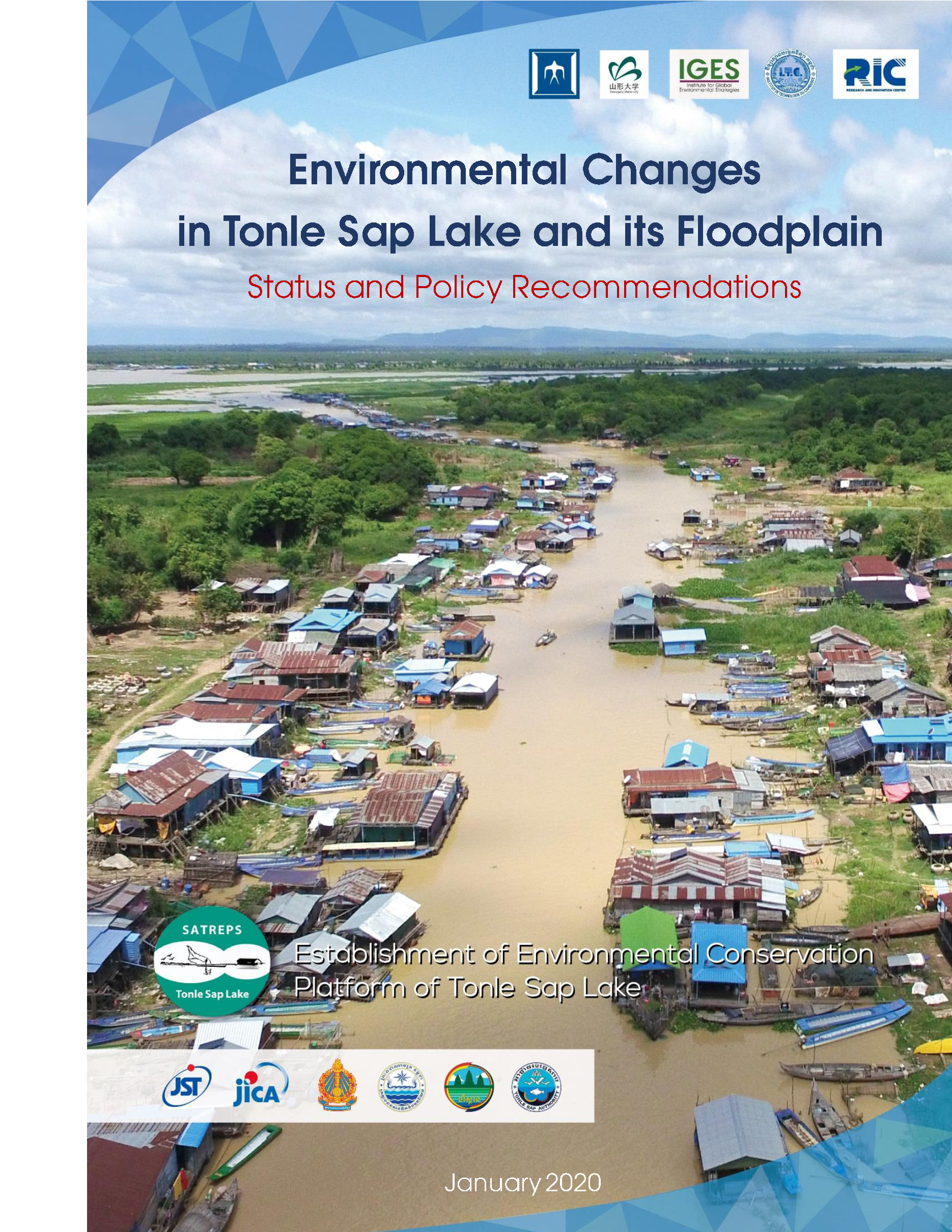
Tonle Sap Lake (TSL), the largest lake in South East Asia, is under increasing pressure from pollution, land-use change, climate change, and development activities in the lake, its basin and the Mekong Basin. Recent changes in the lake hydrological system and its floodplains are becoming a great concern for hundreds of communities relying on the...
Policy Report
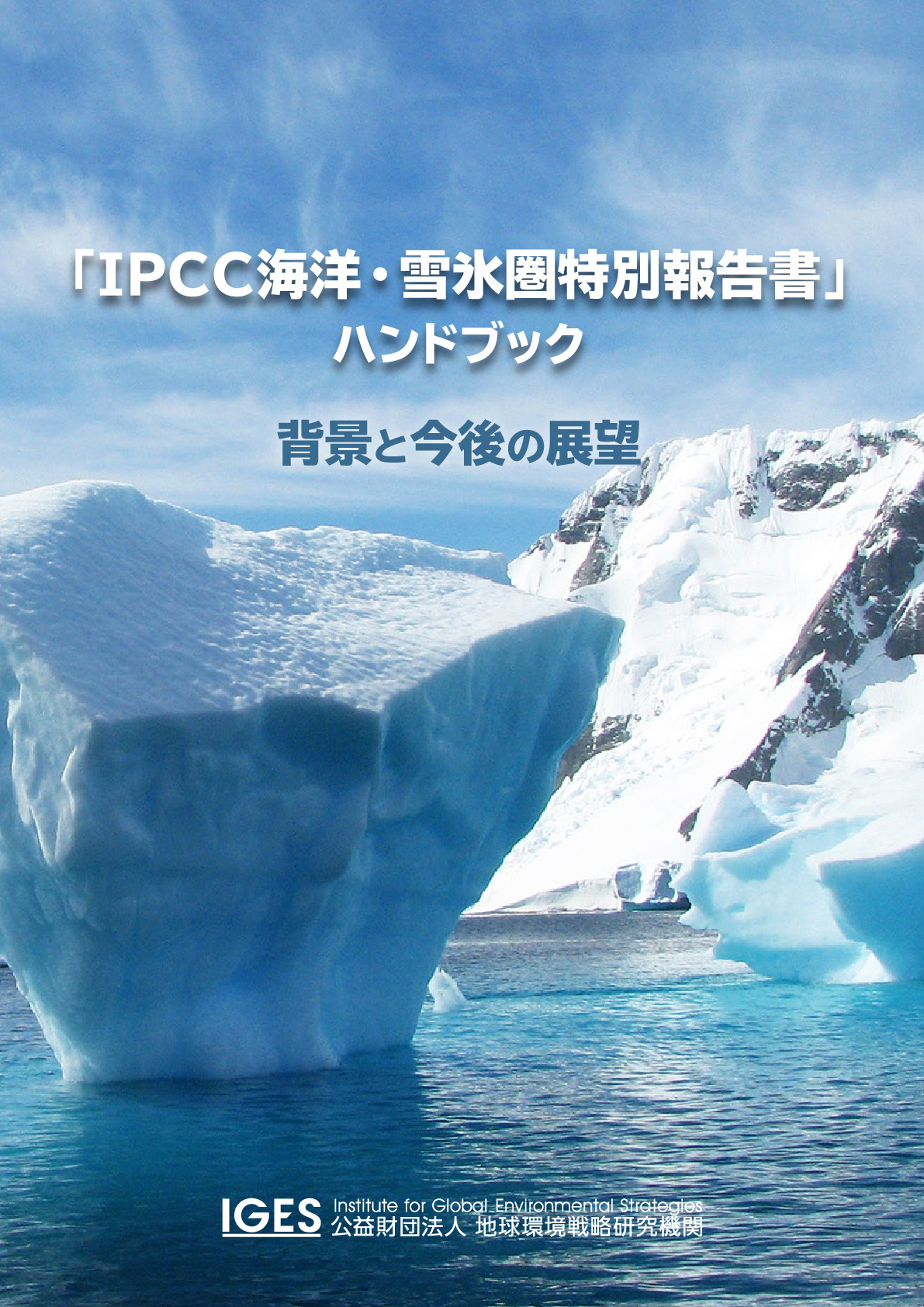
本ハンドブックは、IGES の研究活動ならびに関係機関からの協力をもとに、「変化する気候下での海洋・雪氷圏に関するIPCC 特別報告書」に関する最新の知見を取りまとめたものです。様々な角度からの分析・関連資料を掲載しており、同報告書の総合的な理解に資する内容となっています。 第1 章(イントロダクション)では、IPCC が同報告書を作成するに至った背景を、国連気候変動枠組条約(UNFCCC)での議論やIPCC の足跡とともに振り返ります。第2 章(ブリーフィング・ノート)では、IGES 研究員が専門的知見をベースに、同報告書の概要を解説しています。第3 章(主執筆者インタビュー)では、実際に同報告書の作成に携わった2 名のIPCC 関係者へのインタビューを収録しています。第4 章...
Peer-reviewed Article
In UNISDR Global Assessment Report 19
This paper evaluates the current institutional and policy environment in the ASEAN region, which is known as one of the most vulnerable regions to climate change impacts in the world. The future projections indicate that the region is prone to severe weather events including floods, typhoons, and droughts. Considering the importance of...
Submission to Policy Process
Contributing Papers for the 2019 Global Assessment Report
Groundwater is a de-facto source of water during drought and emergencies. In a broader perspective, the traditional short-term strategy of using groundwater to combat water deficits during drought needs revisiting. The objective of this paper is to examine the relevance and options for developing and adopting such groundwater-based natural...
Results 1 to 1 of 1 (Sorted by date)
Project

Updated: March 2025
Environment Research and Technology Development Fund 1CN-2206 (FY2022-2024) - Research on the national long-term roadmap to synergise mitigation and adaptation towards a net zero and resilient ASEAN
Towards the establishment of a net-zero and resilient ASEAN Community as indicated by the ASEAN Climate Vision 2050, IGES is conducting a study on the formulation of a long-term roadmap to promote integrated transition of mitigation and adaptation in...