The "EU-Japan Region-to-Region Innovation Cooperation Community of Practice" project, conducted from February to August 2024, was a transitional initiative designed to explore future directions for decentralized cooperation between European regions and Japanese prefectures. Building on the momentum established by previous phases of the...
Results 481 - 490 of 6464 (Sorted by date)
In Journal of Urban Ecology
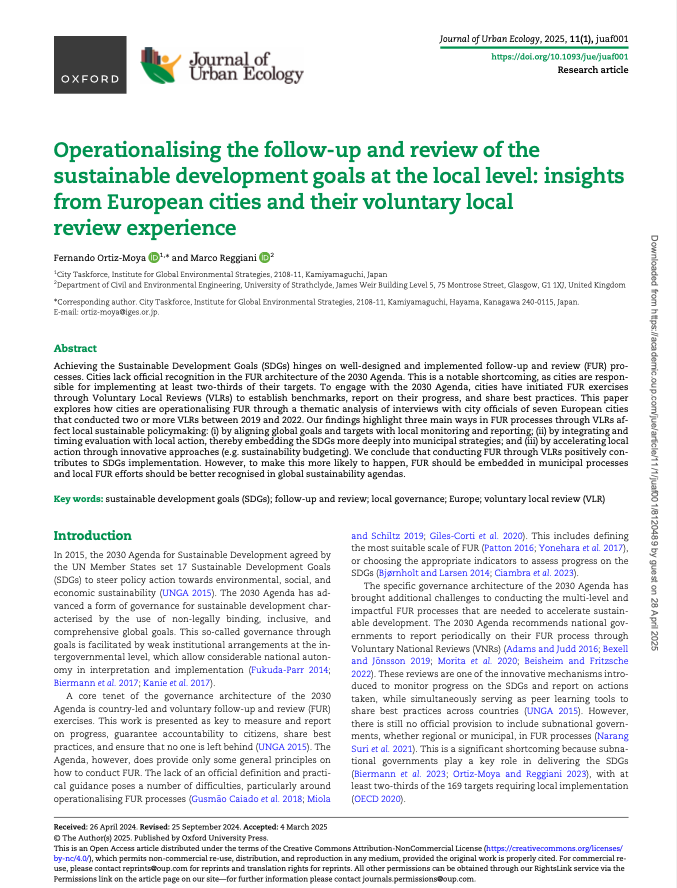
Achieving the Sustainable Development Goals (SDGs) hinges on well-designed and implemented follow-up and review (FUR) processes. Cities lack official recognition in the FUR architecture of the 2030 Agenda. This is a notable shortcoming, as cities are responsible for implementing at least two-thirds of their targets. To engage with the 2030 Agenda...
Keywords:
HOPES30
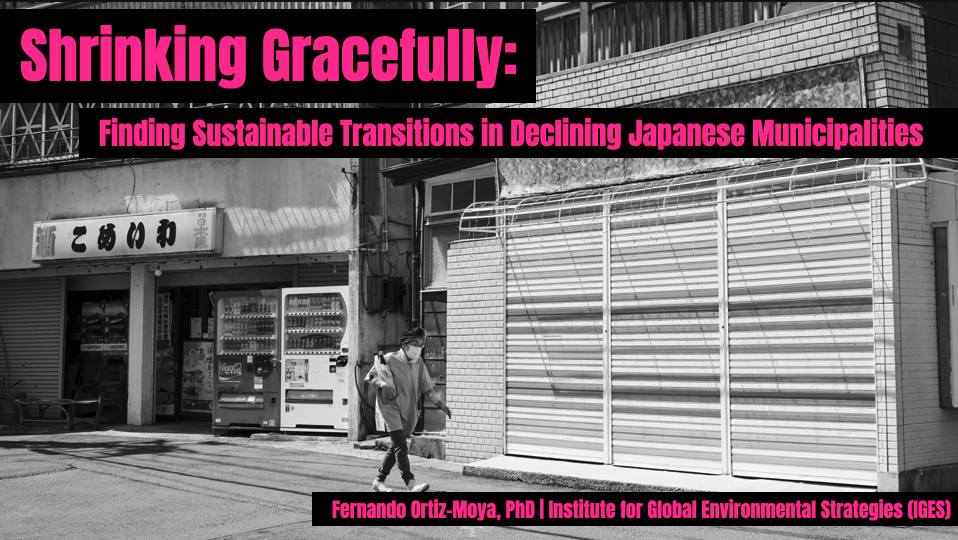
This presentation examines how Japanese municipalities are responding to long-term population decline, contrasting Yubari City’s failed growth-centric approach with Shimokawa Town’s efforts to ‘shrink gracefully.’ It highlights how local governments can move beyond pro-growth planning by adopting sustainable, community-oriented strategies better...
Keywords:
Association of Collegiate Schools of Planning Annual Conference
Introduced in 2015, the 17 Sustainable Development Goals (SDGs) with their 169 specific targets, provide a comprehensive roadmap for nations to address urgent global challenges, from eradicating poverty and hunger to fostering sustainable communities and combating climate change. Since 2016, Voluntary National Reviews (VNRs) have provided a...
Keywords:
Public Management Magazine
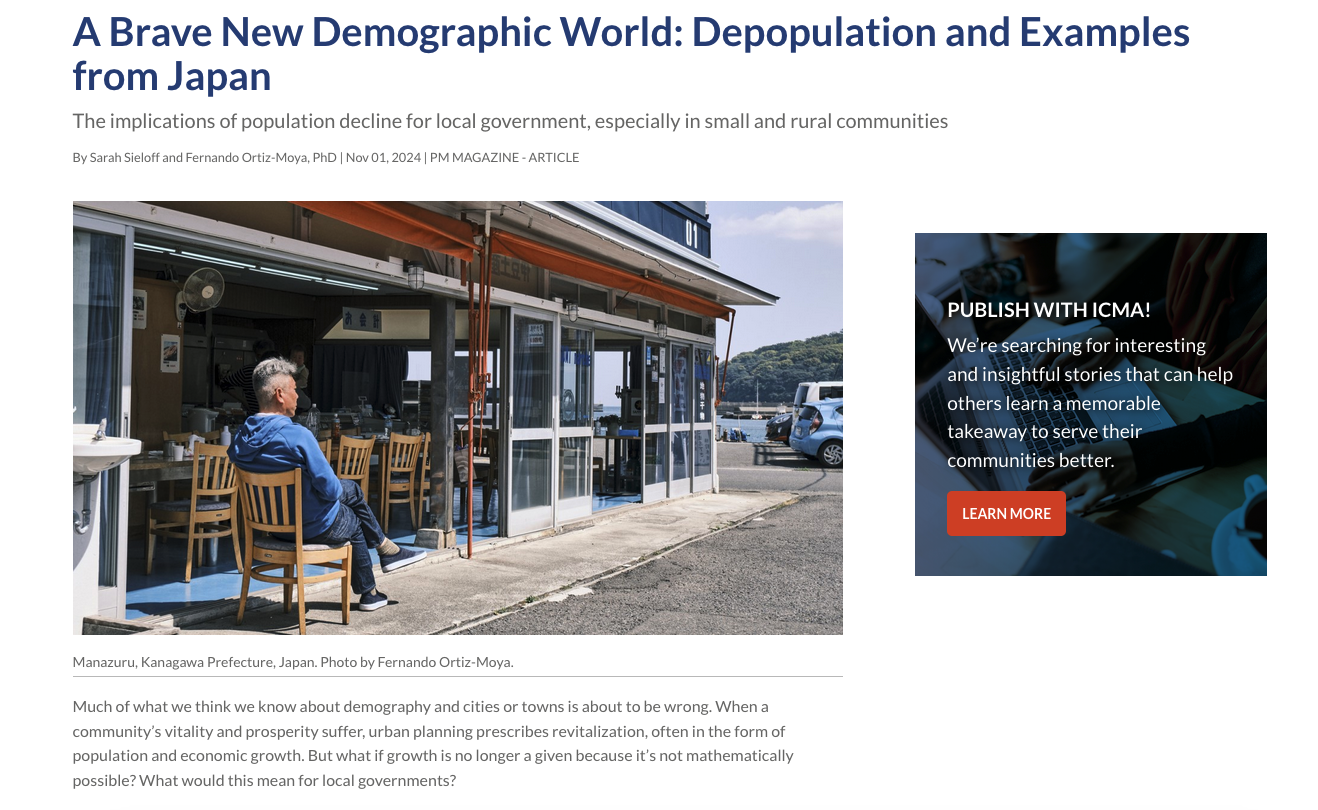
This article examines the implications of demographic decline for local governments, with a focus on small Japanese municipalities that are already navigating the challenges of population loss. Drawing on examples like Yubari, Suzu, and Manazuru, it explores how some towns are rethinking growth-oriented planning and experimenting with alternative...
Keywords:
This is a guidebook for the "City-to-City Collaboration for Zero Carbon Society" program (C3P) developed by the Ministry of the Environment of Japan since fiscal 2013. This publication is intended for potential stakeholders of the C3P, including local governments and private companies in Japan and abroad.
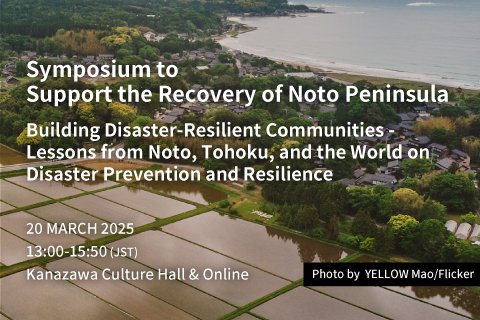
Symposium to Support the Recovery of Noto Peninsula
Building Disaster-Resilient Communities - Lessons from Noto, Tohoku, and the World on Disaster Prevention and Resilience
The impact of climate change has led to an increase in natural disasters such as heavy rainfall worldwide, and the disaster risk faced by regional communities has become more severe. Last year, the Noto Peninsula experienced disasters caused by...
The Final (3rd) Workshop on the National Long-term Roadmap to Synergise Mitigation and Adaptation in the ASEAN Region
The concept of a “Climate Resilient Development Pathway” (CRDP), highlighted in both the IPCC’s Fifth and Sixth Assessment Reports, refers to sustainable development trajectories that integrate adaptation and mitigation, with a net-zero transition...
In Sustainability
The global food system confronts critical challenges, including food insecurity, small-scale producer vulnerability, and environmental degradation. While locally led initiatives emerge as potential solutions, they face obstacles, such as participant bias and scaling limitations. This study analyzes 157 international and 91 Japanese locally led food...
In Land
REDD+ aims to mitigate climate change by reducing deforestation and forest degradation in developing countries while ensuring social and environmental benefits through the involvement of diverse stakeholders. While several studies evaluate stakeholder participation in various aspects of REDD+, such as the level and type of stakeholder participation...