
Results 5331 - 5340 of 5560 (Sorted by date)
Conference Proceeding

The fourth thematic seminar on industrial relocation, organised by UN/ESCAP, the Ministry of the Environment of Japan, IGES, and Ho Chi Minh City, was held on 27-28 August in Ho Chi Minh City (Vietnam), which is engaged in industrial relocation and has made considerable progress in this area. Industrial relocation has been and continues to be...
Book Chapter
In People and Forest: Policy and Local Reality in Southeast Asia, the Russian Far East, and Japan
Book Chapter
In People and Forest: Policy and Local Reality in Southeast Asia, the Russian Far East, and Japan
Discussion Paper
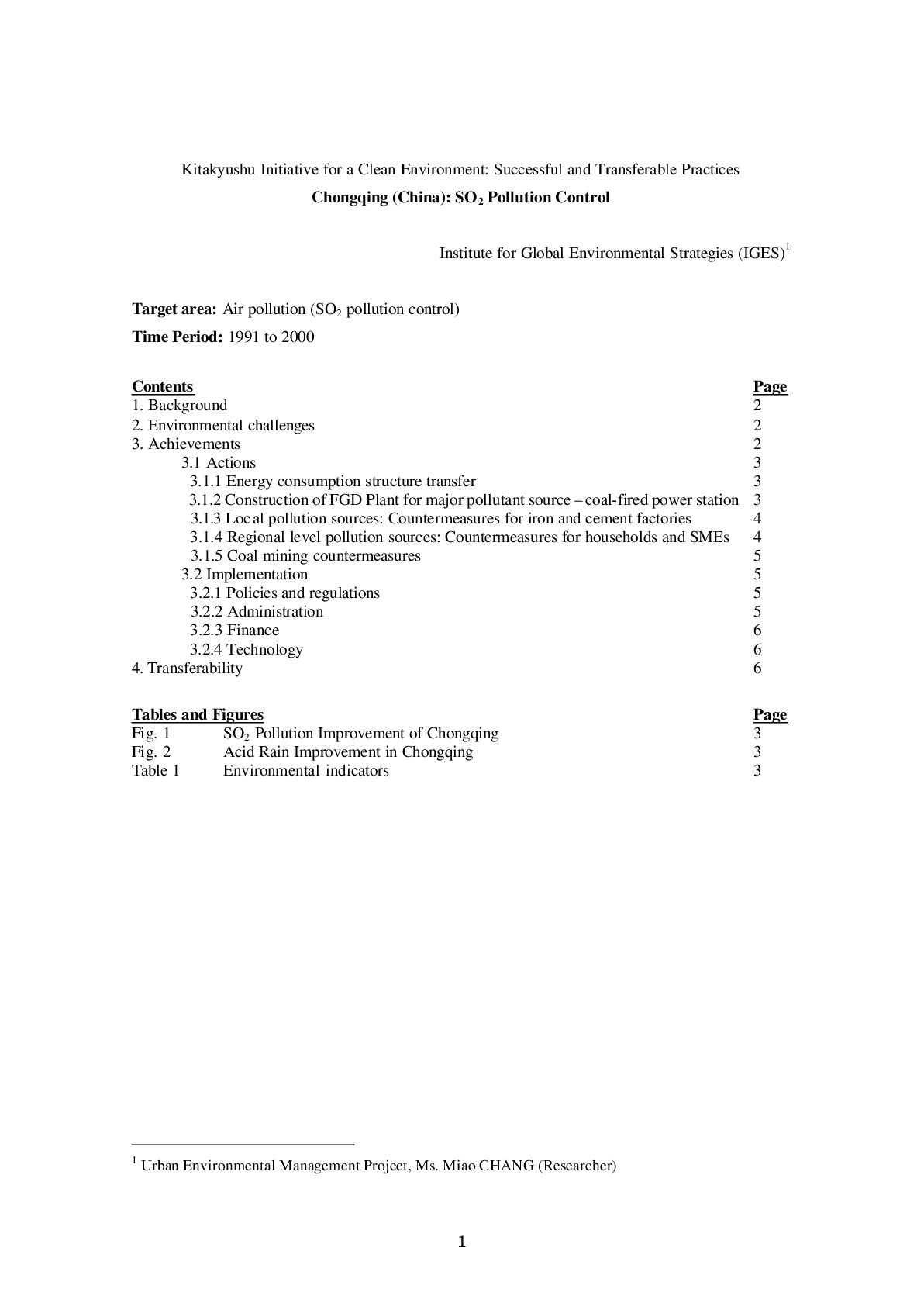
Kitakyushu Initiative for a Clean Environment: Successful & Transferable Practices Database
Remarks: Kitakyushu Inisiative Network Successful Practices and Policies Databases http://www.iges.or.jp/kitakyushu/datadatabase.html
Conference Proceeding
The third thematic seminar, Kitakyushu Initiative Seminar on Urban Air Quality Management, was held on 20-21 February 2003 at the United Nations Conference Centre in Bangkok, Thailand. Discussions focused on monitoring, transportation and industry, including policy making and implementation. Participants included representatives from Bangkok...
Discussion Paper
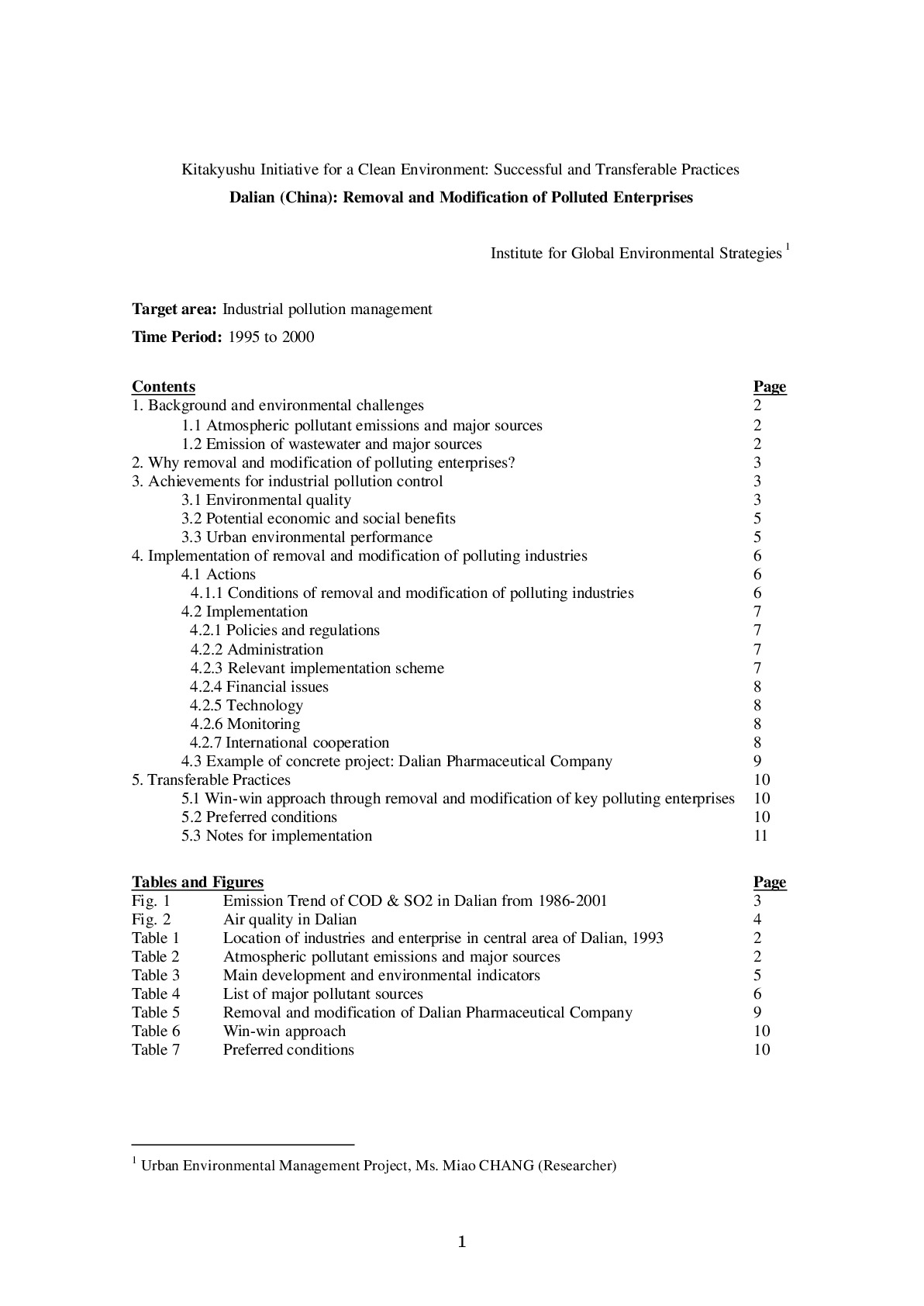
Kitakyushu Initiative for a Clean Environment: Successful & Transferable Practices Database
Remarks: Kitakyushu Initiative for a Clean Environment: Successful & Transferable Practices Database http://www.iges.or.jp/kitakyushu/sp/over/over.html
Book Chapter
Discussion Paper
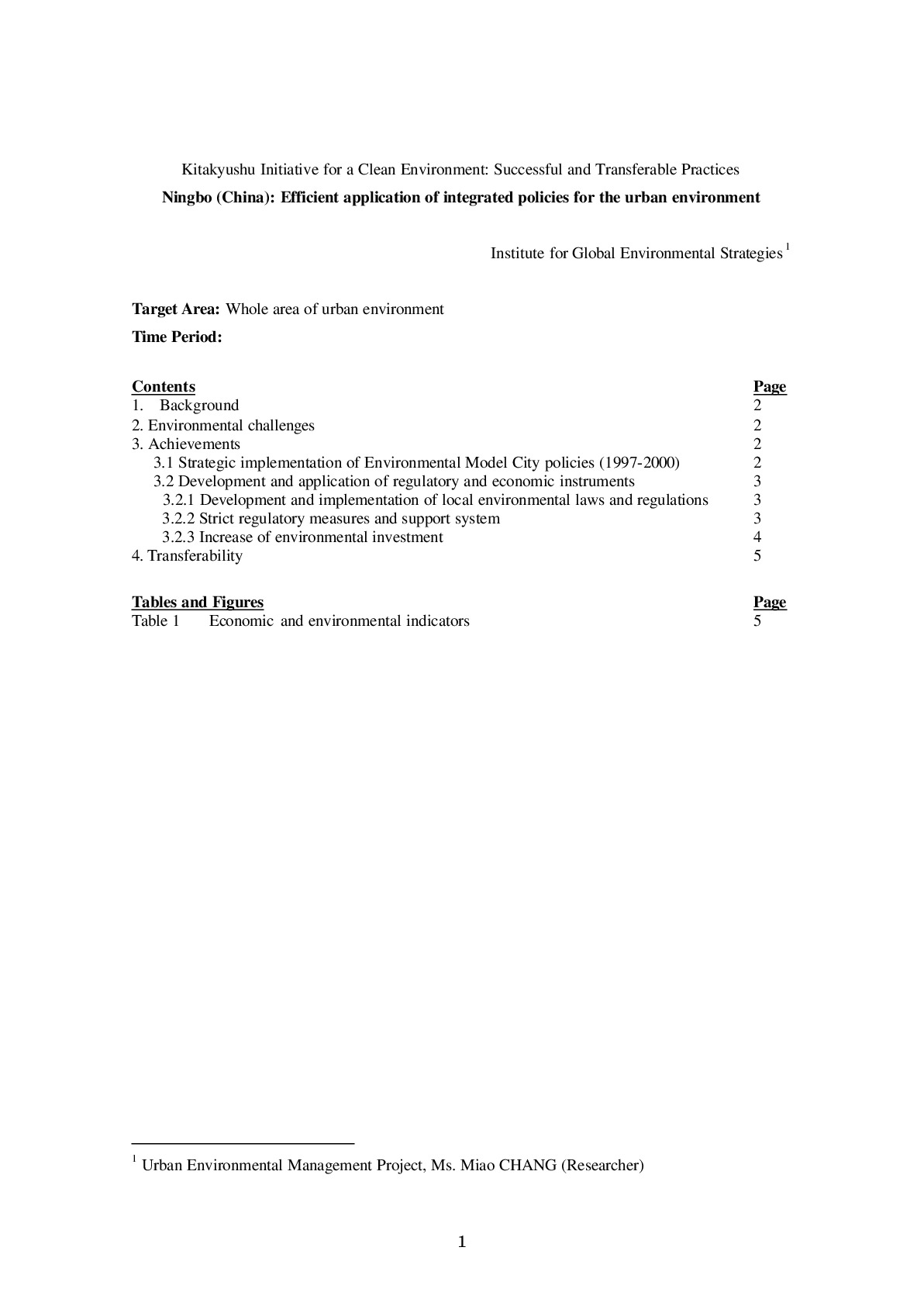
Kitakyushu Initiative for a Clean Environment: Successful & Transferable Practices Database
Remarks: Kitakyushu Initiative for a Clean Environment: Successful & Transferable Practices Database http://www.iges.or.jp/kitakyushu/sp/over/over.html
Discussion Paper
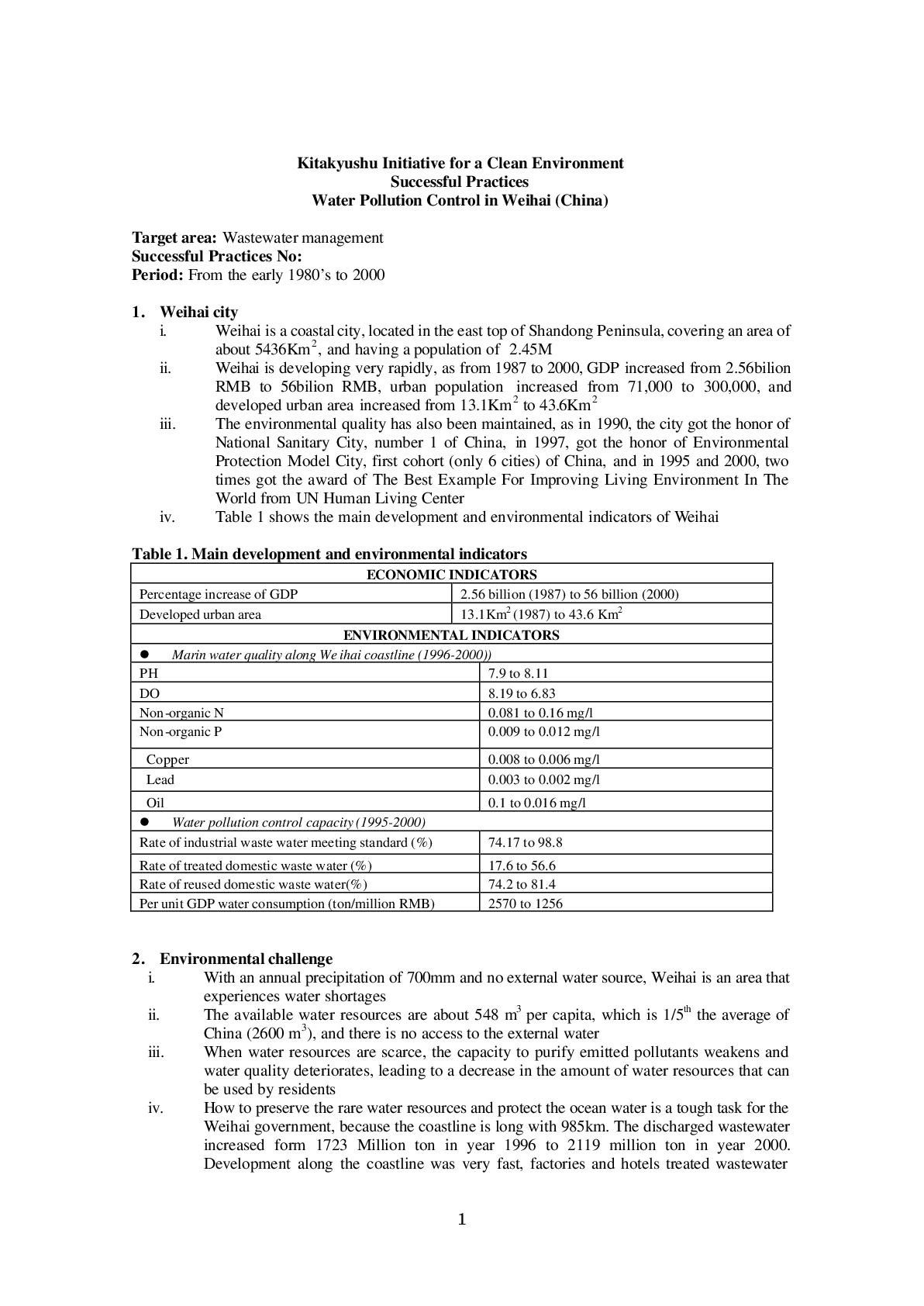
Kitakyushu Initiative for a Clean Environment: Successful & Transferable Practices Database
Remarks: Kitakyushu Initiative for a Clean Environment: Successful & Transferable Practices Database http://www.iges.or.jp/kitakyushu/sp/water/water.html
Conference Paper
Proceedings of South Asian Regional Conference on Transition towards Sustainable Development