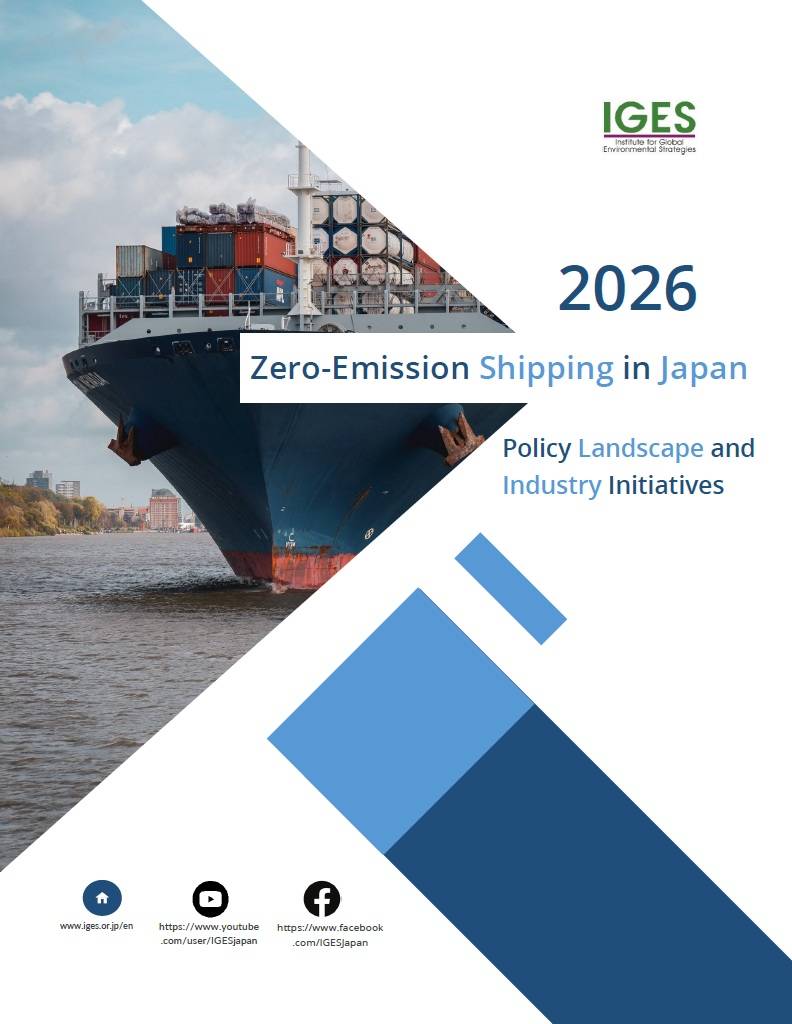
In October 2025, an extraordinary session of the IMO Marine Environment Protection Committee was held. Negotiations took place on a draft amendment to the Convention aimed at achieving the international target of ‘GHG emissions from international shipping by around 2050’. Japan has been co-sponsoring the proposal alongside Europe and leading the...
- Clear all
- Language: (-) English
- Region/Country: (-) Worldwide
Results 31 - 40 of 3558 (Sorted by date)
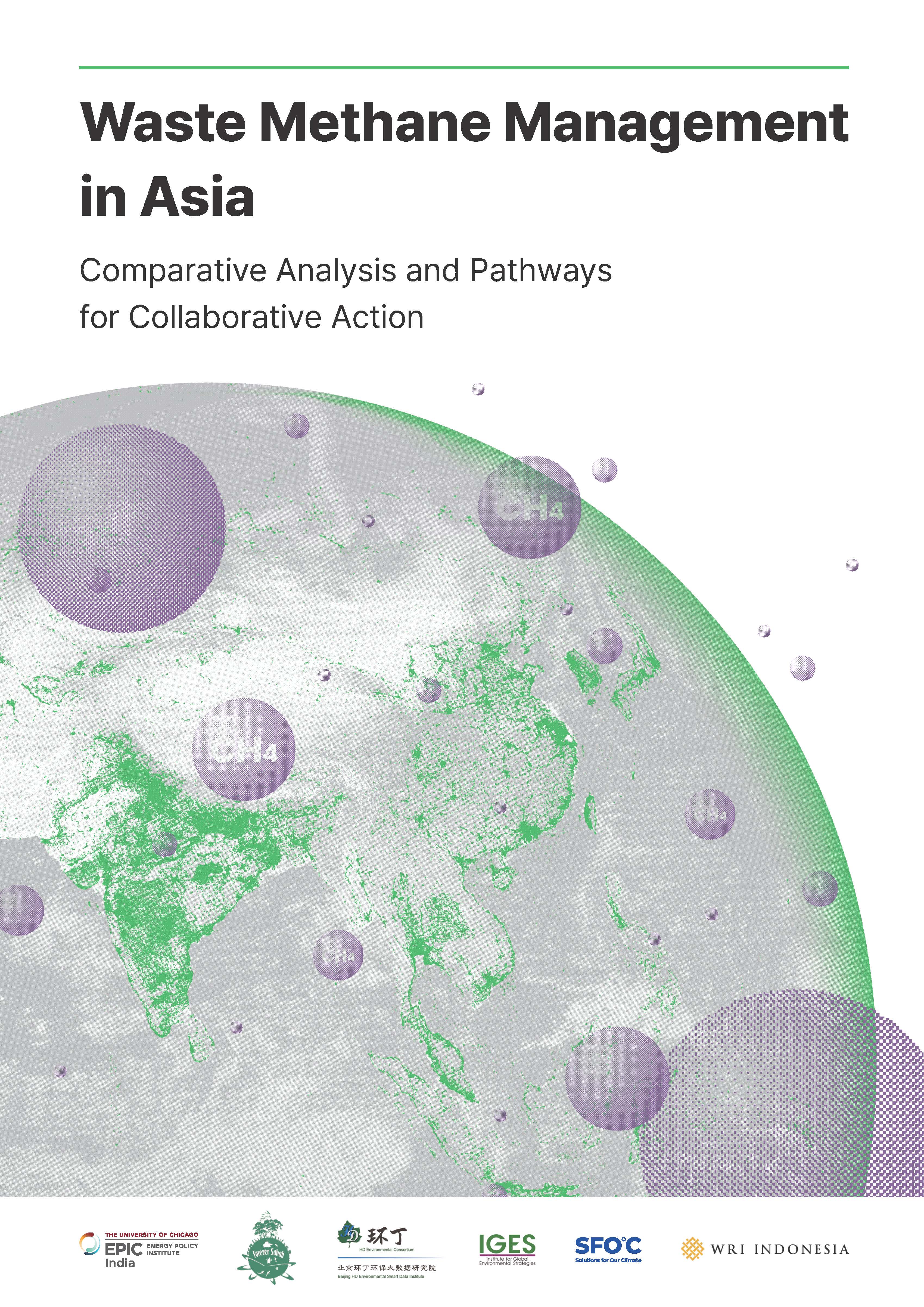
Methane is a potent, short-lived climate pollutant responsible for nearly 0.5°C of global temperature rise. Though it remains in the atmosphere for about 12 years, its climate impact is 86 times stronger than carbon dioxide over 20 years, making methane mitigation one of the most effective strategies for tackling climate change. The waste sector...
In Transactions in GIS
Agriculture in semi-arid regions is increasingly vulnerable to climate variability and land degradation, threatening rural livelihoods and food security. At the same time, the global transition toward clean energy, particularly solar power, offers synergistic opportunities to mitigate climate change while supporting sustainable rural development...
Keywords:
In Water
Salinity intrusion has become a critical threat to agricultural stability and water resource management in the Vietnamese Mekong Delta (VMD), particularly in coastal regions. This study evaluates the efficacy of the Long Short-Term Memory (LSTM) neural network, a sophisticated deep learning (DL) architecture, for predicting salinity concentrations...
In International Journal of Applied Earth Observation and Geoinformation
Quantitative monitoring of lake water storage in arid regions is essential for effective management of regional water resources, and can also elucidate the impacts of ecological degradation on lake water storage. This study investigates changes in water storage in Ebinur Lake, Xinjiang, from 2011 to 2024 using field–measured water depth data and...
In Next Research
Single-use plastic waste poses significant environmental challenges, particularly through microplastic pollution in aquatic ecosystems. In this study, a bio-carrier was fabricated from recycled single-use plastic waste, and its performance was evaluated in a laboratory-scale moving bed biofilm reactor combined with membrane filtration (MBBR-MBR)...
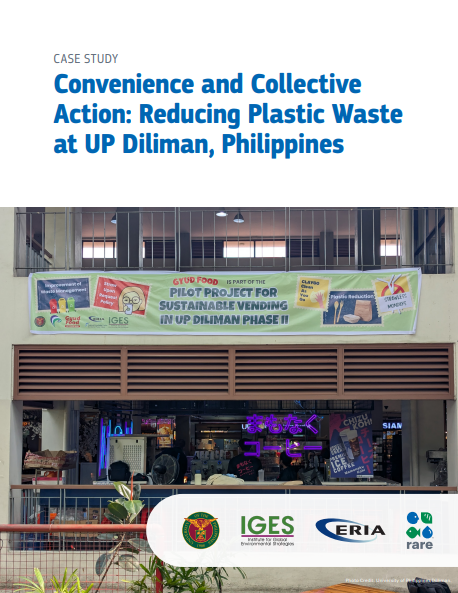
Using behavioral science to reduce plastic waste on the UP Diliman campus The University of Philippines Diliman (UP Diliman) initiative, led by UP Diliman with support from the Economic Research Institute for ASEAN and East Asia (ERIA), Institute for Global Environmental Strategies (IGES), and Rare, tackled plastic waste generated by a dense campus...
Keywords:
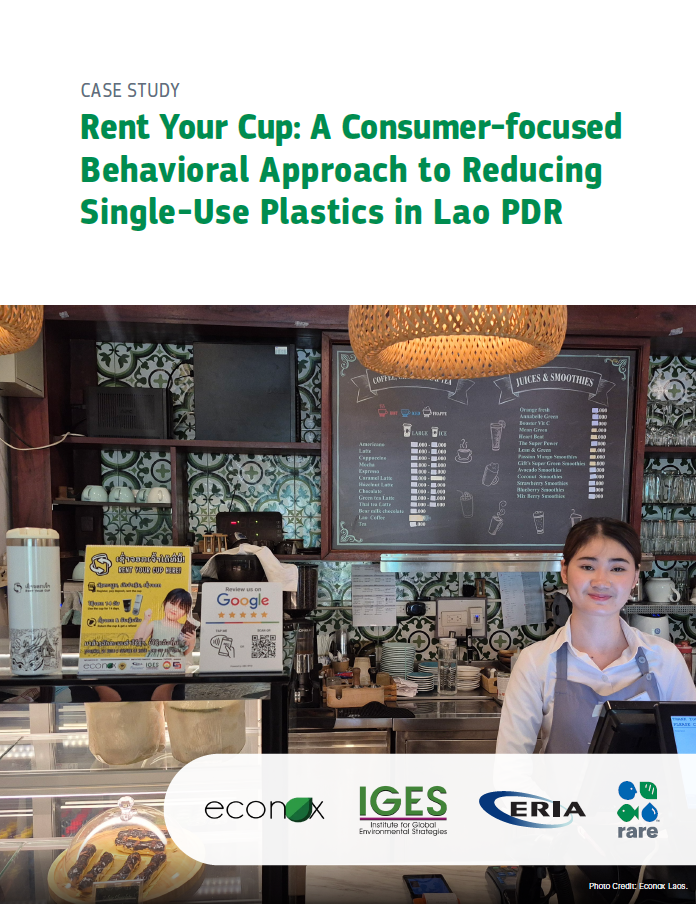
Changing the local reuse economy with behavioral science The Rent Your Cup initiative in Lao PDR, led by Econox with support from Economic Research Institute for ASEAN and East Asia (ERIA), Institute for Global Environmental Strategies (IGES), and Rare, addressed the growing problem of single-use plastic waste driven by expanding café culture and...
Keywords:
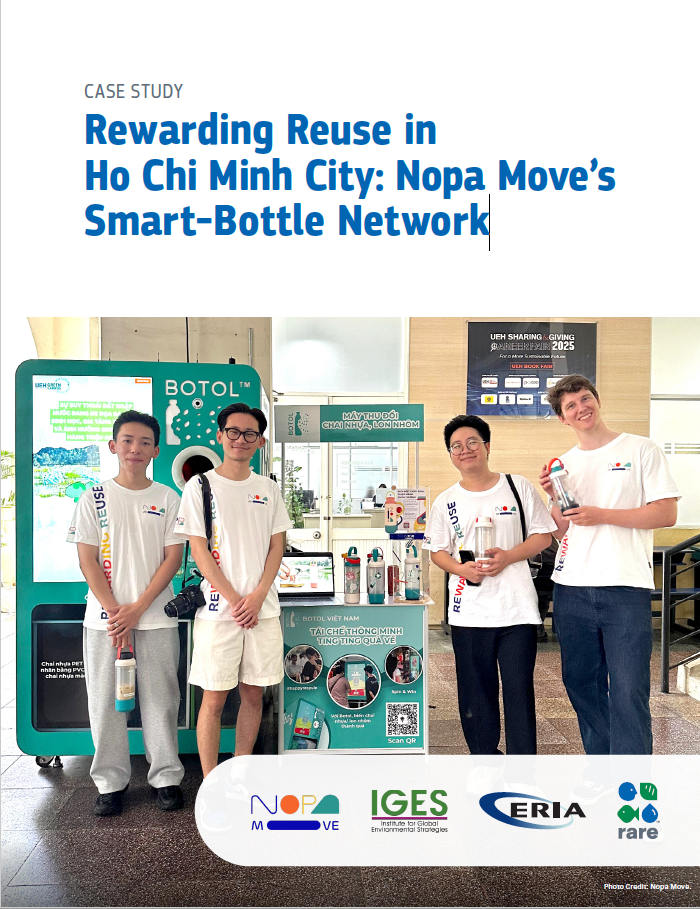
Using behavioral insights to increase reusable water bottle use Nopa Move’s Smart Bottle Network, with support from the Economic Research Institute for ASEAN and East Asia (ERIA), Institute for Global Environmental Strategies (IGES), and Rare, addressed single-use plastic waste in Ho Chi Minh City’s commuter coffee culture, where disposables...
Keywords:
In Sustainability Science
In Japan, almost all Climate Citizens’ Assemblies (CCAs) to date have been held at the municipal level. Although considerable efforts have been made to produce valuable recommendations—those that go beyond existing local climate policies-, the usefulness of CCAs in Japan continues to be questioned. This case study examines two contrasting...