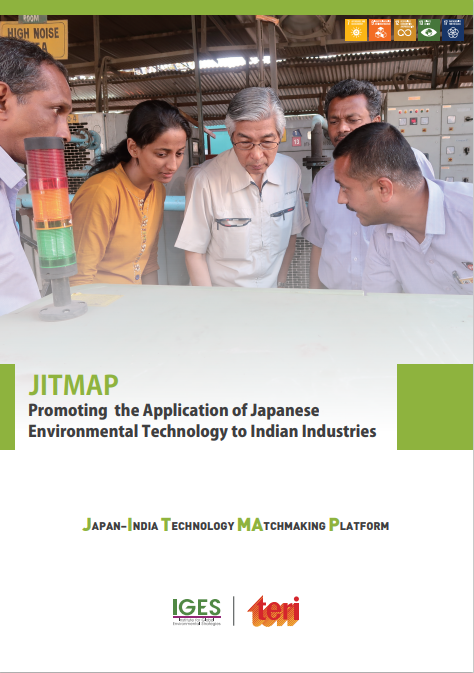
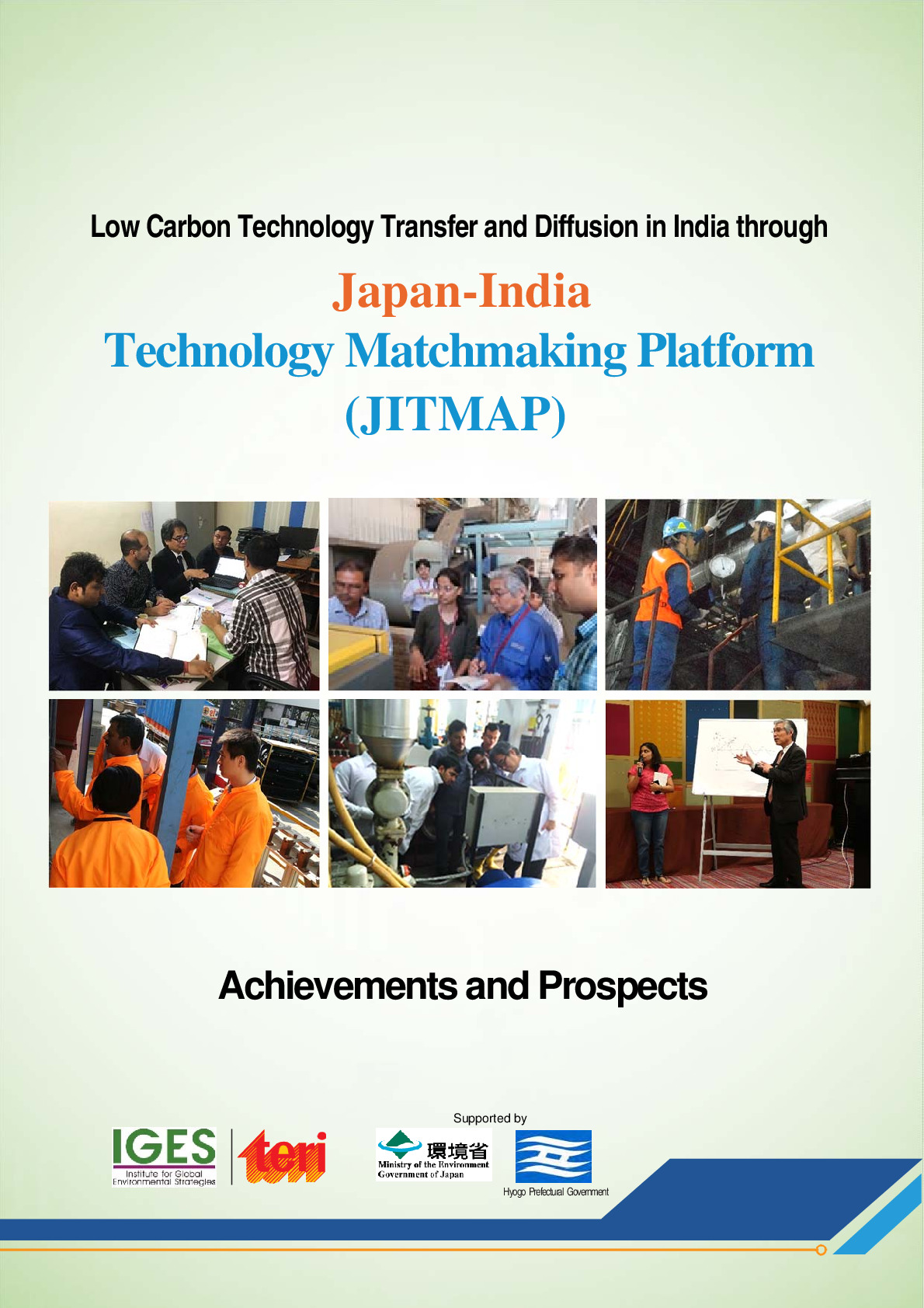
This brochure was prepared to publicize the Japan-India Technology Matchmaking Platform (JITMAP), which was established in FY2016 by IGES-KRC in collaboration with The Energy and Resources Institute (TERI) of India and is being operated in India, with the aim of increasing awareness and expanding the number of new Implementing Partners. JITMAP is a...
- Clear all
- Language: (-) English
- Research Unit: (-) Kansai Research Centre
Results 21 - 30 of 275 (Sorted by date)
6th North-East Asia Multistakeholder Forum on Sustainable Development Goals 2022
On September 7-8, 2022, the 6th North-East Asia Multistakeholder Forum on Sustainable Development Goals 2022 was organized by the United Nations Economic and Social Commission for Asia and the Pacific (ESCAP) with the attendees from the UN-related offices, international organizations, and government-related organizations, etc. IGES Kansai Research...
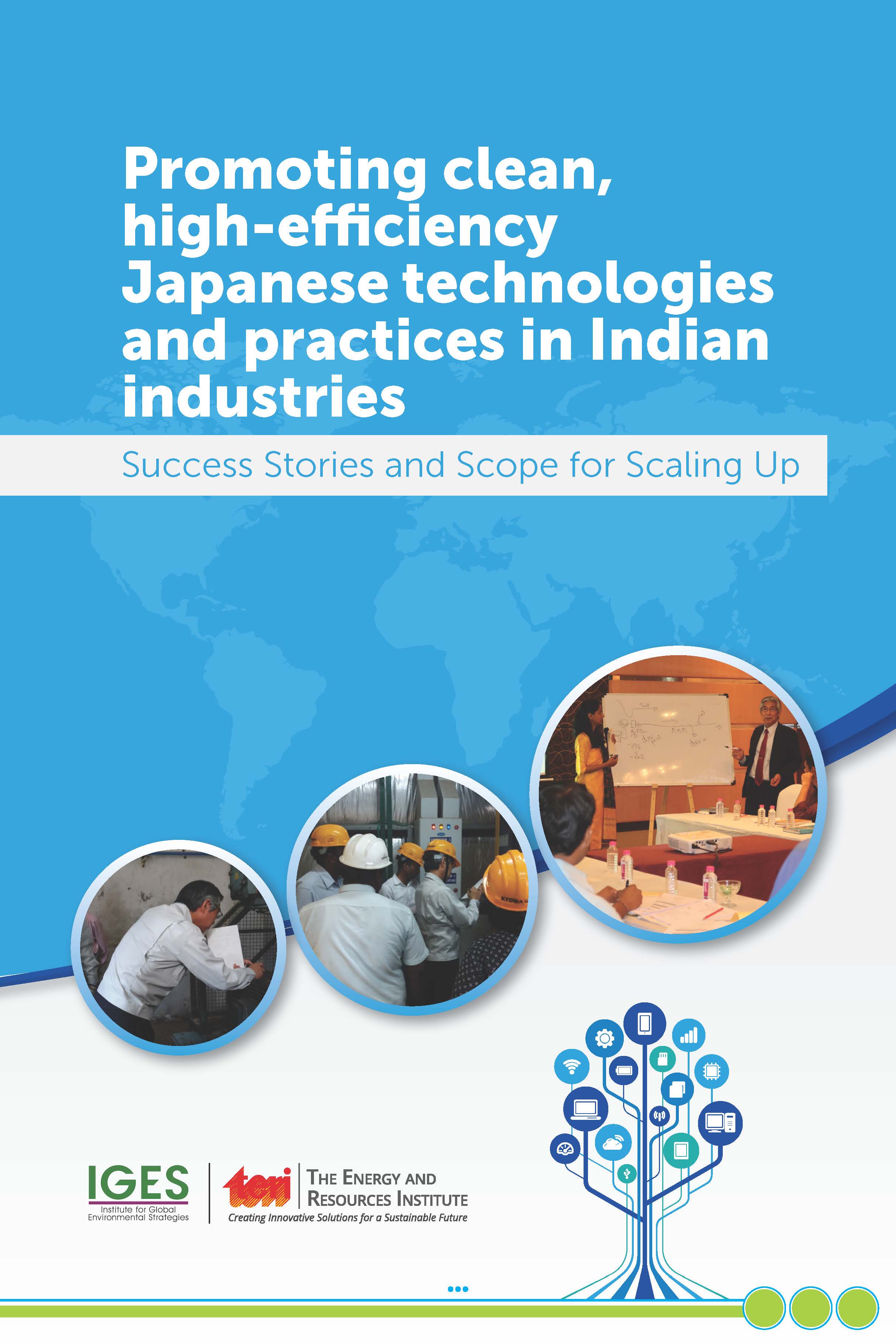
This booklet was made in order to introduce success stories on adoption of Japanese Low Carbon Technologies (LCTs), best operating practices, energy-saving and economic impacts, etc. through activities of the Japan-India Technology Matchmaking Platform (JITMAP). JITMAP is a multi-stakeholder platform launched by IGES and TERI in July 2016 with the...
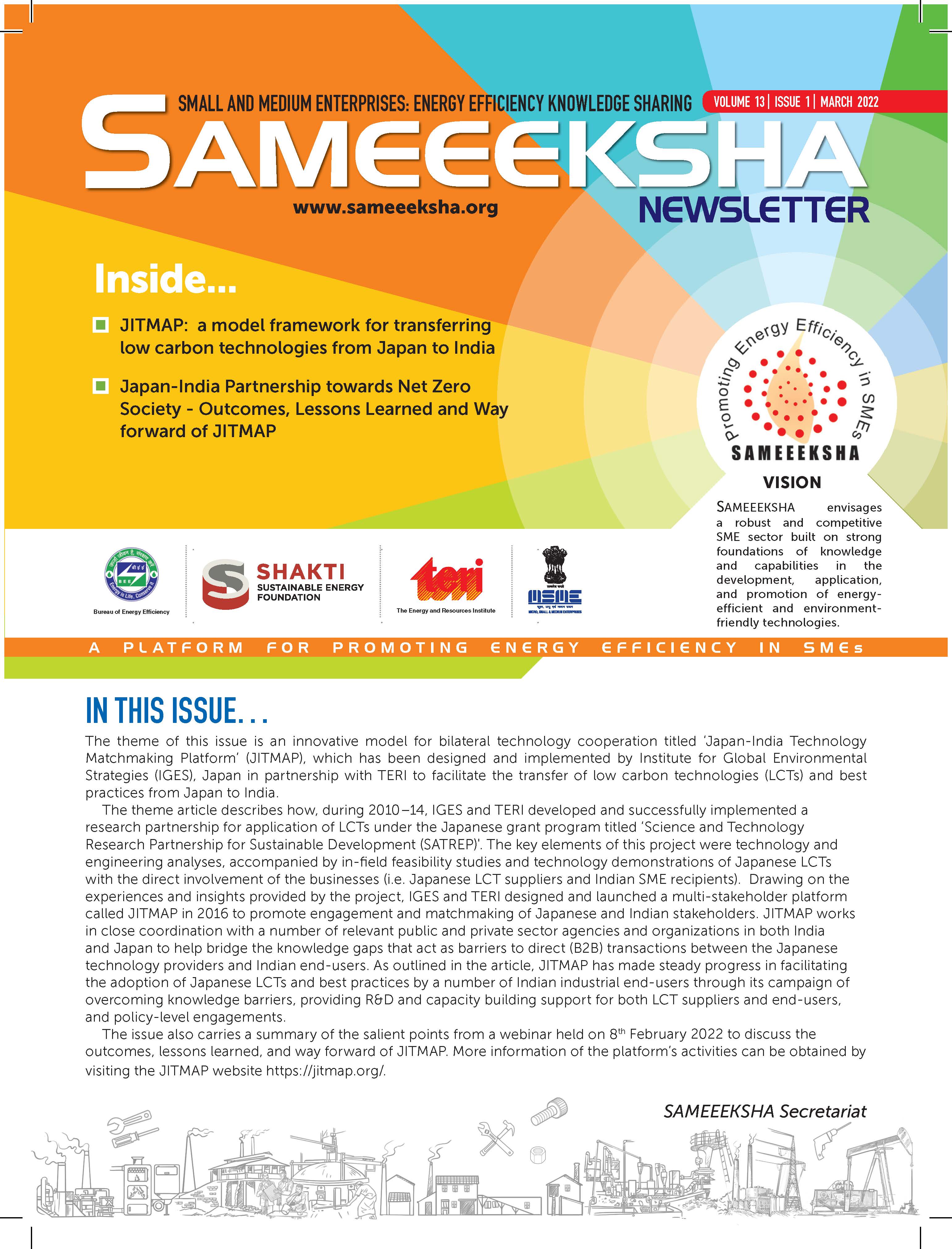
The article introduces an innovative model for bilateral technology cooperation titled ‘Japan-India Technology Matchmaking Platform’ (JITMAP), which has been designed and implemented by Institute for Global Environmental Strategies (IGES), Japan in partnership with TERI to facilitate the transfer of low carbon technologies (LCTs) and best practices...
The 2nd Webinar on Introduction of Japanese Environmental Technologies in India
The presentation focuses on financing MSMEs in India. It provides a few recommendations to strengthen the Japan-Indian Technology Matchmaking Platform, established by IGES and TERI, to promote MSMEs' access to sustainable/green finance.
Keywords:
The concept of 1.5-degree lifestyles involves changes in household consumption for achieving levels of per person carbon footprint compatible with the 1.5°C target of the Paris Agreement (IPCC, 2018). This requires, on average, emitting the equivalent of 2.5 tons of CO₂ per person per year by 2030, and 0.7 tons of CO₂ per person per year by 2050...
In Energy Efficiency in Motor Systems
Compressed air systems account for 5–35% of electricity use among the Indian manufacturing sector. It shares a significant portion of the production cost, but its energy-efficiency measures are not widely applied in India yet. From 2011 to 2018, the Institute for Global Environmental Strategies (IGES) and The Energy and Resources Institute (TERI)...
This catalogue has been produced for the workshops and home experiments organised by the 1.5ºC Lifestyle Project. A decarbonised lifestyle to reduce the carbon footprint (CFP), including CO₂ emissions plus CO₂ equivalent of the other greenhouse gas (GHG) emissions, per Japanese person from 7,600 kg per year (2015) to 2,500 kg per year (about 1/3)...
In order to properly coordinate their efforts and facilitate technology transfer, IGES-TERI launched the ʻJapan-India Technology Matchmaking Platformʼ (JITMAP) in July 2016 as part of the project on evaluation and verification of CO2 emissions reduction technologies (TA project) funded by the Ministry of the Environment, Japan (MOEJ). JITMAP is a...
This proceedings is related to the awareness workshop on the opportunities of adoption of Japanese Low Carbon Technologies (LCTs) in the compressed air system in India on 25 January 2020 at Mumbai, India. The key objectives of the workshop were to: • Increase awareness about energy efficient air compressors and peripherals (hard technologies) along...