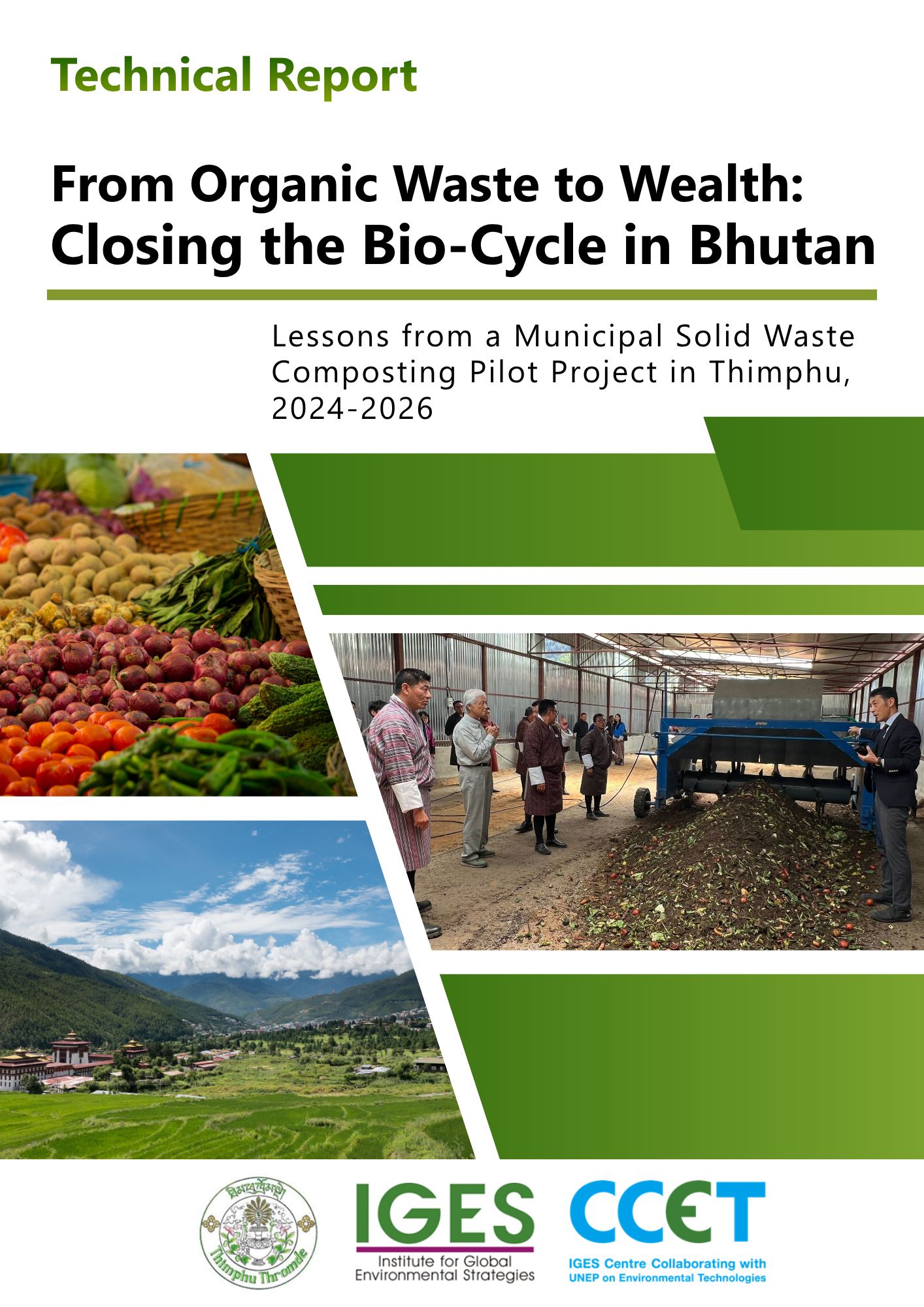
Bhutan faces mounting pressure on its municipal solid waste (MSW) management systems. Its capital city, Thimphu, generates approximately 50 tonnes of MSW per day, of which roughly 30 tonnes per day is organic (wet) waste that is currently deposited at the Memelakha landfill — an ageing open-dumpsite already well beyond its intended lifespan. At the...
- Clear all
- Region/Country: (-) Bhutan
- Region/Country: (-) Democratic People's Republic of Korea
- Region/Country: (-) New Zealand
Results 1 - 10 of 26 (Sorted by date)
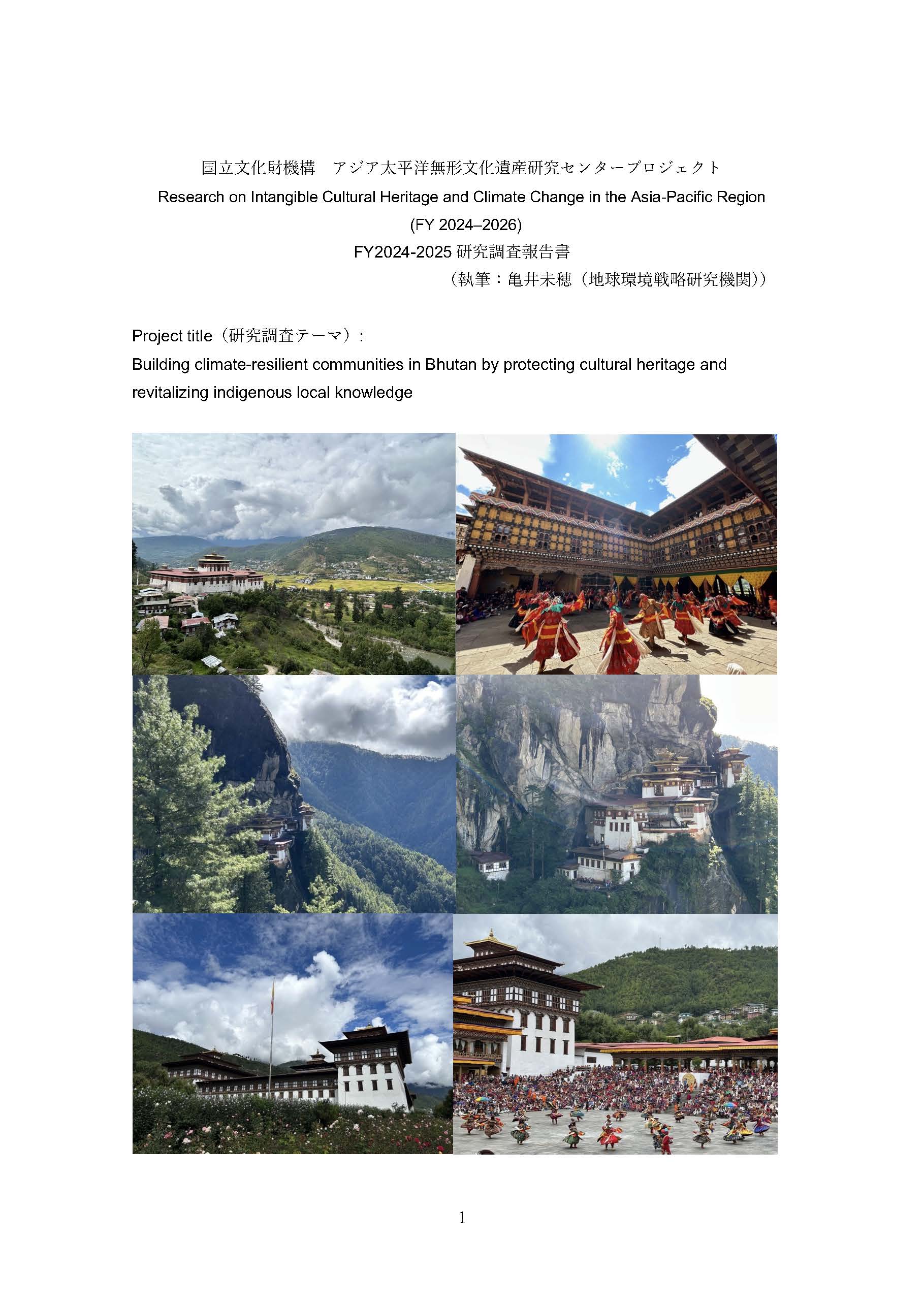
This research aims to contribute to the new scientific knowledge related to the adaptation and climate resilient development strategies. In particular, cultural heritage is a new element for the Global Goals on Adaptation (GGA) in the UAE Framework for Global Climate Resilience, which was adopted in Dubai 2023. Creating new scientific knowledge on...
Research on Intangible Cultural Heritage and Climate Change in the Asia-Pacific Region/ Second Online Meeting
Presentation at the year-end project meeting : Research on Intangible Cultural Heritage and Climate Change in the Asia-Pacific Region, coordinated by International Research Centre for Intangible Cultural Heritage in the Asia-Pacific Region (IRCI)
環境省業務「令和7年度途上国における適応M&Eツールの適応プロセス実装支援及び国際整合化検討業務」では、ユーザー対話型の適応のモニタリングと評価(M&E)ツール「Japan Adaptation Monitoring and Evaluation System」 (以下、「JAMES」)を開発途上国の諸都市における適応計画や防災計画等の気候変動適応推進プロセスに引き続き実装し、途上国の地域での適応プロセス推進を支援するとともに、国際援助機関や開発コンサルタント等が実施する支援事業とJAMESの連携可能性について検討を行った。併せて、2023年に国連気候変動枠組条約(UNFCCC)第28回締約国会議(COP28)で合意されたUAEフレームワークとの整合性を図りつつ、各国...
HLPF2019 IGESSide Event “From Science to Implementation: Strengthening the Science Policy Interface (SPI) to Integrate Climate Change, Resilience, and the SDGs” on 11thJuly 2019, UNHQ, NY
First Sub-Regional workshop on Preparation of status Report and Sub-regional Roadmap for Implementing the Global Waste Management Goals toward Addressing SDGs in South Asia
Home to roughly 1.8 billion people, South Asia generates approximately 334 million tonnes of waste per year of which 174 million tonnes (57%) is organic in content. In addition to the increase in municipal solid waste, managing complex and emerging waste streams, including e-waste, food waste, construction and demolition waste, disaster waste...
The International Conference of the Association of Korean Economic Studies
Based on the accumulated experiences and outputs of SDGs studies and policy suggestions in 9 countries IGES implemented and provided, this presentation identifies the priority areas for SDGs studies in general at a country level which to be applied for North Korea (N.Korea). In addition, reflecting the features of political, economic and social...
Training Programmme on Climate Change for Bhutanese Policymakers
In collaboration with the Institute for Global Environmental Strategies, Japan (IGES), NIES has worked with Bhutan for years to address the adverse impacts of climate change. On February 5-8, 2018, IGES delivered a training program for policymakers, and the Asia-Pacific Climate Change Adaptation Information Platform (AP-PLAT) coordinated lectures...
This is a final report on the project for accelerating Asian regional collaboration on Environmental Impact Assessment, under a lump-sum Ukeoi contract with MOEJ in FY2014. The Project consists of four components: i) In-depth study on policy and implementation of country EIA system in six countries, namely Cambodia, Korea, Indonesia, Myanmar...
Background and objectives On 5-6 May 2013 the 15th Tripartite Environmental Ministers Meetings (TEMM15) was held in Kitakyushu, where the three countries engaged in opinion exchange on ten priority areas for environmental cooperation. From 2014, recommendations were made to specifically prioritise the strengthening of policy dialogue, collaborative...