This catalogue has been produced for the workshops and home experiments organised by the 1.5ºC Lifestyle Project. A decarbonised lifestyle to limit the carbon footprint (CFP), including CO₂ emissions plus CO₂ equivalent of the other greenhouse gas (GHG) emissions to 2,500 kg per year in 2030 and 700 kg per year in 2050. The options are divided into...
- Clear all
- Language: (-) Thai
- Language: (-) Cambodian
- Research Unit: (-) Sustainable Consumption and Production
Results 1 - 10 of 12 (Sorted by date)
Just like in any city, the waste management has always been a major societal issue for Phnom Penh. The monthly amount of disposed waste at the landfill more than doubled in the past decade owing to factors such as population growth, economic growth, changes in industrial structure and of people’s lifestyle. While Phnom Penh Capital Administration...
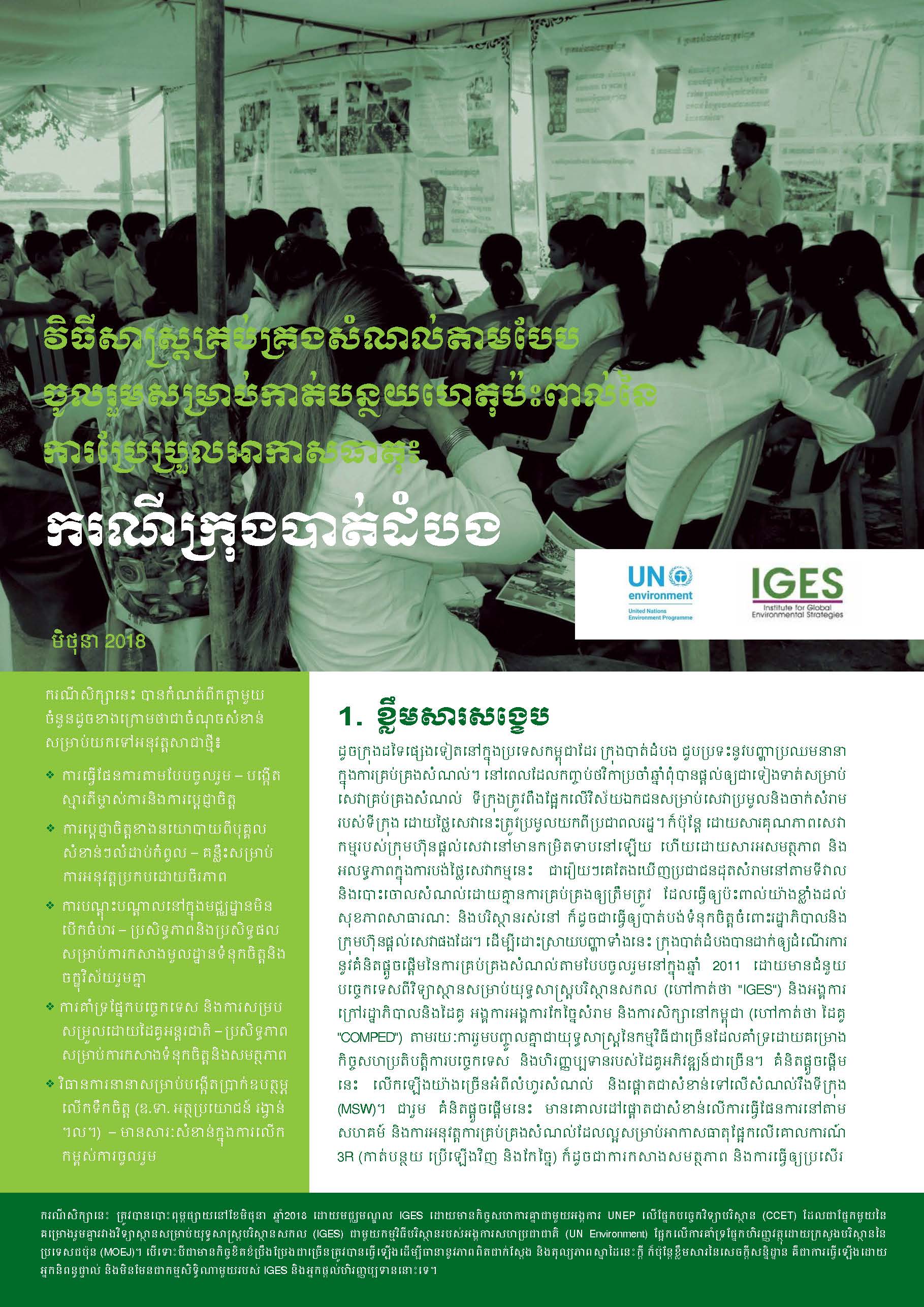
As with many other cities in Cambodia, Battambang Municipality faces huge challenges in managing its waste. With no consistent annual budget allocated to waste management services, the city relied on the private sector for municipal waste collection and disposal services based on user fees collected from residents. However, with low service quality...
This GHG calculation tool is translated from the English version II to ease of use by local government in Thailand. The products include the GHG calculation tool based on Excel and a user manual that explains fundamental information of and how to use the IGES GHG calculation tool. Remarks: English and Khmer version are available.
This presentation briefly explains what is MRV and how to do MRV.
This product includes GHG calculation tool and user manual in Khmer. Remarks: English and Thai version are available.
This presentation explains relation between municipal solid waste management and climate change including examples of climate friendly waste management practices.
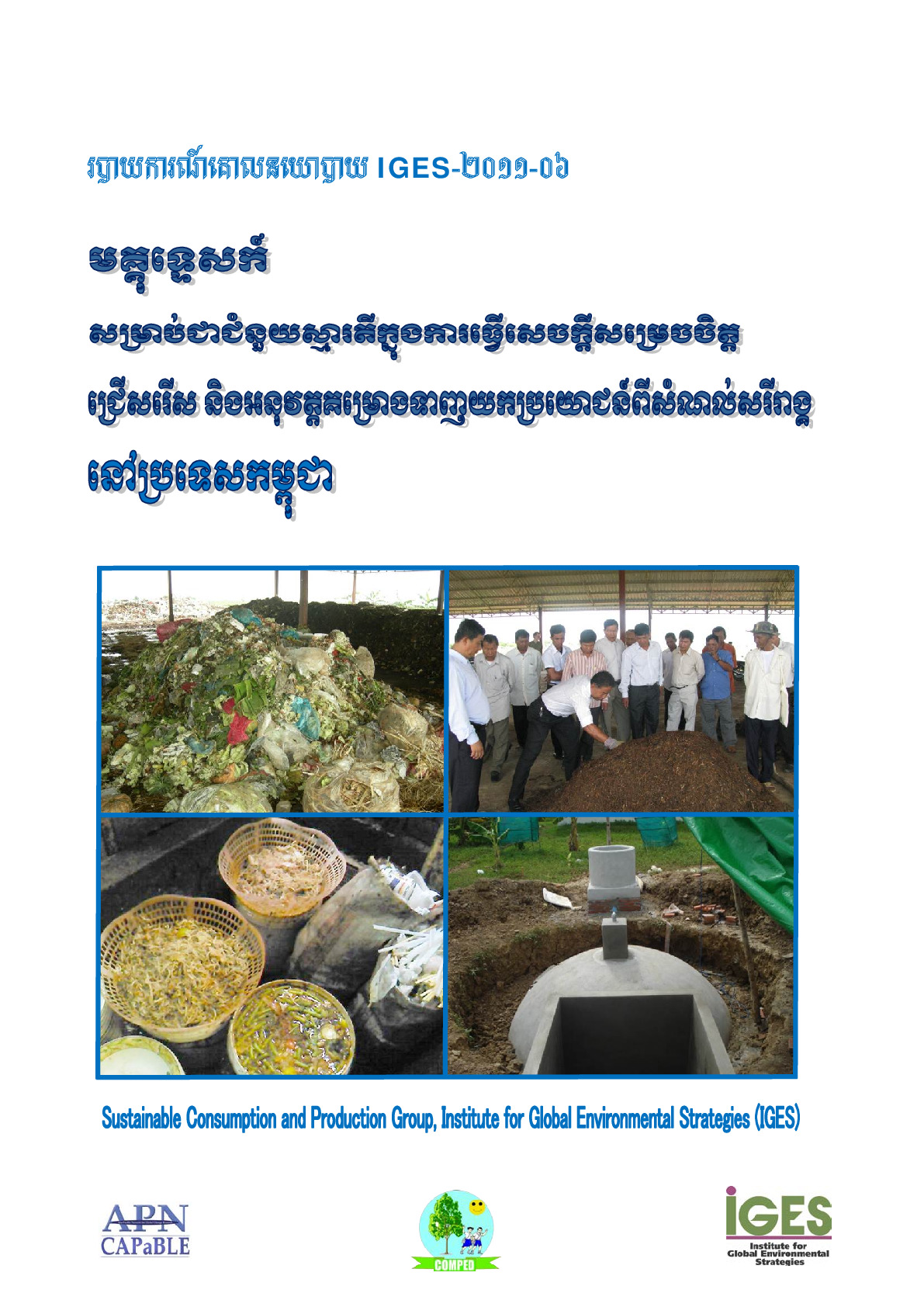
This report describes and analyses the current situation of urban organic waste management in Cambodia through field surveys and interviews. The authors introduce various organic waste utilisation technologies that implemented in neighbouring and other developing Asian countries to assist technology selection. In addition, the authors provide...
The objective of this report is to facilitate local governments in decision making and implementation of urban organic waste utilization projects that can contribute to sustainable solid waste management and national agendas on food, energy, and climate change. This report provides an overview of national policy, regulations, and institutions...