- English
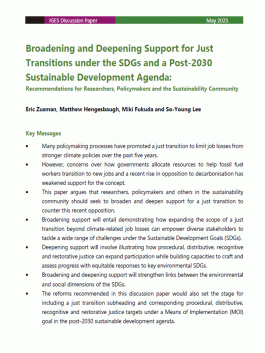


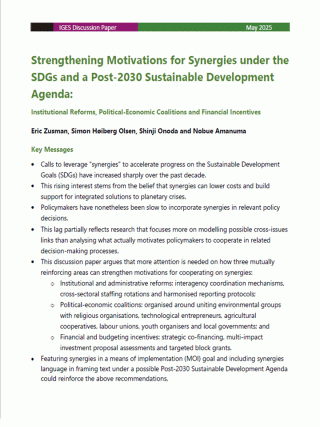
- Many policymaking processes have promoted a just transition to limit job losses from stronger climate policies over the past five years.
- However, concerns over how governments allocate resources to help fossil fuel workers transition to new jobs and a recent rise in opposition to decarbonisation has weakened support for the concept.
- This paper argues that researchers, policymakers and others in the sustainability community should seek to broaden and deepen support for a just transition to counter this recent opposition.
- Broadening support will entail demonstrating how expanding the scope of a just transition beyond climate-related job losses can empower diverse stakeholders to tackle a wide range of challenges under the Sustainable Development Goals (SDGs).
- Deepening support will involve illustrating how procedural, distributive, recognitive and restorative justice can expand participation while building capacities to craft and assess progress with equitable responses to key environmental SDGs.
- Broadening and deepening support will strengthen links between the environmental and social dimensions of the SDGs.
- The reforms recommended in this discussion paper would also set the stage for including a just transition subheading and corresponding procedural, distributive, recognitive and restorative justice targets under a Means of Implementation (MOI) goal in the post-2030 sustainable development agenda.
<日本語要約>
「SDGsとポスト2030アジェンダにおける公正な移行への取組みの拡大と深化:研究者、政策立案者、サステイナビリティ分野のコミュニティに向けた提言」
- 過去5年間、気候変動対策の強化に伴い、雇用の喪失を最小限に抑えるための「公正な移行(Just Transition)」を推進する政策決定プロセスが数多く推進されてきました。
- しかし、化石燃料従事者が新たな職業へ移行するための公的資金の配分方法をめぐる懸念や、昨今の脱炭素化に対する反発の高まりにより、この公正な移行というコンセプトへの支持は弱まりつつあります。
- 本ディスカッションペーパーでは、研究者、政策立案者、サステイナビリティ分野の関係者が、脱炭素化への反発に対抗するため、公正な移行への理解と支持を拡大し、深化させるべきであると主張しています。
- 具体的には、手続き的正義、配分的正義、承認的正義、修復的正義という4つの概念を取り入れることが重要です。
- これにより、多様なステークホルダーの参加を促し、主要な環境分野のSDGsに対する公平な対応を策定・評価する能力を高めることができます。
- 公正な移行への支持を強化することは、持続可能な開発目標(SDGs)の環境的側面と社会的側面の連携の強化にも繋がります。
- 本ディスカッションペーパーで提案されている改革は、2030 年以降の持続可能な開発のためのアジェンダにおける、実施手段(Means of Implementation: MOI)の中に、公正な移行と関連する4つの正義を盛り込むための強固な基盤を築くことにつながると考えられます。
Author:
Date:
Languages:
- English