

Results 1611 - 1620 of 5565 (Sorted by date)
Policy Brief
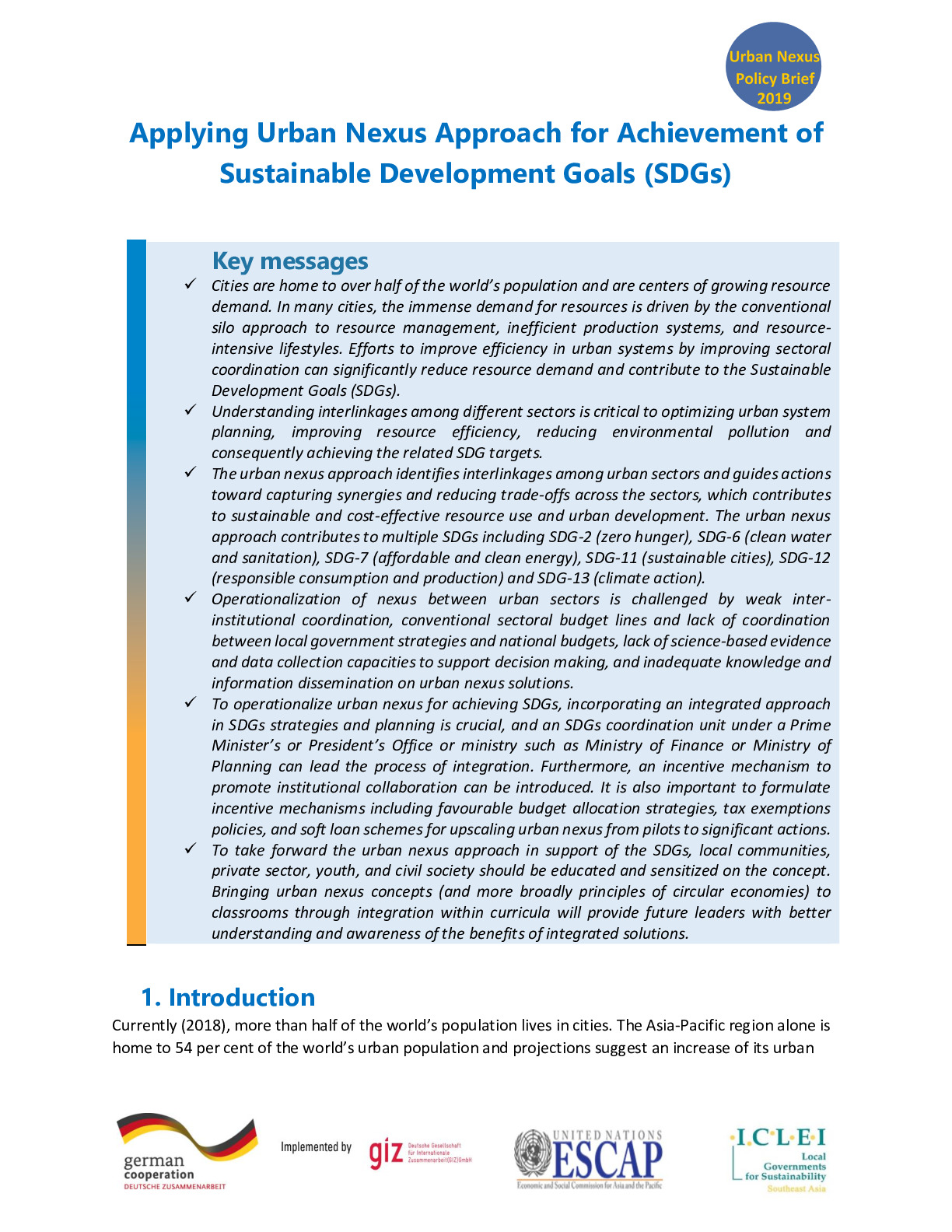
UNESCAP - Urban Nexus Policy Brief 2019
Key messages ✓ Cities are home to over half of the world’s population and are centers of growing resource demand. In many cities, the immense demand for resources is driven by the conventional silo approach to resource management, inefficient production systems, and resource-intensive lifestyles. Efforts to improve efficiency in urban systems by...
Peer-reviewed Article
In ISPRS Journal of Photogrammetry and Remote Sensing
Green fractional vegetation cover (fc) is an important phenotypic factor in the fields of agriculture, forestry, and ecology. Spatially explicit monitoring of fc via relative vegetation abundance (RA) algorithms, especially those based on scaled maximum/minimum vegetation index (VI) values, has been widely investigated in remote sensing research...
Commissioned Report
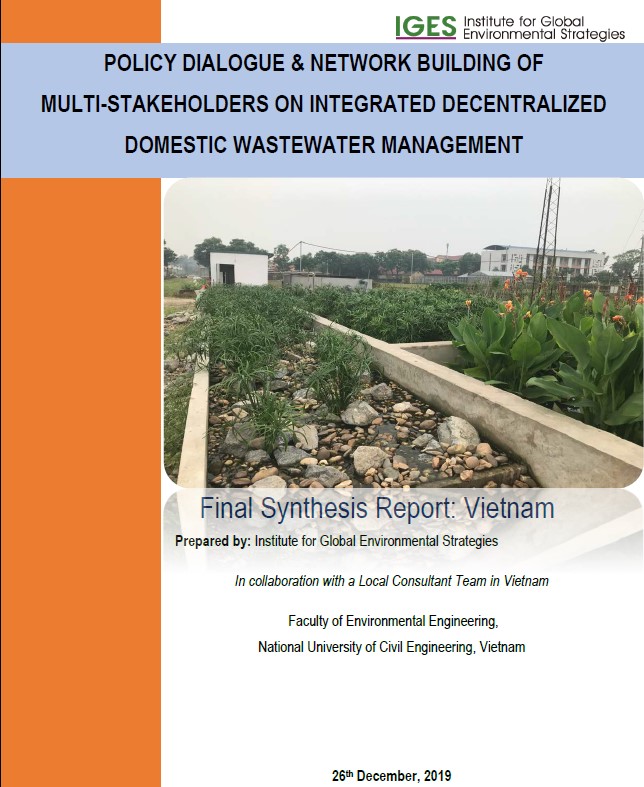
This report presents the results of fact-finding investigation and surveys on decentralised domestic wastewater management in Vietnam, as a part of the commission work under the Japan-ASEAN Integration Fund (JAIF) project on: "Policy Dialogue and Network Building of Multi-stakeholders on Integrated Decentralised Domestic Wastewater Management"
Commissioned Report
Building on the country’s momentum in economic growth and poverty reduction over the last couple of decades and aspiring to graduate from the least developed country (LDC) status, Lao PDR has developed a well-balanced policy framework for embracing the 2030 Agenda and the Sustainable Development Goals (SDGs). Being a least developed country with...
Commissioned Report
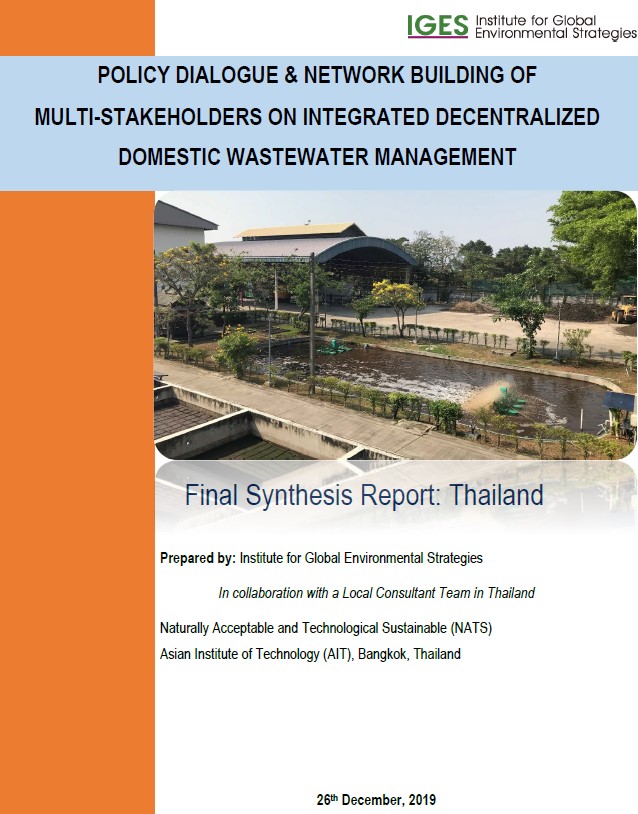
This report presents the results of fact-finding investigation and surveys on decentralised domestic wastewater management in Thailand, as a part of the commission work under the Japan-ASEAN Integration Fund (JAIF) project on: "Policy Dialogue and Network Building of Multi-stakeholders on Integrated Decentralised Domestic Wastewater Management"
Commissioned Report
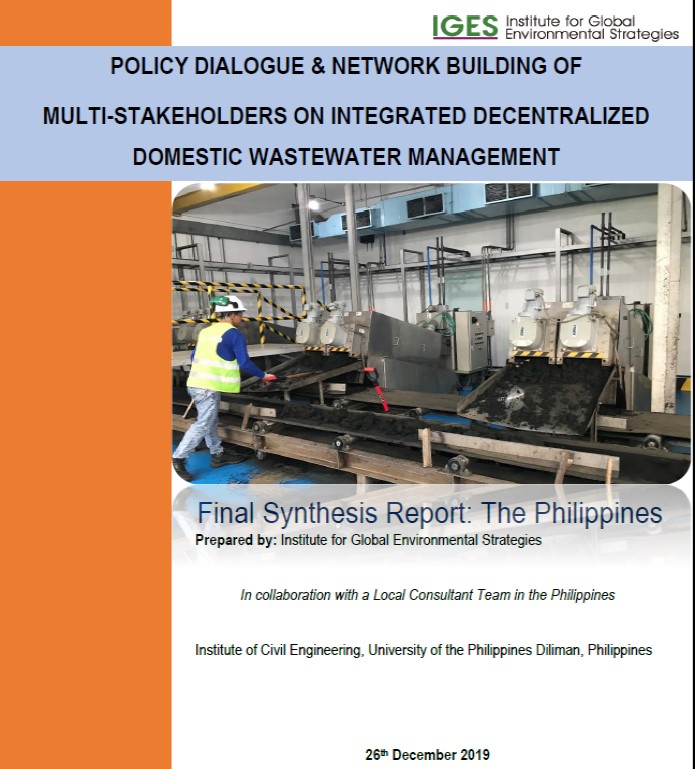
This report presents the results of fact-finding investigation and surveys on decentralised domestic wastewater management in the Philippines, as a part of the commission work under the Japan-ASEAN Integration Fund (JAIF) project on: "Policy Dialogue and Network Building of Multi-stakeholders on Integrated Decentralised Domestic Wastewater...
Commissioned Report
Implementing the 2030 Agenda and the Sustainable Development Goals (SDGs) receives the highest political support in Tanzania. The country’s Second Five-Year Development Plans (FYDP II) for the period of 2016/17-2020/21 is the main policy instrument in Tanzania for implementing the SDGs. Being a least developed country with limited capacities and...
Commissioned Report
Being a least developed country with limited capacities and financial resources, Ethiopia faces tremendous challenges in filling the development gaps and achieving the broad scope of SDGs with 169 targets and more than 230 indicators. Priority setting is therefore indispensable which can help use limited resources effectively by addressing the...
Submission to Policy Process
Development of the Roadmap for Sustainable Waste Management and Resource Circulation in South Asia, 2019-2030 is a result of an intensive consultation process facilitated by the South Asia Cooperative Environment Programme (SACEP) and the IGES Centre Collaborating with UNEP on Environmental Technologies (CCET) with the participation of all eight...
Policy Report
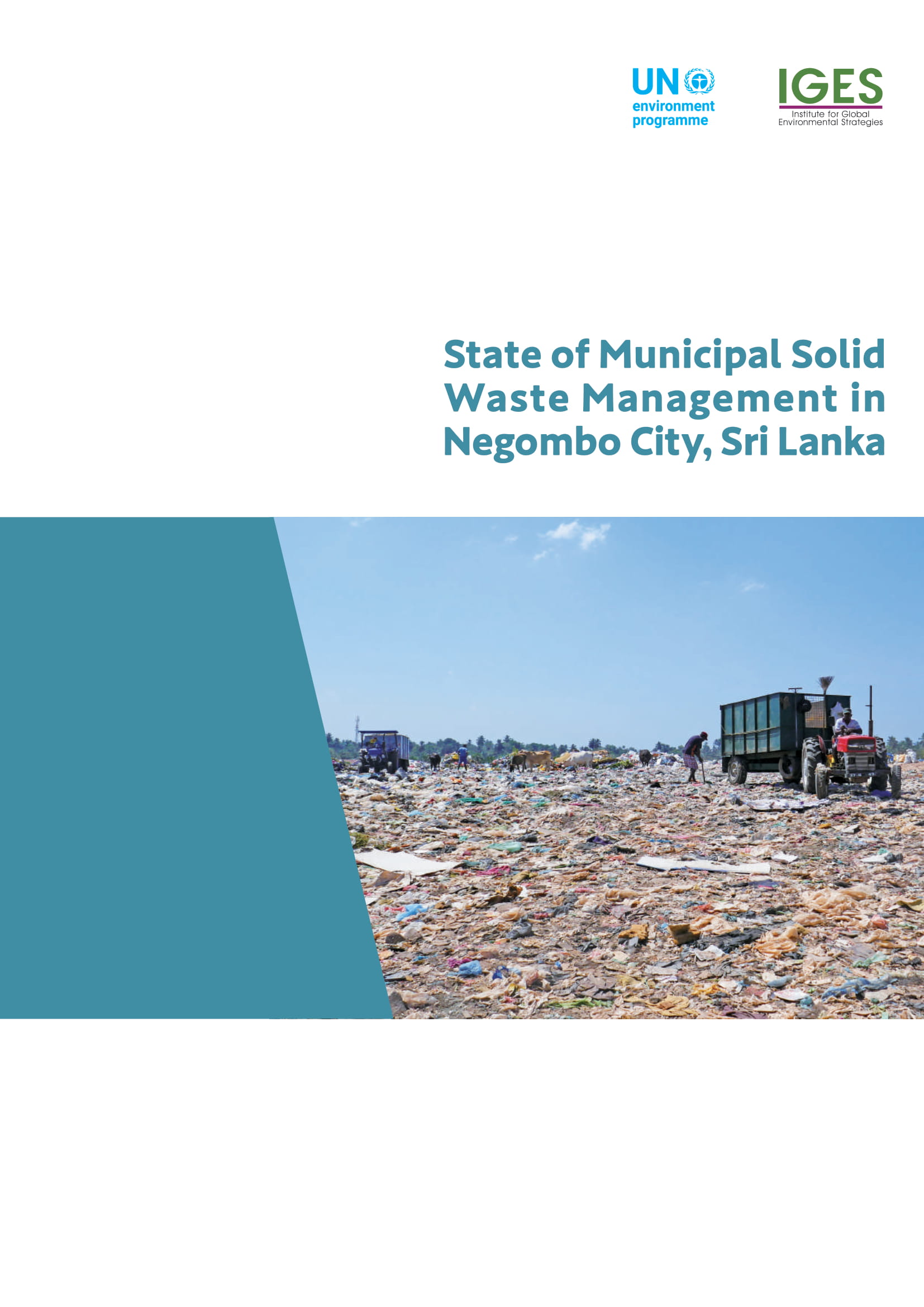
Negombo City is one of the fastest growing tourist destinations in Sri Lanka. It is the major commercial and transport centre, and main health service provider for the region. However, municipal solid waste management is a pressing concern for Negombo due to expanding urbanization, increasing income, lack of public awareness, changes in consumption...