In a context of escalating and interlinked climate and biodiversity crises, ambitious, integrated and inclusive action towards just transitions is central to ensuring a more sustainable, equitable and resilient world for current and future generations. The year 2025 marks the 10th anniversary of the Paris Agreement and the submission of the second...
- Clear all
- Topic: (-) Biodiversity
Results 61 - 70 of 1468 (Sorted by date)
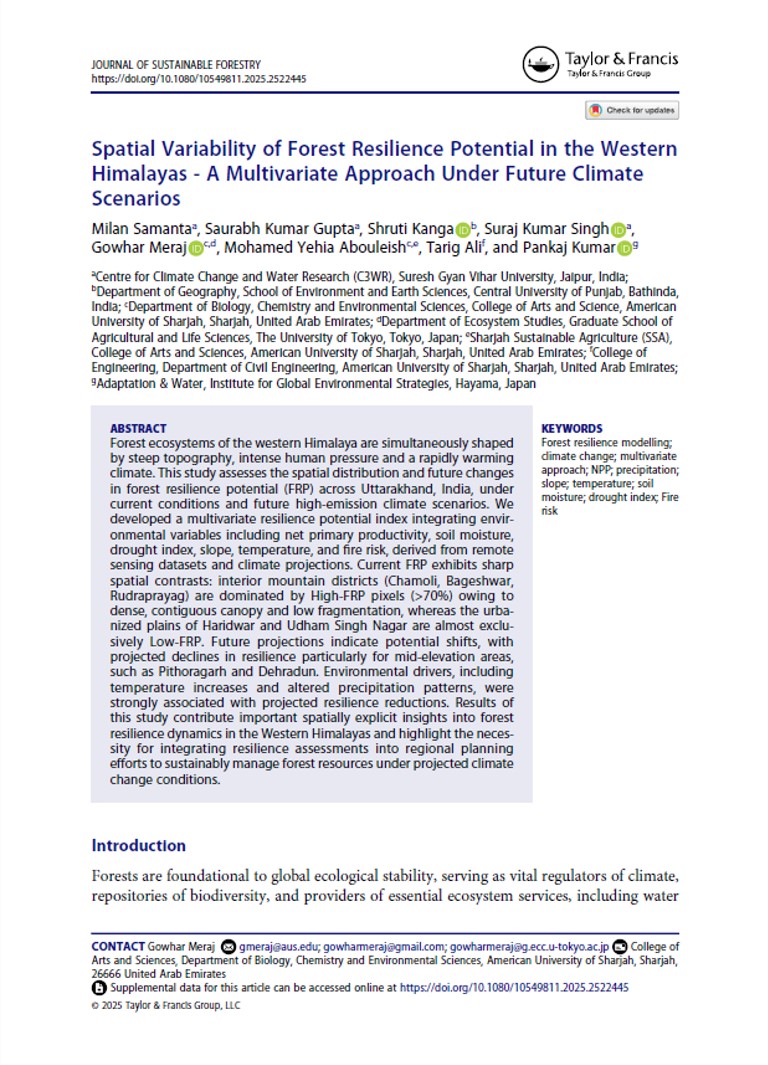
In Journal of Sustainable Forestry
Forest ecosystems of the western Himalaya are simultaneously shaped by steep topography, intense human pressure and a rapidly warming climate. This study assesses the spatial distribution and future changes in forest resilience potential (FRP) across Uttarakhand, India, under current conditions and future high-emission climate scenarios. We...
Ecosystem Services Partnership 11th World Conference
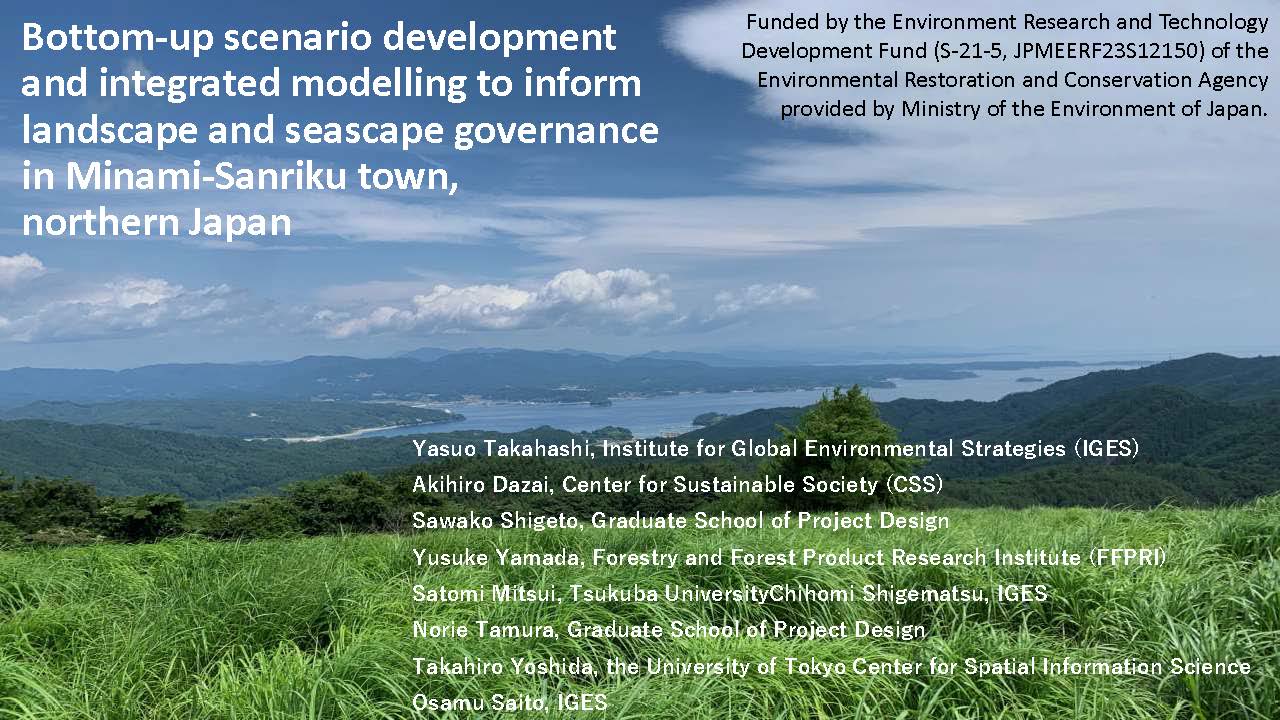
We attempt a bottom-up approach to developing NFF-based localized future scenarios up to 2050 that capture these local concerns and efforts. Our exercise started with interpreting the Ramsar Site Management Plan (2022) from the NFF lens, followed by a stakeholder workshop in 2024 to flesh out multiple future scenarios. A spatially-explicit...
Presentation
From Vision to Action: Co-Creating Nature-Positive Fisheries Futures in Timor-Leste
11th ESP World Conference
Timor-Leste, one of the world's youngest nations, is also among the least developed countries, presenting unique challenges and opportunities for sustainable growth. Despite being surrounded by rich marine resources on three sides, its fisheries sector remains significantly underdeveloped. The advancement of this sector carries immense potential –...
In The Routledge Handbook of Cultural Ecosystem Services
Cultural landscapes represent a nexus of cultural values, traditions, and land-use practices; hence, they are essential areas to capture embedded values where humans and nature are interconnected. Understanding these multi-faceted human-nature relationships is crucial for transitioning to sustainable futures. Cultural ecosystem services, relational...
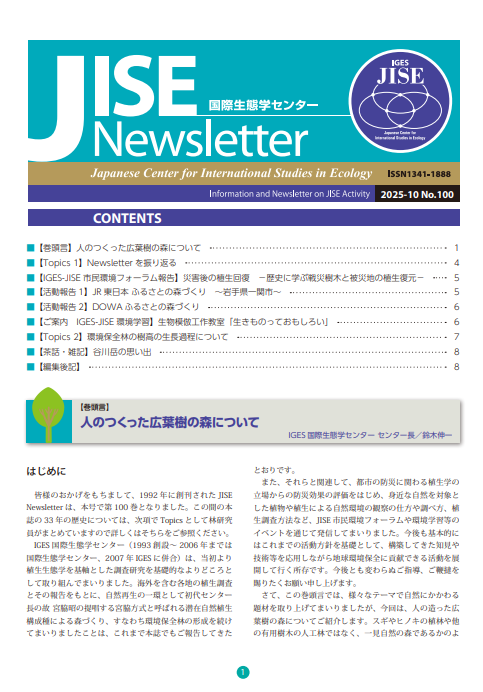
■【研究員 調査・研究レポート】キノコについて知る・学ぶ ■【生態学寸描】横浜の一地域におけるニリンソウ群落の分布 ■【お知らせ】IGES-JISE 市民環境フォーラム 災害後の植生回復 ■【茶話・雑記】日本の通貨に描かれている植物 ■【編集後記】
In Sustainability Science
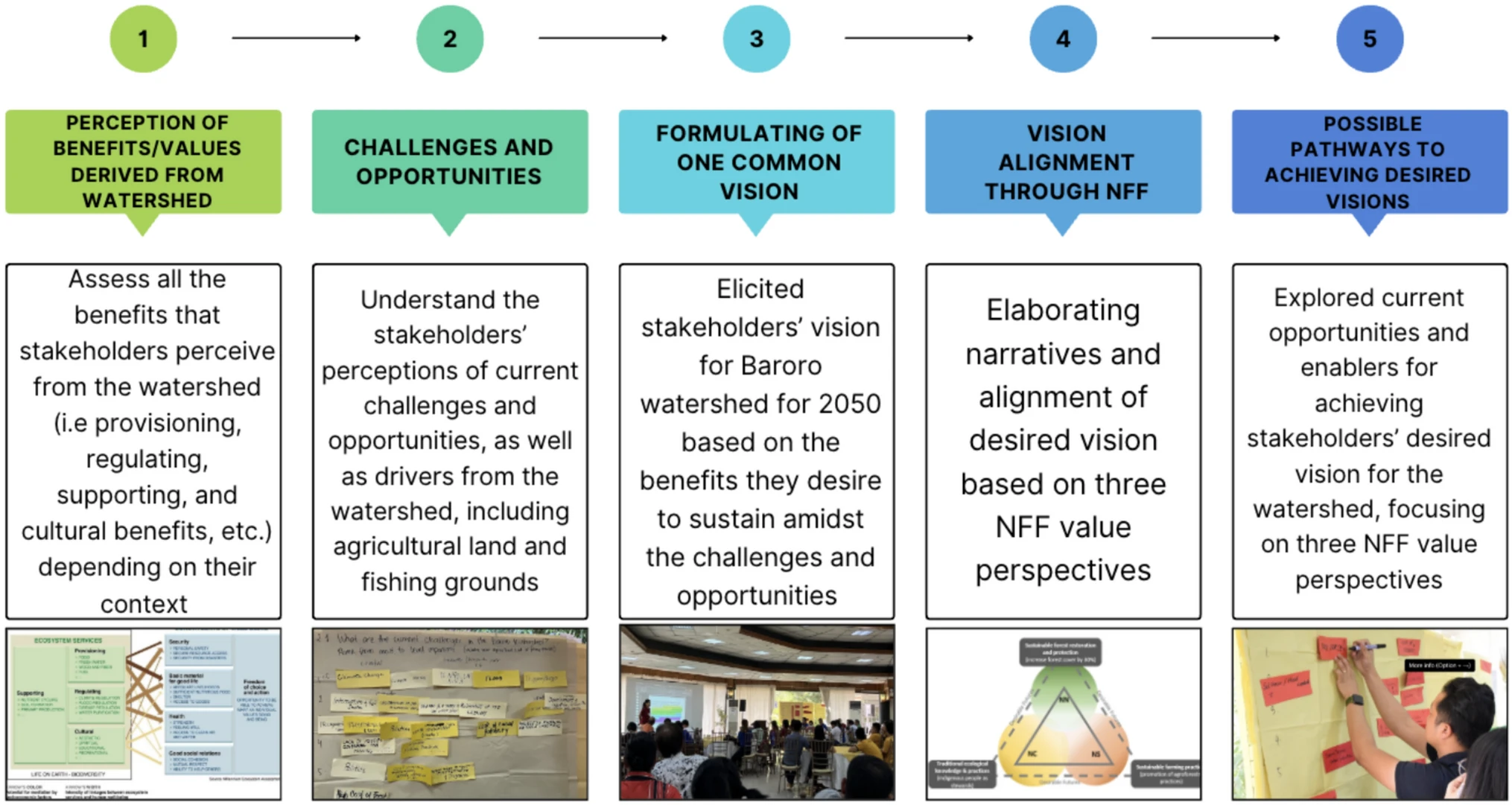
The Convention on Biological Diversity (CBD) emphasizes the need for innovative approaches to foster harmonious coexistence with nature, particularly in managing critical resources such as watersheds. This study applies the Nature Futures Framework (NFF) to integrate diverse value perspectives on nature into sustainable watershed management...
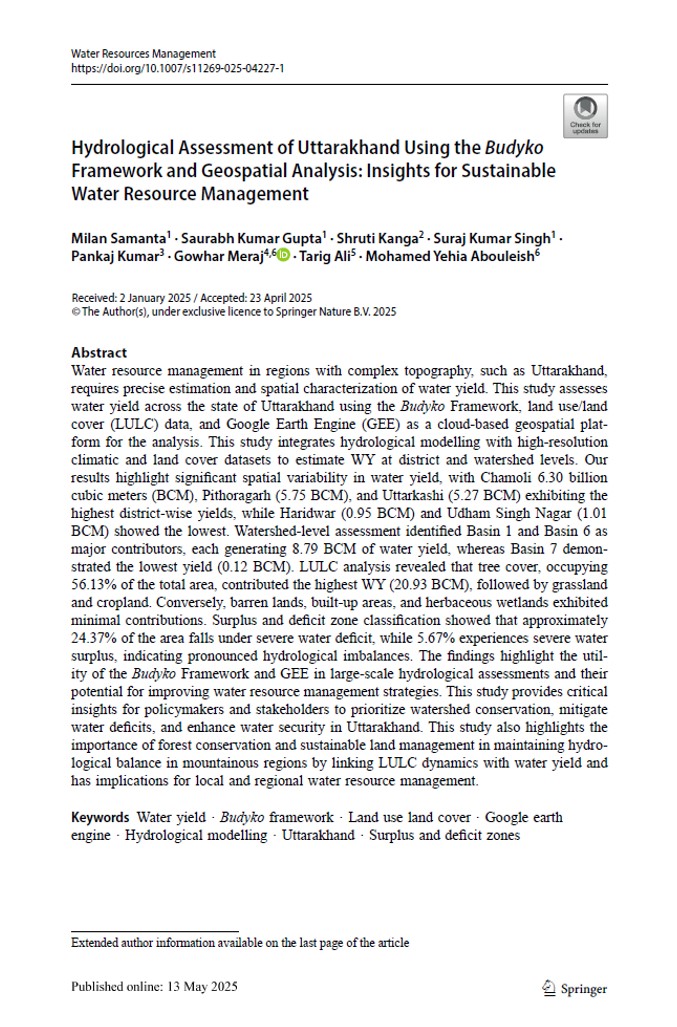
In Water Resource Management
Water resource management in regions with complex topography, such as Uttarakhand, requires precise estimation and spatial characterization of water yield. This study assesses water yield across the state of Uttarakhand using the Budyko Framework, land use/land cover (LULC) data, and Google Earth Engine (GEE) as a cloud-based geospatial platform...
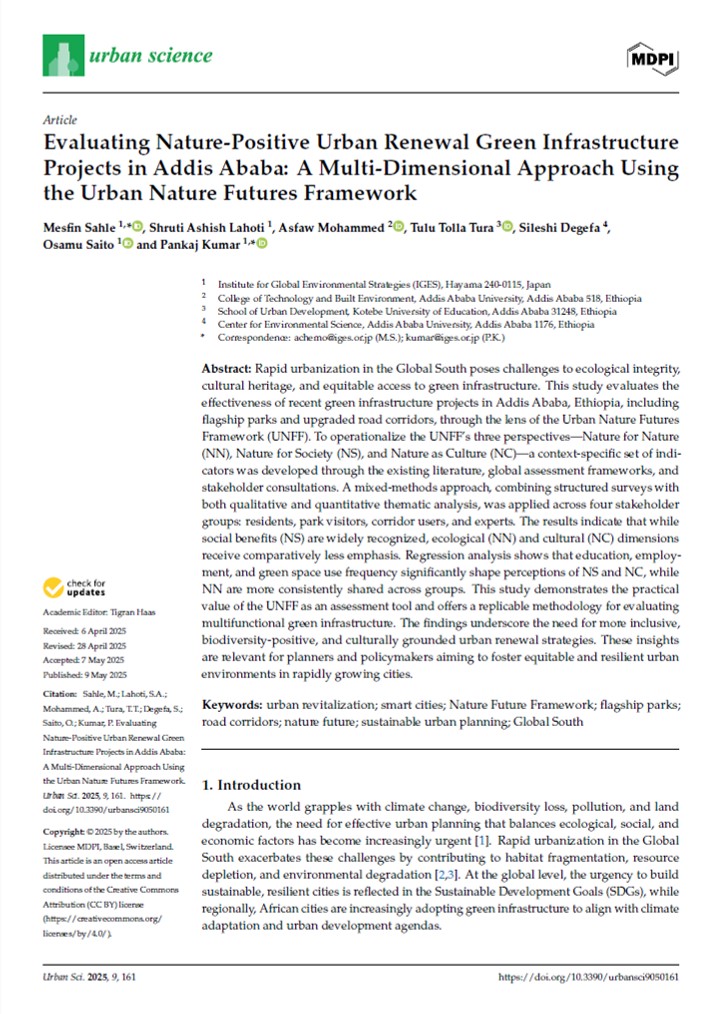
In Urban Science
Rapid urbanization in the Global South poses challenges to ecological integrity, cultural heritage, and equitable access to green infrastructure. This study evaluates the effectiveness of recent green infrastructure projects in Addis Ababa, Ethiopia, including flagship parks and upgraded road corridors, through the lens of the Urban Nature Futures...
In One Earth
The years 2023 and 2024 were characterized by unprecedented warming across the globe, underscoring the urgency of climate action. Robust science advice for decision makers on subjects as complex as climate change requires deep cross- and interdisciplinary understanding. However, navigating the ever-expanding and diverse peer-reviewed literature on...
Keywords: