This is the Vietnamese version of 'Da Nang City Climate Action Plan - A conceptual framework for sectoral cmitate actions, 2nd Edition'. Revision (corrected on 25th Sep 2023): Editorial error / P.59 'Working team 3.5 & 3.6 names’ (English version had no error in this section.)

- Clear all
- Language: (-) Chinese, Simplified
- Language: (-) Vietnamese
- Research Unit: (-) Integrated Sustainability Centre
Results 1 - 8 of 8 (Sorted by date)
In Bulletin of Chinese Academy of Sciences
The 2030 Agenda for Sustainable Development, adopted by the United Nations in 2015, set 17 global Sustainable Development Goals (SDGs) with 169 targets. 232 indicators were proposed as the global framework for monitoring the progress made in achieving SDGs. SDG targets and their corresponding indicators interact with each other forming an...
In 中国省区间投入产出模型与区际经济联系
With the development of globalisation and the emergence of global environmental issues such as climate change, China has become an important country in many multi-regional economic analysis models, such as the multi-region input-output models and the CGE (computable general equilibrium) models. Since China has large regional disparity in terms of...
In 中国省区间投入产出模型与区际经济联系(China's Interregional Input-Output Model and Interregional Economic Linkage)
In 中国
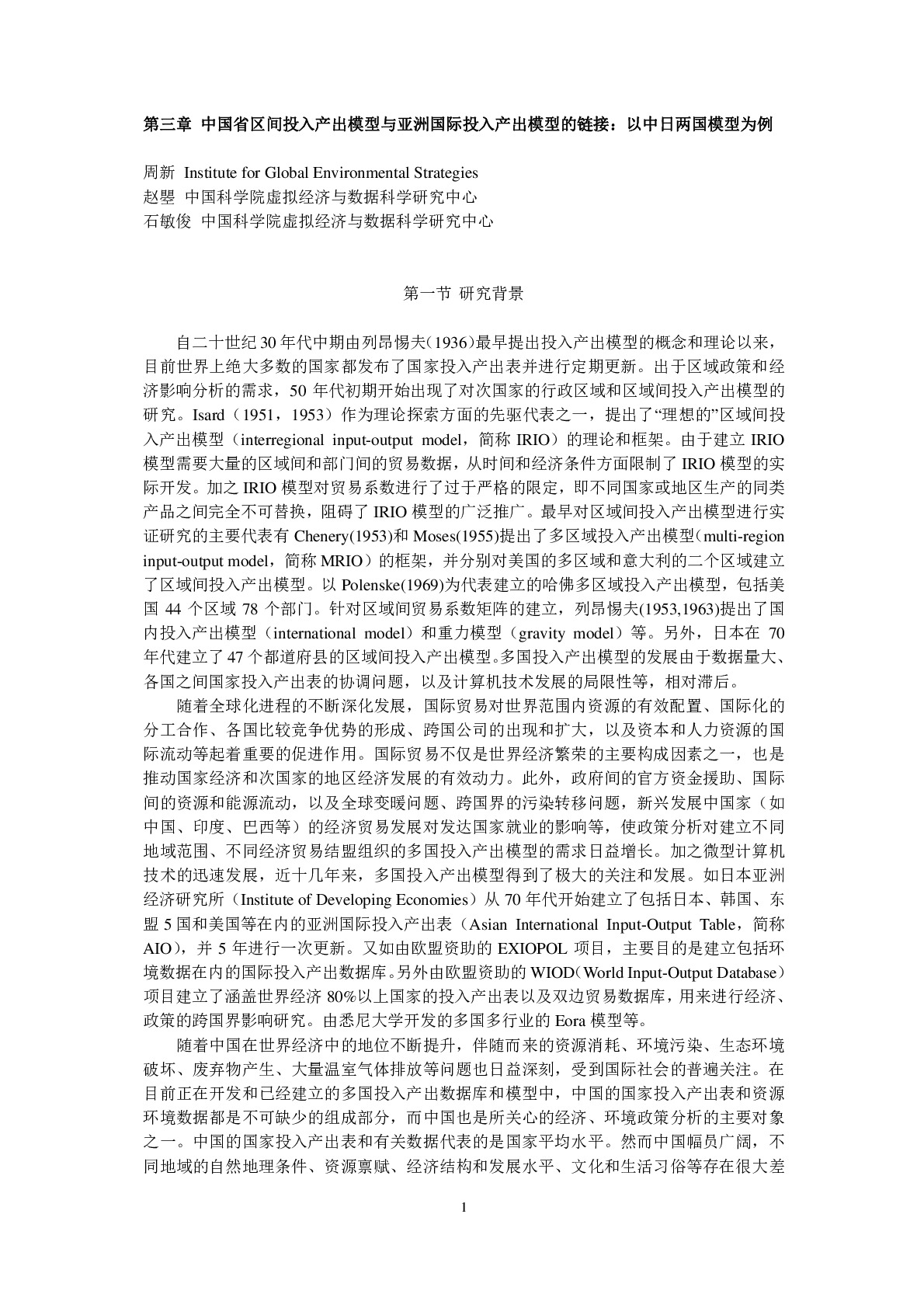
This book chapter described the methodology to link a country's interregional input-output table with an international input-output table. The case of China's interregional input-output table and the Asian International Input-Output Table are used as an example to build such a link. In particular, the bilateral trade of China and Japan are used to...
In Journal of Environmental Economics and Policy
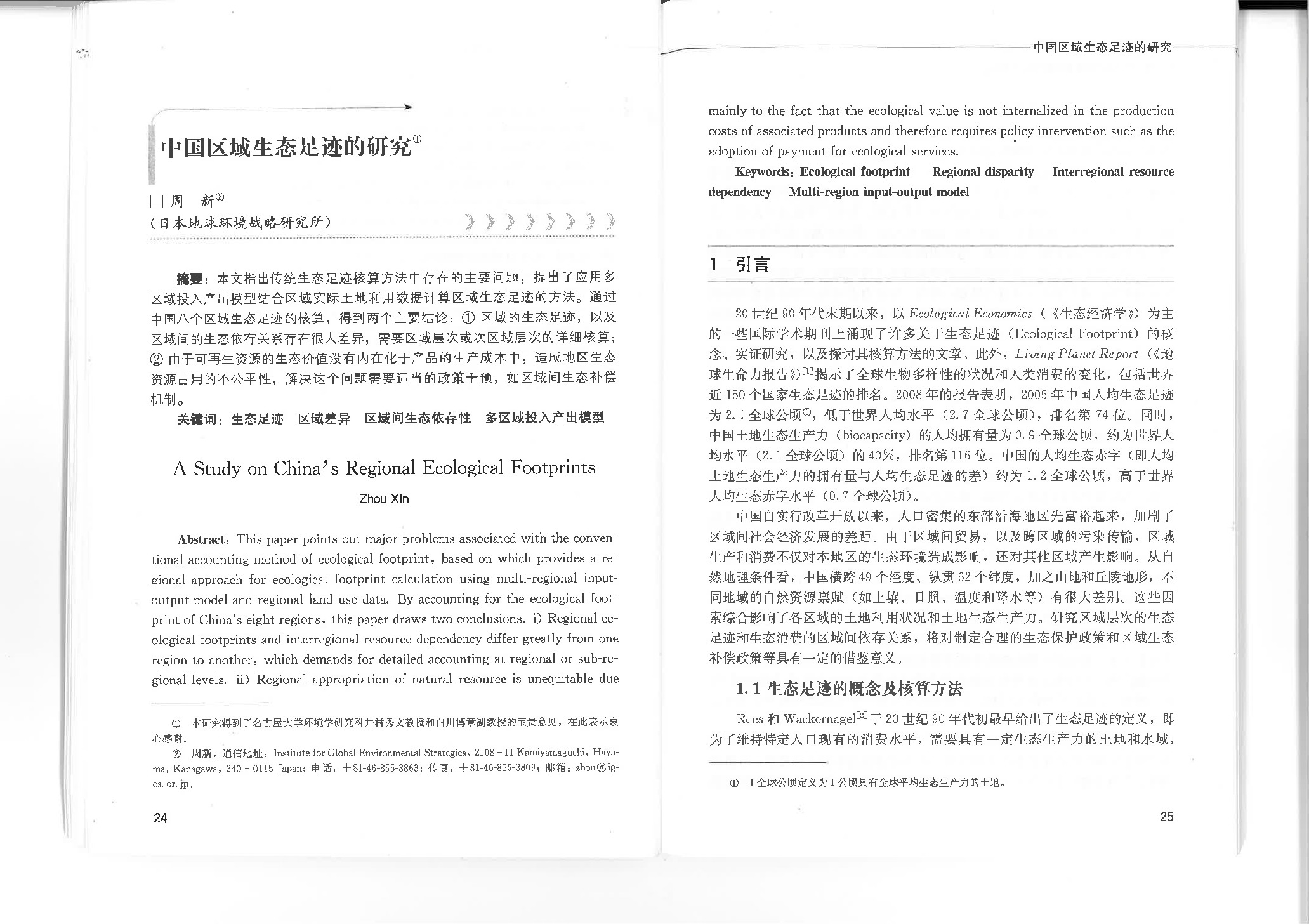
This paper points out major problems associated with conventional accounting method of ecological footprint and provides a regional approach for ecological footprint calculation using the multi-regional input-output model and regional land use data. By accounting for the ecological footprints of China’s eight regions, this paper draws two...
In Management Review
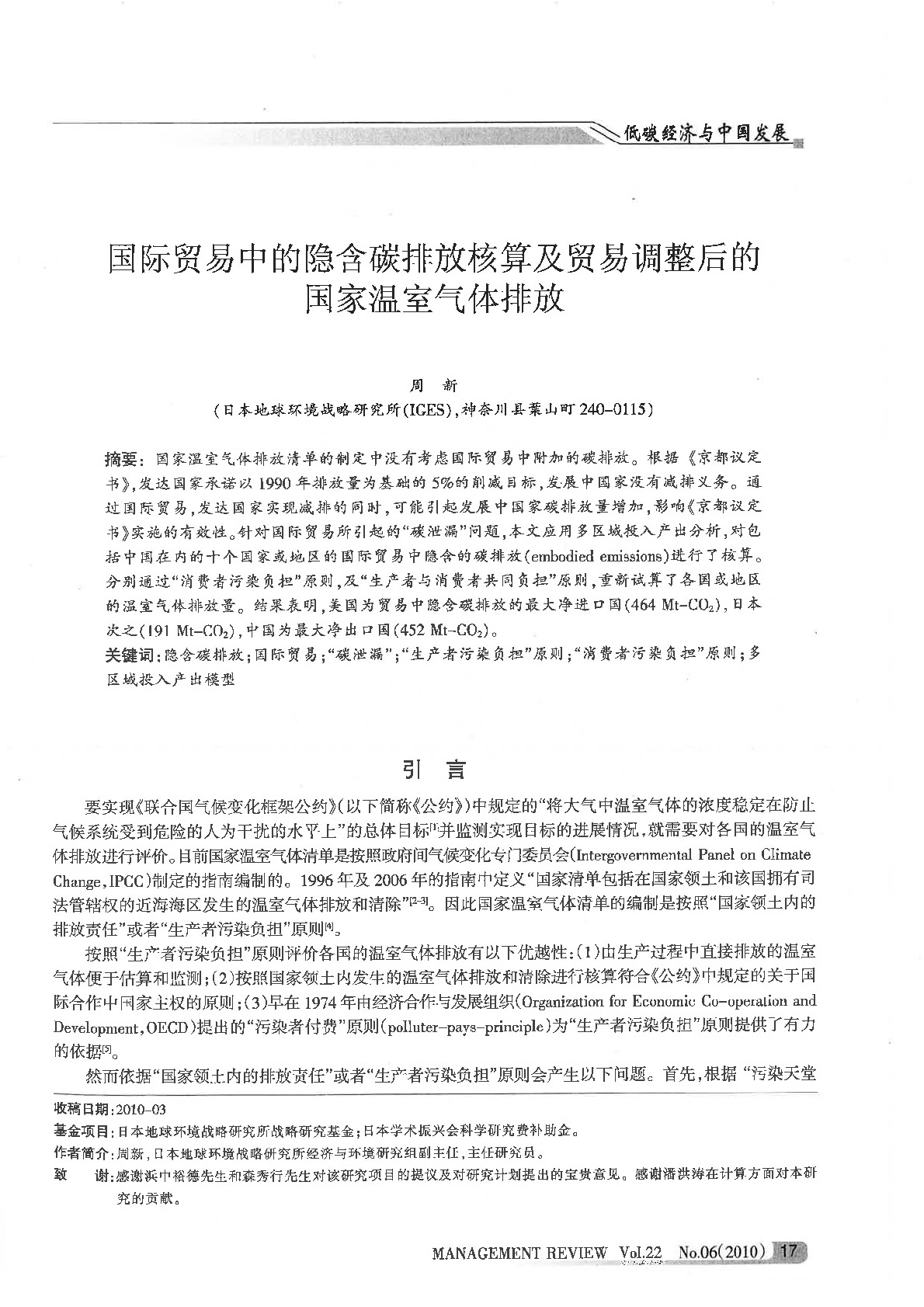
Current national GHG inventory which is based on producer responsibility does not consider emissions embodied in international trade. According to the Kyoto Protocol, industrialised countries have committed to collectively reduce their GHG emissions to an average of 5% against 1990 levels over the period 2008-2012. The Protocol does not commit...