
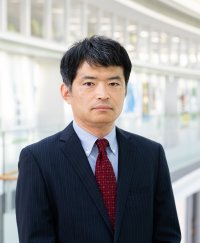
Policy Researcher
Research Topics & Areas of Expertise
(1) Ecology
- Spatio-temporal dynamics of ecological phenomenon
- Natural resource utilization of local societies
(2) Sustainable management of production forests
- Policies and the implementations
- Biodiversity and carbon stock assessment
- International and domestic timber tradings
(3) REDD+
- National level policies and institutions
- Project level implementations
Education
BA: Faculty of Science, Kyoto University; MSc and Ph.D: Graduate School of Science (Center for Ecological Studies), Kyoto University
Results 91 to 100 of 169 (Sorted by date)
Book Chapter

In Anthropogenic Tropical Forests: Human–Nature Interfaces on the Plantation Frontier
The island of Borneo is regarded as one of the most biologically rich regions in the world, containing some of the oldest remaining tropical rainforests. However, it also suffers high levels of deforestation and degradation to meet the demands for timber extraction and agricultural activities. In Sarawak, areas designated as permanent forests...
Book Chapter
In Anthropogenic Tropical Forests: Human–Nature Interfaces on the Plantation Frontier
With rapid deforestation and forest degradation ongoing in tropical regions, the maintenance of biodiversity and high biomass/carbon stocks can bring additional benefits to the sustainable management of natural forests along with sustainable timber production. However, the measures for improving the maintenance of biodiversity and high biomass are...
Book Chapter
In Anthropogenic Tropical Forests: Human–Nature Interfaces on the Plantation Frontier
The drastic transformation in land use from natural forest to acacia and oil palm plantations in tropical regions is an issue of some controversy. The influence of land-use change on nutrient cycling is not fully understood. In this case, stream water chemistry is one of the most useful indexes of the nutrient status of an ecosystem. We...
Book Chapter
In Anthropogenic Tropical Forests: Human–Nature Interfaces on the Plantation Frontier
It is important to understand carbon (C) dynamics in terrestrial and coastal ecosystems in order to develop a strategy to control carbon dioxide effluxes. However, the factors determining concentrations of riverine carbon are still largely unknown, especially in Southeast Asia. We investigated the spatial distribution of dissolved and particulate...
Book Chapter
In Anthropogenic Tropical Forests: Human–Nature Interfaces on the Plantation Frontier
Over the last few decades, the landscape of Borneo has drastically changed from primary forests to a mosaic of secondary forests and crop plantations, and more recently to the monocultures of single crop plantations. At the same time, livelihoods have become more linked to urban economies. To evaluate the effects of these changes on hunting...
Book Chapter
In Anthropogenic Tropical Forests: Human–Nature Interfaces on the Plantation Frontier
In the traditional agricultural land-use pattern of the indigenous peoples of inland Sarawak, there are small areas of primary forests, referred to as a pulau or communally reserved forests (CRFs), which are customarily reserved by local communities. Here, we investigate the current condition and geographic distribution of CRFs in the human...
Book Chapter
In Anthropogenic Tropical Forests: Human–Nature Interfaces on the Plantation Frontier
Southeast Asian countries have been important suppliers of tropical timber to Japan since the early twentieth century. This chapter begins with a comparative examination of the history of the timber trade in the Philippines, Malaysia (Sabah and Sarawak), Indonesia and Papua New Guinea, for whom Japan has historically been the major market for round...
Book Chapter
In Anthropogenic Tropical Forests: Human–Nature Interfaces on the Plantation Frontier
The biodiversity of stream-dwelling fish and the effects of oil palm and acacia plantations on this biodiversity were evaluated by field research conducted in the Bintulu region of central Sarawak, Malaysia. A quantitative survey was conducted at 61 locations by electrofishing. These 61 locations included 16 sites in oil palm plantations, five...
Presentation
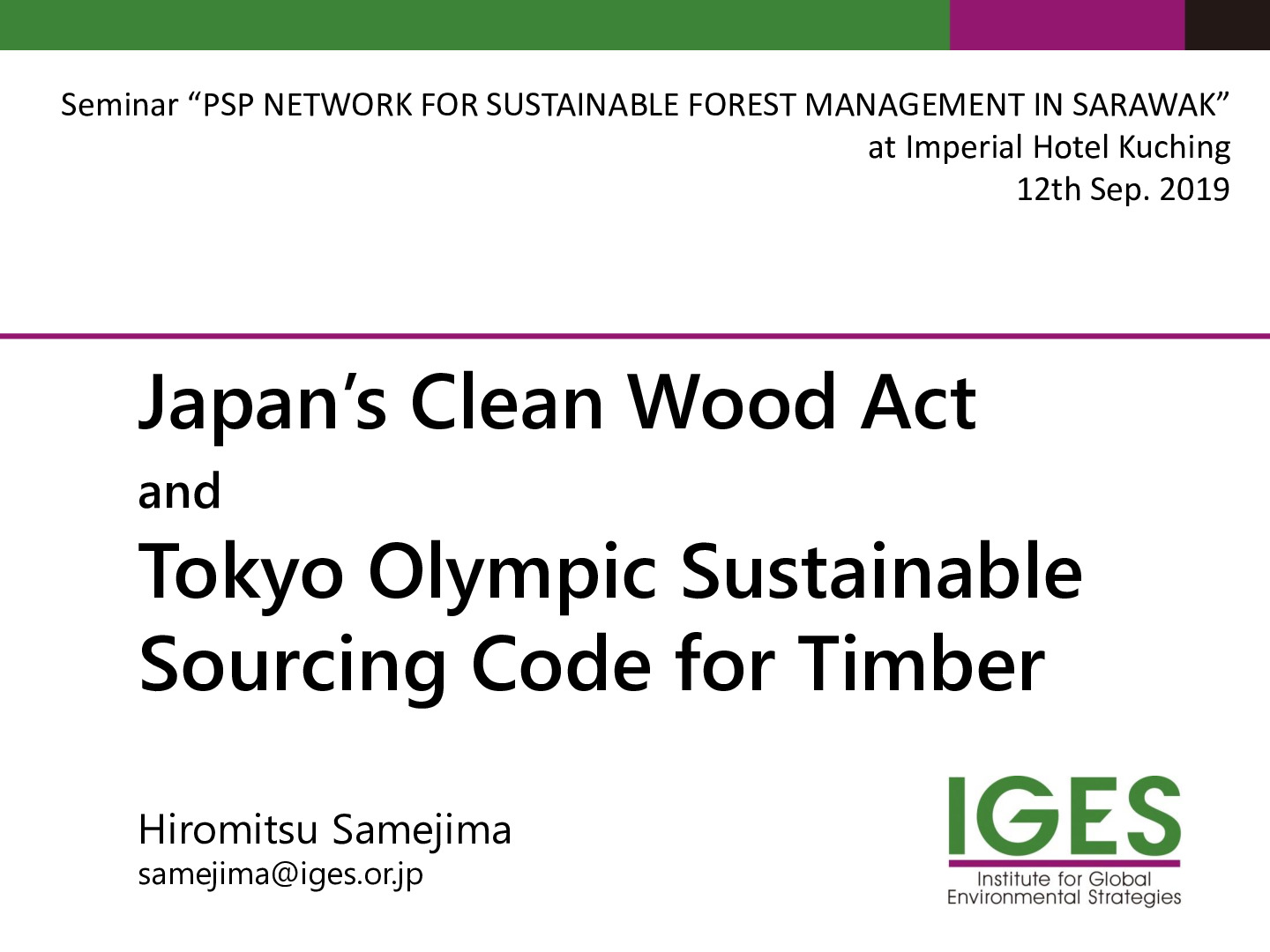
Seminar “PSP NETWORK FOR SUSTAINABLE FOREST MANAGEMENT IN SARAWAK”
Japan is still the largest market for timber from Sarawak. Thus, it is important to understand the latest trends of the policy and initiative for timber legality and sustainability. Japan issued the Act on Promotion of Use and Distribution of Legally-harvested Wood and Wood Products (Clean Wood Act) in 2016. The objective of this new act is to...
Peer-reviewed Article
In Forest Policy and Economics
This article examines the REDD+ engagement types preferred by Japanese private firms at the project level including their motivation and rationale for the engagement and explores the challenges and opportunities in relation to their participation. We analyzed 148 responses to a survey questionnaire mailed to participants across Japan and the...
No Projects Found.