Summary
The national training programme on “Waste Characterization Survey Methodology in Lesotho” was successfully held from 15-16 June 2026 at Lancers Inn in Maseru, Lesotho. This two-day capacity-building initiative brought together a wide array of national and municipal stakeholders to build concrete technical skills in designing and executing waste characterisation studies. The workshop was organised by the IGES Centre Collaborating with UNEP on Environmental Technologies (IGES-CCET), in close collaboration the with the Ministry of Environment and Forestry (Lesotho), UNEP-International Environmental Technology Centre (IETC), United Nations Development Programme (UNDP), Lesotho, and the National University of Lesotho (NUL). The workshop combined high-level policy dialogue, digital/AI waste data methodology training and hands-on field practice. The event established a technical foundation for the development of Lesotho's upcoming Extended Producer Responsibility (EPR) schemes and evidence-based circular economy policies.
The primary objective of this two-day capacity-building programme was to equip national environmental officers, municipal engineers, and civil society advocates with the technical skills needed to plan, execute, analyse, and report waste characterisation surveys. Specifically, the training aimed to:
- ● Build Technical Capacity: Train national government officers and municipal staff in standardised waste characterisation survey design, sampling, and physical sorting procedures.
- ● Establish EPR Linkages: Demonstrate how localised waste characterisation data directly supports the mathematical design of Extended Producer Responsibility (EPR) systems, plastic bans, and recycling infrastructure investments.
- ● Support Digital Innovation: Introduce and train participants in emerging digital and AI-based tools—including UNEP's data tools and UN-Habitat's Waste Wise Cities Tool (WaCT)—to automate classifications, decrease human error, and establish reliable Monitoring, Reporting, and Verification (MRV) networks.
- ● Implement Safe Field Protocols: Direct and implement practical, field-based sorting exercises under strict Environmental, Health, and Safety (EHS) safeguards suitable for the Lesotho context.
- ● Enhance Institutional Coordination: Strengthen cross-sectoral collaboration between ministries, local municipal authorities (such as the Maseru City Council), academia (NUL), and international partners (UNEP, UNDP, IGES).
Background
Developing localised, reliable, and timely data on solid waste generation, physical composition, and material flows is a mandatory prerequisite for effective municipal waste management planning and the successful rollout of circular economy instruments. This is especially true for policy instruments such as Extended Producer Responsibility (EPR), where the financial and operational obligations of producers are directly calculated based on the specific plastic and packaging fractions moving through municipal waste streams.
While the Government of Lesotho has made notable regulation progresses in establishing a modern waste management framework, including the launch of the National Integrated Solid Waste Management Strategy in early 2026, systematic and empirical waste characterisation data remains severely limited.
Most historical waste figures used by decision-makers are derived from regional proxies or outdated studies, constraining evidence-based planning. Furthermore, municipal and local authorities in Lesotho have lacked standardised methodologies to safely conduct their own physical surveys. To bridge these critical data gaps and equip local institutions with self-sustaining analytical capabilities, this technical training was designed to integrate conventional field protocols with cutting-edge digital and Artificial Intelligence (AI) data collection applications.
Programme Highlights
Day 01: Concepts, Design, and Digital Innovation (15 June 2026)
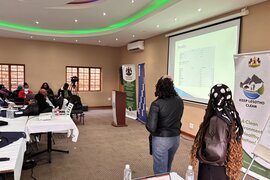
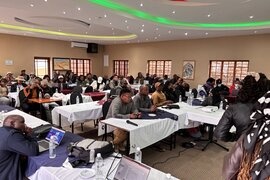
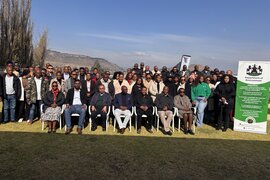
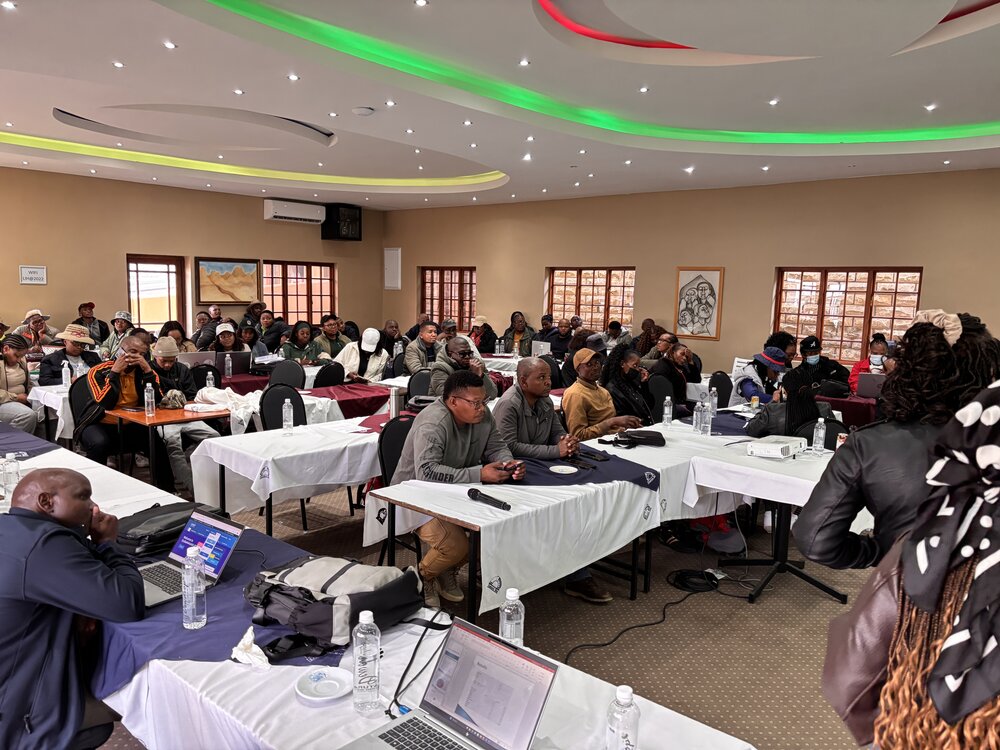
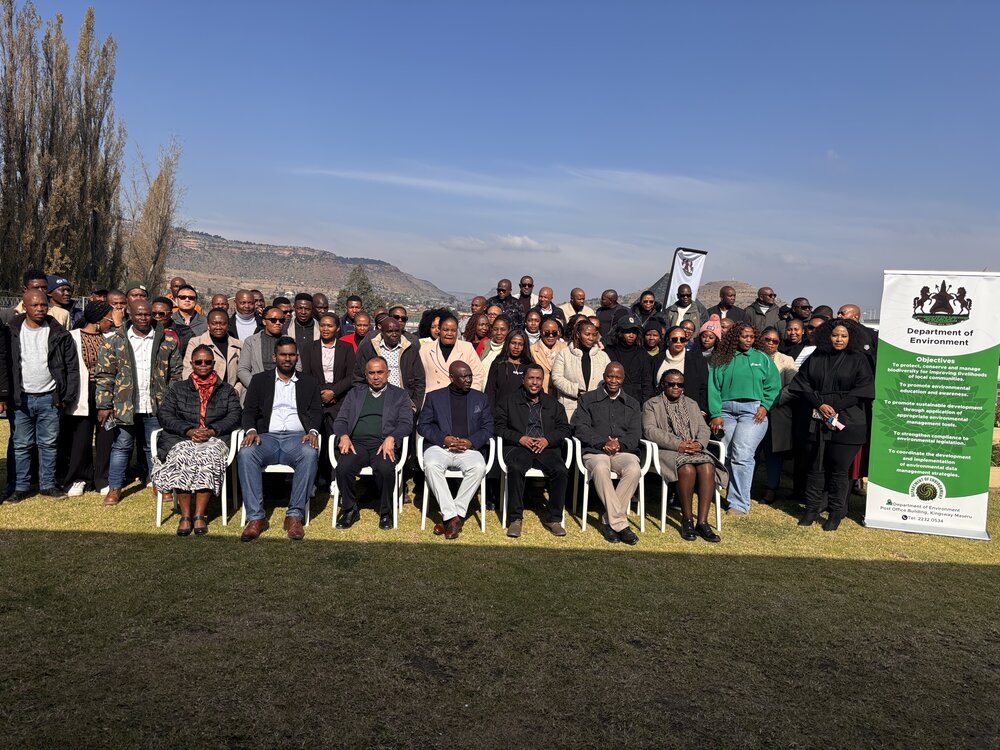
Day 1 focused on theoretical foundations, methodological design, policy relevance, and digital innovation. The session was moderated by Prof. Timothy Thamae from the National University of Lesotho (NUL) Innovation Hub. The workshop commenced with many high-level opening remarks from key national and international dignitaries. Alexander Mangwiro (Regional Coordinator, Chemicals, Waste Management & Air Quality Subprogramme, UNEP Africa Office) and Dr. Taye Amssalu (Deputy Resident Representative, UNDP Lesotho) provided international framing, highlighting how waste metrics align with SDG Targets 11.6.1 (municipal waste management) and 12.5.1 (national recycling rates). Welcome remarks were added to the workshop through statements by Qonggong Hoohlo (Acting Director of Department of Environment – Ministry of Environment and Forestry), who noted that industrial growth and trade must be decoupled from plastic pollution through instruments like EPR. Thabo Mofosi, Minister of Environment & Forestry, delivered the keynote address, formally launching the capacity-building drive and declaring that scientific waste characterisation is a national environmental priority for Lesotho.
The technical training kicked off with an ice-breaking session led by Dr. Premakumara Jagath Dickella Gamaralalage (IGES-CCET), followed by an introductory overview of the workshop by Dr. Nhubu Trust (Executive Director, Future Projects Consulting Africa). The subsequent modules walked participants through the end-to-end survey pipeline:
- ● Module 1 (Koki Takano, UN-Habitat - Online): Highlighted the policy relevance of the Waste Wise Cities Tool (WaCT), showing how data directly translates into evidence-based decision-making and global SDG reporting.
- ● Module 2 (Dr. Nhubu Trust): Guided participants through survey design, stratified random sampling (separating residential neighborhoods by low, middle, and high income), and pre-preparation logistics.
- ● Module 3 (Lakshitha Paranagamage, IGES-CCET): Detailed the survey methodologies across households, non-households, and landfills, outlining the strict rules of daily sample capture.
- ● Module 4 (Dany Ghafari, UNEP): Showcased cutting-edge digital and AI applications for WaCT surveys, demonstrating how machine learning can accelerate waste composition image analysis.
- ● Module 5 (Lakshitha Paranagamage, IGES-CCET): Explained waste sorting mechanics, density measurement, and the communication of survey results.
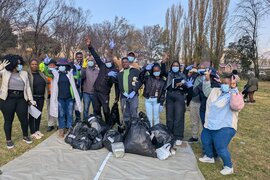
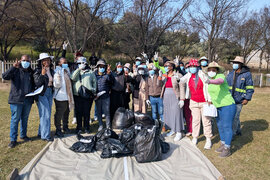
- ● Field Preparation: Prof. Timothy Thamae (NUL): Concluded Day 1 with an intensive safety briefing, distributing masks and gloves, and assigning participants to their designated practical teams.
Day 02: Field Practice, Data, and Application
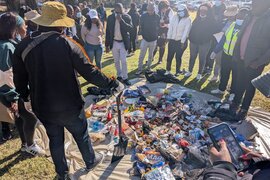
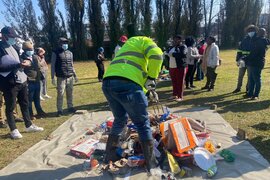
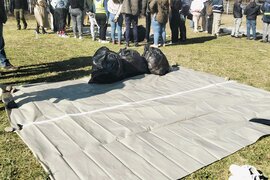
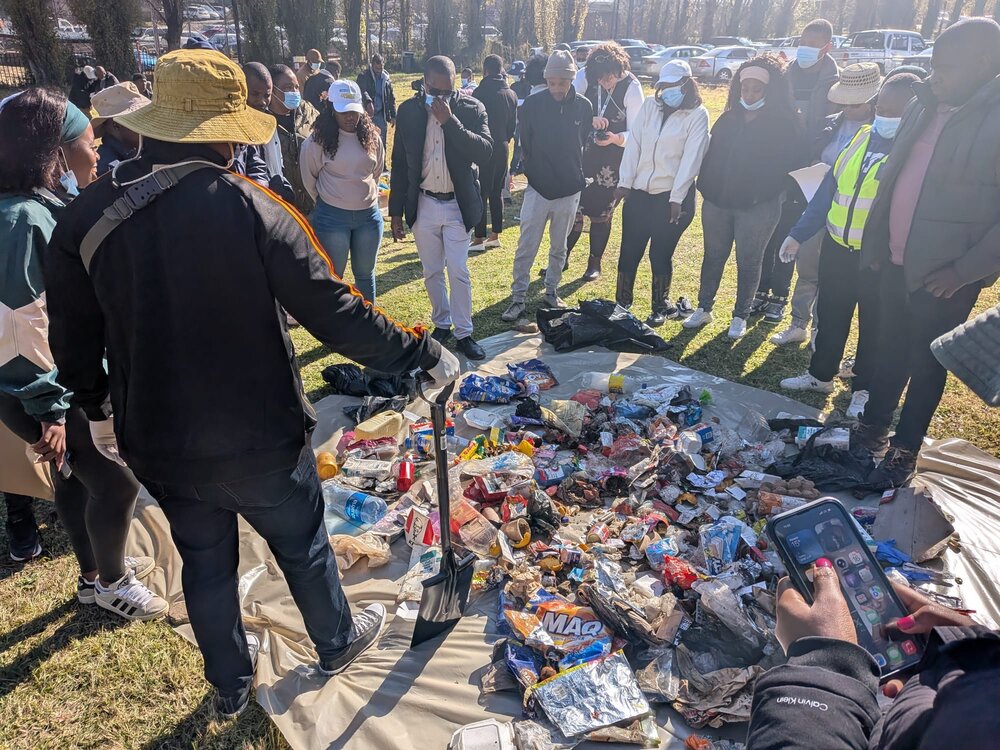
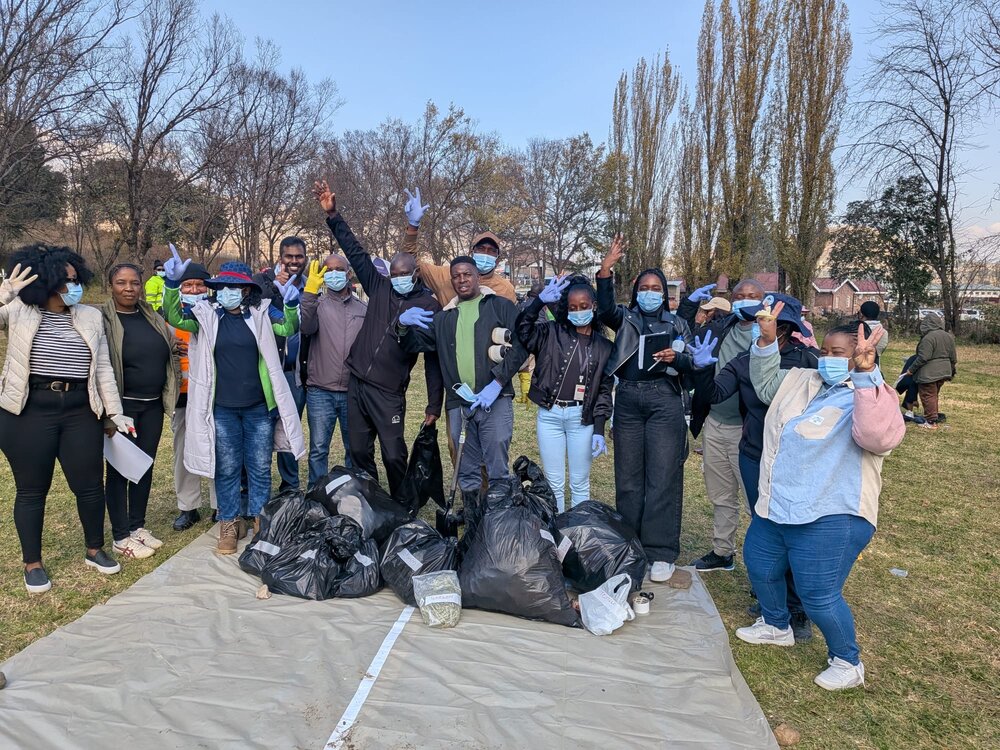
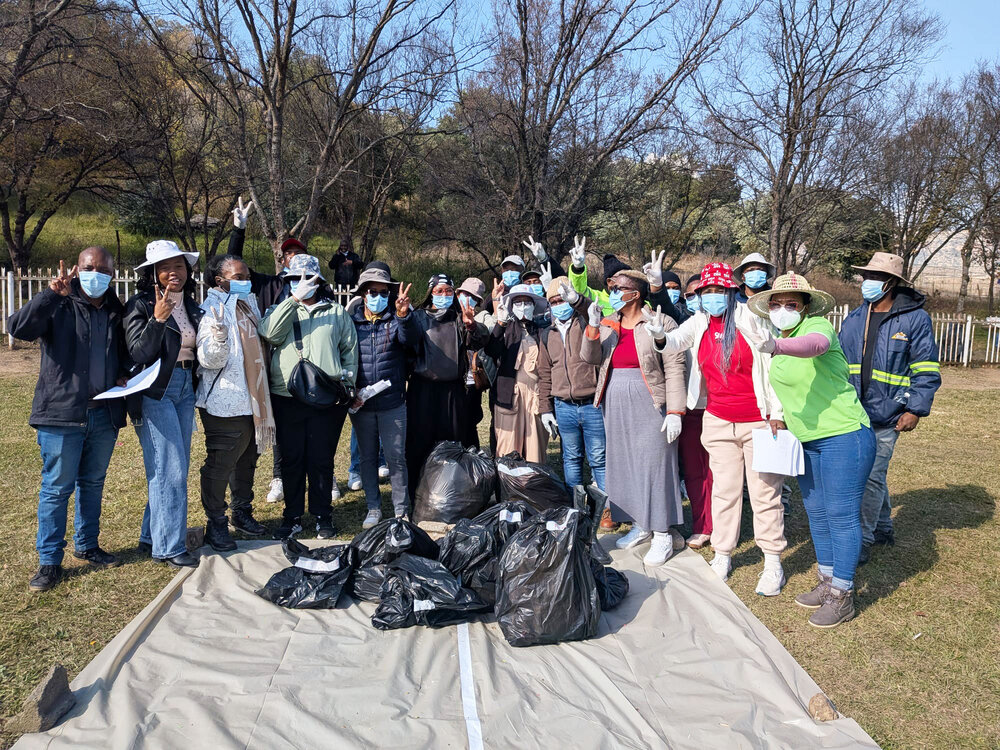
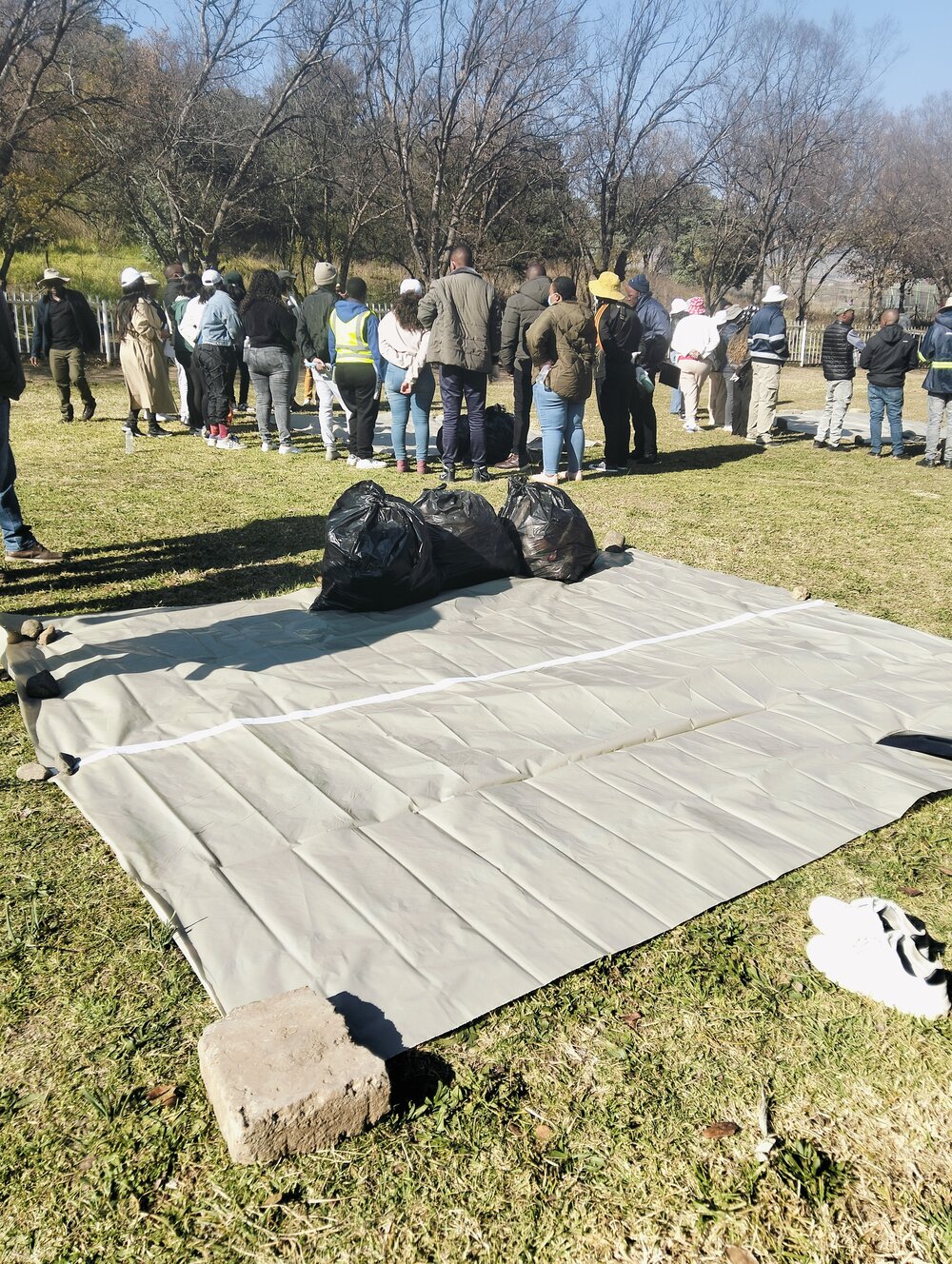
The second day translated theoretical methodologies into direct field-based practice. During the field-based practice session, the participants were divided into four operational field groups, each assigned to characterise an aggregated bulk waste sample of approximately 50 kg pre-collected by the logistics team. The four streams represented:
- 1. Group 1 (Household-Low income): Sourced from residential clusters.
- 2. Group 2 (Household-High Income): Sourced from residential clusters.
- 3. Group 3 (Non-Household/Mall): Sourced from residential clusters.
- 4. Group 4 (Street Market): Sourced from the central vegetable and trade markets of Maseru.
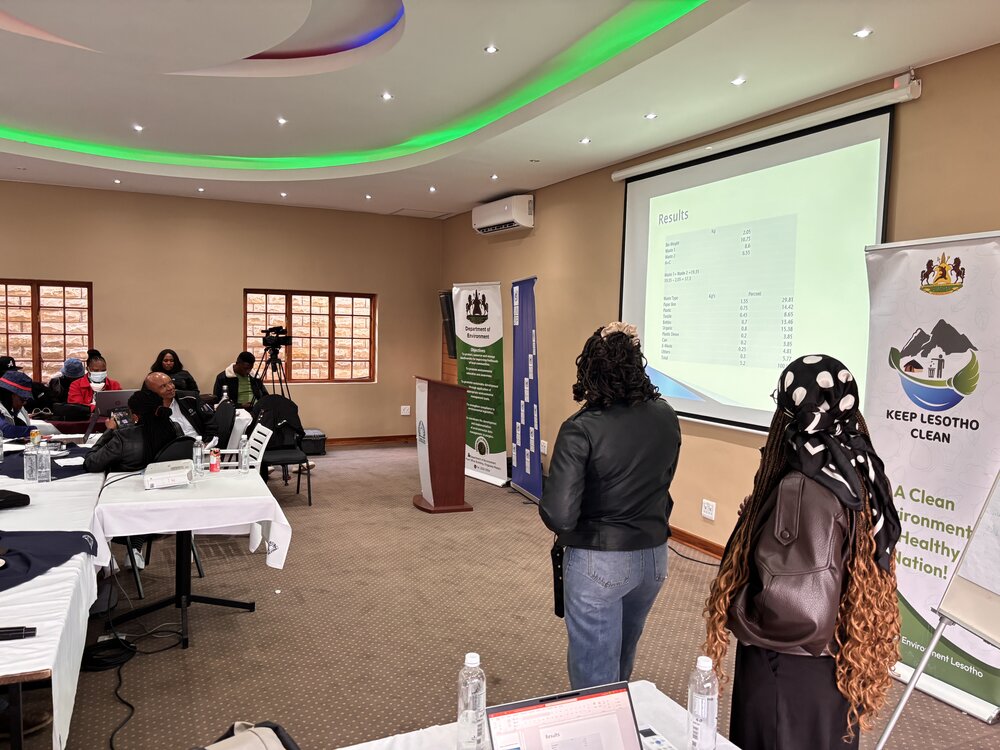
Following the activities, groups returned to compile their datasets into percentage compositions. Under the facilitation of Dr. Premakumara Jagath Gamaralalage, each group drafted and delivered a short presentation outlining their quantitative findings, qualitative waste composition, and corresponding policy recommendations for future waste composition surveys.
The workshop concluded with closing remarks by Florina Rakeketsi (Deputy Principal Secretary, Ministry of Local Government & Chieftainship), who emphasised that the data collection skills practiced during these two days will form the empirical foundation for Lesotho's upcoming plastic circularity regulations.
Event Details
Maseru, Lesotho
IGES Centre Collaborating with UNEP on Environmental Technologies (CCET)
2108-11 Kamiyamaguchi, Hayama, Kanagawa, 240-0115 Japan
E-mail: [email protected]
Presentation Materials
Programme Director: Timothy Thamae, NUL Innovation Hub, National University of Lesotho
| Day 01: Concepts, Design, and Digital Innovation | |||
|---|---|---|---|
| Time (SAST)(UTC+2) | Session | Resource Person/Speaker | |
| 09:05 – 09:10 | Welcoming remarks | His Worship Mayor of Maseru Relebohile Sechache | |
| 09:10 – 09:30 | Statement | Alexander Mangwiro, Regional Coordinator, Chemicals, Waste management & Air Quality Subprogramme, United Nations Environment Programme Africa Office | |
| Jacqueline Olweya, Resident Representative – United Nations Development Programme UNDP | |||
| Motlatsi Maqelepo, Minister of Trade, Industry & Business Development | |||
| Nkhethoa Seetsa, Minister of Local Government & Chieftainship | |||
| 09:30 – 09:40 | Keynote Address by the Minister responsible for Environment & Forestry | Thabo Mofosi, Minister of Environment & Forestry | |
| 09:40 – 09:50 | Self-Introduction/Ice-breaking | Premakumara Jagath Dickella Gamaralalage | |
| 09:50 – 10:20 | Introduction to the workshop | Nhubu Trust PhD, Executive Director, Future Projects Consulting Africa | PDF(452KB) |
| 10:20 – 10:50 | Module 1: WaCT – Importance of waste characterization (Policy Relevance, SDGs, and Decision-making) | Koki Takano, UN-Habitat (Online) | PDF(2.2MB) PDF(4.4MB) |
| Q&A | |||
| 11:15 – 12:15 | Module 2: Survey Design, Sampling & Pre-preparation | Nhubu Trust PhD, Executive Director, Future Projects Consulting Africa | PDF(1.7MB) |
| Q&A | |||
| 12:15 – 13:15 | Module 3: Survey Methodology (Non-Household/ landfill) | Lakshitha Paranagamage, IGES-CCET | PDF(3.0MB) |
| Q&A | |||
| 14:05 – 15:00 | Module 4: Application of digital/ AI technology for WaCT survey | Dany Ghafari, UNEP | PDF(282KB) |
| 15:00 – 15:30 | Module 5: Waste Sorting and Composition Analysis/ Survey results/ Communications | Lakshitha Paranagamage, IGES-CCET | PDF(2.2MB) |
| Q&A | |||
| 15:45 – 16:30 | Field Preparation & Safety Briefing | Thimothy Thamae, National University of Lesotho | |
Programme Director: Apesi Ratšele PS (a.i.) – Ministry of Environment & Forestry/ Tšepo Lethobane District Administrator – Maseru
| Day 02: Field Practice, Data, and Application | |||
|---|---|---|---|
| Time (SAST)(UTC+2) | Session | Resource Person/Speaker | |
| 09:00 – 09:30 | Field Work Introduction and Group Division | Thimothy Thamae, National University of Lesotho | |
| Q&A | |||
| 09:30 – 10:30 | Module 10: Field-Based Group Work | IGES-CCET University of Lesotho Nhubu Trust | |
| Group 01 – Household Survey and Characterization | |||
| Group 02 – Market Waste Characterization | |||
| Group 03 – Non-Household Survey and Characterization | |||
| Group 04 – Landfill Waste Characterization | |||
| 10:45 – 12:00 | Continuation of Module 10 | IGES-CCET Thimothy Thamae | |
| 13:00 – 15:00 | Group Work: Data analysis/ Presentation/ Discussions | Premakumara Jagath Dickella Gamaralalage, IGES-CCET | |
| 15:00 – 15:15 | Feedback | Premakumara Jagath Dickella Gamaralalage, IGES-CCET | |
| 15:45 – 16:00 | Closing Remarks | Mabataung Khalane, Principal Secretary Ministry of Local Government & Cheiftainship | |