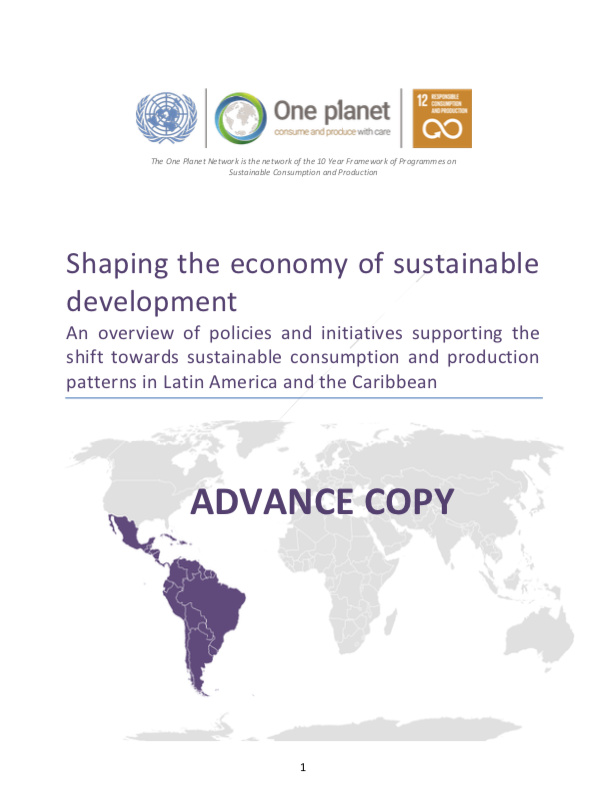
This report presents an overview of policies and initiatives related to sustainable consumption and production advanced by the governments of the Latin American and Caribbean region. Although not pretending to present an exhaustive overview, the report was developed based on extensive literature review as well as on the results of a pilot survey...
Results 1801 - 1810 of 6464 (Sorted by date)
Carbon dioxide (CO2), which is considered as a primary driver of climate change, is responsible for slightly more than half of the total current warming impact from human-caused emissions (EESI, 2013). Emitted CO2 remain in the atmosphere for hundreds of years, creating warming effect even the new CO2 level reduce to zero. Therefore, the strategies...
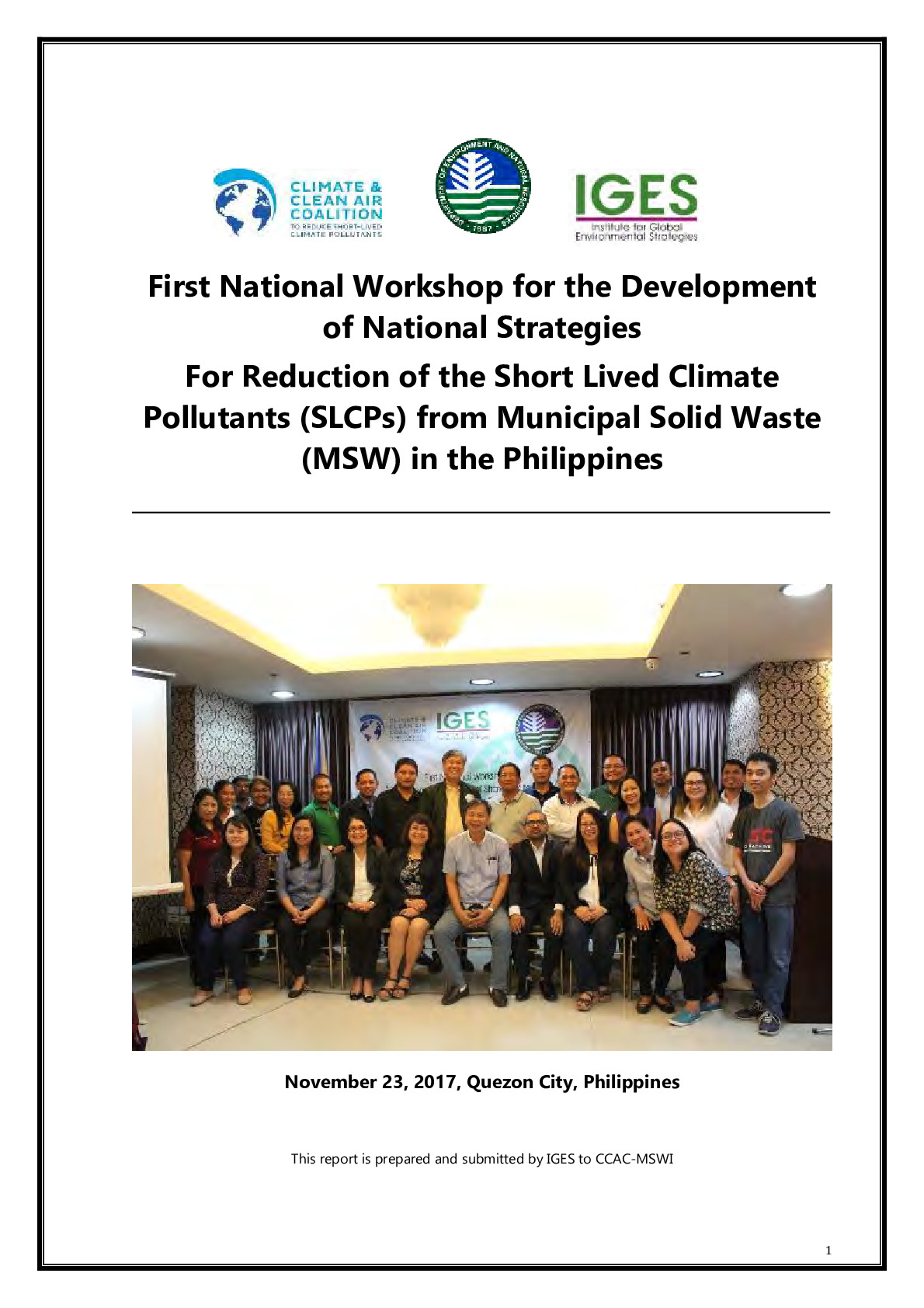
First National Workshop for Development of National Strategy for Reduction of Short-Lived Climate Pollutants (SLCPs) from Municipal Solid Waste (MSW) in the Philippines
Carbon dioxide (CO2), which is considered as a primary driver of climate change, is responsible for slightly more than half of the total current warming impact from human-caused emissions (EESI, 2013). Emitted CO2 remain in the atmosphere for hundreds of years, creating warming effect even the new CO2 level reduce to zero. Therefore, the strategies...
SWAPPCon 2017
Upon the invitation by Solid Waste Management Association of the Philippines (SWAPP) to make a presentation on behalf of CCAC-IGES for our ongoing project in the Philippines, I made a presentation on the topic "Development of National Action plan for reduction of short-lived climate pollutants (SLCP) from Municipal Solid Waste Management (MSWM) in...
In International Journal of Life Sciences
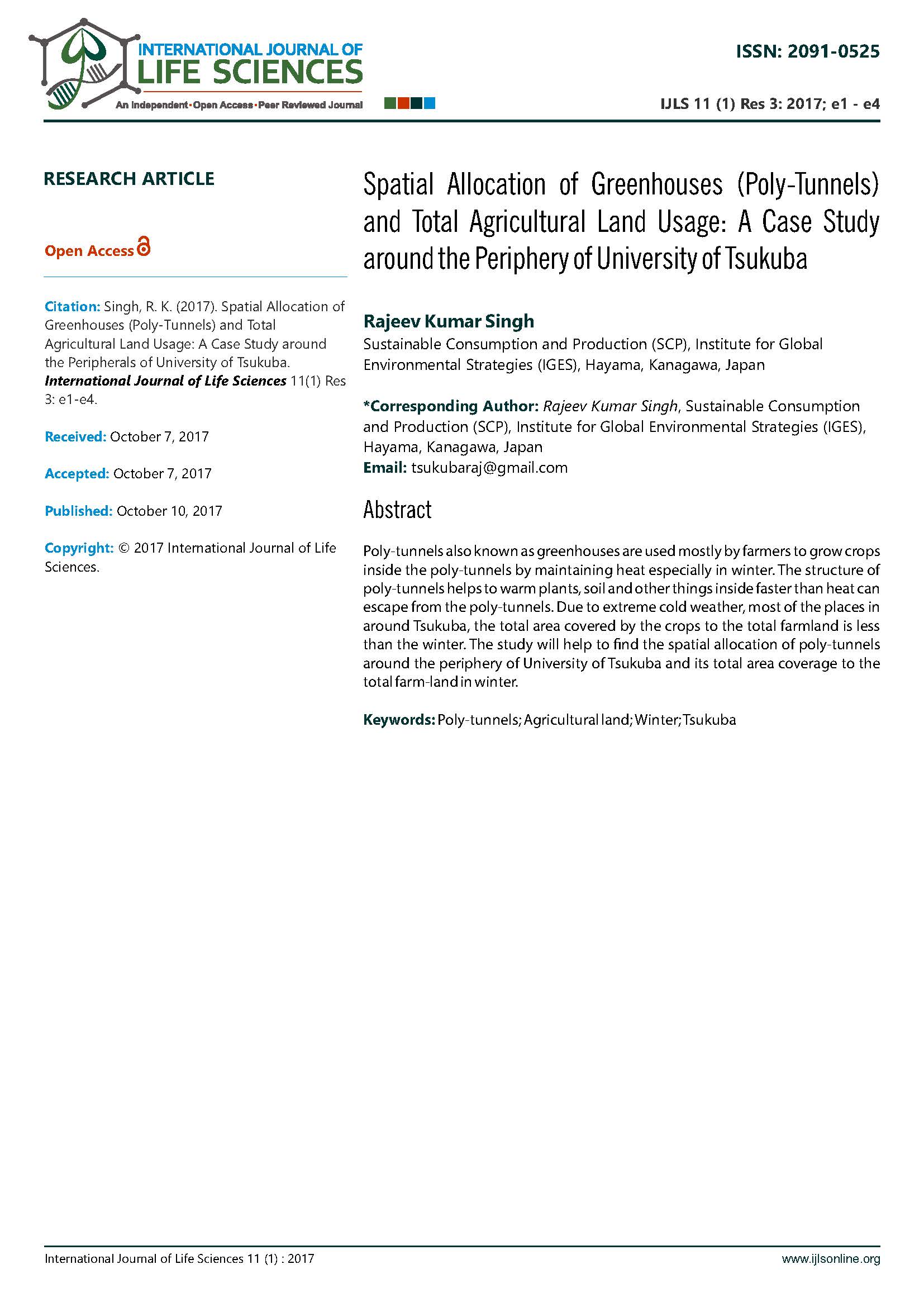
Poly-tunnels also known as greenhouses are used mostly by farmers to grow crops inside the poly-tunnels by maintaining heat especially in winter. The structure of poly-tunnels helps to warm plants, soil and other things inside faster than heat can escape from the poly-tunnels. Due to extreme cold weather, most of the places in around Tsukuba, the...
Carbon dioxide (CO2), a primary driver of climate change, is responsible for more than half of the total current warming impact of human-caused emissions. Emitted CO2 remains in the atmosphere for hundreds of years, absorbing heat that contributes to a warming effect even after initial CO2 concentrations start falling. Taking this into...
As a part of its wider outreach efforts to raise visibility of IETC and CCET as a collaborative project between UNEP and IGES, CCET has launched a website to communicate the organization, its mandate and operations, as well as to disseminate the knowledge products developed through its operations, with an expectation that it would evolve into an...
In Routledge Handbook of Energy in Asia
Developing Asia’s growing demand for fossil fuels not only adds pressure on the domestic economy of each country due to higher energy bills but also strangulates the region’s environmental health with the growing emissions. The need for poverty reduction and economic development simultaneously forces the region to continue to depend heavily on...
JSPS (Japan) and DST (India) Joint Research Seminar on adopting Water-Energy-Food Nexus Approach in India
The presentation talked highlighted Water-Energy-Food nexus based solution of water scarcity mitigation in India
The 12th Policy Consultation Forum of Seoul Initiative Network on Green Growth
The presentation discussed importance of nexus approach for sustainable use of environmental resources. Taking the case of India, it presented how current sectoral approach approaches creates trade-off. It also suggested solutions to minimize trade-off and capture multiple benefits across the water energy and food nexus.