Background
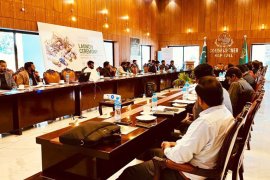
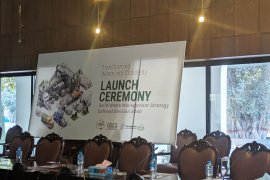
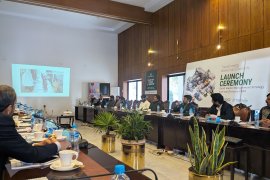
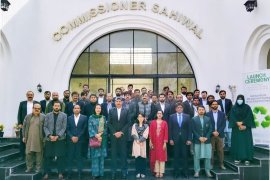
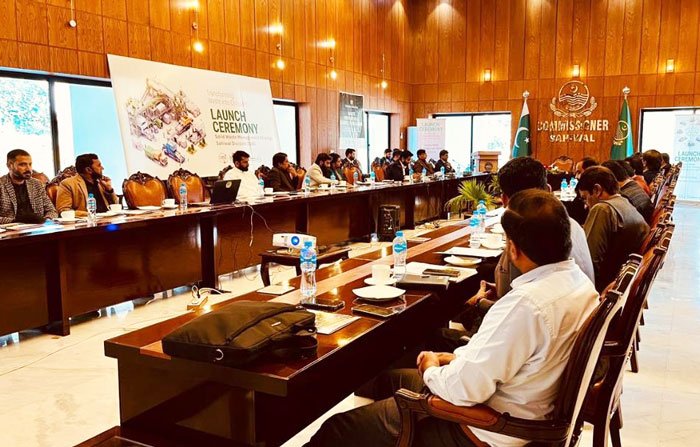
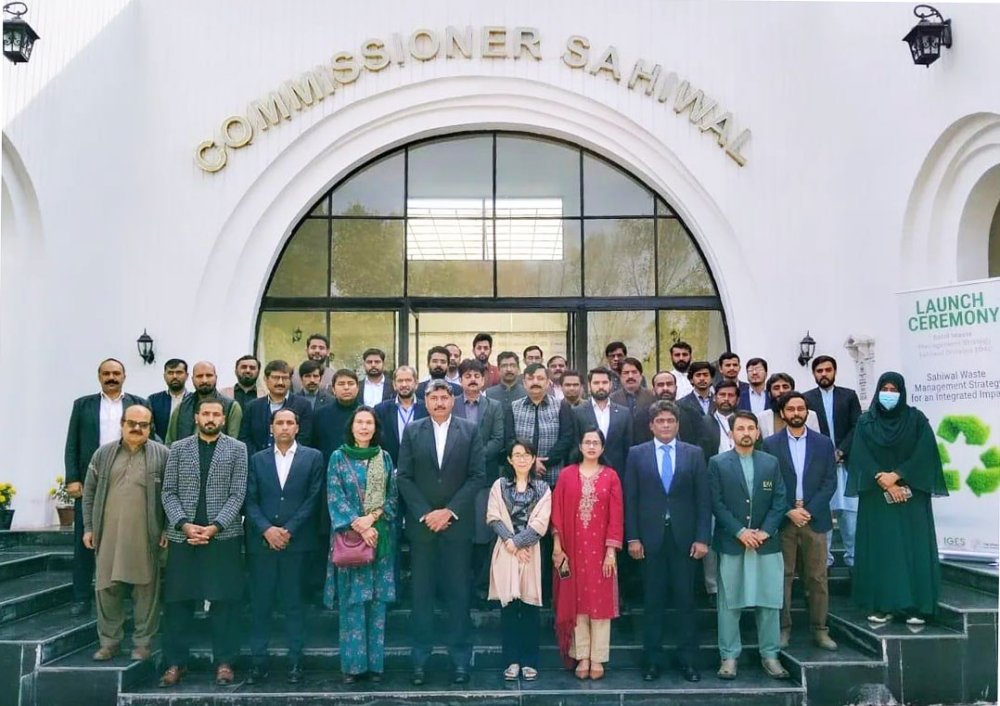
The launching ceremony of the Solid Waste Management (SWM) Strategy 2040 for Sahiwal Division was held on February 12, 2026. The primary purpose of the event was to officially unveil the Strategy.
The SWM Strategy 2040 for Sahiwal Division was developed by the Sahiwal Division with technical support of the Urban Unit, IGES and the UNEP. It is designed to address the pressing waste management challenges exacerbated by the rapid urbanisation in the region. It aims to catalyse a paradigm shift from conventional linear disposal methods to a circular, low-emission, and resource-efficient system, fully aligned with provincial reforms under the Suthra Punjab Programme and national sustainable development goals.
Objectives and Media Engagement
- ● To formally launch and disseminate the strategy document to key stakeholders.
- ● To present the technical framework and community-centric approaches of the strategy.
- ● To initiate partnerships and identify pathways for pilot projects and sustainable financing.
The coverage across various dailies (such as Daily Gohrab, Daily Muashrat, Shajar-e-Qasoor, and Daily Musawaat) framed the event as a milestone initiative organised by international and local partners to combat climate change and pollution in the region. They described the launch as a comprehensive and integrated "Solid Waste Management Vision" and strategy for the Sahiwal Division, aimed at introducing modern, citizen-friendly, and eco-friendly waste management systems.
They also noted that several speakers addressed the participants, reaffirming their commitment to improving sanitation across Punjab, including Amer Sohail Kaifi, Additional Secretary of Local Government; the CEO of the Sahiwal Waste Management Company; Dr. Ayesha Khan from AHKF; and Miho Hayashi from IGES Japan. Technical experts from the Urban Unit also shared practical insights on the strategy and its implementation.
Summary
The opening remarks delivered by Commissioner Asif Tufail and Takehiro Nakamura, head of UNEP-IETC, emphasised the need to move decisively from planning to implementation, calling for strong inter-departmental coordination aligned with the Suthra Punjab Programme (SPP), and urged stakeholders to work together to position Sahiwal as a model division for sustainable waste management. Additionally, the need for a circular economy approach was underscored, as well as the support from UNEP in developing a broader circular economy policy and plastic recycling industry for Pakistan.
The programme featured expert presentations outlining the strategy’s foundations. Asif Iqbal presented its technical framework, structured around four core pillars: governance strengthening; infrastructure development; digital monitoring; and community engagement. He emphasised the significant investments brought by the government of Punjab under SPP, including Material Recovery Facilities (MRFs), and GIS-based systems to improve route optimisation, efficiency, and accountability.
Ayesha Khan highlighted the strategy’s inclusive approach, sharing findings from the Bhutto Nagar pilot project (February–November 2025). The pilot surveyed 450 households on waste practices and mapped more than 200 informal workers. Based on these findings, three Waste Business Associations (WBAs) were established through training on social protection and entrepreneurship, with the aim of progressing toward formal recognition and integration into the municipal system.
Iftikhar Ali outlined the operational readiness of the Sahiwal Waste Management Company while addressing practical challenges such as fleet management, workforce capacity, and financial sustainability. He reaffirmed the company’s commitment to integrating the newly formed WBAs into the formal collection system.
In her closing remarks, Miho Hayashi (IGES) commended the integration of pilot findings into the strategy as an example of evidence-based policymaking. She reaffirmed IGES’s support through technical assistance and knowledge exchange, emphasizing that the launch marks the start of implementation and requires sustained multi-stakeholder collaboration.
The event concluded with the formal dissemination of the Strategy and an engaged Q&A session, reflecting strong stakeholder commitment.
Event Details
Conference Room at Commissioner’s office, Sahiwal Division, Pakistan
IGES Sustainable Consumption and Production Area
IGES Centre collaborating with UNEP on Environmental Technology (CCET)
2108-11 Kamiyamaguchi, Hayama, Kanagawa, 240-0115 Japan
E-mail: [email protected]
Presentation Materials
| Timings (UTC+5) | Activity | ||
|---|---|---|---|
| 11:05 – 11:15 | Opening Remarks Asif Tufail, Commissioner Sahiwal Takehiro Nakamura, Director, UNEP-IETC (video message) | ||
| 11:15 – 11:30 | Launch of SWM Strategy Amir Suhail Kaifi Additional Secretary - LG&CDD,Lahore | ||
| 11:30 – 11:50 | Group Picture & Tea Break | ||
| 11:50 – 12:30 | Presentation:Solid Waste Management Strategy for Sahiwal Division 2040 Asif Iqbal GM Solid Waste Management - The Urban Unit | ||
| 12:30 – 13:00 | Presentation:Community-Centric and Inclusive Waste Management Approaches Ayesha Khan Chief Executive Officer - Akhter Hameed Khan Fundation | ||
| 13:00 – 13:15 | Remarks:Implementation of Strategy Iftikhar Ali Chief Executive Officer - Sahiwal Solid Waste Managemete Company | ||
| 13:15 – 13:45 | Plenary Discussion, Q&smp;A Session Moderators Asif Iqbal & Anum Shahid - The Urban Unit | ||
| 13:45 – 14:00 | Closing Remarks Miho Hayashi, Program Manager - IGES Commissioner Sahiwal LG Representative | ||