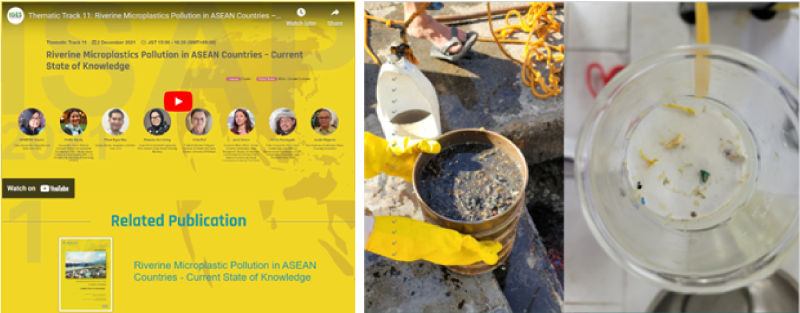
Microplastic pollution has recently become a social and environmental issue that needs to be properly addressed. It has also been widely reported in the scientific community that microplastics are present in almost all aquatic habitats. The decomposition of large macroplastic waste generates many small particles called microplastics (less than 5mm), which are considered new pollutants in water bodies such as lakes, rivers and oceans. The microbeads can remain in the water for decades, accumulating harmful chemical pollutants on their surface and transporting the pollutants with the current.
New Approach to Water Management
In order to address this emerging issue, we initiated research on riverine microplastics in 2021 and extended our studies to search for a solution. For details, please visit the PoDIWM-2 website, which addresses the challenges ASEAN cities face in providing safe, affordable and sustainable domestic wastewater treatment systems. This project also aims to address the emerging challenge of microplastic pollution in the region and is a response to the shortcomings of conventional centralised approaches to wastewater management, which have proven to be costly and less adaptable to climate change and natural disasters.