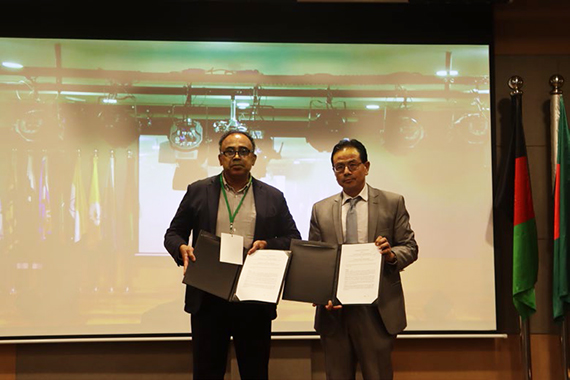
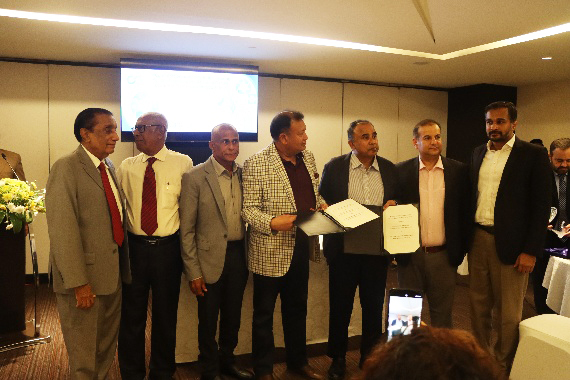
The Institute for Global Environmental Strategies (IGES) officially announced a Memorandum of Understanding (MOU) with the South Asia Co-operative Environment Programme (SACEP) and the SAARC Chamber of Commerce and Industry (SAARC-CCI), signed on 12 March 2026. This MOU aims to create a strong platform for regional cooperation to promote circular economy policies, improve waste and resource management systems, reduce methane and black carbon emissions, and mobilise investment, bringing together governments, the private sector, research institutions and development organisations.
South Asia is facing mounting environmental challenges associated with rapid urbanisation and changing consumption patterns. It is projected that the volume of waste will nearly double by 2050 if current trends continue (World Bank 2026). However, many cities still rely on open dumping and open burning practices, exacerbating not only land, air and water pollution but also GHG emissions.
Open burning of waste is a major source of short-lived climate pollutants (SLCPs) such as black carbon and methane. SLCPs have a powerful near-term warming effect and are closely linked to poor air quality causing adverse health impacts. Globally, the waste sector is the third-largest source of anthropogenic methane emissions, accounting for nearly 20% of total methane emissions.
Addressing waste management through circular economy approaches therefore presents a major opportunity, not only to reduce pollution and mitigate climate change but also to conserve resources, create green jobs and improve people’s livelihoods.
Such transformation requires broad stakeholder engagement and regional collaboration. IGES through its Centre Collaborating with UNEP on Environmental Technologies (CCET), SACEP and SAARC-CCI build partnerships with particular emphasis on promoting circular economy in a more inclusive manner by paying attention to informal waste workers who play a critical role in waste collection, sorting, repair, reuse and recycling across the region.