Summary
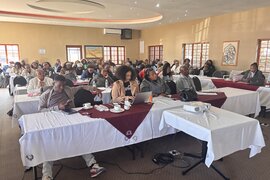
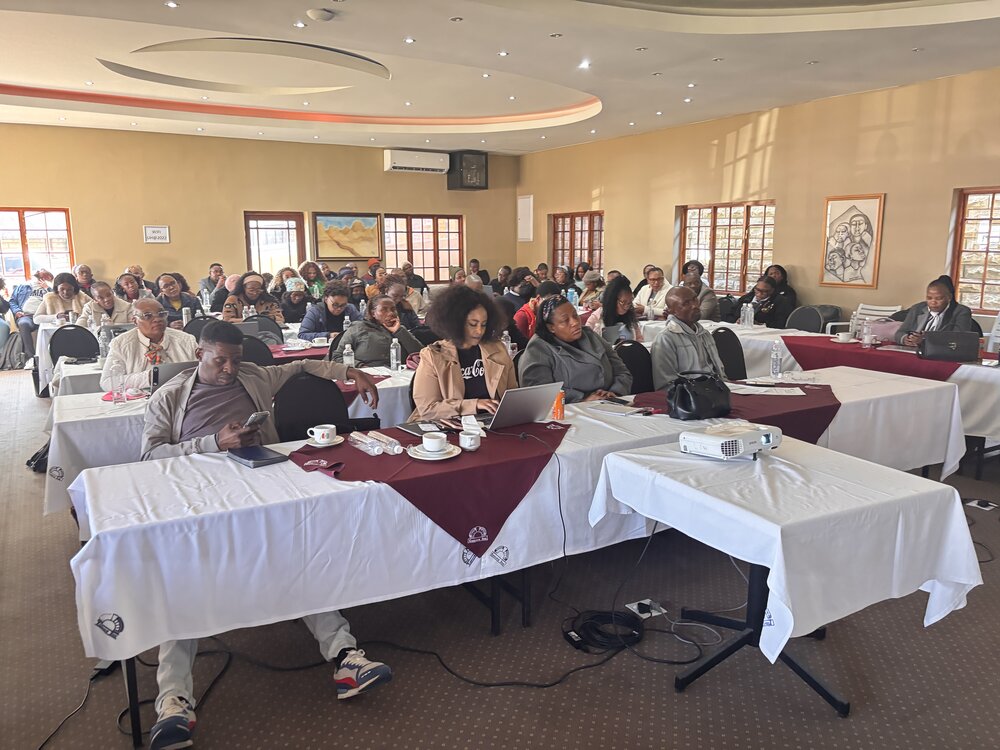
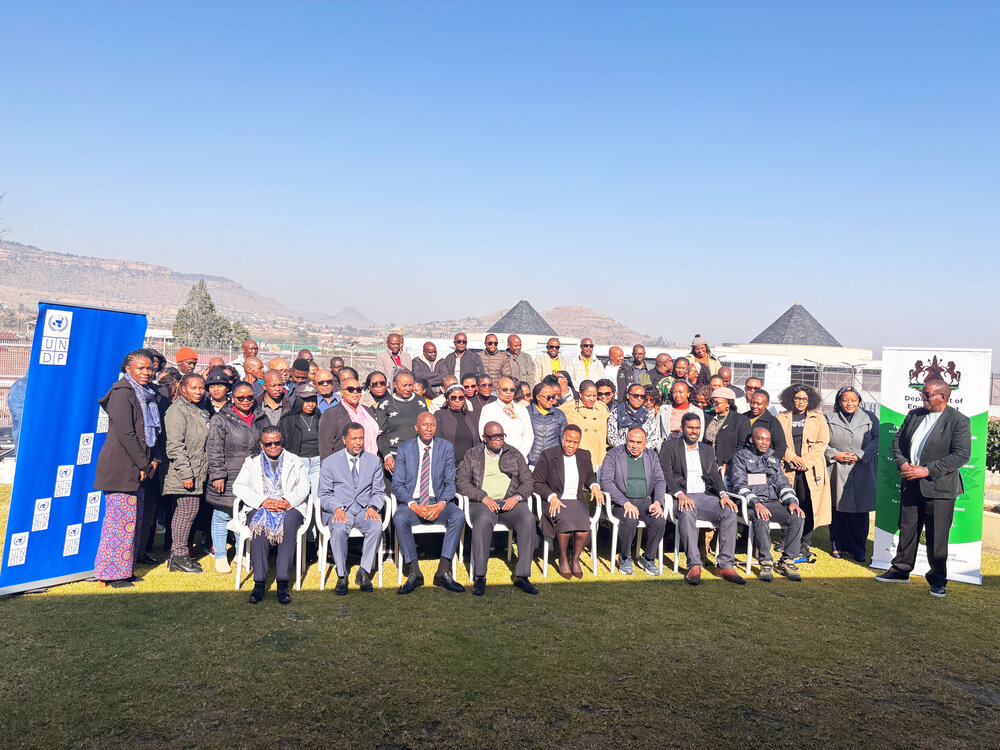
The "National Awareness and Training Workshop on Extended Producer Responsibility (EPR) in Lesotho" was held on 17 June 2026 at Lancers Inn, Maseru, Lesotho. This high-level training event served as a critical national platform to introduce EPR concepts, share regional best practices, and deliberate on institutional frameworks to engage the private sector and integrate the informal waste sector.
The workshop was organised by the IGES Centre Collaborating with UNEP on Environmental Technologies (IGES-CCET), in close collaboration the with the Ministry of Environment and Forestry (Lesotho), UNEP - International Environmental Technology Centre (IETC), United Nations Development Programme (UNDP), Lesotho, and the National University of Lesotho (NUL). The workshop combined high-level policy dialogue, private sector coordination strategy, and structured stakeholder feedback.
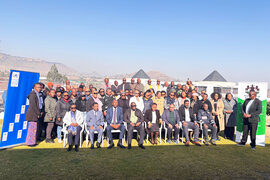
It brought together national policymakers, municipal authorities, private sector representatives, recyclers, and informal waste pickers to co-design coordination mechanisms for sustainable packaging and circular waste management in Lesotho.
The primary objective of this workshop was to establish a collaborative blueprint for implementing a functional EPR system in Lesotho. Specifically, the workshop aimed to:
- ● Build National Awareness on EPR: Sensitise government authorities, local businesses, and municipal managers on the core concepts, legal frameworks, and circular economy principles of EPR.
- ● Analyse Current Waste Systems: Diagnose gaps in Maseru's collection, sorting, recycling, and financing infrastructures to align them with future take-back obligations.
- ● Extract Regional Best Practices: Share operational and legal lessons from South Africa's packaging EPR schemes and Southeast Asian private-sector models.
- ● Facilitate Informal Sector Integration: Highlight pathways to formally integrate and protect informal reclaimers within formal EPR value chains and PRO networks.
- ● Formulate Governance Options: Deliberate on the respective roles of producers, importers, brand owners, and Producer Responsibility Organizations (PROs) in financing and running EPR systems in Lesotho.
Background
Effective waste management planning and the transition toward a circular economy require institutionalising sustainable financing mechanisms that hold producers accountable for the entire lifecycle of their packaging and products EPR is internationally recognised as a leading policy instrument to shift the financial and operational burden of waste management from overstretched municipal authorities to producers, brand owners, and importers.
In Lesotho, while progressive steps have been taken through legal regulations and the launch of the National Integrated Solid Waste Management Strategy in 2026, the lack of structured private sector take-back obligations and low recycling infrastructure constrain circularity goals. To address these capacity gaps, it is essential to build local technical capacity among government officers, municipalities, businesses, and informal sector organisations. Building a coherent national EPR framework requires standardising administrative guidelines, exploring Producer Responsibility Organization (PRO) governance, and developing context-appropriate financial mechanisms. In addition, integration of informal waste reclaimers is vital to ensure social equity and operational efficiency. This workshop was organised to catalyse this transition by providing targeted training, facilitating cross-sectoral dialogue, and extracting applicable lessons from successful regional models like South Africa and Southeast Asia.
Technical Sessions & Interactive Discussions
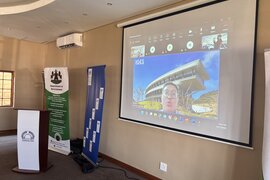
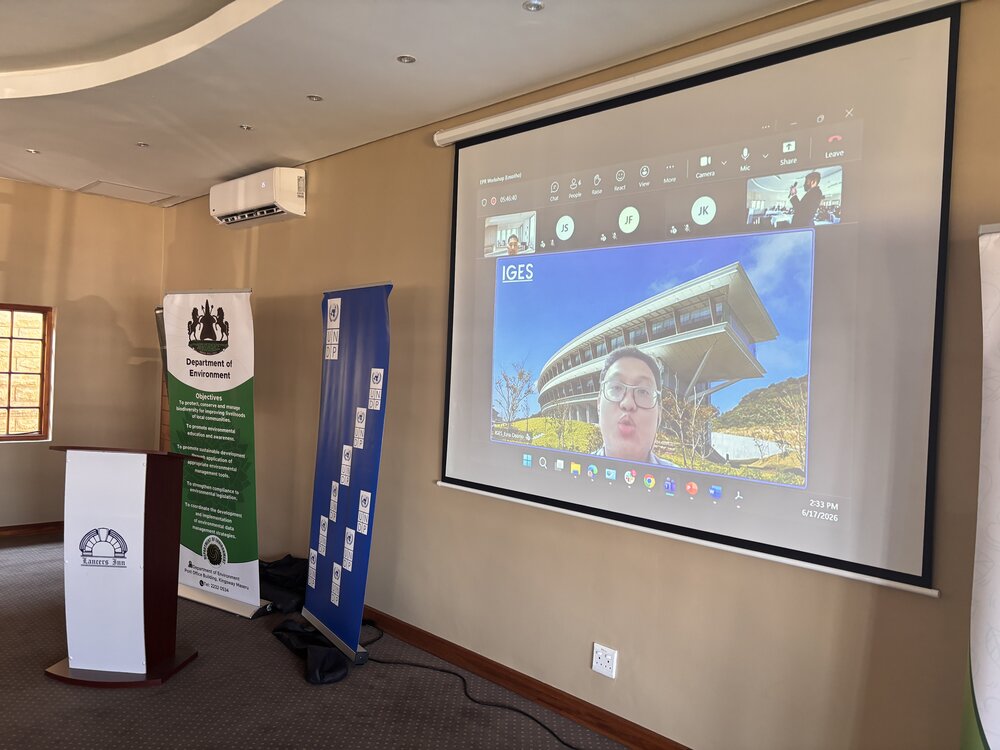
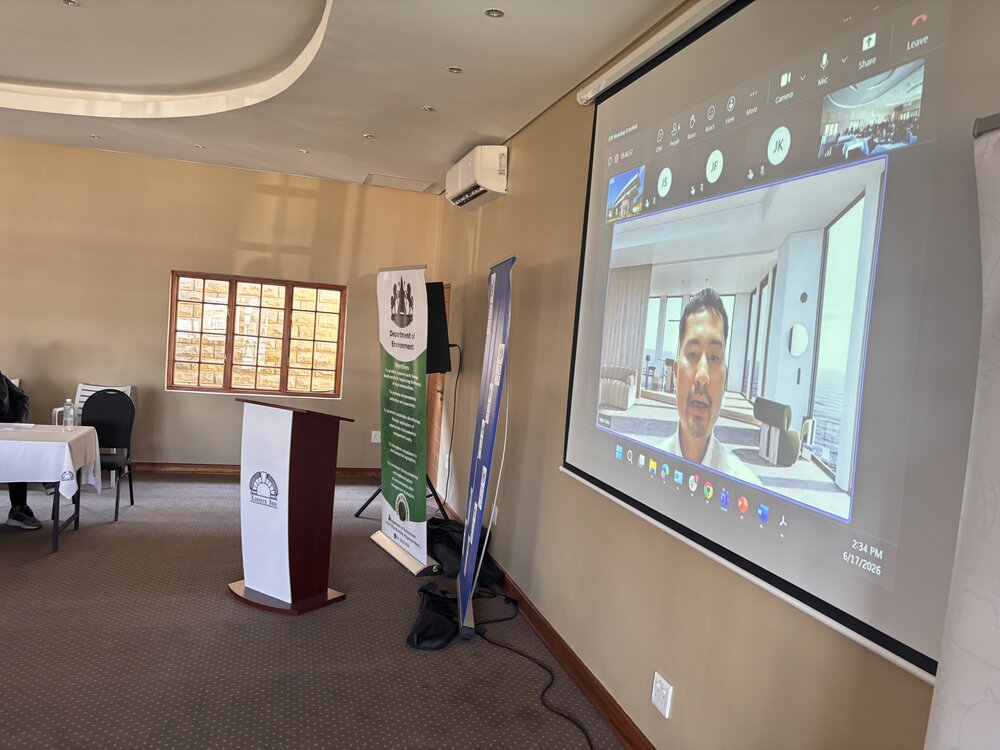
- ● Introduction to EPR featured an online presentation by Prof. C. Visvanathan (Faculty of Engineering, Mahidol University, Thailand), who explained the global evolution of EPR from a voluntary measure to a mandatory policy tool, explaining how the circular economy cannot function without producer-funded collections.
- ● Waste Management and Recycling System in Lesotho shifted the focus to the local context. Motseki Khuto (Maseru City Council) presented a detailed overview of the waste management gaps in Maseru, highlighting financial constraints, uncollected volumes, and the critical need for a structured recovery system supported by municipal ordinances and private capital.
- ● EPR Experiences from South Africa brought invaluable regional context by Jeremia Sibande (Department of Forestry, Fisheries and the Environment, South Africa) and shared South Africa's comprehensive packaging, lighting, and e-waste EPR models.
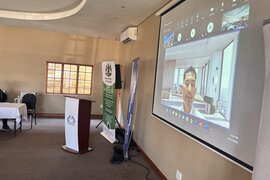
This was followed by a presentation on successful EPR case studies from Southeast Asia by Dr. Pham Ngoc-Bao and Ezra Osorio (IGES, SCP unit) - ● Informal Sector Integration to EPR in Lesotho by Prof. Timothy Thamae (University of Lesotho), which established a framework for protecting vulnerable waste collectors while formalising recycling chains.
- ● Role of PRO in EPR focused on the role of PRO and the and grassroots alignment presented by Julia Gawlik (PRO Circularity Alliance) discussing the concrete roles, responsibilities, and financing options of Producer Responsibility Organizations.
- ● Luyanda Hlatshwayo (Africa Reclaimers Organisation - ARO, South Africa) delivered an inspiring presentation on EPR from the informal reclaimers' perspective, sharing grassroots organising methods.
- ● Interactive Group Discussion moderated by Dr. Premakumara Jagath Dickella Gamaralalage, IGES-CCET to capture stakeholder feedback in real-time. Participants brainstormed key enabling conditions, policy blockages, and next coordination steps. The workshop concluded with closing remarks from.

Event Details
Lancers Inn, Maseru Lesotho
IGES Centre Collaborating with UNEP on Environmental Technologies (CCET)
2108-11 Kamiyamaguchi, Hayama, Kanagawa, 240-0115 Japan
E-mail: [email protected]
Presentation Materials
Programme Director: Timothy Thamae, NUL Innovation Hub, National University of Lesotho
| Time (SAST)(UTC+2) | Session/Key Topics Content | Speakers | |
|---|---|---|---|
| 09:05 – 09:10 | Welcoming remarks | Apesi Ratšele, Principal Secretary Ministry of Environment & Forestry | |
| 09:10 – 09:30 | Statement | Alexander Mangwiro, Regional Coordinator, Chemicals, Waste management & Air Quality Subprogramme, United Nations Environment Programme Africa Office | |
| Jacqueline Olweya, Resident Representative – United Nations Development Programme UNDP | |||
| Hon. Motlatsi Maqelepo, Minister of Trade, Industry & Business Development | |||
| Nkhethoa Seetsa, Minister of Local Government & Chieftainship | |||
| 09:35 – 09:45 | Keynote Address by the Minister responsible for Environment & Forestry | Thabo Mofosi, Minister of Environment & Forestry | |
| 09:45 – 10:45 | The Role of EPR in Waste Management and Circular Economy | C. Visvanathan, Faculty of Engineering, Mahidol University, Thailand. (Online) | PDF(8.6MB) |
| 11:10 – 12:00 | Current Waste management and recycling systems in Lesotho | Thabo Mothebe, Maseru City Council | PDF(577KB) |
| 12:00 – 12:30 | EPR models and lessons from South Africa | Jeremia Sibande, Department of Forestry, Fisheries and the Environment South Africa | PDF(1.6MB) |
| 12:30 – 13:00 | Informal Sector Integration to EPR in Lesotho | Thimothy Thamae, University of Lesotho | PDF(1.2MB) |
| Q&A | |||
| 14:00 – 14:30 | EPR Experiences from Southeast Asia | Ngoc-Bao Pham, IGES (Online) | PDF(1.7MB) |
| Q&A | |||
| 14:30 – 15:00 | EPR from the informal sector perspective | Luyanda Hlatshwayo, Africa Reclaimers Organisation (ARO) | PDF(728KB) |
| 15:00 – 16:00 | Roles and responsibilities of producers and PROs | Julia Gawlik, PRO Circularity Alliance | |
| Financing and governance options | |||
| Q&A | |||
| 16:15 – 16:45 | Stakeholder perspectives | Moderated by Premakumara Jagath Dickella Gamaralalage | |
| Key challenges and enabling conditions for EPR Informal sector integration | |||
| Key takeaways Identification of next steps and coordination mechanisms | |||
| Q&A | |||
| 16:45 – 17:00 | Closing remarks | Palesa Matobako, Principal Secretary Ministry of Trade, Industry & Business Development |