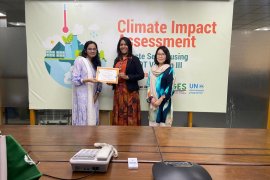
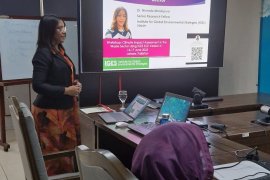
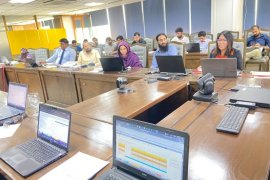
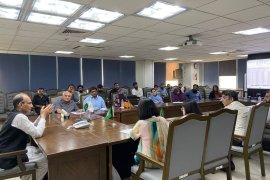
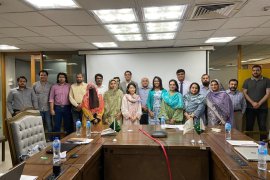
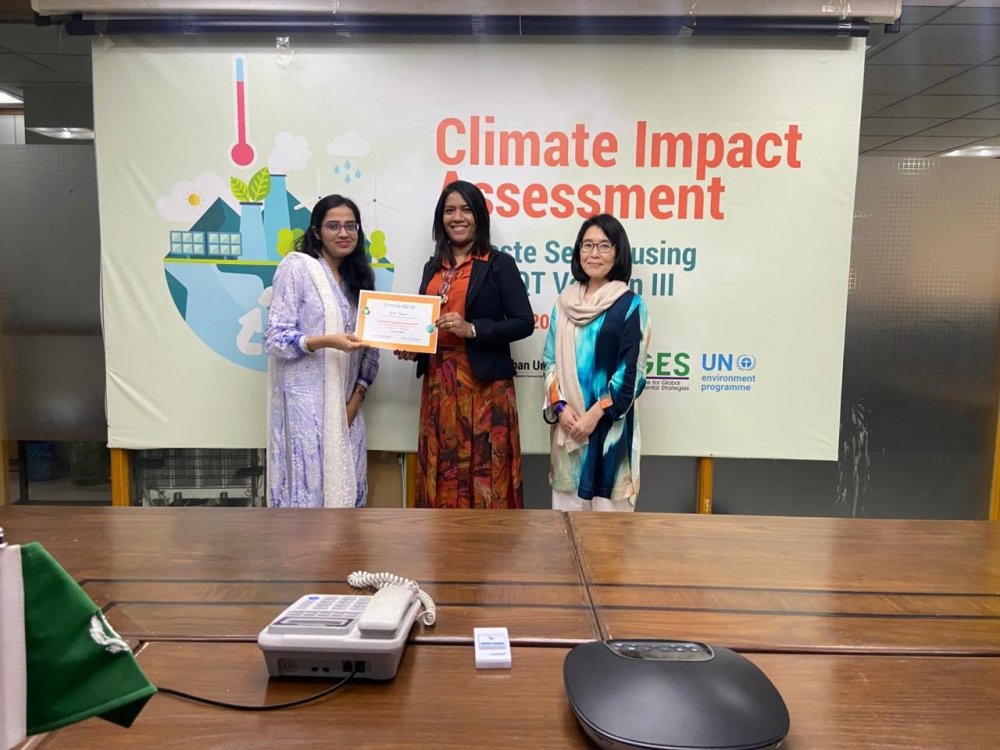
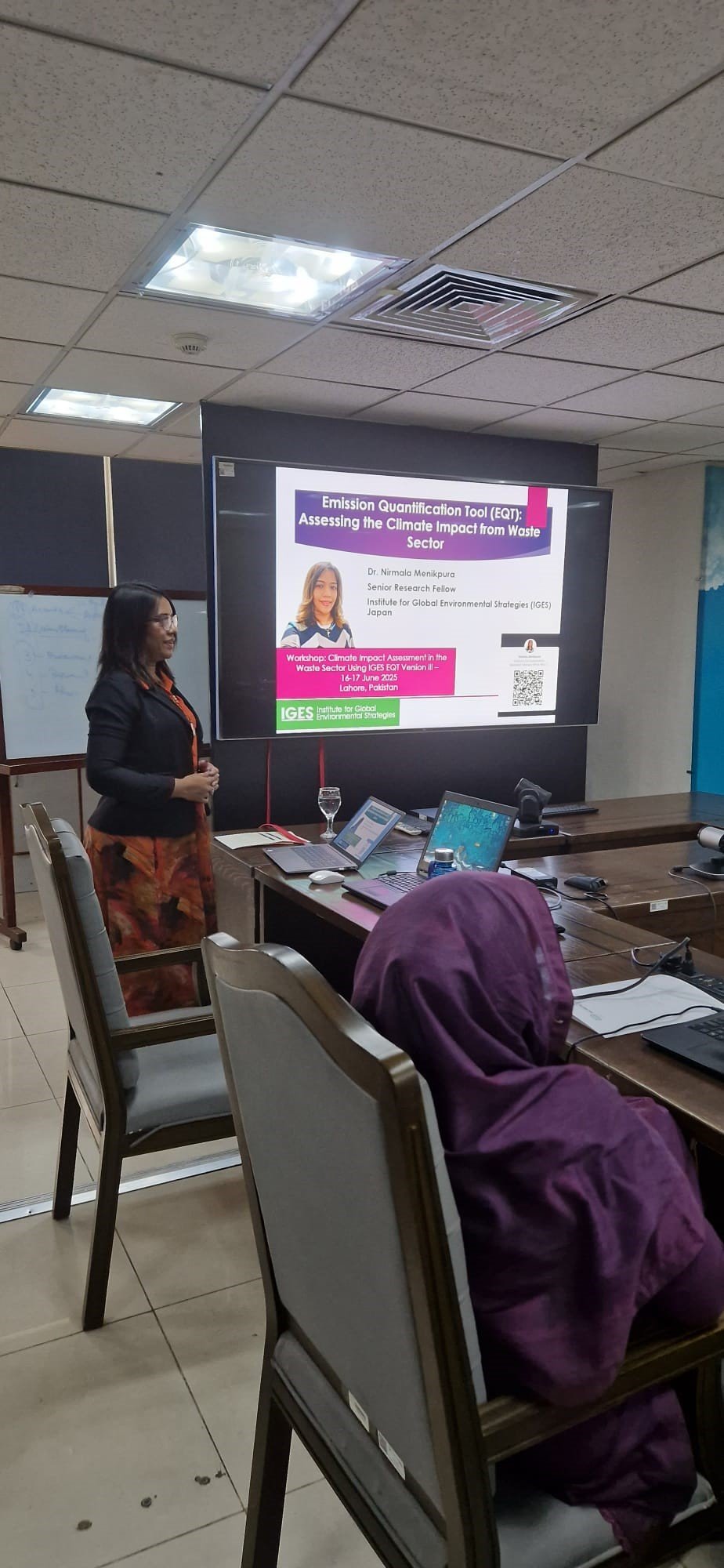
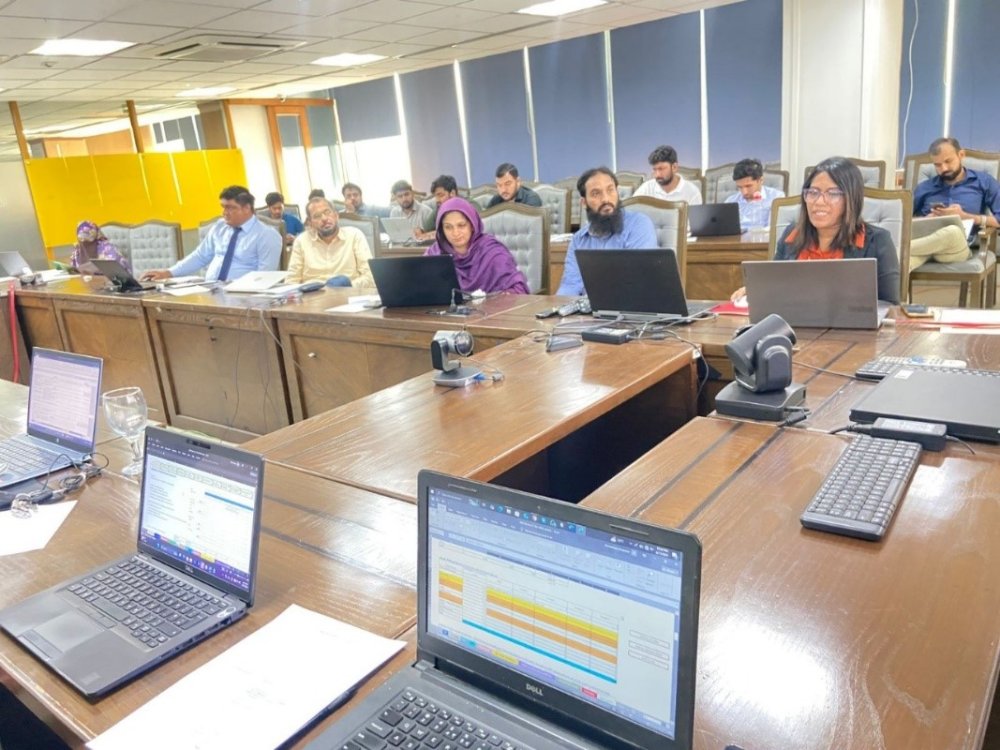
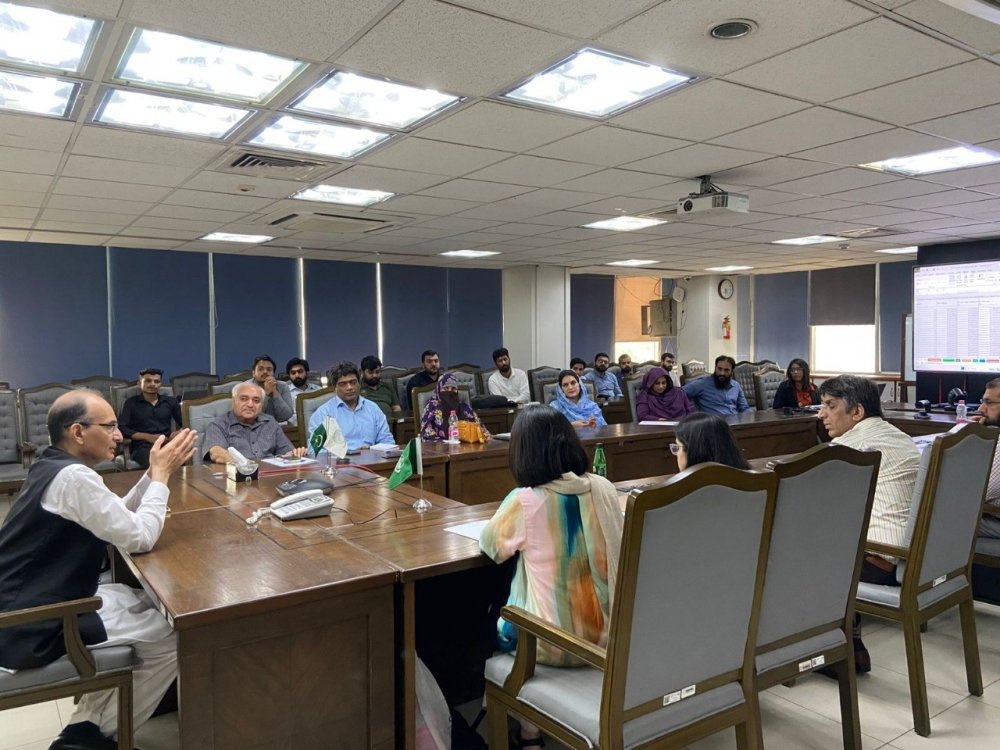
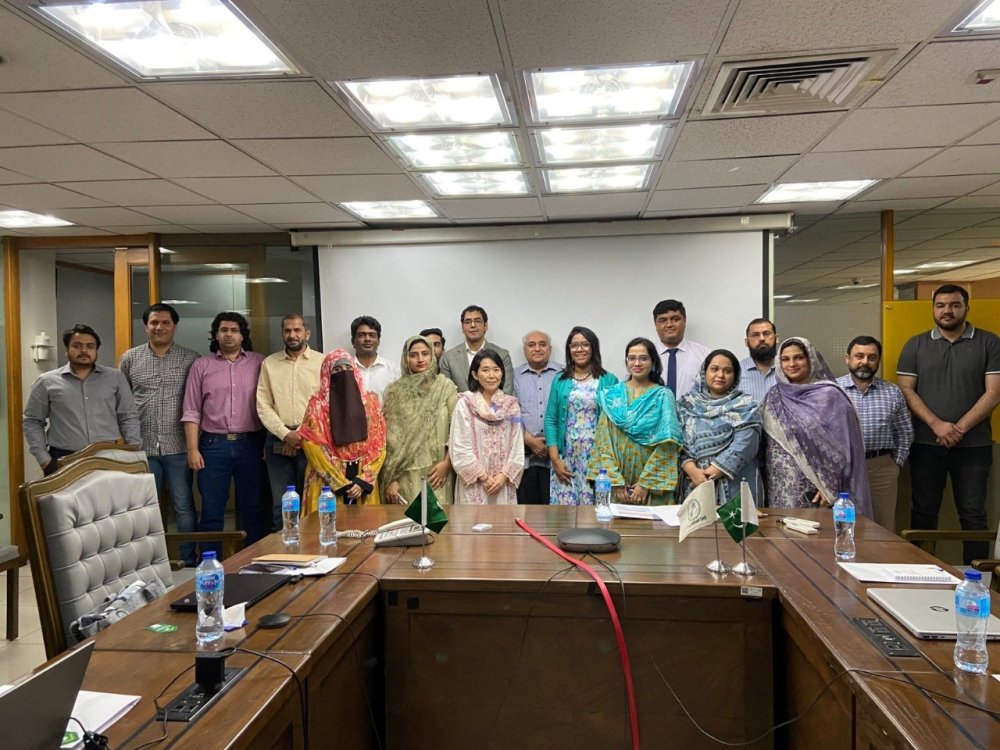
IGES Centre Collaborating with UNEP on Environmental Technologies (IGES-CCET), in collaboration with the Urban Unit, jointly organized a two-day capacity-building workshop titled “Climate Impact Assessment in the Waste Sector Using IGES EQT Version III” that took place in Lahore (Pakistan) on 16 and 17 June 2025. The workshop brought together municipal officials, technical practitioners, and waste sector stakeholders to enhance their understanding and application of lifecycle-based tools for assessing greenhouse gas (GHG) and short-lived climate pollutant (SLCP) emissions from waste systems. The training introduced participants to the updated Emission Quantification Tool (EQT Version III) and equipped them with practical knowledge to develop data-driven, climate-responsive solid waste strategies at the city and national levels.

Background
Pakistan’s waste sector, particularly in fast-growing urban areas, is a significant contributor to greenhouse gas (GHG) emissions, but also presents opportunities for emission reduction and resource recovery. To support data-driven climate action in the sector, IGES developed the Emission Quantification Tool (EQT), a science-based, user-friendly tool originally launched in 2013 with support from the Climate and Clean Air Coalition. The latest Version III, released in 2025 in collaboration with UNEP-IETC, integrates life cycle assessment (LCA) principles and allows users to quantify GHG and short-lived climate pollutant (SLCP) emissions, compare waste management scenarios, and identify climate-friendly options even in data-limited contexts.
This workshop demonstrated the practical application of EQT as a regional capacity-building initiative to help Pakistan strengthen climate-responsive waste management planning. By combining technical sessions with real-world datasets and hands-on scenario modelling, the event enhanced participants’ ability to assess baseline emissions and explore mitigation strategies. The training emphasised the importance of robust data collection and informed decision-making to advance low-carbon, circular waste systems aligned with national climate goals.
Intent
The primary intent of the workshop was to promote the use of scientifically grounded tools like the EQT to guide Pakistan’s waste sector toward climate-smart and evidence-based planning. It aimed to enhance stakeholder understanding of emissions accounting, provide training on the practical application of the EQT, and foster cross-sector collaboration for improved data-driven decision-making.
Specifically, the workshop aimed to:
- Build the capacity of municipal officials, researchers, and practitioners to apply the EQT in quantifying GHG and SLCP emissions.
- Strengthen data collection practices and scenario-based planning for sustainable waste management.
- Encourage discussion on localized challenges and opportunities for integrating climate action in solid waste strategies.
- Lay the foundation for future collaboration and tool adaptation in the South Asian context.
Summary
Opening Session
- The workshop began with opening remarks by the Secretary of the Local Government and Community Development Department and the CEO of The Urban Unit, setting the stage for collaborative learning.
- Ms. Miho Hayashi (IGES) set the regional context by highlighting common waste management challenges in Asia and best practices in recycling and treatment technologies.
- A government representative from the Ministry of Environment shared insights on Pakistan’s evolving policy landscape, aligning national waste strategies with climate goals.
- Ms. Anum Shahid shared insights into municipal solid waste (MSW) systems in major cities across Punjab, helping bring the discussion to the local level.
- Dr. Ayesha Khan highlighted the important yet often overlooked role of NGOs and the informal sector in Pakistan’s waste management landscape.
- Dr. Asif Iqbal addressed key data collection challenges, sharing findings from a recent survey conducted by The Urban Unit to capture baseline information and identify gaps in data availability.
Introduction to LCA and EQT
- Dr. Nirmala Menikpura (IGES) introduced the concept of LCA to assess climate impacts from the waste sector.
- A detailed walkthrough of the EQT Version III covered its evolution, key features, data input requirements, and real-world applications.
- The session concluded with an interactive wrap-up to consolidate learnings and prepare for day two.
Hands-On Training
- Participants reviewed LCA principles embedded in the EQT Version III, including new features like SLCP integration and scenario modeling.
- Practical training included data entry using a sample dataset from Lahore and application of the EQT for emissions estimation and scenario analysis.
- Participants engaged in two case studies, baseline emissions and future mitigation scenarios with real-time guidance from IGES trainers.
Panel and Closing Session
- IGES and The Urban Unit experts addressed participant questions and discussed local adaptations of EQT.
- The Director of The Urban Unit encouraged institutional use of EQT in municipal planning.
- Certificates of completion were awarded to all participants.
Key Messages
- Lifecycle-based tools such as the EQT are essential to quantify emissions from the waste sector and design effective, low-carbon management strategies.
- Solid waste in Pakistan, particularly from urban centers, holds considerable mitigation potential if properly tracked, managed, and integrated into climate policy frameworks.
- Improved data collection especially regarding informal sector recycling (amount of collected recyclables and composition), fuel consumption, and landfill operations is critical to more accurate emissions estimation and policy formulation.
- Landfill gas recovery systems must not be limited to 10 years and should be designed to capture peak methane emissions, and their integration with energy generation can significantly reduce GHG and SLCP emissions.
- The newly added RDF modelling and related climate impacts in the EQT is highly relevant for Pakistan and can support industrial decarbonization if paired with targeted policies and infrastructure investments.
- Participants called for the EQT to be transformed into a web-based platform to enable easier access, real-time scenario development, and broader application in national reporting.
- Strengthening inter-agency collaboration, capacity building, and access to emission tools like the EQT is key to building more climate-resilient and circular waste systems across Pakistan.
Event Details
Lahore, Pakistan
IGES Centre Collaborating with UNEP on Environmental Technologies
2108-11 Kamiyamaguchi, Hayama, Kanagawa, 240-0115 Japan
Phone: +81-46-855-3840
https://ccet.jp/
Presentation Materials
| Presentation I | Climate Impacts from the Waste Sector & Application of LCA -EQT Nirmala Menikpura, Senior Research Fellow, IGES | PDF (4.2MB) | |
| Presentation II | EQT presentation Nirmala Menikpura, Senior Research Fellow, IGES | PDF (2.4MB) |