Results 21 - 30 of 288 (Sorted by date)
Peer-reviewed Article
In IRES Vol.5 No.1
Author:
Axel Michaelowa
Industrialized countries have been astonishingly slow in providing incentives for their private sectors to invest in Clean Development Mechanism (CDM) projects or to buy certified emission reductions (CERs). On the other hand, capacity-building initiatives have been promoted extensively and have used almost 10 percent of the total funds invested in...
Peer-reviewed Article
In IRES Vol.5 No.1
It is widely agreed that the Clean Development Mechanism (CDM) is a useful international instrument that encourages and reinforces the reduction of greenhouse gas emissions (GHGs), and also that it should be further promoted as a way to fill the gap in energy and GHG efficiency between industrialized and developing countries. A number of...
Peer-reviewed Article
In IRES Vol.5 No.1
Author:
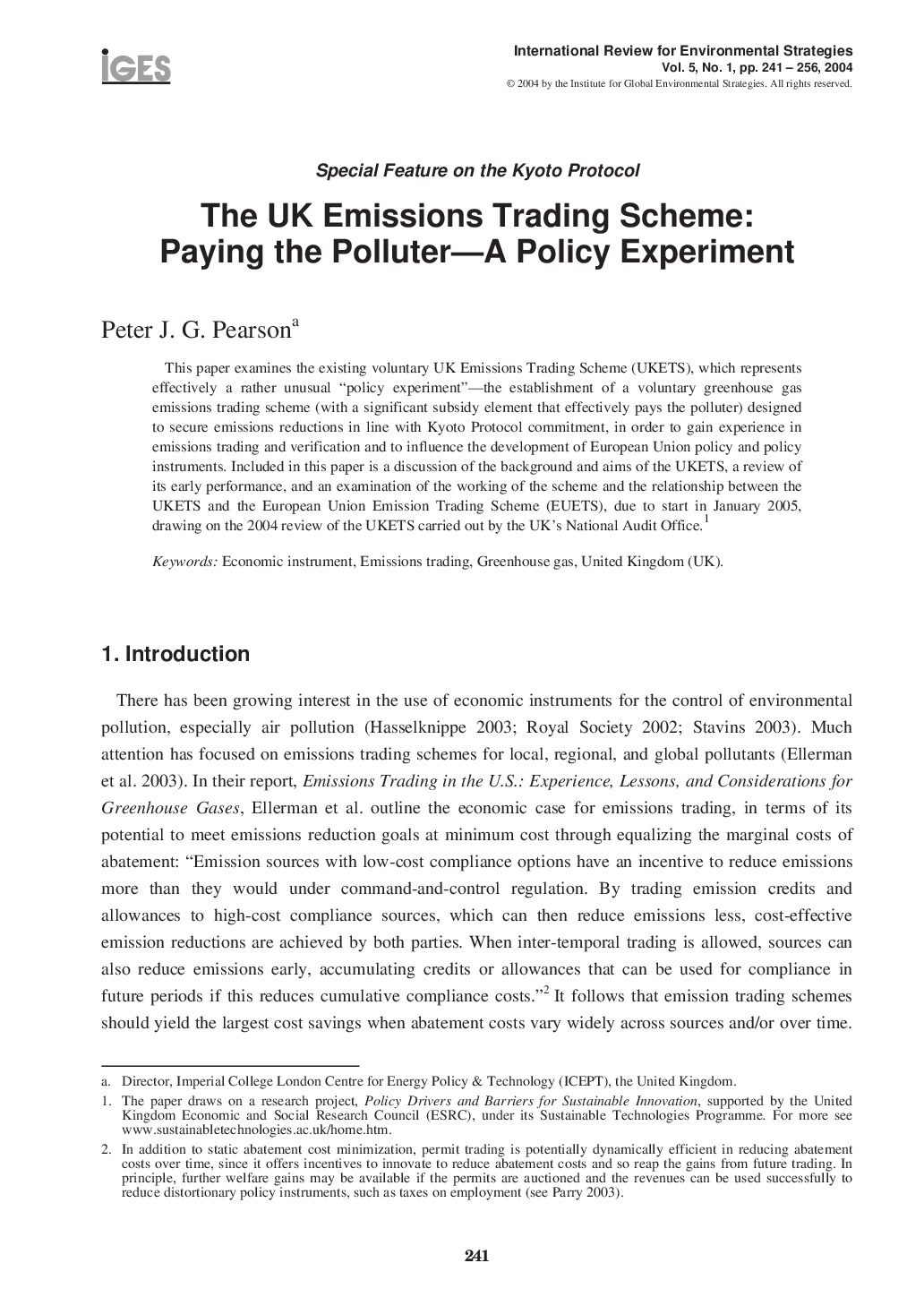
Peter J. G. Pearson
This paper examines the existing voluntary UK Emissions Trading Scheme (UKETS), which represents effectively a rather unusual “policy experiment”?the establishment of a voluntary greenhouse gas emissions trading scheme (with a significant subsidy element that effectively pays the polluter) designed to secure emissions reductions in line with Kyoto...
Peer-reviewed Article
In IRES Vol.5 No.1
Author:
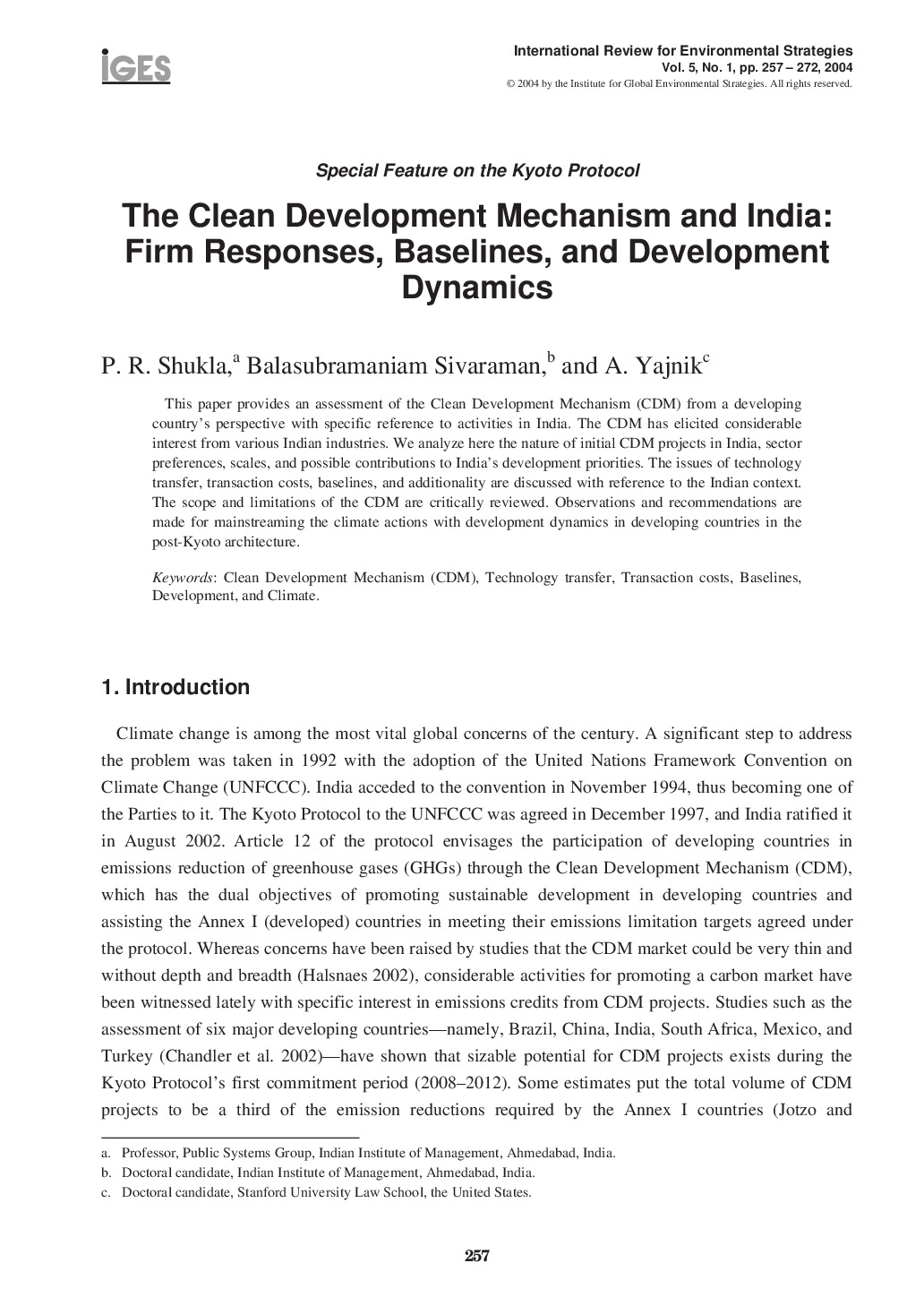
Balasubramaniam Sivaraman
A. Yajnik
This paper provides an assessment of the Clean Development Mechanism (CDM) from a developing country’s perspective with specific reference to activities in India. The CDM has elicited considerable interest from various Indian industries. We analyze here the nature of initial CDM projects in India, sector preferences, scales, and possible...
Peer-reviewed Article
In IRES Vol.5 No.1
Author:
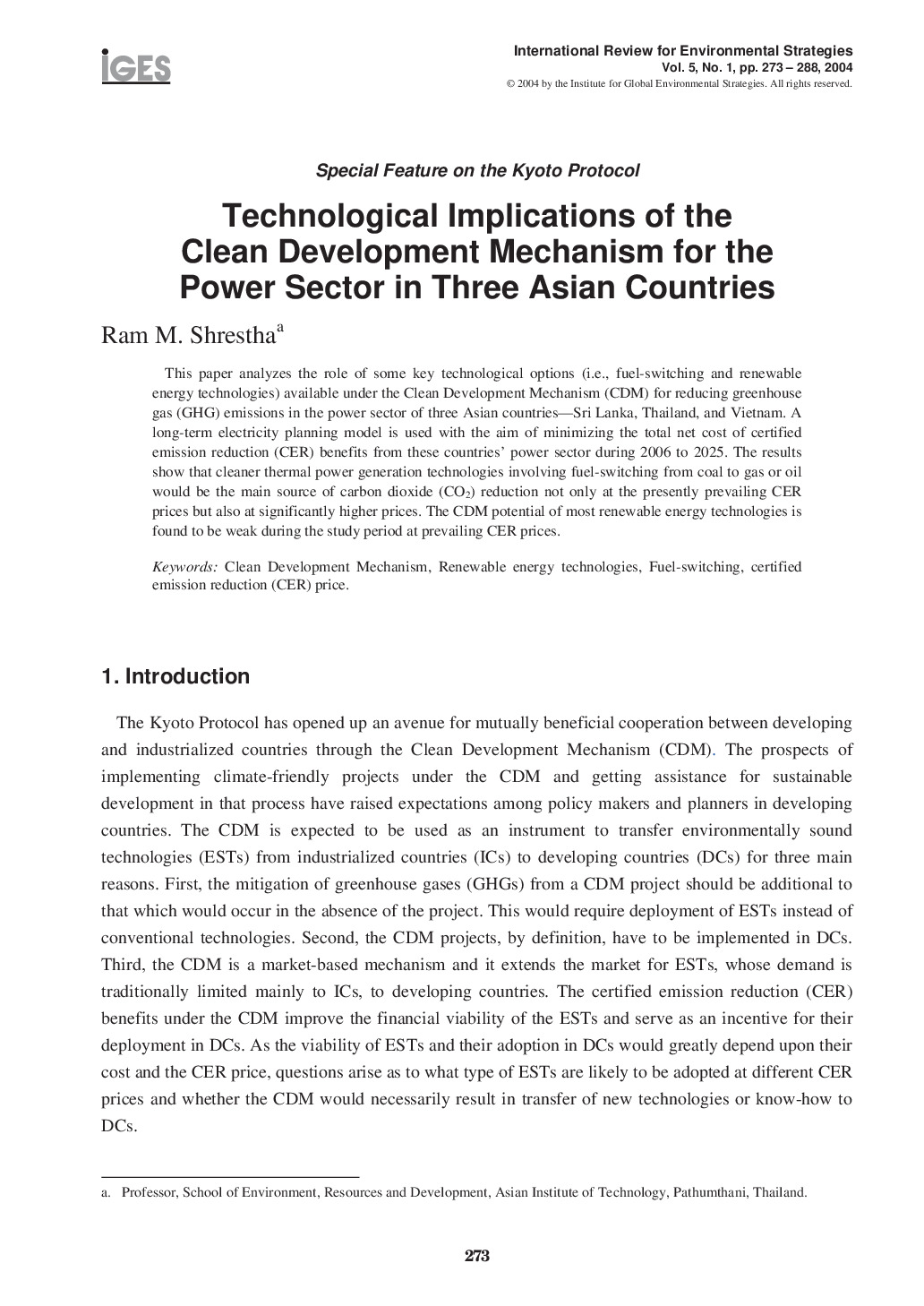
Ram M. Shrestha
This paper analyzes the role of some key technological options (i.e., fuel-switching and renewable energy technologies) available under the Clean Development Mechanism (CDM) for reducing greenhouse gas (GHG) emissions in the power sector of three Asian countries?Sri Lanka, Thailand, and Vietnam. A long-term electricity planning model is used with...
Peer-reviewed Article
In IRES Vol.5 No.1
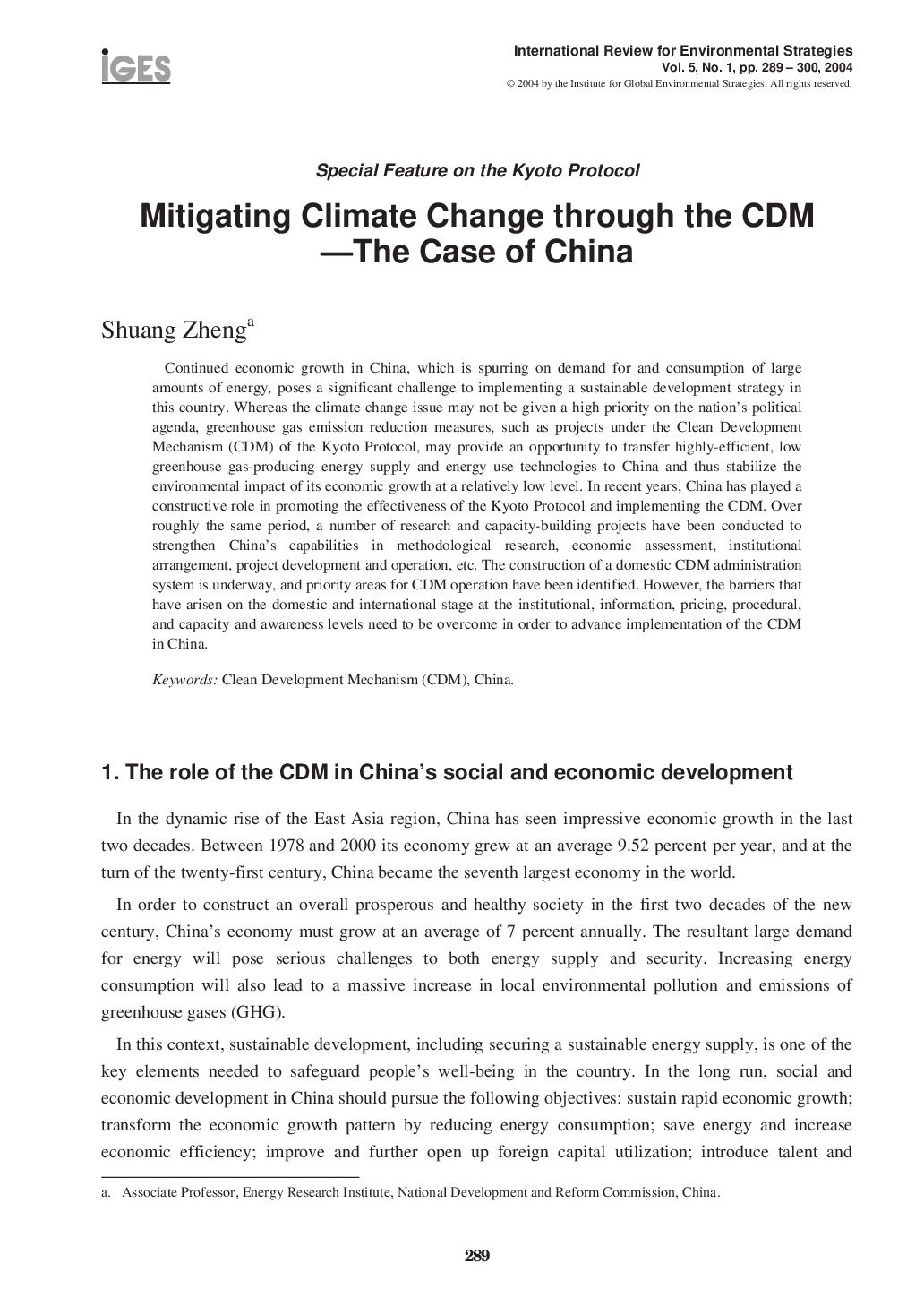
Continued economic growth in China, which is spurring on demand for and consumption of large amounts of energy, poses a significant challenge to implementing a sustainable development strategy in this country. Whereas the climate change issue may not be given a high priority on the nation’s political agenda, greenhouse gas emission reduction...
Peer-reviewed Article
In IRES Vol.5 No.1
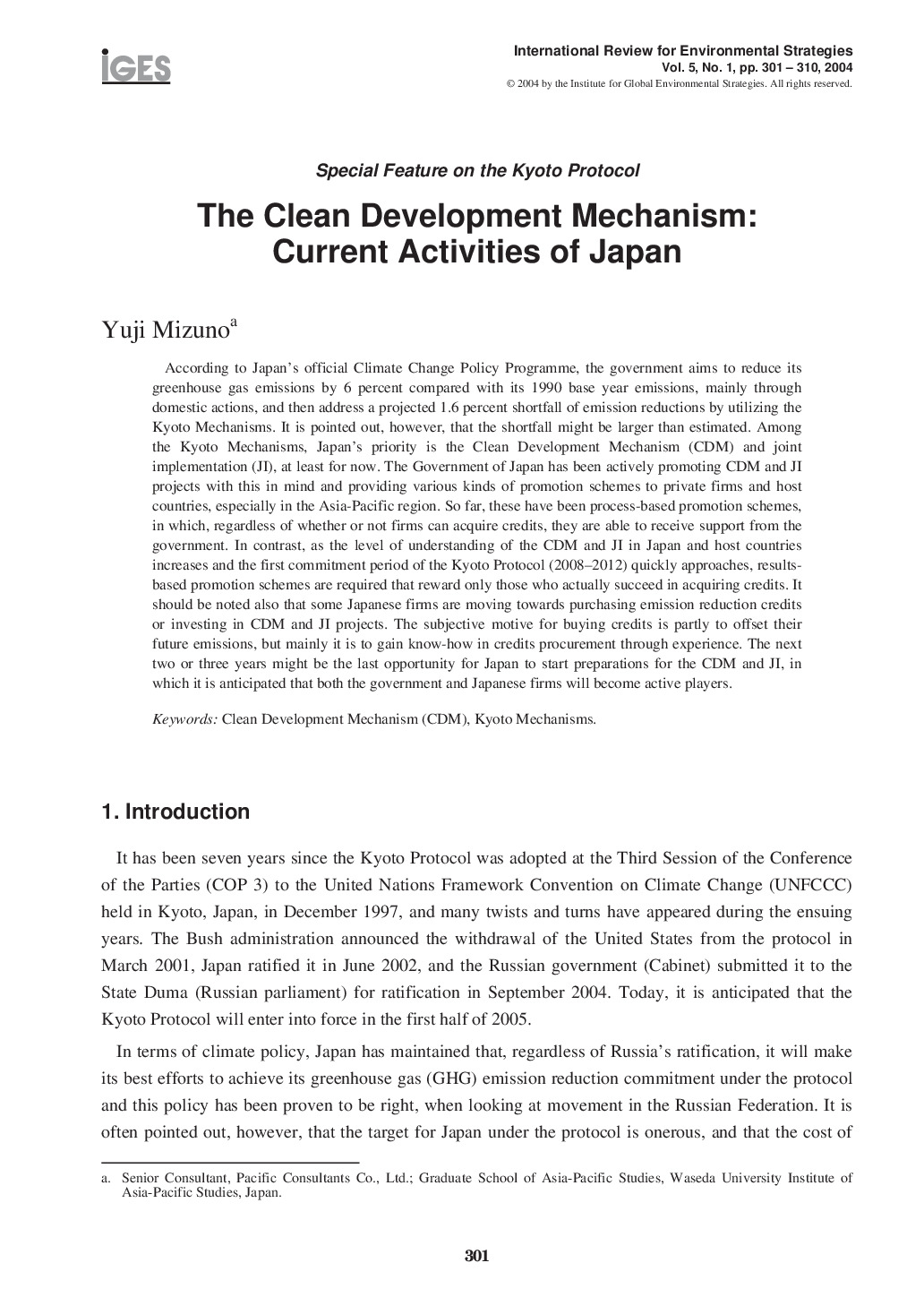
According to Japan’s official Climate Change Policy Programme, the government aims to reduce its greenhouse gas emissions by 6 percent compared with its 1990 base year emissions, mainly through domestic actions, and then address a projected 1.6 percent shortfall of emission reductions by utilizing the Kyoto Mechanisms. It is pointed out, however...
Peer-reviewed Article
In IRES Vol.5 No.1
Author:
Cédric Philiberta
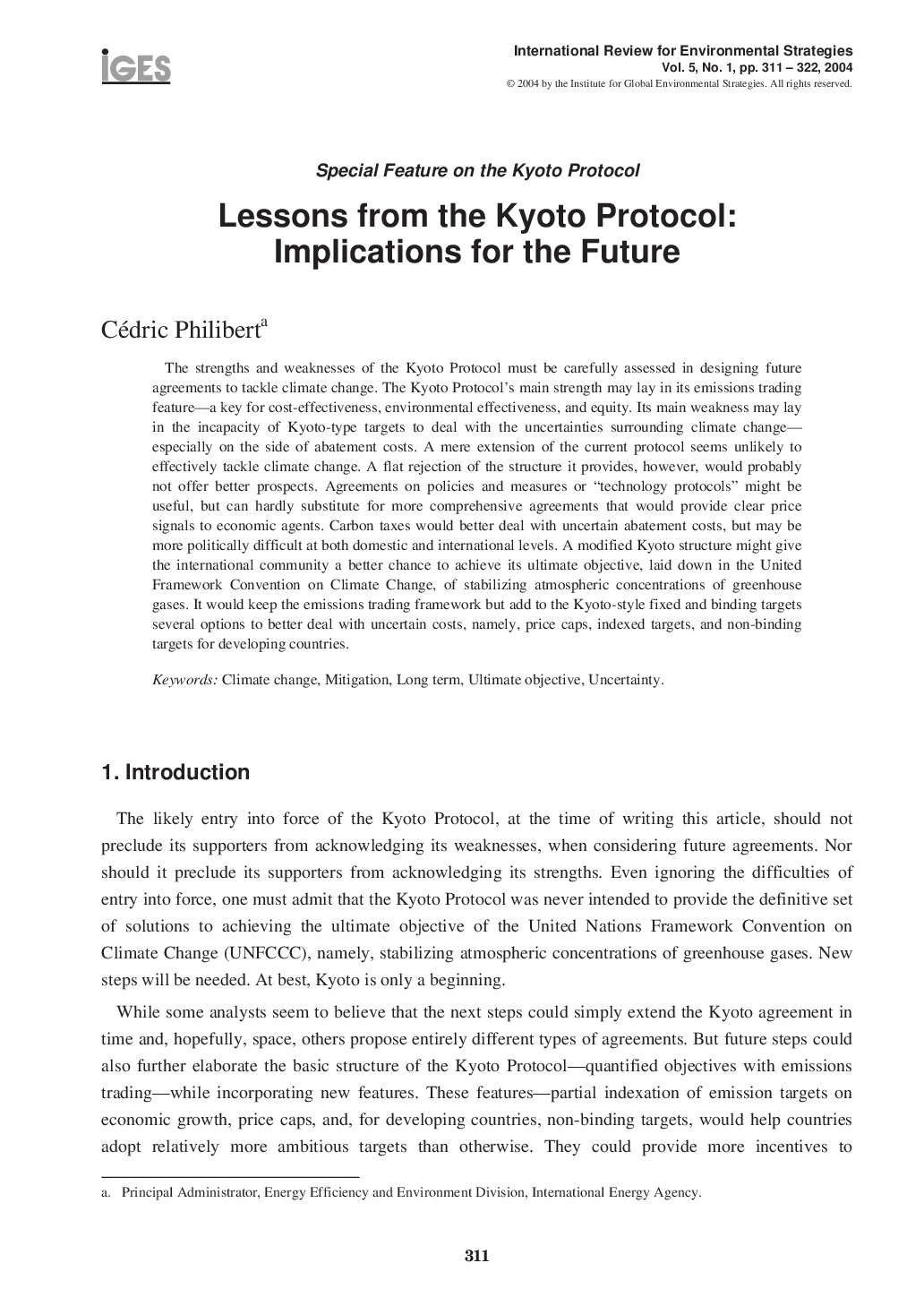
The strengths and weaknesses of the Kyoto Protocol must be carefully assessed in designing future agreements to tackle climate change. The Kyoto Protocol’s main strength may lay in its emissions trading feature?a key for cost-effectiveness, environmental effectiveness, and equity. Its main weakness may lay in the incapacity of Kyoto-type targets to...
Peer-reviewed Article
In IRES Vol.5 No.1
Author:
Yasuko Kameyama
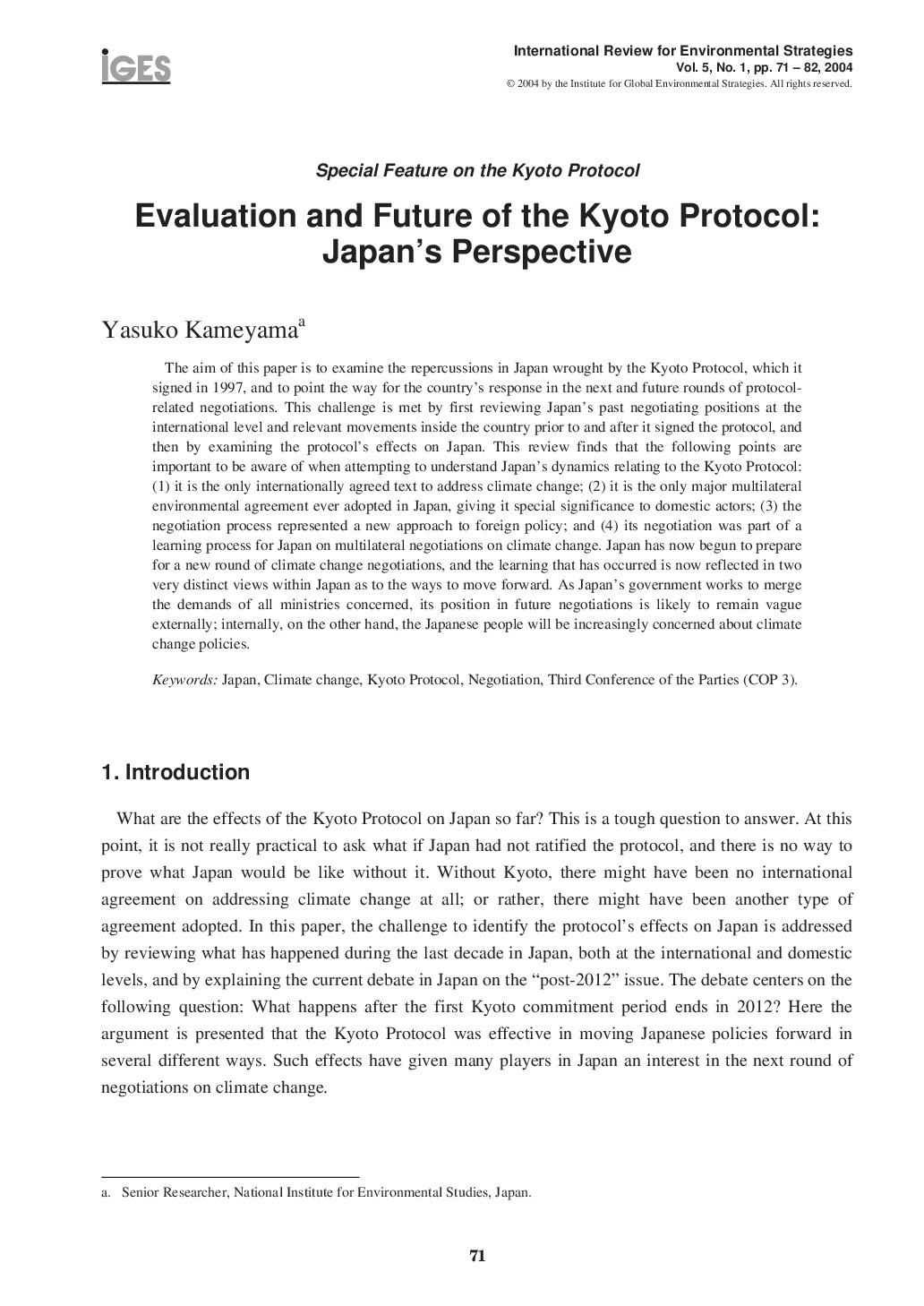
The aim of this paper is to examine the repercussions in Japan wrought by the Kyoto Protocol, which it signed in 1997, and to point the way for the country’s response in the next and future rounds of protocol-related negotiations. This challenge is met by first reviewing Japan’s past negotiating positions at the international level and relevant...
Peer-reviewed Article
In IRES Vol.5 No.1
Author:
Theodora Petroula
Rob Swart
Bernd Gugele
Bernd Strobel
Peter Taylore
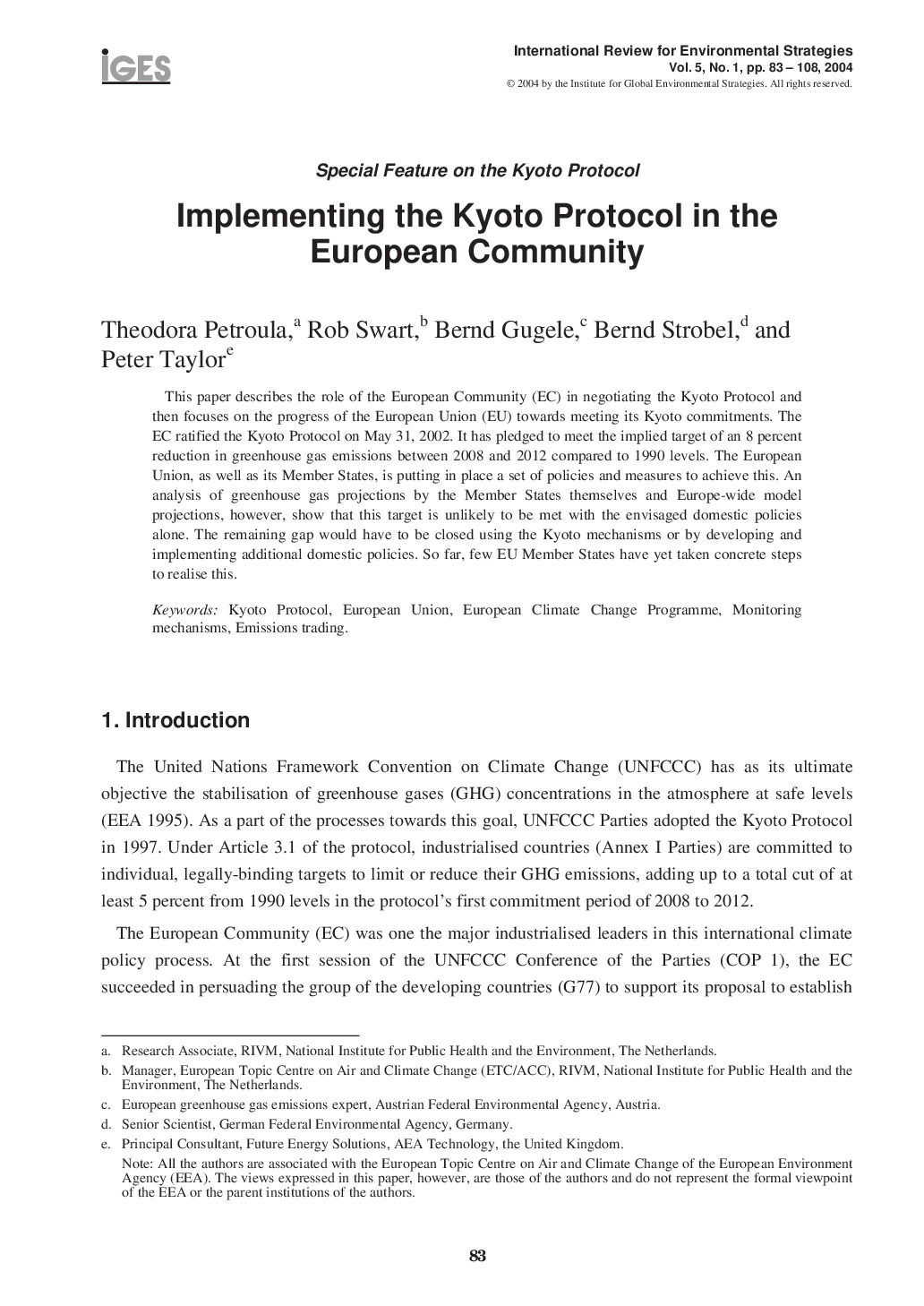
This paper describes the role of the European Community (EC) in negotiating the Kyoto Protocol and then focuses on the progress of the European Union (EU) towards meeting its Kyoto commitments. The EC ratified the Kyoto Protocol on May 31, 2002. It has pledged to meet the implied target of an 8 percent reduction in greenhouse gas emissions between...